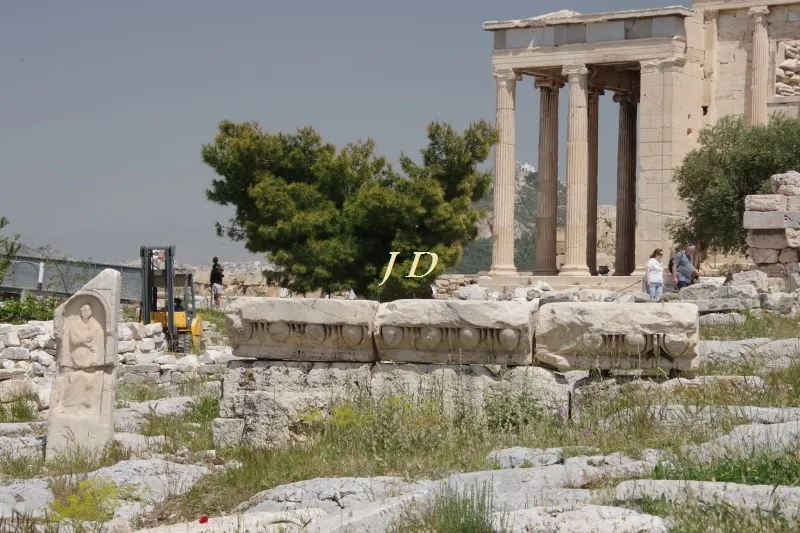
Dipylon was the principal gate in the defensive wall of Classical Athens, at Kerameikos, beside the ancient cemetery. Its remains cover a broad area, with traces of towers and flanking walls that reveal how the entrance was protected. The forecourt once gathered people travelling towards Thebes and Corinth, and the gate also marked the beginning of the Great Panathenaic procession. Walk through the archaeological remains to see how a military entrance also served as a major route and ceremonial threshold for the city.
A guarded entrance to Athens
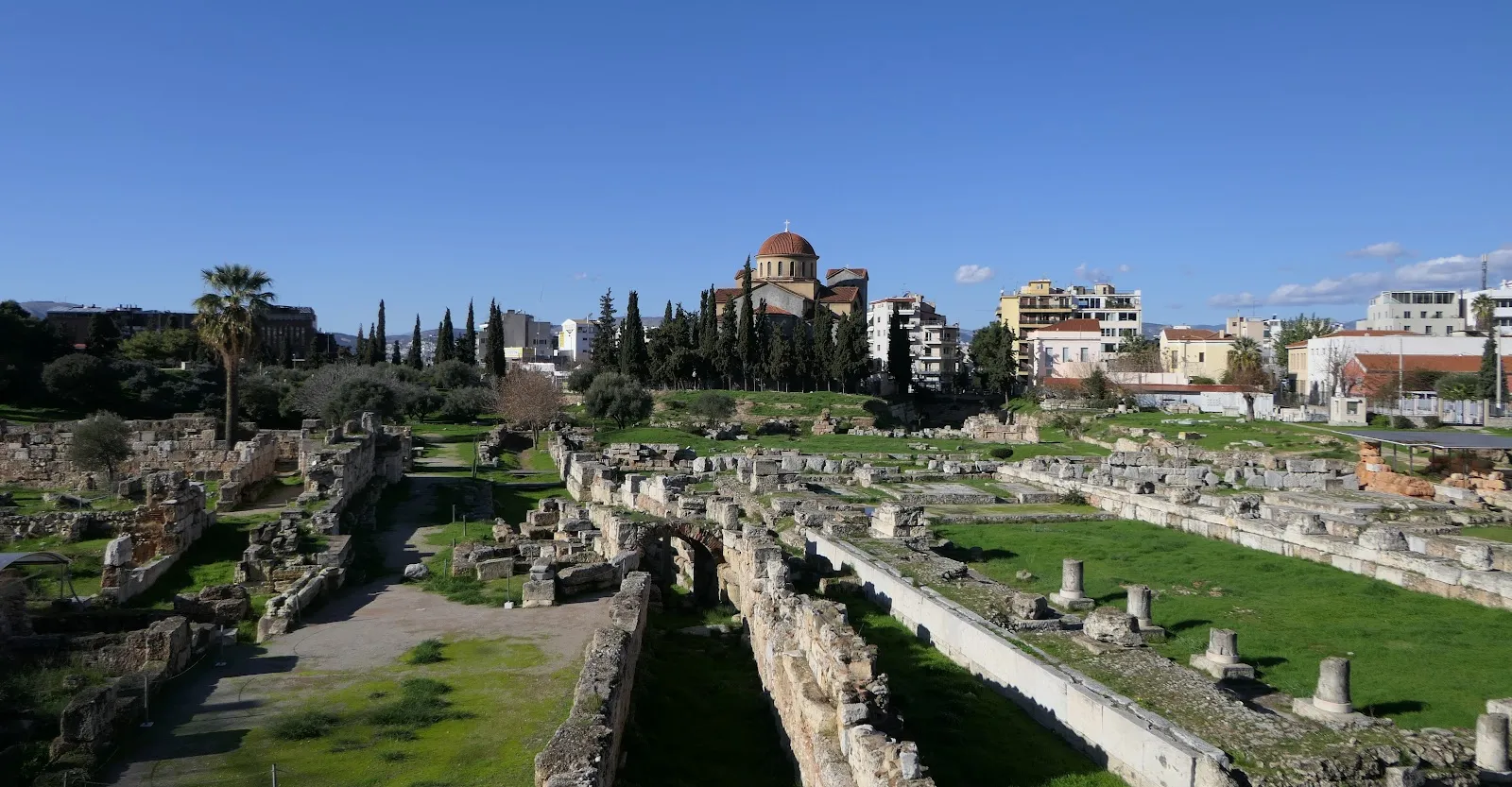
Dipylon formed part of the city wall and controlled a major entrance to Classical Athens. Its plan included towers and flanking walls, features that helped defend the approach. The site’s broad footprint gives a sense of the scale of this monumental gate.
The entrance connected the city with the ancient cemetery at Kerameikos and with roads leading beyond Athens. Routes from here went towards Thebes and Corinth, as well as to other parts of Greece.
A route for ceremony
Dipylon had a role beyond defence and travel. The Great Panathenaic procession began at the gate, giving this entrance an important place in the city’s ceremonial life. Its forecourt served as a gathering point for people setting out on their journeys, too.
FAQ
Where is Dipylon?
Dipylon is in the Kerameikos archaeological area in Athens, beside the ancient cemetery.
What was Dipylon used for?
It was the main gate in the wall of Classical Athens, with defensive features. It also marked the starting point of the Great Panathenaic procession.
What can you see at Dipylon?
The remains include a broad gate area and traces of towers and flanking walls. The forecourt was once a gathering place for travellers.