
Claude Monet's House and Gardens is the painter's former home at 84 Rue Claude Monet in Giverny, Normandy, now looked after by the Fondation Claude Monet. Monet lived here for 43 years, until his death in 1926. The pink house with green shutters opens onto the flower garden known as the Clos Normand, and a second garden holds the water lily pond and the Japanese bridge he painted again and again. Inside, the rooms keep his furniture, his collection of Japanese prints and some of his paintings. It is an easy day trip from Paris.
From a train window to the pink house
Monet first noticed Giverny from a train window. He moved to the village in 1883 with his second wife, Alice, and their eight children, and he rented the house and the land around it. By 1890 he could afford to buy both, and he began shaping the grounds into the gardens he wanted to paint.
He lived here until his death in December 1926. His son Michel inherited the property but did not live there, and Monet's step-daughter Blanche looked after it. After the Second World War the house and garden fell into neglect. Restoration followed, and the site opened to the public in 1977.
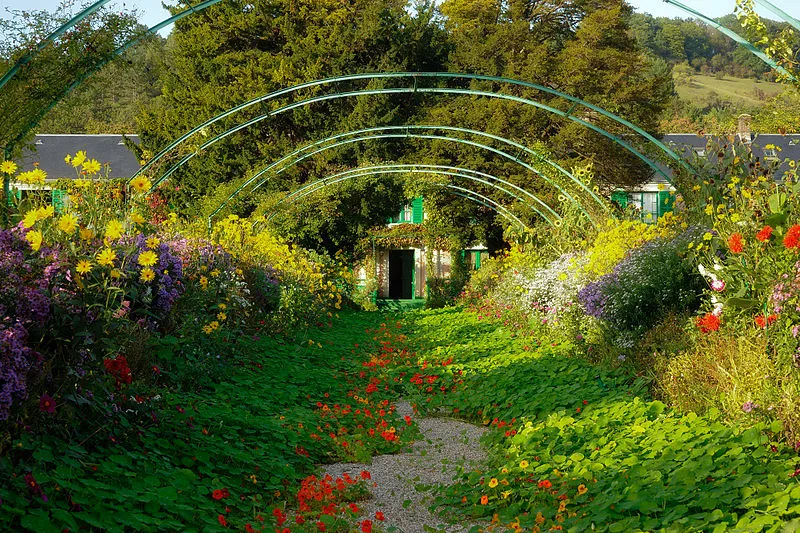
Today it is classified as a monument historique and run by the Fondation Claude Monet, a non-profit organisation. The house is painted pink with green shutters, as it was in Monet's day.
The Clos Normand and the water garden
The grounds have two parts. The Clos Normand is the large flower garden directly in front of the house. It is laid out in a series of beds separated by arches of climbing roses. Monet planted it like a palette, choosing flowers for the colours they make when seen from a distance.
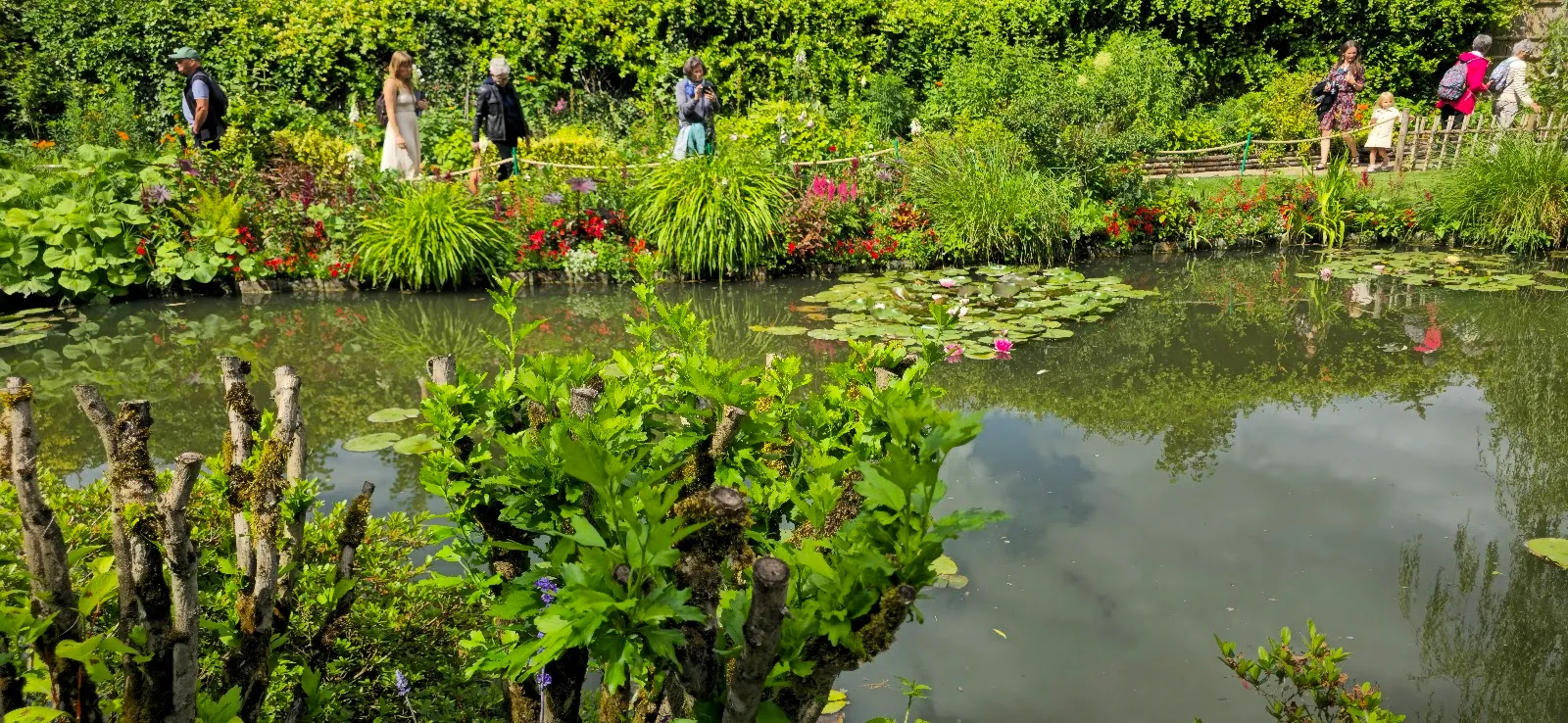
The second part is the water garden, with the lily pond and the wooden Japanese bridge. The pond did not always exist. Monet diverted the Ru, a small arm of the Epte river, to fill it. The water lilies painted here became the subject of his most famous series.
The first beds can be crowded, and you will need to pick your way through the paths. The crowds move steadily, though, and the colour and birdsong make it an easy walk.
Inside the house
The rooms are colourful and far lighter than the dark interiors fashionable in the late 19th century. Several are themed around a single colour. The kitchen is tiled in blue and green. You also pass through his studio, a reading room and the bedroom, along with the dining and sitting rooms.
Many of the objects belonged to Monet, and the furniture is original. He collected Japanese woodblock prints, and you will see them on the walls. A small room holds a selection of his paintings. From the house you can look out over the garden, which is the reason most people come.
The visit is lightly staged. The foundation chose not to build up a heavy security system, which keeps the rooms feeling like a lived-in home.
What blooms when
The garden changes with the season, so there is no wrong month during the open period. Spring brings tulips, daffodils and cherry blossom. Summer has roses, poppies, sunflowers and water lilies. Autumn is the season for dahlias and other warm colours.
Spring is the most popular time. In autumn the crowds thin, and the cloudier skies soften the scene in a way that suits the paintings. The garden opens each year from spring to early November, and the exact dates change from year to year, so check the foundation's website before you plan.
Getting there and planning the day
Giverny is in Normandy, northwest of Paris, and works well as a day trip from the capital. From the train station at Vernon, a shuttle bus called La Navette runs to the main car park at the site. The ride takes about 20 minutes and costs 4 euros one way or 8 euros return. A taxi saves only about 5 minutes. Free parking is available for drivers.
The entrance, the restrooms and the parking lot are wheelchair accessible, and a hearing loop is available. The Giverny Tourist Office at 80 Rue Claude Monet has regional brochures and visit information.
The Museum of Impressionism, also in the village, is a natural second stop. Giverny has other galleries and quiet streets to walk afterwards.
FAQ
How long do you need at Monet's House and Gardens?
Plan on at least 45 minutes to an hour for the garden and the house. Allow longer if you want to linger by the water lily pond or walk the flower beds slowly.
When are Monet's gardens open?
They open every day during a season that runs from spring to early November. The start and end dates change each year, so check the foundation's website before you travel.
Should I buy tickets in advance?
Yes. Timed tickets can be bought online, and they let you skip the line at the gate. Combined tickets with the Museum of Impressionism are sold only on site, at either museum or at the Vernon Tourism Office.
How do you get to Giverny from Paris?
Take a train to Vernon, then the shuttle bus La Navette to the main car park at the site. The bus ride is about 20 minutes and costs 4 euros one way or 8 euros return.
Is Monet's House and Gardens wheelchair accessible?
The entrance, the restrooms and the parking lot are wheelchair accessible, and there is wheelchair accessible seating. A hearing loop is also available.
What is the best time of year to visit?
Every season has its own flowers, from tulips in spring to roses and water lilies in summer and dahlias in autumn. Late September and early October have fewer crowds.


