
Falaise d'Aval is the western of the two white chalk cliffs that frame the town of Étretat on the Normandy coast. Wind and waves have cut the chalk into arches and needle-shaped rocks, and the view most people come for is the large arch with the Aiguille standing just beyond it. You can climb to the top on foot from the town or from the beach, and the views change with the light and the weather.
Two cliffs, one beach
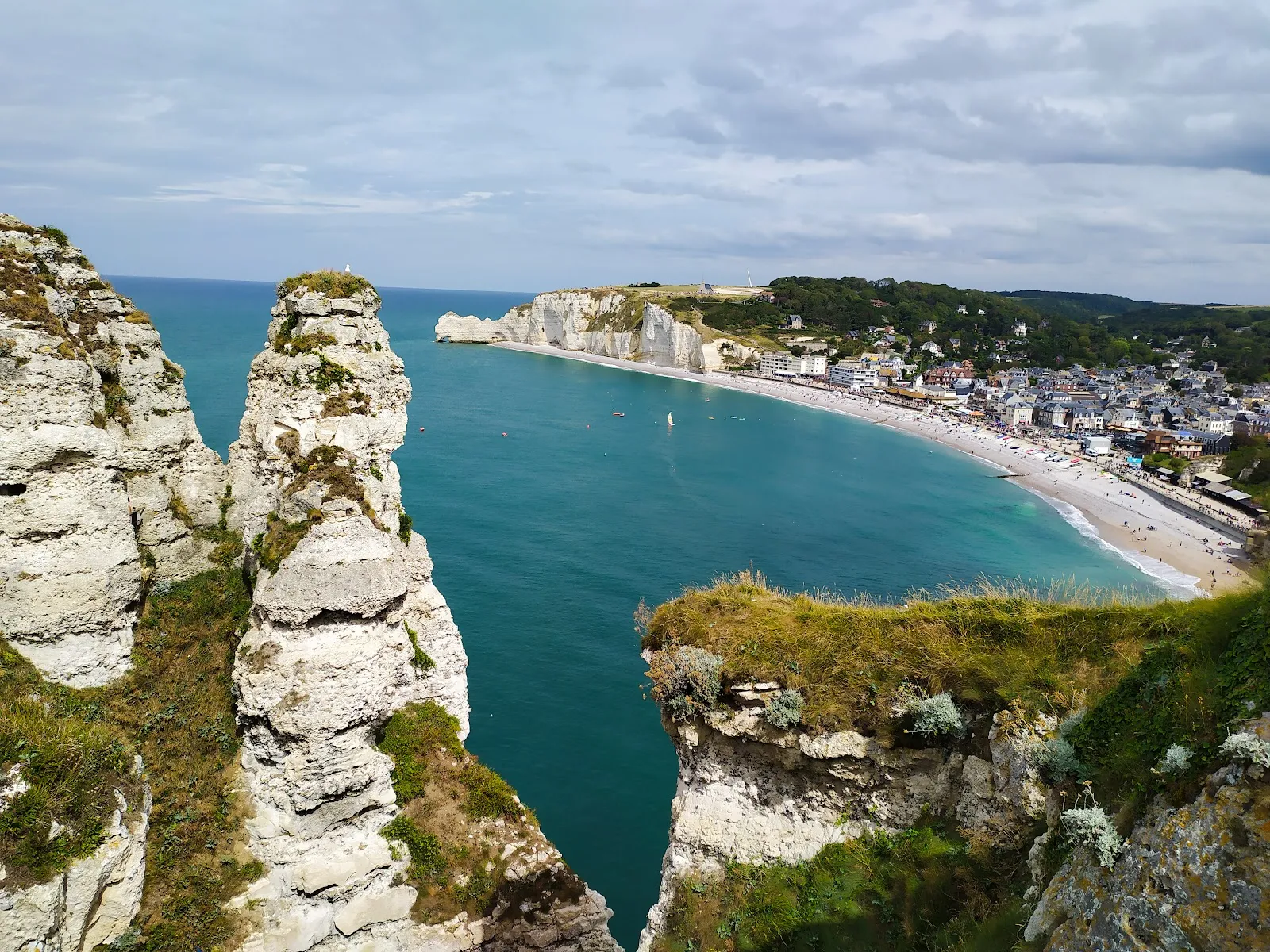
Étretat sits between two cliffs. Falaise d'Aval is the one on the left when you stand on the beach facing the sea, and its name means downstream cliff. Falaise d'Amont, the upstream cliff, lies on the other side of the beach. It is not quite as striking, but it offers its own panoramas and the Needle rock formation.
There are three arches in total, one on Falaise d'Amont and two on Falaise d'Aval. Claude Monet came to the town often and painted its cliffs and beach many times, and the Aval side appears in several of his best-known works.
If you park near the beach between the two cliffs, you can visit both on foot in a few hours.
The arch, the Aiguille and the legend
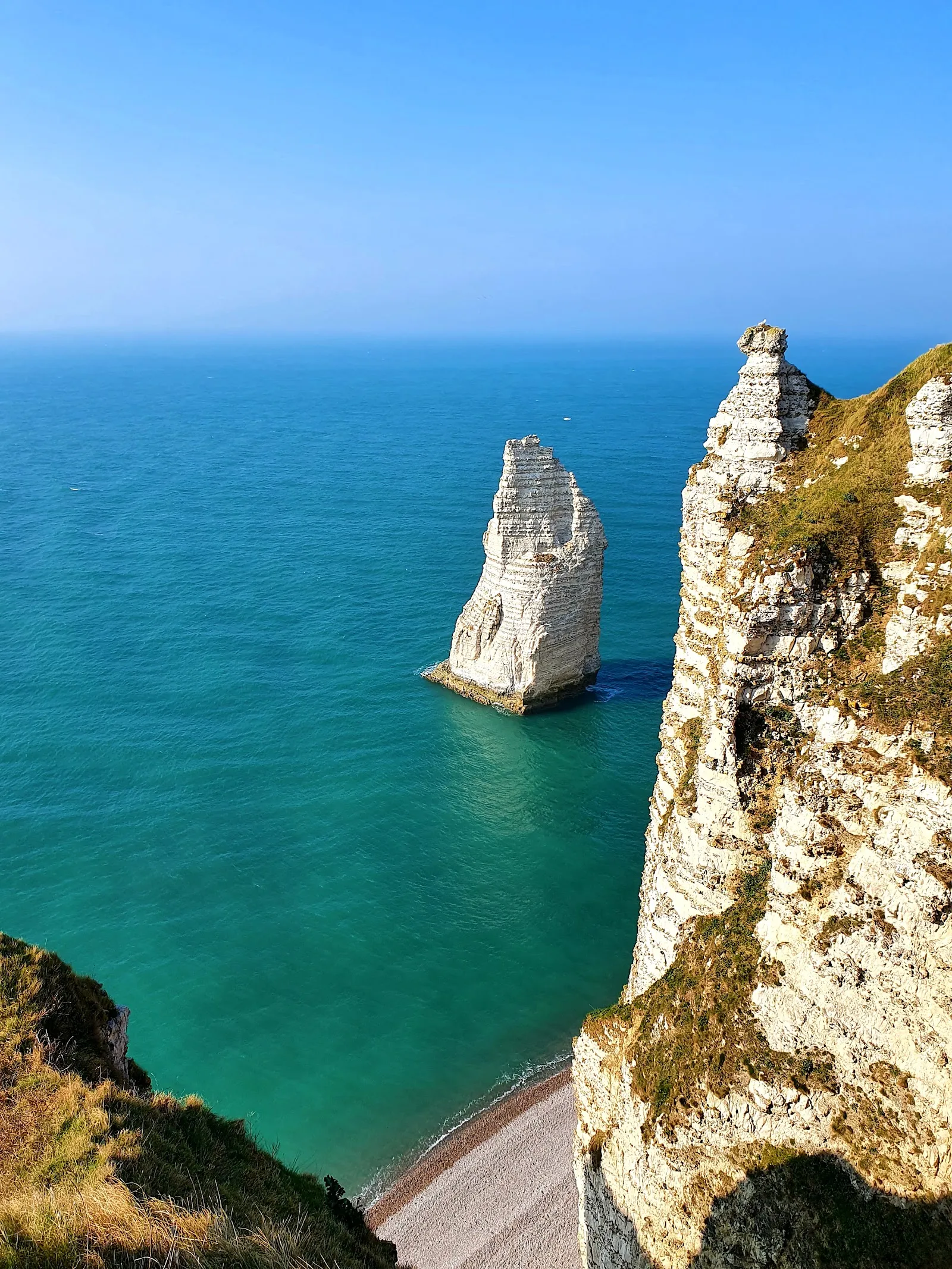
The main arch on this cliff is the Porte d'Aval. Monet painted it often, together with the pillar of the Pointe d'Aiguille on the west side. The French writer Guy de Maupassant, who met Monet frequently in 1885, compared the arch to an elephant dipping its trunk into the sea. Seen from the beach, the arch and the pillar appear to be joined.
Behind the arch stands the Aiguille, a needle of chalk rising from the sea. In French it is called the Aiguille Creuse, the hollow needle. Arsène Lupin's story of the same name, a work of fiction, used the rock as a hiding place for treasure, with a secret passage leading into it. The story makes a good tale to hear on the walk, but it is not a record of anything that happened here.
Reaching the top
The path up to Falaise d'Aval starts at the far end of the beach, where you can still see the remains of bunkers from the Atlantic Wall. The Germans built this defensive system to guard against an Allied invasion of mainland Europe from Great Britain.
The climb includes a set of about 180 stairs. The cliff edge here is crumbling, and the wind can be strong, so keep back from the edges. The walk has real elevation, so it suits people who are reasonably fit. Some unofficial paths avoid the steepest steps of the main route.
Walking from the town takes about ten minutes. A small road train also runs to the cliff.
What to expect at the top
From the top, the arch is in view across the water, and the sound of the waves and the calls of seagulls fill the air. Tall grass on the slopes bends in the wind, and wild flowers grow along the paths.
This side draws the most people because it shows the arch. Fences and roped-off areas keep visitors away from the edge, and the viewpoint is busy for much of the day. The other side of the beach gives a better view of the cliffs, but the arch cannot be seen from there.
Practical details
Parking in the town is hard to find, so arrive early or use one of the free or paid lots. The site has a wheelchair accessible entrance, and advance tickets are recommended.
The beach has cool, turquoise water and a sandy bottom. Few people swim here, and there are no umbrellas or beach bars.
At low tide, you can walk over the rocks at the foot of Falaise d'Aval and pass through the Trou à l'Homme, a tunnel that leads to Jambourg beach. Check the tide times before you go.
FAQ
How long do you need at Falaise d'Aval?
Walking up and around the cliff takes about an hour. If you visit both cliffs on foot, plan for a few hours.
Is the walk up to the cliff hard?
The route has real elevation and needs some physical preparation. Many people of different ages manage it, and unofficial paths avoid the steepest stairs.
Is Falaise d'Aval accessible for wheelchairs?
The site has a wheelchair accessible entrance. The main route to the top includes steep stairs.
Where should I park?
Parking in the town is difficult. Free and paid lots are available. Parking near the beach between the two cliffs makes it easy to visit both on foot.
Should I book tickets in advance?
Advance tickets are recommended for this site.
