Pitt Rivers Museum is Oxford’s museum of anthropology and world archaeology, reached through the Oxford University Museum of Natural History on Parks Road. More than half a million objects, photographs and manuscripts fill its dim, Victorian-style galleries. Instead of grouping objects by place or date, the displays bring together items with similar uses, from musical instruments and masks to tools and weapons. That layout lets you compare how people in different cultures approached similar needs. Look for drawers beneath some cases, where further objects are stored.
A collection arranged by use
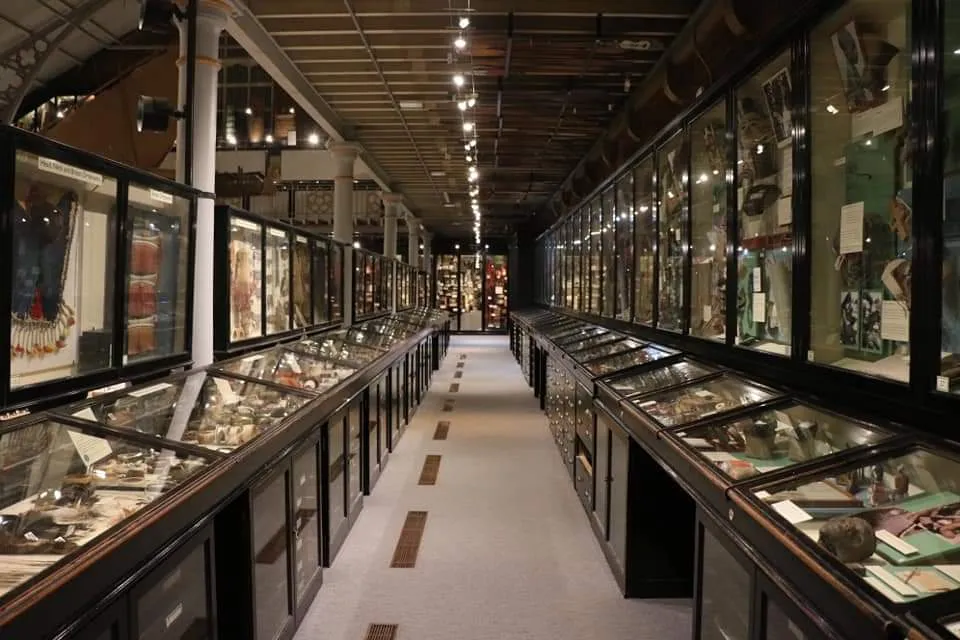
Pitt Rivers Museum cares for the University of Oxford’s anthropology and world archaeology collections. It began in 1884, when Augustus Pitt Rivers gave his collection to the university. His donation came with conditions: the university was to build a museum for it, appoint a lecturer to teach about the collection and preserve its display method.
That method shapes the visit. Objects are grouped by type or function, rather than by the culture they came from or the period in which they were made. Musical instruments, weapons, tools, textiles and jewellery appear together across different origins and eras. The arrangement invites comparisons: visitors can look at how different communities made objects for similar purposes. It also gives the galleries an unusual, densely packed character.
Cases, drawers and three floors
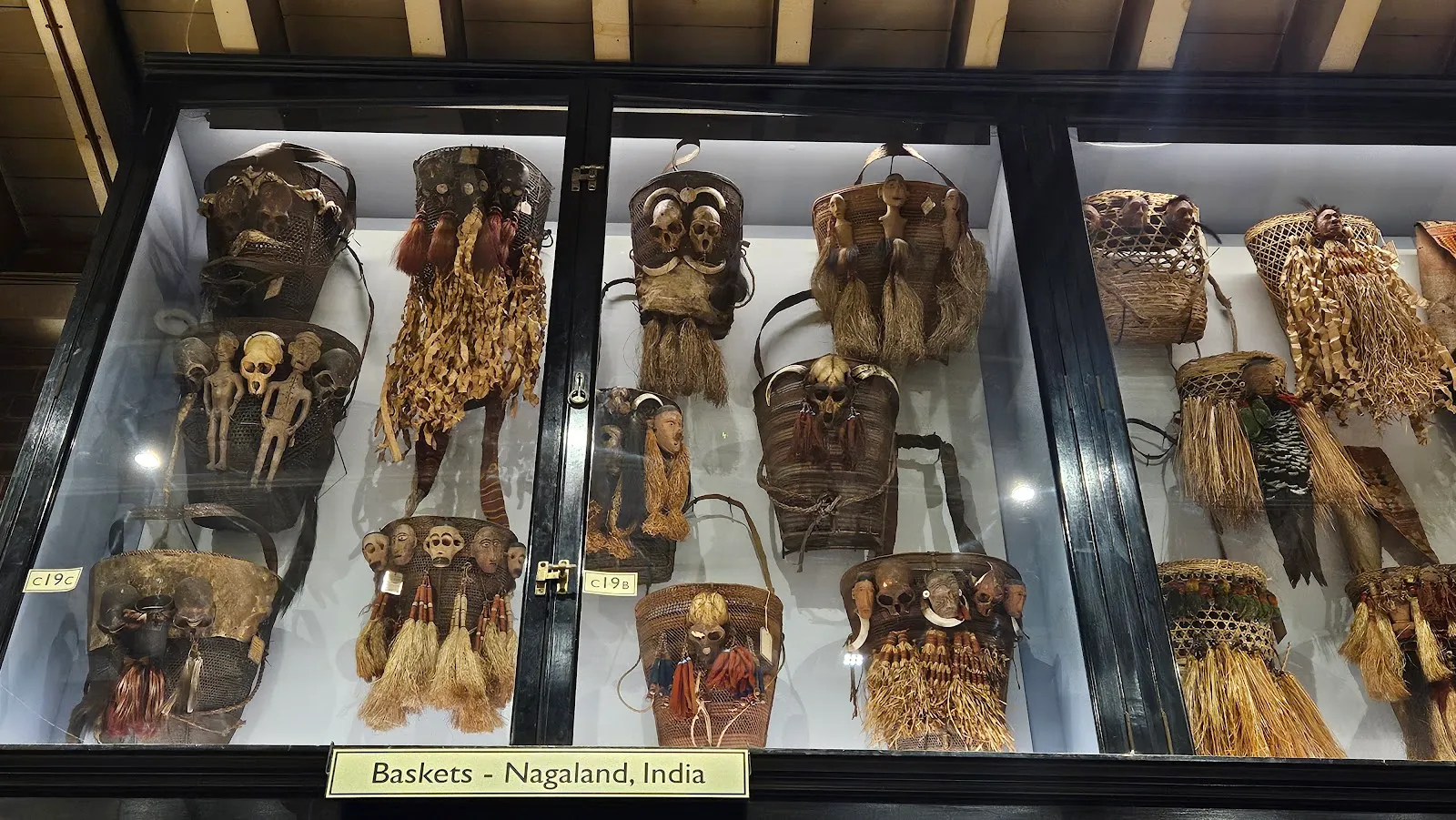
The museum’s collection has grown to more than half a million objects, photographs and manuscripts. Its cases hold items from across the world and across human history, including masks, toys, ritual objects and tools. Among the objects noted in the collections are a Tahitian mourner’s costume, Hawaiian feather cloaks and masks from Africa, Melanesia and North America. Musical instruments and weapons appear in groupings that let you trace variations across places and time.
The galleries extend across three floors, with balconies overlooking the central display space. Many cabinets have drawers beneath them that can be opened to reveal more objects. These are easy to overlook when the cases are already full, so take time to check below the displays as you move through the rooms. Handwritten labels and original Victorian display cases contribute to the museum’s period character; some labels can be difficult to read because of their position.
A museum with a colonial history
The collection’s history is part of what the museum asks visitors to consider. Objects gathered from around the world sit within the history of British colonial collecting, and the museum recognises that context. Its displays include objects with ritual significance as well as items made for trade or tourism. The grouping by function can make connections between objects visible, while the stories behind how they were collected raise questions about the circumstances of their arrival.
Pitt Rivers is also a teaching and research institution: its collections support work in anthropology and archaeology at the University of Oxford. Its galleries reward a slower visit, but trying to inspect every case can be overwhelming. Following one theme, such as musical instruments, masks or weapons, gives the displays a manageable shape and leaves room to notice the comparisons between objects.
FAQ
Is Pitt Rivers Museum free to enter?
Yes. Admission is free, and donations are appreciated.
How do you get into Pitt Rivers Museum?
Enter through the Oxford University Museum of Natural History. The Pitt Rivers Museum is accessed from inside that building.
How long should I spend at Pitt Rivers Museum?
Allow around two to four hours. The collection is extensive, so focusing on a few subjects can help you plan your visit.
Can you open drawers in the museum?
Some display cases have drawers beneath them that visitors can open to see additional objects.