
Jasper National Park covers more than 10,000 square kilometres of the Alberta Rockies, making it the largest park in the Canadian Rockies. The Icefields Parkway runs about 230 kilometres from Lake Louise to Jasper, past glaciers, waterfalls and turquoise lakes. Elk, bighorn sheep, moose and bears are often seen from the road. The park also has a wide network of trails, from short walks to multi-day backpacking routes, and Maligne Canyon and Maligne Lake are among its best-known stops.
Land and history before the park
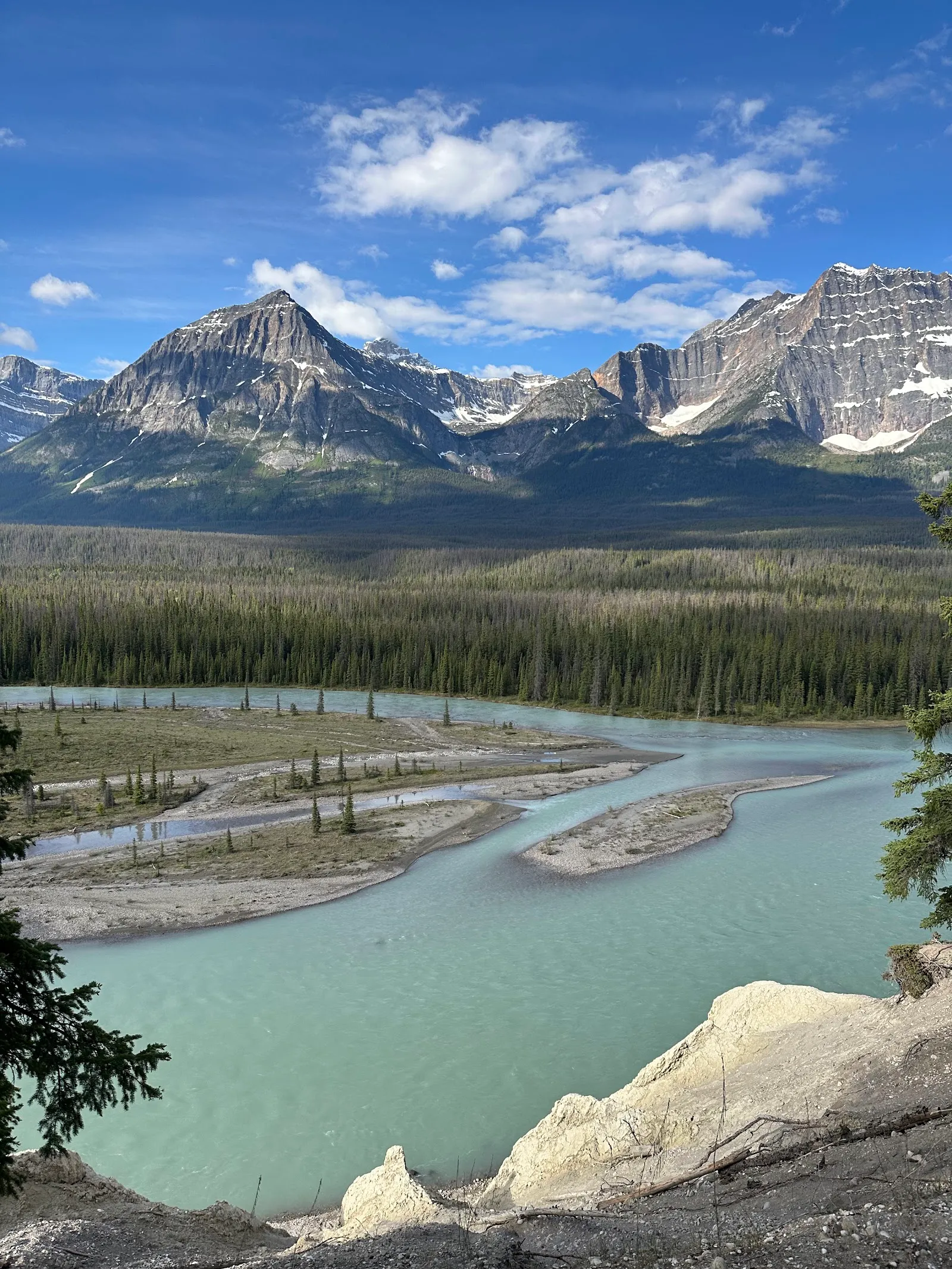
Before 1907, there was no park boundary where Jasper National Park now sits. Indigenous peoples lived on this land long before that, using and caring for its natural resources.
Some groups spent almost the whole year in the Rocky Mountains. Others came seasonally to gather resources, visit ceremonial sites, meet other groups, or cross the mountain passes.
The rock here was laid down as sediment, in layers more than a thousand metres deep, while much of the land lay under sea water. Between about 80 and 50 million years ago, a mountain-building process called the Laramide orogeny pushed these rocks upward over roughly 30 million years.
The Icefields Parkway
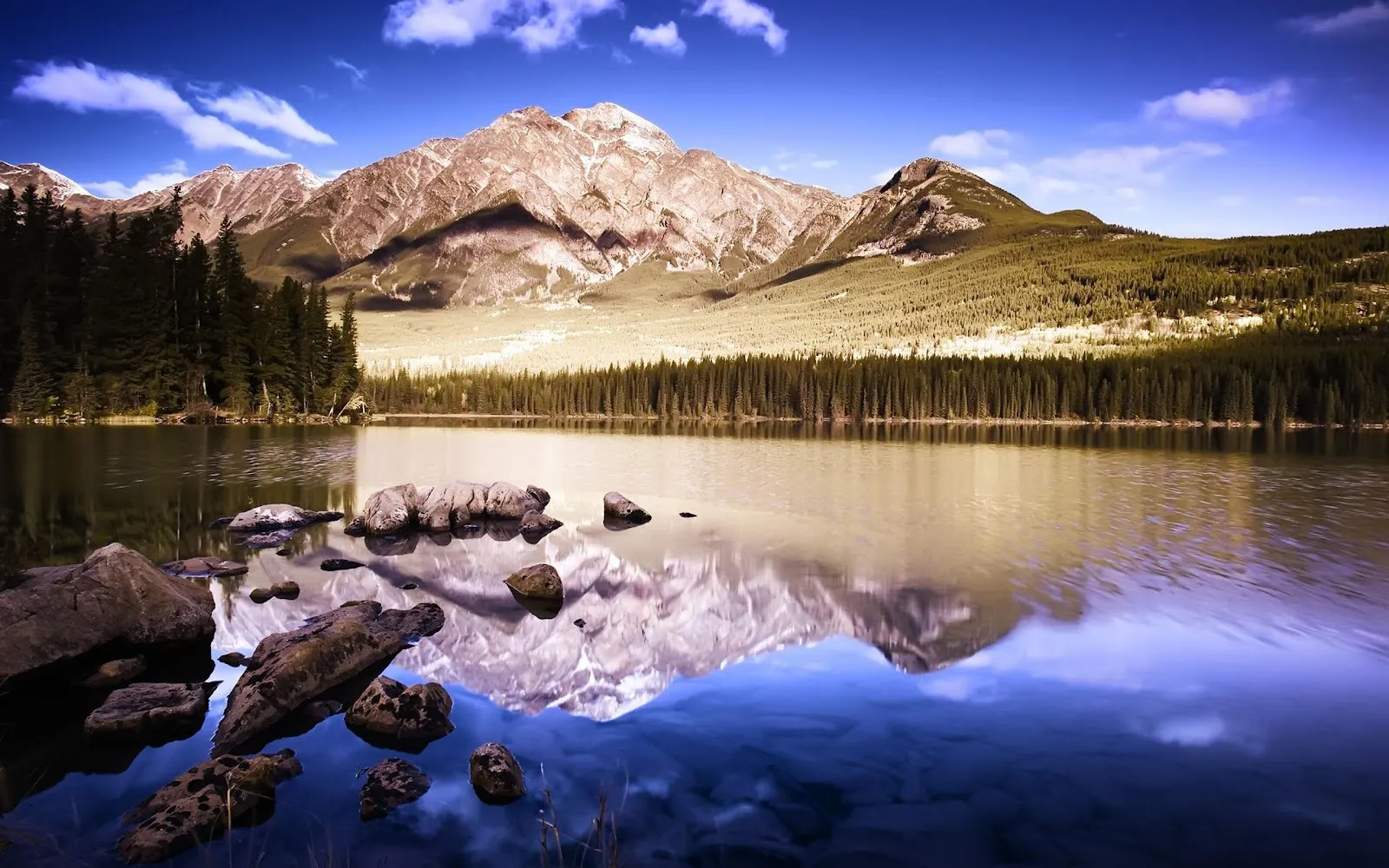
The Icefields Parkway follows the Continental Divide for about 230 kilometres from Lake Louise to Jasper. It passes more than 100 glaciers.
The Peyto Lake viewpoint sits near the highest point of the road, and it is worth the stop for the view over the lake's turquoise water. Mistaya Canyon and Bow Lake are other common stops.
The Columbia Icefield, the largest ice field in the Rocky Mountains, can be explored by tour in a large all-terrain vehicle or seen by helicopter. Nearby, the Athabasca Glacier is said to be the most visited glacier in North America, and a short hike leads to its toe. Some visitors also walk the glass-floored Glacier Skywalk.
Maligne Canyon and Maligne Lake
Maligne Canyon is about 1.2 kilometres long. The Maligne River carved it into limestone, and its walls rise more than 50 metres above the water. In places the gorge is only about 2 metres wide.
The top of the canyon is often its narrowest point. Some have suggested the canyon was once a deep cave that glacial erosion later exposed. Six footbridges cross the gorge on an interpretive trail. In winter the river freezes into ice formations, and ice climbers come to the canyon.
Maligne Lake lies about 40 minutes down the road from the canyon. In summer, a half-day canoe trip or boat cruise takes you to Spirit Island, one of the most photographed spots in Canada, set against the emerald water of the lake.
Wildlife in the park
Elk, bighorn sheep, moose, bears, wolves, mountain goats and caribou live in the park. Elk often graze in fields and near the road. Black bears have been seen in town, and brown and black bears have been seen along roadsides, sometimes with cubs.
Sunrise and dusk give the best chances, especially near Jasper and Maligne Lake. Keep a safe distance and do not drive up close to animals. If animals come near the car, stay inside it.
Leashed dogs are welcome in the park, and they should be kept well away from wildlife.
Hiking, camping and rafting
Snow lingers at higher elevations until June, so some trails and roads open later in the year. July and August are the most popular months for hiking.
The Skyline Trail is a backpacking route of about 44 kilometres, and 27 of those kilometres are above the treeline. The Tonquin Valley trail is about 42 kilometres and takes 2 to 3 days. From Miette Hot Springs, the trail follows a paved path and boardwalk before it climbs toward Utopia Pass.
The park has backcountry camping and more than 1,770 drive-in campsites, many of which cannot be reserved. Wapiti campsites are a good option for a quieter stay.
The Athabasca River, from Athabasca Falls, is a gentle rafting river from May to October. The Sunwapta River has faster water and good wildlife views. The Maligne River has a 1.6 kilometre stretch of rapids and is used for trips from July to September.
Night skies
Jasper is a dark sky reserve, where light pollution is minimal. The clear, dark sky makes it a good place for stargazing and for watching the northern lights.
Plan your evening around the weather and the moon, and give your eyes time to adjust to the dark before you look up.
FAQ
How long do you need in Jasper National Park?
Plan at least a few days to see the main sights. Allow at least half a day for the Icefields Parkway drive alone.
Can I bring a dog?
Leashed dogs are welcome in the park. Keep them at a safe distance from wildlife.
Do I need a car?
A car makes it much easier to reach trailheads and viewpoints. Arranged tours are an option, but they are not cheap.
Is the park wheelchair accessible?
The park entrance and parking lot are listed as wheelchair accessible, and public restrooms are available.
Can you see the northern lights in Jasper?
Jasper is a dark sky reserve with very little light pollution, which makes it good for viewing the night sky and the northern lights.


