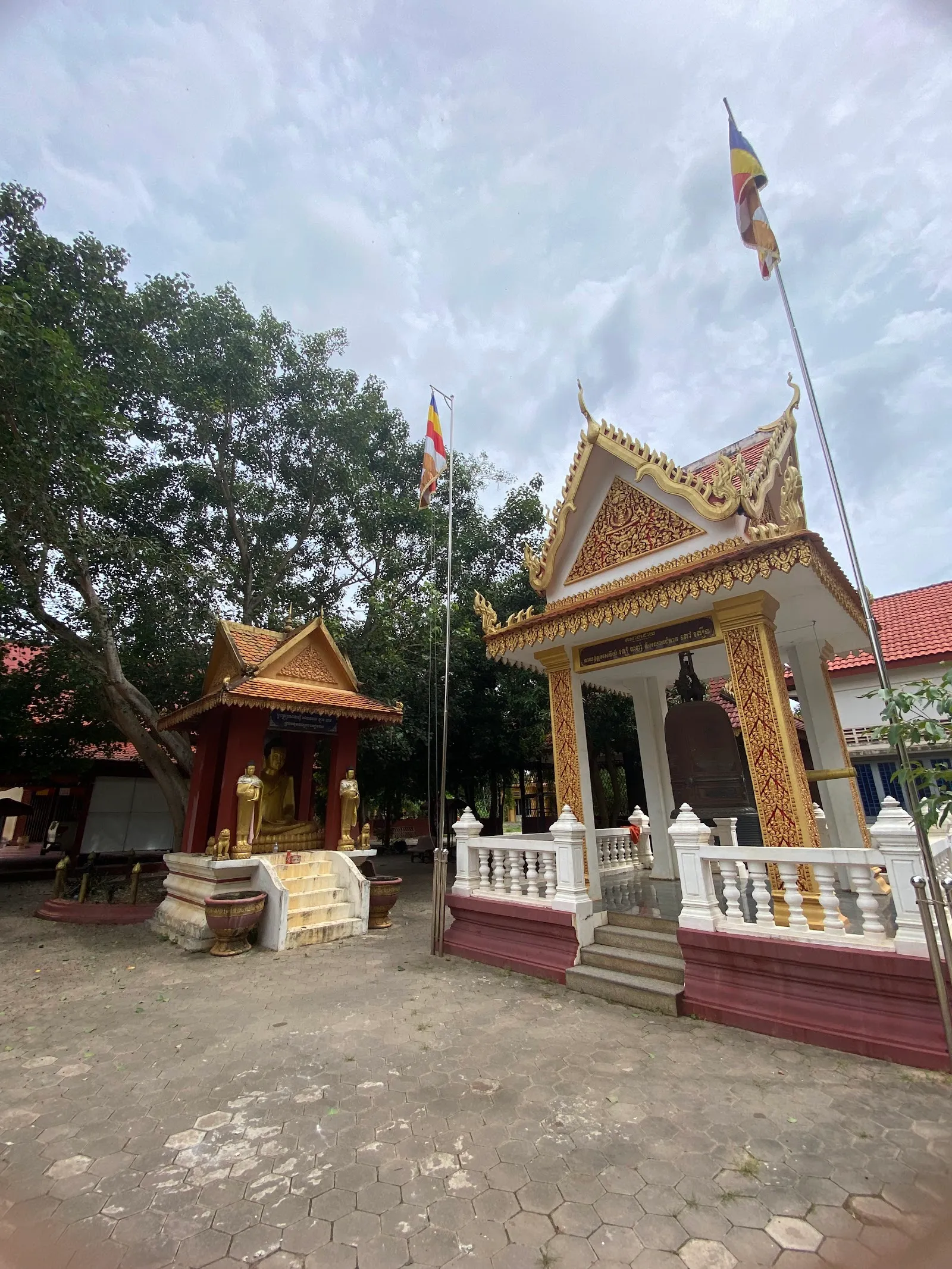
Bayon Temple stands at the centre of Angkor Thom, the ancient city near Siem Reap. Built under King Jayavarman VII in the late 12th or early 13th century, it is known for towers crowned with serene stone faces and galleries filled with carved scenes. Look for the faces from the upper terrace, then follow the reliefs showing royal campaigns, market life, processions and dancers. The temple’s compact layout draws you through courtyards, galleries and narrow passages, so allow time to explore at an unhurried pace.
A temple at the centre of Angkor Thom
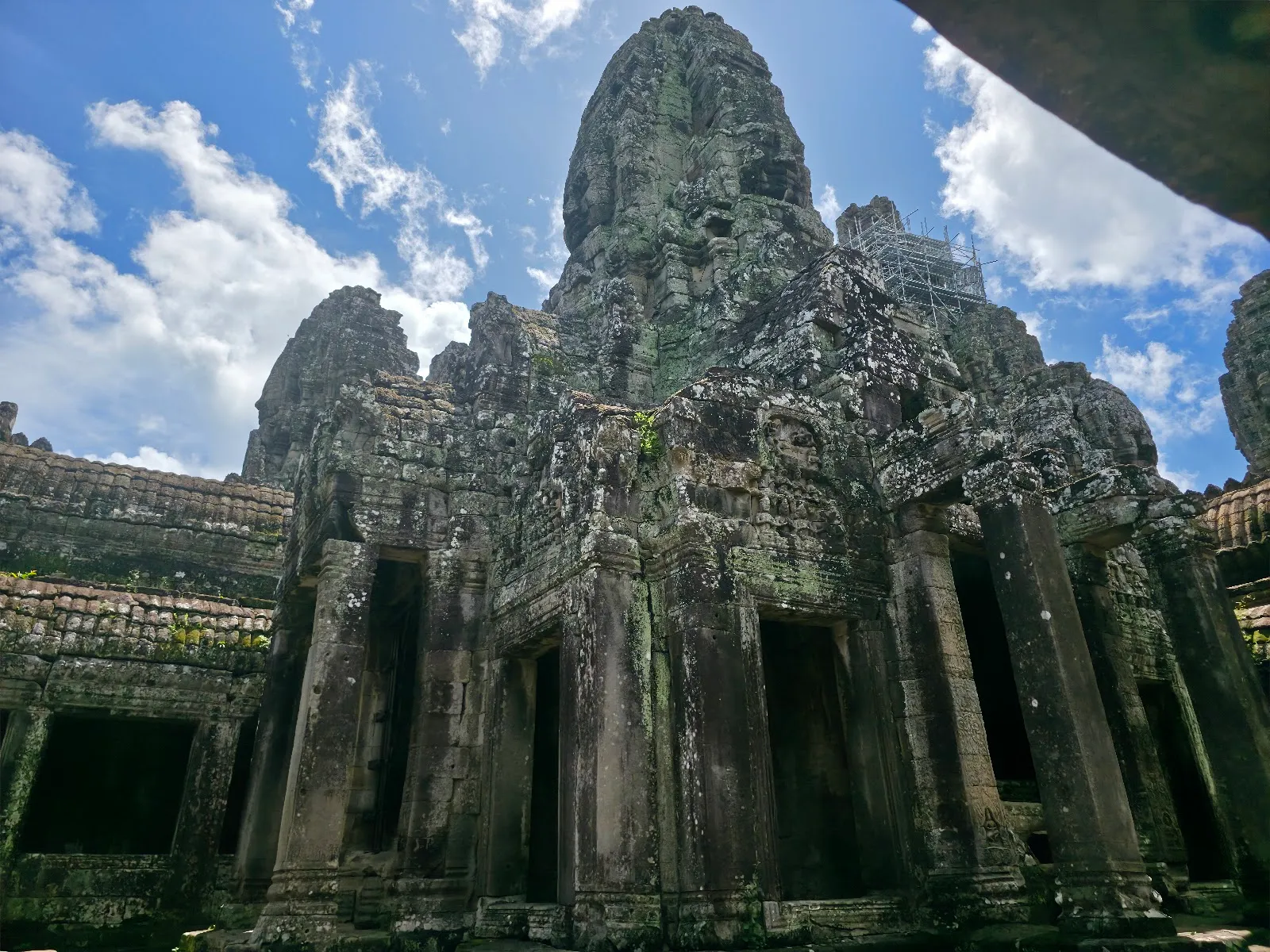
Bayon occupies the centre of Angkor Thom, the walled city built by King Jayavarman VII. It was constructed as a Buddhist state temple in the late 12th or early 13th century. Later rulers changed parts of the complex as religious affiliations shifted, leaving Buddhist and Hindu imagery side by side.
The temple’s plan grew through successive building work. Galleries and the upper sanctuary were added and revised, producing a closely packed arrangement of towers, corridors and courtyards. As you move inward, the spaces become more compressed, with narrow passages between stone structures.
The faces above the upper terrace
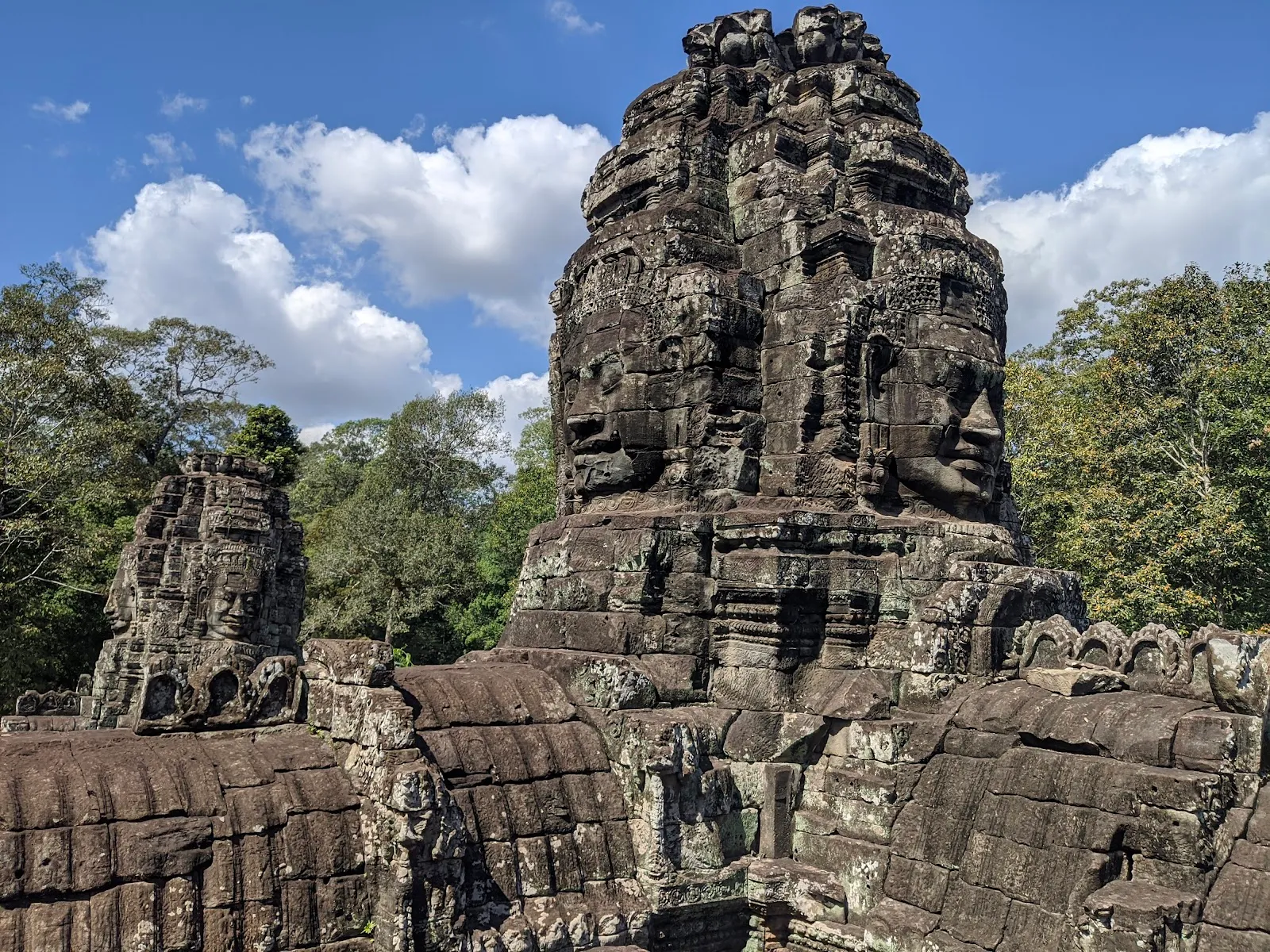
Bayon is recognised for the large stone faces set high on its towers. Around 200 remain, looking out in different directions. Their identity is still debated: they are often associated with Avalokiteshvara, the bodhisattva of compassion, and their features have also been linked to Jayavarman VII. The faces’ calm expressions are visible from different points around the temple, so look up as you move between the towers.
The upper terrace brings the faces close and reveals how tightly the towers overlap. Some routes pass through dim, narrow corridors. Take care as you walk and give yourself time to look at the stonework rather than moving quickly from one viewpoint to the next.
Reading the gallery reliefs
The galleries hold long stretches of carved scenes. Their subjects include royal campaigns and battles, as well as markets, processions, dancers and other aspects of everyday life. Together, the reliefs offer details of Khmer life and courtly activity that are distinct from the temple’s imposing towers.
The scenes also include myths and religious imagery. Look closely along the gallery walls: figures and events unfold across the stone rather than appearing as isolated carvings. A guide can help explain the history and symbolism of particular panels, especially where the imagery is difficult to interpret.
Religious changes and restoration
Bayon’s history includes changes made after Jayavarman VII’s reign. Buddhist images were removed or recut during a later Hindu reaction, traditionally associated with Jayavarman VIII. The exact responsibility and sequence of these changes remain disputed. Altered Buddhist figures can be seen alongside Hindu images and scenes whose meaning or date is uncertain.
Restoration work continues at the temple and can limit access to some areas. The routes available may therefore differ from one visit to another. Check the official temple information before setting out, and follow any access guidance on site.
FAQ
Where is Bayon Temple?
It is at the centre of Angkor Thom, near Siem Reap, Cambodia.
What is Bayon Temple known for?
Its towers carry large stone faces, and its gallery walls show carved scenes of royal campaigns, markets, processions and daily life.
When is a good time to visit Bayon Temple?
The morning, between 8 and 11, is suggested for softer light and fewer crowds.
How much time should I allow for Bayon Temple?
Allow about half a day to explore the temple at an unhurried pace.