Planifica un viaje
Idioma: Español
Planificador de viajesPlanifica tu viaje en un mapa

Destinos principales

EnglishDeutschFrançaisEspañolPortuguêsPortuguês (BR)Italiano
Aviso de viaje · PakistánAlgunos gobiernos desaconsejan todo viaje a Pakistán salvo el esencial.Los consejos dependen de tu pasaporte. Lee los de tu propio gobierno antes de reservar.Recomendaciones oficiales
Zonas con advertencias
  • provincia de Baluchistán · evitar todo viaje · Canadá, Alemania, Francia, Nueva Zelanda, Reino Unido, Estados Unidos
  • Frontera con India, distancia no especificada (incl. LoC) · evitar todo viaje · Francia, Nueva Zelanda
  • Carretera del Karakórum, de Mansehra a Chilas · evitar todo viaje · Canadá, Nueva Zelanda, Reino Unido
  • provincia de Jyber Pastunjwa · evitar todo viaje · Canadá, Francia, Nueva Zelanda, Estados Unidos
  • Cachemira administrada por Pakistán (Azad Jammu y Cachemira) · evitar todo viaje · Canadá, Alemania, Francia, Italia, Nueva Zelanda, Reino Unido
  • Región fronteriza con Afganistán, distancia no especificada · evitar viajes no esenciales · Italia, Nueva Zelanda
  • Antiguas áreas tribales de la FATA · evitar viajes no esenciales · Francia, Italia

También señalada por un gobierno: Franja de 10 km a lo largo de la frontera con China (Canadá), Franja de 10 km a lo largo de la frontera con India (Canadá), Franja de 10 km a lo largo de la frontera con Irán (Canadá), Franja de 10 km a lo largo de la Línea de Control (Canadá), Franja de 10 millas a lo largo de la frontera con Afganistán (Reino Unido), Franja de 10 millas a lo largo de la Línea de Control (Reino Unido), Franja de 50 km a lo largo de la frontera con Afganistán (Canadá), Franja de 50 km a lo largo de la frontera con Afganistán en Gilgit-Baltistán (Nueva Zelanda), Bajaur (Reino Unido), Bannu (Reino Unido), Buner (Reino Unido), Charsadda (Reino Unido), Dera Ismail Khan (Reino Unido), Hangu (Reino Unido), Inmediaciones de la Línea de Control (Estados Unidos), Karak (Reino Unido), distrito de Khyber (Reino Unido), Kohat (Reino Unido), Kurram (Reino Unido), Lakki Marwat (Reino Unido), Dir Inferior (Reino Unido), Waziristán del Sur Inferior (Reino Unido), Mohmand (Reino Unido), Carretera N45, desde el norte de la circunvalación de Mardan hasta las afueras de Chitral, incl. valle Kalash (Reino Unido), Waziristán del Norte (Reino Unido), Orakzai (Reino Unido), Peshawar (Reino Unido), Provincia de Punjab, excepto la zona Faisalabad-Lahore-Islamabad (Francia), Swat (Reino Unido), Tank (Reino Unido), Dir Superior (Reino Unido), Waziristán del Sur Superior (Reino Unido), Franja de 20 km a lo largo de la frontera india, incl. LoC (Alemania), Franja de 5 millas a lo largo de la frontera india (Reino Unido), Distrito de Chitral (Canadá), Dera Ghazi Khan (Reino Unido), Zona Faisalabad-Lahore-Islamabad (Francia), Karachi (Canadá), Ruta terrestre hacia y desde Irán y Afganistán (Alemania), Malakand (Reino Unido), Mardan (Reino Unido), Nowshera (Reino Unido), Shangla (Reino Unido), Provincia de Sindh al norte de Nawabshah, incluida (Reino Unido), Swabi (Reino Unido), Áreas tribales de Baluchistán (Italia)

GobiernoConsejosActualizadoLeer las recomendaciones
Reino Unido (FCDO)No advice against the whole country (regional advisories)–Leer las recomendaciones
Estados Unidos (Departamento de Estado)Reconsider Travel16 jun 2026Leer las recomendaciones
Canadá (Asuntos Globales)Exercise a high degree of caution (regional advisories)–Leer las recomendaciones
Alemania (Auswärtiges Amt)No advice against the whole country; partial warnings for named regions (regional advisories)13 oct 2026Leer las recomendaciones
Nueva Zelanda (SafeTravel)Avoid non-essential travel–Leer las recomendaciones
Francia (Ministerio de Europa y Asuntos Exteriores)Le reste du territoire est déconseillé sauf raison impérative–Leer las recomendaciones

Revisado a diario según los consejos publicados por los gobiernos; última revisión 3 nov 2026.RoamLedger resume las recomendaciones oficiales; no son consejos de ningún gobierno.

Shah Faisal Mosque
Mezquita

Shah Faisal Mosque Islamabad

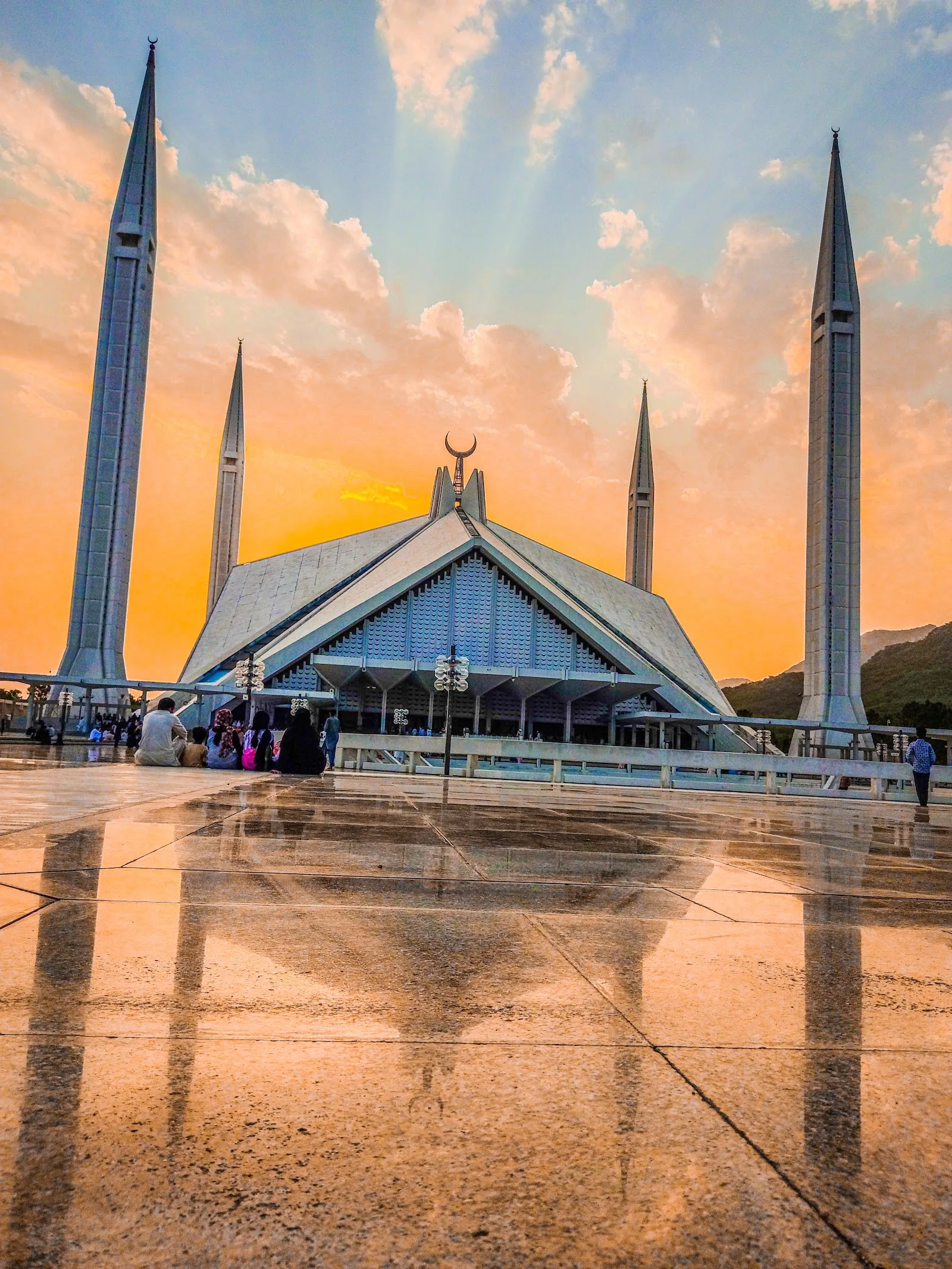
Faisal Mosque is the national mosque of Pakistan, standing at the foot of the Margalla Hills on Shah Faisal Avenue in Islamabad.

Faisal Mosque is the national mosque of Pakistan, standing at the foot of the Margalla Hills on Shah Faisal Avenue in Islamabad. The Turkish architect Vedat Dalokay gave it a dome-less, eight-sided concrete form modelled on a Bedouin tent, flanked by four 90-metre minarets. Saudi Arabia funded the building, and it is named after King Faisal bin Abdul Aziz. The white structure looks best against the hills at sunrise or sunset, and again after dark when it is lit. Visitors dress modestly and leave bags outside.

A tent in concrete, 1976 to 1986
Shah Faisal Mosque Islamabad

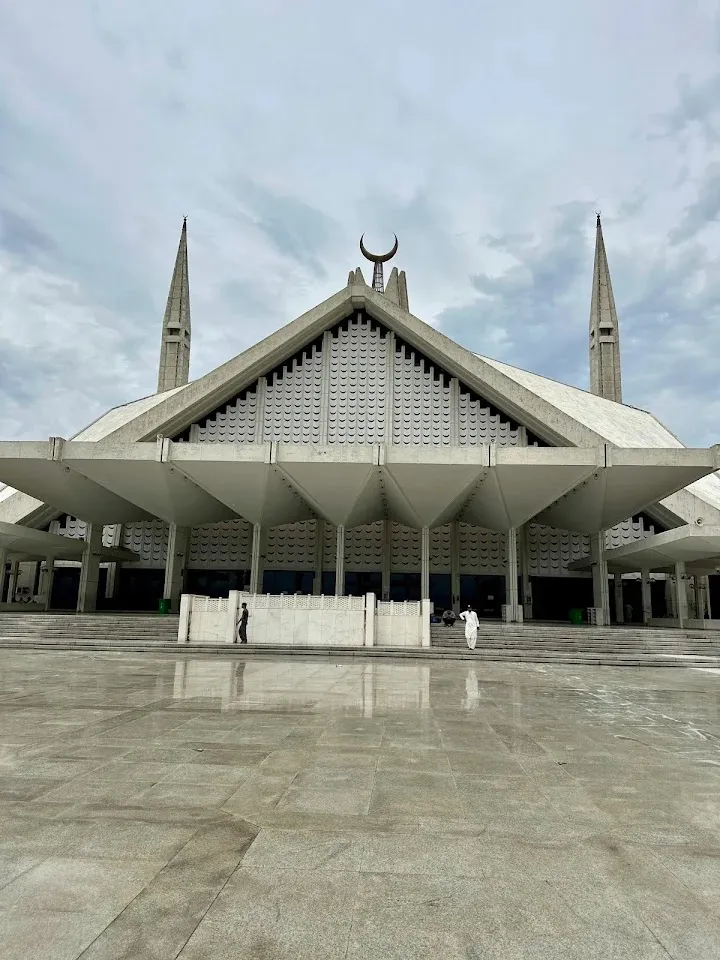
Faisal Mosque was designed by the Turkish architect Vedat Dalokay. Instead of the usual dome, he drew an eight-sided concrete structure inspired by a Bedouin tent. Four slender minarets, each 90 metres (295 feet) tall, stand around it.

The project was largely paid for by a grant from Saudi Arabia, and the mosque carries the name of King Faisal bin Abdul Aziz. Construction began in 1976 and finished in 1986. For a few years from the late 1980s into the early 1990s it was the largest mosque in the world. It remains the largest in Pakistan and is the country's national mosque.

Inside and around the prayer halls
Shah Faisal Mosque Islamabad

The interior has chandeliers and calligraphy, and tile work adds detail to the modern lines. The prayer halls are large and quiet, and the acoustics carry well.

The grounds include porticoes and wide courtyards, which is where most visitors spend their time. Washrooms and a wudu area are on site, and there is a small library and museum. The entrance, restrooms and parking are wheelchair accessible, and parking is free.

The setting at the Margalla Hills

The mosque sits at the foothills of the Margalla Hills, and the green slope behind the white walls is the view most people photograph. At sunset the sky behind the building turns purple, and floodlights then pick out the main structure. Early morning is quieter and the light is softer.

The Pakistan Monument and the Daman-e-Koh viewpoint are also on the standard Islamabad route, so the mosque combines easily with them in a single day.

Before you go

Visitors come from across Pakistan and abroad, and the mosque is an active place of worship as well as a landmark. Expect more people during Friday prayers and on public holidays; a regular weekday morning is calmer.

Access to the interior can depend on prayer times and local conditions, and security closures have happened. Check the situation on the day. Staff and volunteers on site can answer questions about where visitors may go.

Preguntas frecuentes

Can non-Muslims visit Faisal Mosque?

Non-Muslim visitors can enter the courtyard if they are properly dressed. Access to other areas can depend on prayer times, so ask staff on site.

Are bags allowed inside Faisal Mosque?

No. Bags are not allowed inside the premises, for men or women, so bring only essentials.

What is the best time to visit Faisal Mosque?

Early morning or about an hour before sunset gives the best light. The building is also lit at night. Fridays and holidays are the busiest days.

Who designed Faisal Mosque and when was it built?

The Turkish architect Vedat Dalokay designed it. Construction began in 1976 and was completed in 1986.

Is Faisal Mosque wheelchair accessible?

Yes. The entrance, restroom and parking lot are wheelchair accessible, and parking is free.

Más lugares imprescindibles en Pakistán

Explorar todo