The Met Cloisters, a branch of the Metropolitan Museum of Art, is devoted to medieval European art, architecture, and gardens in Fort Tryon Park in Upper Manhattan. Stone archways, stained glass, quiet courtyards, and views over the Hudson River give the galleries a distinctive setting. Look for the Unicorn Tapestries, medieval sculpture, and works from the Romanesque and Gothic periods, then take time to walk through the gardens. It is a smaller, more intimate museum than the Met on Fifth Avenue, and the hilltop approach takes some effort.
A museum built around medieval architecture
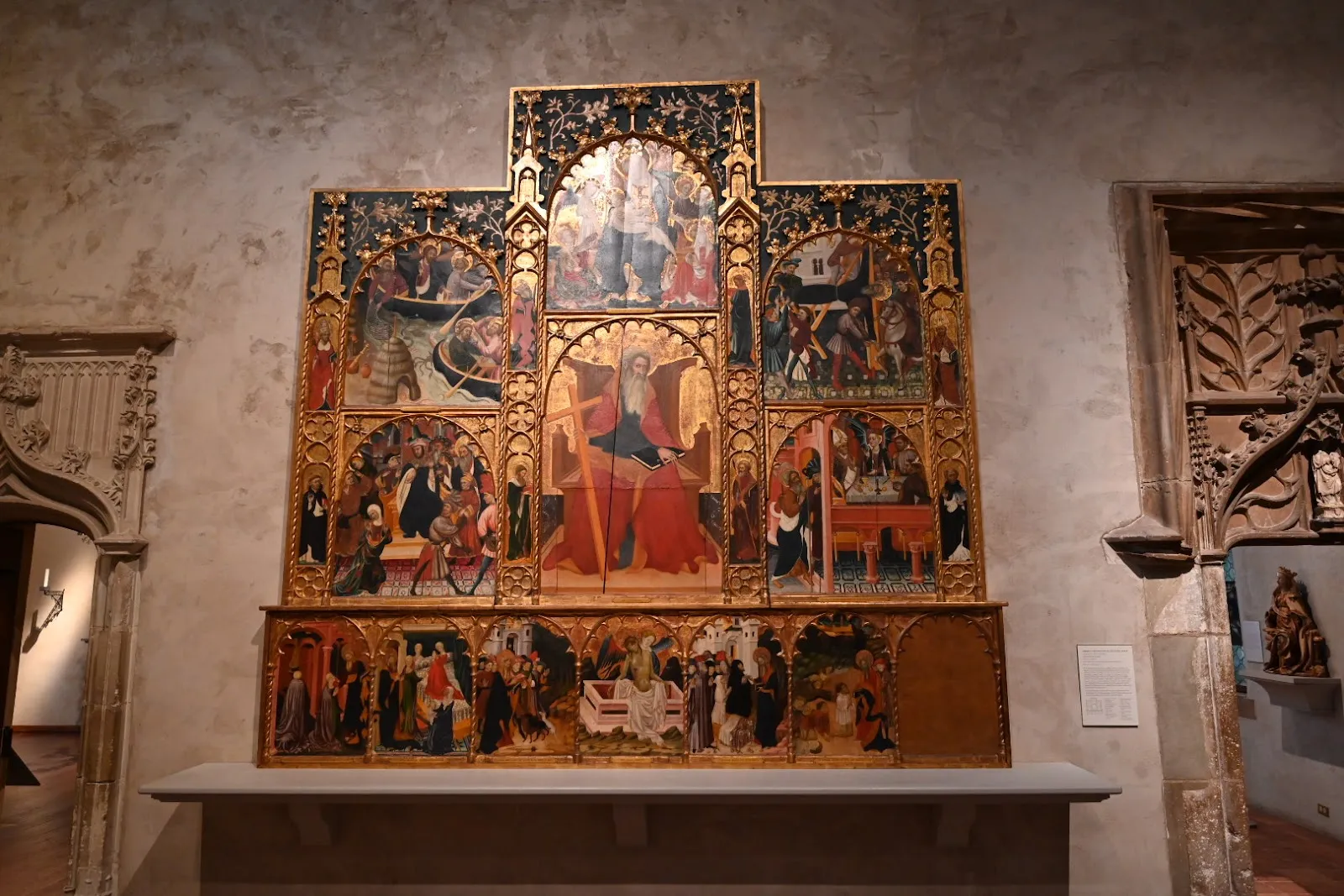
The Met Cloisters is the Metropolitan Museum of Art’s branch for medieval European art, architecture, and gardens. It opened in 1938 in Fort Tryon Park, on a wooded hill in Upper Manhattan. Its architecture draws on medieval buildings, including elements from European cloisters, and the galleries are arranged around courtyards and covered walks.
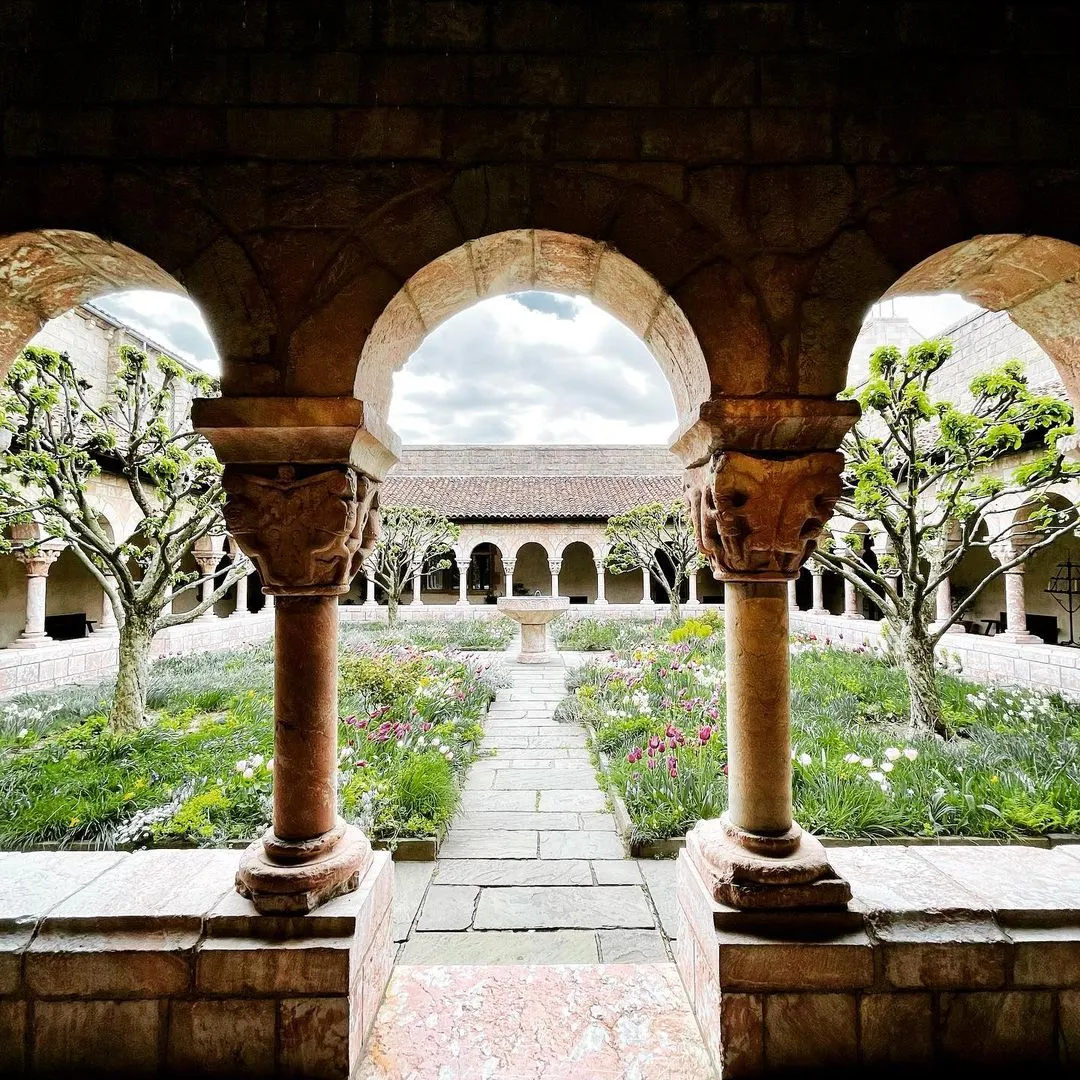
The Romanesque and Gothic character is part of the visit, not just a backdrop for the collection. Stonework, archways, stained glass, and enclosed gardens shape the route through the museum. The setting feels markedly different from the Met’s main building on Fifth Avenue, with a smaller collection and a quieter pace.
What to look for inside
The collection brings together medieval European works, including sculpture, paintings, stained glass, illuminated manuscripts, tapestries, and religious objects. The Unicorn Tapestries are among the museum’s best-known works. Their scenes reward a slow look at the woven details; one depicts the hunt of the unicorn, including its capture.
The museum also presents changing exhibitions. Past exhibitions have explored love, sex, and gender in the Middle Ages, while an Ofrenda installation honored children around the world and el Día de Muertos. Check the museum’s site before visiting if a particular exhibition or installation is central to your plans.
Courtyards, gardens, and the park
The gardens extend the medieval theme outdoors, with planting inspired by herbs and flowers used for culinary, medicinal, and textile purposes. Courtyards and cloister walks offer places to pause between galleries, and some look toward the Hudson River. In spring, flowers bring added color to the gardens.
Fort Tryon Park is part of the outing. Walking paths and open areas surround the museum, with river views from the hilltop. If you want a longer visit, leave time for a stroll through the park before or after the galleries. Benches and grassy areas in the park can also make a quieter place to take a break.
Planning your visit
The museum is at 99 Margaret Corbin Drive in Fort Tryon Park. Reaching it involves a walk uphill through the park, so allow for the approach as well as time inside. One visitor account describes taking the A train to 190th Street and transferring to the M4 bus; check current transit directions before setting out.
The building’s historic layout includes narrow stairs and dimly lit spaces. These can make parts of the visit difficult for people with mobility or sight impairments. The museum lists a wheelchair-accessible entrance, restrooms, seating, parking, and assistive listening options, but the historic setting may still shape how easily you can move through every area. The museum recommends getting tickets in advance. New York residents with ID can pay what they wish; check the official site for current admission information and ticket conditions.
Preguntas frecuentes
What is The Met Cloisters known for?
It is the Metropolitan Museum of Art’s branch devoted to medieval European art, architecture, and gardens. The Unicorn Tapestries are among its best-known works.
How long do you need at The Met Cloisters?
Allow about 2 to 3 hours for a relaxed visit to the galleries and gardens.
Is The Met Cloisters accessible?
The museum lists an accessible entrance, restrooms, seating, parking, and assistive listening options. Its historic layout includes narrow stairs and dimly lit areas that may be challenging for some visitors.
Can New York residents pay what they wish?
New York residents with ID can pay what they wish for admission. Check the museum’s website for current ticket details.