Planifica un viaje
Idioma: Español
Planificador de viajesPlanifica tu viaje en un mapa

Destinos principales

EnglishDeutschFrançaisEspañolPortuguêsPortuguês (BR)Italiano
Aviso de viaje · TailandiaAlgunos gobiernos desaconsejan viajar a determinadas zonas de Tailandia.Las advertencias cubren únicamente estas zonas: Franja de 50 km a lo largo de la frontera con Camboya, Narathiwat, Pattani, Sur de Songkhla (distritos de Chana, Na Thawi, Thepha y Saba Yoi), Zonas fronterizas con Camboya (distancia no especificada), Yala, Franja de 20 km a lo largo de la frontera con Camboya.Los consejos dependen de tu pasaporte. Lee los de tu propio gobierno antes de reservar.Recomendaciones oficiales
Zonas con advertencias
  • Franja de 50 km a lo largo de la frontera con Camboya · evitar todo viaje · Canadá, Francia, Nueva Zelanda
  • Narathiwat · evitar todo viaje · Canadá, Alemania, España, Francia, Irlanda, Italia, Nueva Zelanda, Reino Unido
  • Pattani · evitar todo viaje · Canadá, Alemania, España, Francia, Irlanda, Italia, Nueva Zelanda, Reino Unido
  • Sur de Songkhla (distritos de Chana, Na Thawi, Thepha y Saba Yoi) · evitar todo viaje · Canadá, Alemania, Francia, Irlanda, Italia, Nueva Zelanda, Reino Unido
  • Zonas fronterizas con Camboya (distancia no especificada) · evitar todo viaje · España, Irlanda, Italia
  • Yala · evitar todo viaje · Canadá, Alemania, España, Francia, Irlanda, Italia, Nueva Zelanda, Reino Unido
  • Franja de 20 km a lo largo de la frontera con Camboya · evitar viajes no esenciales · Alemania, Reino Unido

También señalada por un gobierno: Zonas fronterizas de Buriram (España), Al este de las carreteras 408 y 4113, incluido Sakom (Canadá), Ciudad de Hat Yai (Canadá), Zonas fronterizas de Sisaket (España), Zonas fronterizas de Surin (España), Frontera con Myanmar (excepto Mae Sot) (Francia), Zonas fronterizas de Ubon Ratchathani (España), Línea ferroviaria Hat Yai–Padang Besar (Reino Unido), Frontera con Myanmar: provincias de Mae Hong Son y Tak (Italia), Frontera con Myanmar: provincias de Tak y Chiang Mai (España), Phatthalung (Francia), Zona del templo de Preah Vihear (Sisaket) (Italia), Satun (Francia)

GobiernoConsejosActualizadoLeer las recomendaciones
Reino Unido (FCDO)No advice against the whole country (regional advisories)–Leer las recomendaciones
Estados Unidos (Departamento de Estado)Exercise normal precautions7 jul 2026Leer las recomendaciones
Canadá (Asuntos Globales)Exercise a high degree of caution (regional advisories)–Leer las recomendaciones
Alemania (Auswärtiges Amt)No advice against the whole country; partial warnings for border and southern areas (regional advisories)26 oct 2026Leer las recomendaciones
Nueva Zelanda (SafeTravel)Exercise increased caution (regional advisories)–Leer las recomendaciones
Irlanda (Departamento de Asuntos Exteriores)Normal Precautions (regional advisories)–Leer las recomendaciones
Francia (Ministerio de Europa y Asuntos Exteriores)Increased vigilance across the country (regional advisories)–Leer las recomendaciones

Revisado a diario según los consejos publicados por los gobiernos; última revisión 3 nov 2026.RoamLedger resume las recomendaciones oficiales; no son consejos de ningún gobierno.

Wat Umong Suan Phutthatham
Templo

Wat Umong Suan Putthatham

Wat Umong Suan Putthatham is a forest temple at the foot of Doi Suthep, outside central Chiang Mai.

Wat Umong Suan Putthatham is a forest temple at the foot of Doi Suthep, outside central Chiang Mai. Its brick-lined tunnels run beneath a grassy mound topped by an old chedi, with Buddha images set in the passageways. The grounds also include woodland paths, a pond, and a meditation centre. Come to explore a temple complex shaped as much by its natural setting as by its shrines, and allow time to walk beyond the tunnels into the quieter garden areas.

A temple beneath the chedi
Wat Umong Suan Putthatham

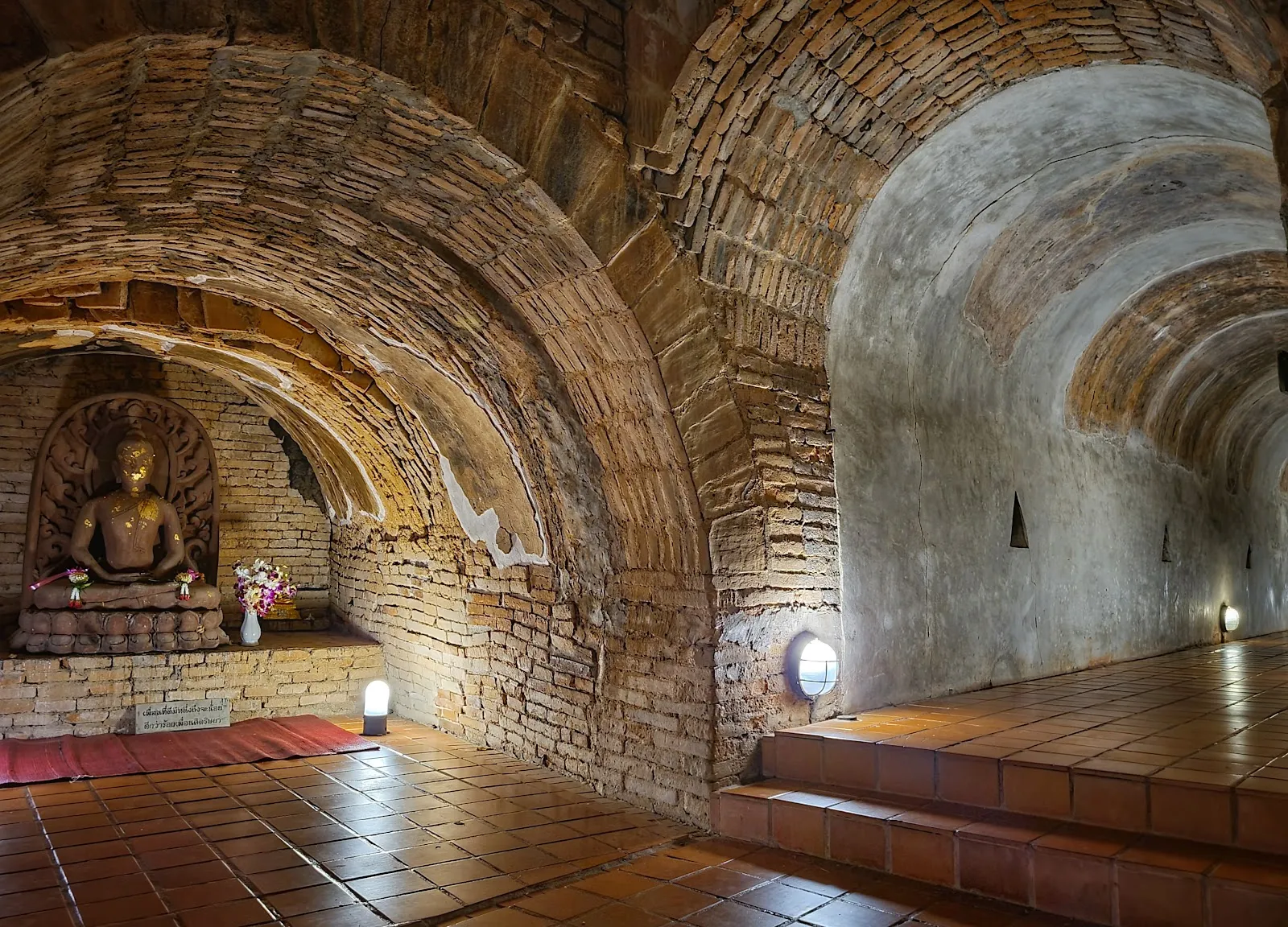
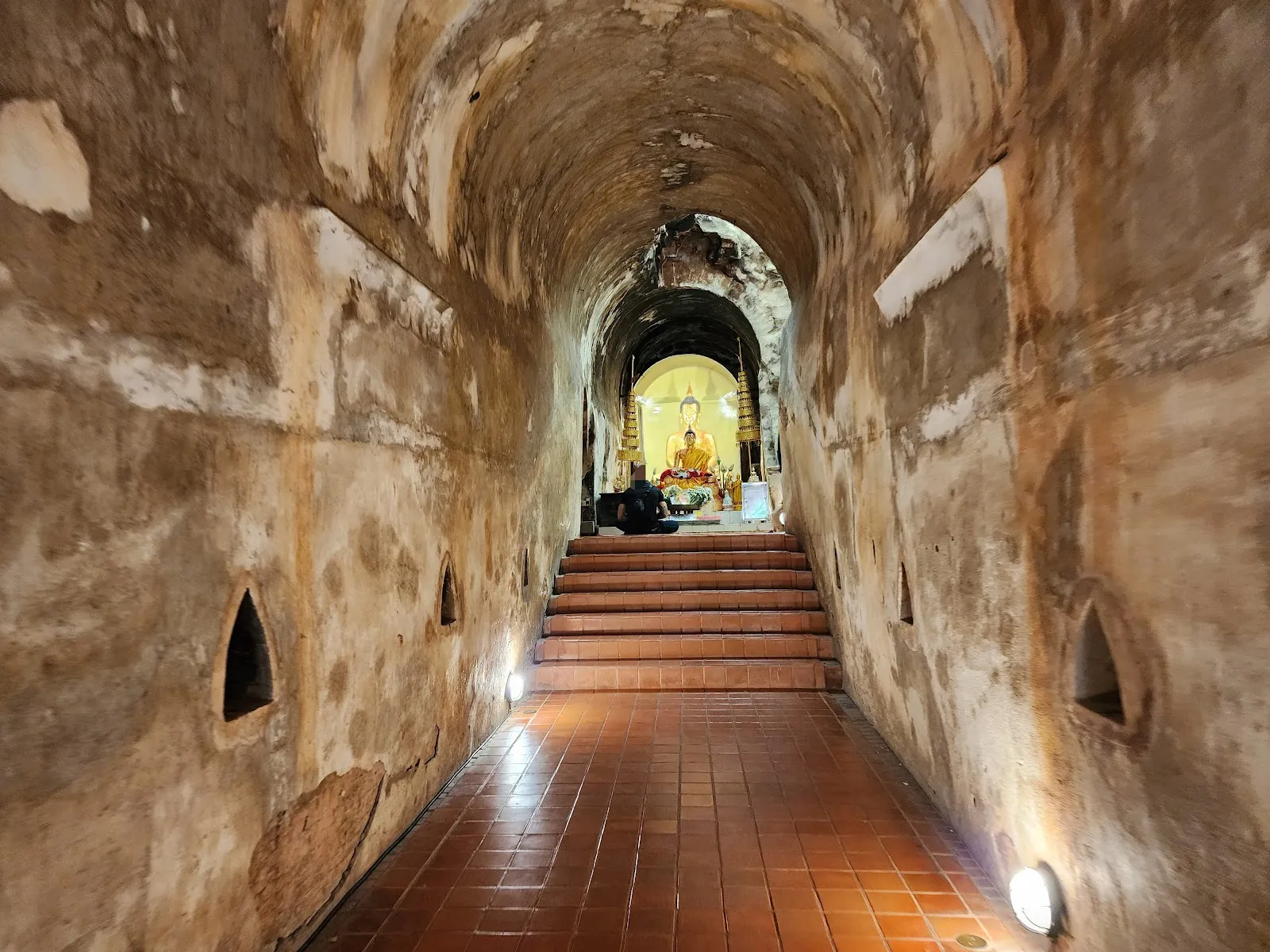
Wat Umong is known as the Tunnel Temple for its network of passages cut into a mound below the main chedi. The brick-lined corridors branch into connected routes, with Buddha figures placed in shrine niches along the way. Their low, enclosed setting feels quite different from the open courtyards of many Chiang Mai temples.

The tunnels are a place of worship as well as a visitor attraction. Move quietly through the shrine areas and remove your shoes before entering. The passages are an invitation to look closely and pause, not simply a shortcut between parts of the grounds.

The forest grounds
Wat Umong Suan Putthatham

The temple sits in wooded foothills near Doi Suthep, on the outskirts of Chiang Mai. Trees and paths surround the central mound, and the complex includes a pond where fish and turtles can be seen. Give yourself time to walk outside the tunnel area; the grounds are spread out, and the wooded setting is part of what makes this temple distinct.

Some trees display short teachings in Thai and English. They provide something to read as you move between the paths and the pond. Buddha statues also appear around the complex, including images in different styles and poses. The grounds combine active religious spaces with places for a quiet walk.

History and meditation

Wat Umong is an old Lanna temple associated with the early history of Chiang Mai. Its age is reflected in the weathered surface of the large chedi, which rises above the tunnels on a grassy platform. The complex is linked with forest-monastery practice, and meditation remains part of its identity.

A meditation centre operates on the grounds, and accounts of the temple describe opportunities to join meditation activities or longer retreats. Ask locally about what is available during your visit rather than assuming a session is running. Wat Umong suits visitors who want to spend time in a working temple and explore its setting at an unhurried pace.

Preguntas frecuentes

Where is Wat Umong?

It is in the Suthep area of Chiang Mai, outside the city centre and near the foothills of Doi Suthep.

What is Wat Umong known for?

The temple is known for its underground passageways, Buddha images, old chedi and forest setting.

How long should I spend at Wat Umong?

Allow about 40 minutes to an hour to explore the tunnels and walk around the grounds.

Is there a dress or footwear consideration?

Dress respectfully for a temple visit and remove your shoes before entering the tunnel shrine areas.

Más lugares imprescindibles en Provincia de Chiang Mai

Explorar todo