Pianifica un viaggio
Lingua: Italiano
Pianificatore di viaggiPianifica il tuo viaggio su una mappa

Le migliori destinazioni

EnglishDeutschFrançaisEspañolPortuguêsPortuguês (BR)Italiano
Avviso di viaggio · ThailandiaAlcuni governi sconsigliano di viaggiare in alcune zone di Thailandia.Gli avvisi riguardano solo queste aree: Fascia di 50 km lungo il confine con la Cambogia, Narathiwat, Pattani, Songkhla meridionale (distretti di Chana, Na Thawi, Thepha e Saba Yoi), Zone di confine con la Cambogia (distanza non specificata), Yala, Fascia di 20 km lungo il confine con la Cambogia.Le indicazioni dipendono dal tuo passaporto. Leggi quelle del tuo governo prima di prenotare.Indicazioni ufficiali
Aree con avvisi
  • Fascia di 50 km lungo il confine con la Cambogia · evitare ogni viaggio · Canada, Francia, Nuova Zelanda
  • Narathiwat · evitare ogni viaggio · Canada, Germania, Spagna, Francia, Irlanda, Italia, Nuova Zelanda, Regno Unito
  • Pattani · evitare ogni viaggio · Canada, Germania, Spagna, Francia, Irlanda, Italia, Nuova Zelanda, Regno Unito
  • Songkhla meridionale (distretti di Chana, Na Thawi, Thepha e Saba Yoi) · evitare ogni viaggio · Canada, Germania, Francia, Irlanda, Italia, Nuova Zelanda, Regno Unito
  • Zone di confine con la Cambogia (distanza non specificata) · evitare ogni viaggio · Spagna, Irlanda, Italia
  • Yala · evitare ogni viaggio · Canada, Germania, Spagna, Francia, Irlanda, Italia, Nuova Zelanda, Regno Unito
  • Fascia di 20 km lungo il confine con la Cambogia · evitare i viaggi non essenziali · Germania, Regno Unito

Segnalata anche da un solo governo: Zone di confine di Buriram (Spagna), A est delle strade 408 e 4113, compresa Sakom (Canada), Città di Hat Yai (Canada), Zone di confine di Sisaket (Spagna), Zone di confine di Surin (Spagna), Confine con il Myanmar (eccetto Mae Sot) (Francia), Zone di confine di Ubon Ratchathani (Spagna), Linea ferroviaria Hat Yai–Padang Besar (Regno Unito), Confine con il Myanmar: province di Mae Hong Son e Tak (Italia), Confine con il Myanmar: province di Tak e Chiang Mai (Spagna), Phatthalung (Francia), Area del tempio di Preah Vihear (Sisaket) (Italia), Satun (Francia)

GovernoConsigliAggiornatoLeggi le indicazioni
Regno Unito (FCDO)No advice against the whole country (regional advisories)–Leggi le indicazioni
Stati Uniti (Dipartimento di Stato)Exercise normal precautions7 lug 2026Leggi le indicazioni
Canada (Affari globali)Exercise a high degree of caution (regional advisories)–Leggi le indicazioni
Germania (Auswärtiges Amt)No advice against the whole country; partial warnings for border and southern areas (regional advisories)26 ott 2026Leggi le indicazioni
Nuova Zelanda (SafeTravel)Exercise increased caution (regional advisories)–Leggi le indicazioni
Irlanda (Dipartimento per gli Affari esteri)Normal Precautions (regional advisories)–Leggi le indicazioni
Francia (Ministero per l'Europa e gli Affari esteri)Increased vigilance across the country (regional advisories)–Leggi le indicazioni

Verificato ogni giorno dalle indicazioni pubblicate dai governi; ultima verifica 3 nov 2026.RoamLedger riassume le indicazioni ufficiali; non è un consiglio di alcun governo.

Wat Umong Suan Phutthatham
Tempio

Wat Umong Suan Putthatham

Wat Umong Suan Putthatham is a forest temple at the foot of Doi Suthep, outside central Chiang Mai.

Wat Umong Suan Putthatham is a forest temple at the foot of Doi Suthep, outside central Chiang Mai. Its brick-lined tunnels run beneath a grassy mound topped by an old chedi, with Buddha images set in the passageways. The grounds also include woodland paths, a pond, and a meditation centre. Come to explore a temple complex shaped as much by its natural setting as by its shrines, and allow time to walk beyond the tunnels into the quieter garden areas.

A temple beneath the chedi
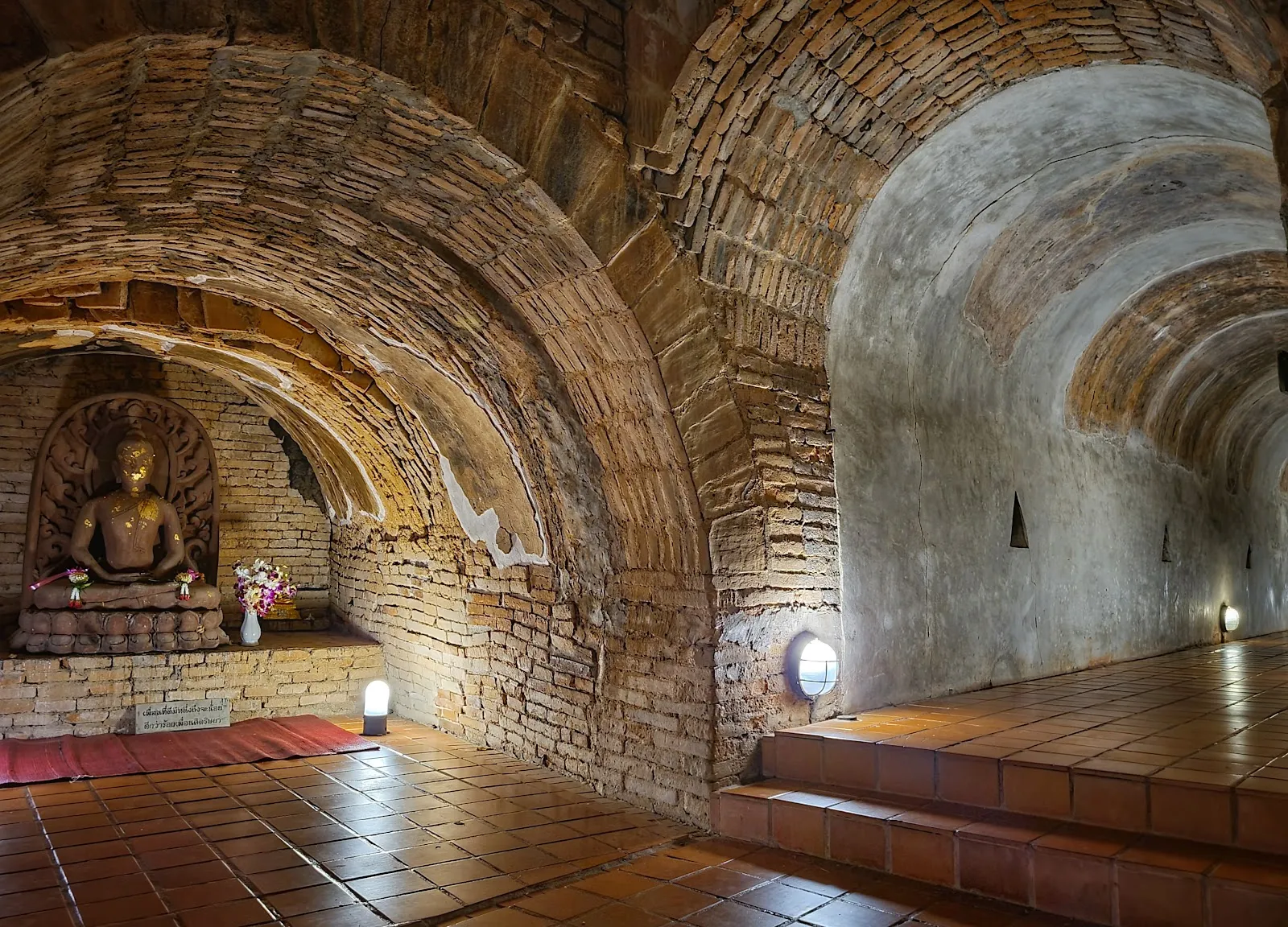
Wat Umong Suan Putthatham

Wat Umong is known as the Tunnel Temple for its network of passages cut into a mound below the main chedi. The brick-lined corridors branch into connected routes, with Buddha figures placed in shrine niches along the way. Their low, enclosed setting feels quite different from the open courtyards of many Chiang Mai temples.

The tunnels are a place of worship as well as a visitor attraction. Move quietly through the shrine areas and remove your shoes before entering. The passages are an invitation to look closely and pause, not simply a shortcut between parts of the grounds.

The forest grounds
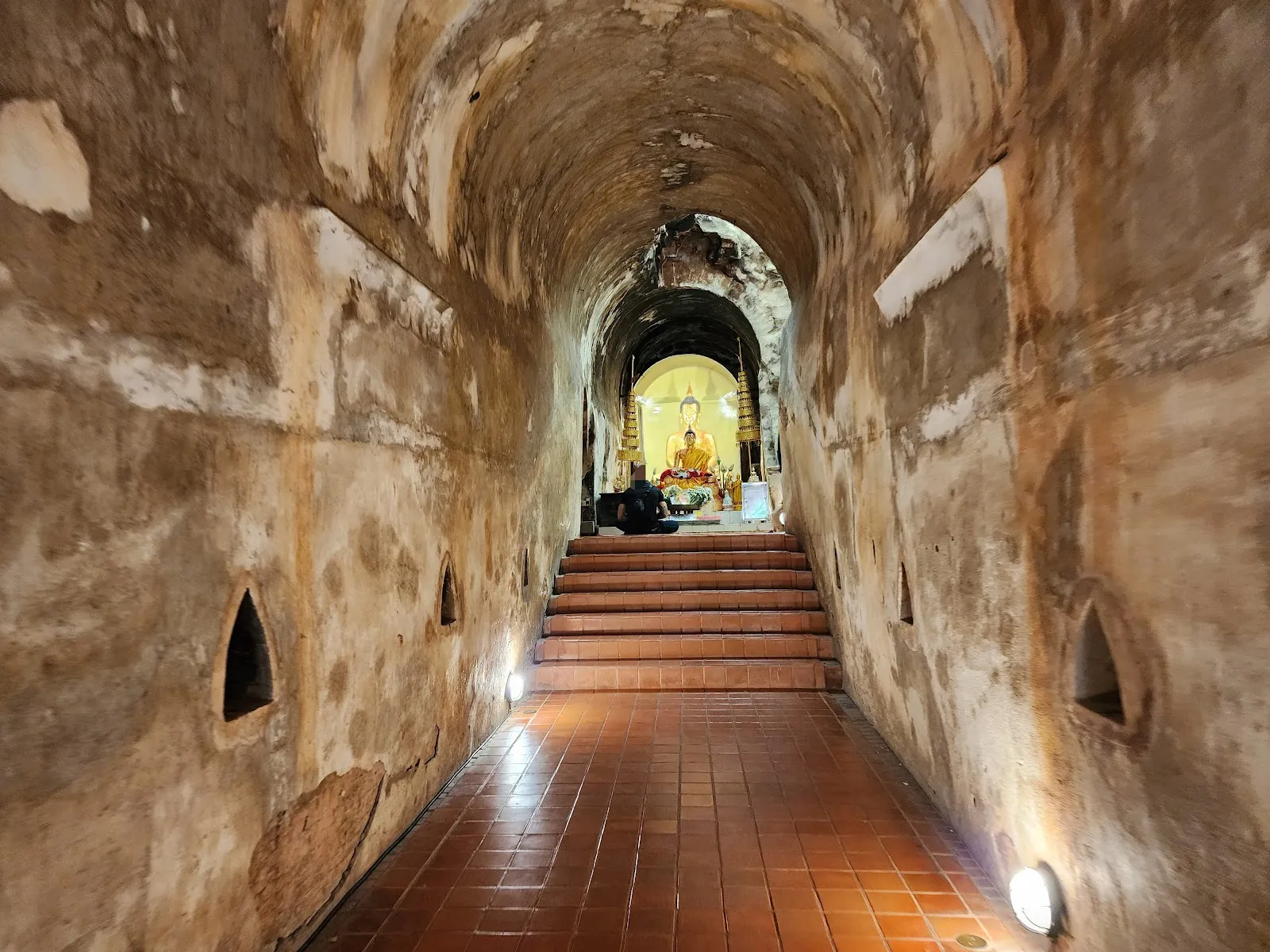
Wat Umong Suan Putthatham

The temple sits in wooded foothills near Doi Suthep, on the outskirts of Chiang Mai. Trees and paths surround the central mound, and the complex includes a pond where fish and turtles can be seen. Give yourself time to walk outside the tunnel area; the grounds are spread out, and the wooded setting is part of what makes this temple distinct.

Some trees display short teachings in Thai and English. They provide something to read as you move between the paths and the pond. Buddha statues also appear around the complex, including images in different styles and poses. The grounds combine active religious spaces with places for a quiet walk.

History and meditation

Wat Umong is an old Lanna temple associated with the early history of Chiang Mai. Its age is reflected in the weathered surface of the large chedi, which rises above the tunnels on a grassy platform. The complex is linked with forest-monastery practice, and meditation remains part of its identity.

A meditation centre operates on the grounds, and accounts of the temple describe opportunities to join meditation activities or longer retreats. Ask locally about what is available during your visit rather than assuming a session is running. Wat Umong suits visitors who want to spend time in a working temple and explore its setting at an unhurried pace.

FAQ

Where is Wat Umong?

It is in the Suthep area of Chiang Mai, outside the city centre and near the foothills of Doi Suthep.

What is Wat Umong known for?

The temple is known for its underground passageways, Buddha images, old chedi and forest setting.

How long should I spend at Wat Umong?

Allow about 40 minutes to an hour to explore the tunnels and walk around the grounds.

Is there a dress or footwear consideration?

Dress respectfully for a temple visit and remove your shoes before entering the tunnel shrine areas.

Altre attrazioni imperdibili a Provincia di Chiang Mai

Esplora tutto