Reise planen
Sprache: Deutsch
ReiseplanerPlane deine Reise auf einer Karte

Top-Reiseziele

EnglishDeutschFrançaisEspañolPortuguêsPortuguês (BR)Italiano
Reisehinweis · ThailandEinige Regierungen raten von Reisen in Teile von Thailand ab.Die Warnungen gelten nur für diese Gebiete: 50-km-Streifen entlang der Grenze zu Kambodscha, Narathiwat, Pattani, Südliches Songkhla (Bezirke Chana, Na Thawi, Thepha und Saba Yoi), Grenzzonen zu Kambodscha (Entfernung nicht angegeben), Yala, 20-km-Streifen entlang der Grenze zu Kambodscha.Die Empfehlung hängt von Ihrem Reisepass ab. Lesen Sie vor der Buchung die Hinweise Ihrer eigenen Regierung.Offizielle Hinweise
Gebiete mit Warnungen
  • 50-km-Streifen entlang der Grenze zu Kambodscha · alle Reisen vermeiden · Kanada, Frankreich, Neuseeland
  • Narathiwat · alle Reisen vermeiden · Kanada, Deutschland, Spanien, Frankreich, Irland, Italien, Neuseeland, Vereinigtes Königreich
  • Pattani · alle Reisen vermeiden · Kanada, Deutschland, Spanien, Frankreich, Irland, Italien, Neuseeland, Vereinigtes Königreich
  • Südliches Songkhla (Bezirke Chana, Na Thawi, Thepha und Saba Yoi) · alle Reisen vermeiden · Kanada, Deutschland, Frankreich, Irland, Italien, Neuseeland, Vereinigtes Königreich
  • Grenzzonen zu Kambodscha (Entfernung nicht angegeben) · alle Reisen vermeiden · Spanien, Irland, Italien
  • Yala · alle Reisen vermeiden · Kanada, Deutschland, Spanien, Frankreich, Irland, Italien, Neuseeland, Vereinigtes Königreich
  • 20-km-Streifen entlang der Grenze zu Kambodscha · nicht notwendige Reisen vermeiden · Deutschland, Vereinigtes Königreich

Außerdem von einer Regierung genannt: Grenzgebiete von Buriram (Spanien), Östlich der Highways 408 und 4113, einschließlich Sakom (Kanada), Stadt Hat Yai (Kanada), Grenzgebiete von Sisaket (Spanien), Grenzgebiete von Surin (Spanien), Grenze zu Myanmar (außer Mae Sot) (Frankreich), Grenzgebiete von Ubon Ratchathani (Spanien), Bahnstrecke Hat Yai–Padang Besar (Vereinigtes Königreich), Grenze zu Myanmar: Provinzen Mae Hong Son und Tak (Italien), Grenze zu Myanmar: Provinzen Tak und Chiang Mai (Spanien), Phatthalung (Frankreich), Gebiet des Preah-Vihear-Tempels (Sisaket) (Italien), Satun (Frankreich)

RegierungHinweiseAktualisiertHinweise lesen
Vereinigtes Königreich (FCDO)No advice against the whole country (regional advisories)–Hinweise lesen
Vereinigte Staaten (State Dept)Exercise normal precautions7. Juli 2026Hinweise lesen
Kanada (Global Affairs)Exercise a high degree of caution (regional advisories)–Hinweise lesen
Deutschland (Auswärtiges Amt)No advice against the whole country; partial warnings for border and southern areas (regional advisories)26. Okt. 2026Hinweise lesen
Neuseeland (SafeTravel)Exercise increased caution (regional advisories)–Hinweise lesen
Irland (Außenministerium)Normal Precautions (regional advisories)–Hinweise lesen
Frankreich (Ministerium für Europa und Auswärtige Angelegenheiten)Increased vigilance across the country (regional advisories)–Hinweise lesen

Täglich anhand der veröffentlichten Hinweise der Regierungen geprüft; zuletzt geprüft am 3. Nov. 2026.RoamLedger fasst offizielle Hinweise zusammen; es handelt sich nicht um Empfehlungen einer Regierung.

Wat Umong Suan Phutthatham
Tempel

Wat Umong Suan Putthatham

Wat Umong Suan Putthatham is a forest temple at the foot of Doi Suthep, outside central Chiang Mai.

Wat Umong Suan Putthatham is a forest temple at the foot of Doi Suthep, outside central Chiang Mai. Its brick-lined tunnels run beneath a grassy mound topped by an old chedi, with Buddha images set in the passageways. The grounds also include woodland paths, a pond, and a meditation centre. Come to explore a temple complex shaped as much by its natural setting as by its shrines, and allow time to walk beyond the tunnels into the quieter garden areas.

A temple beneath the chedi
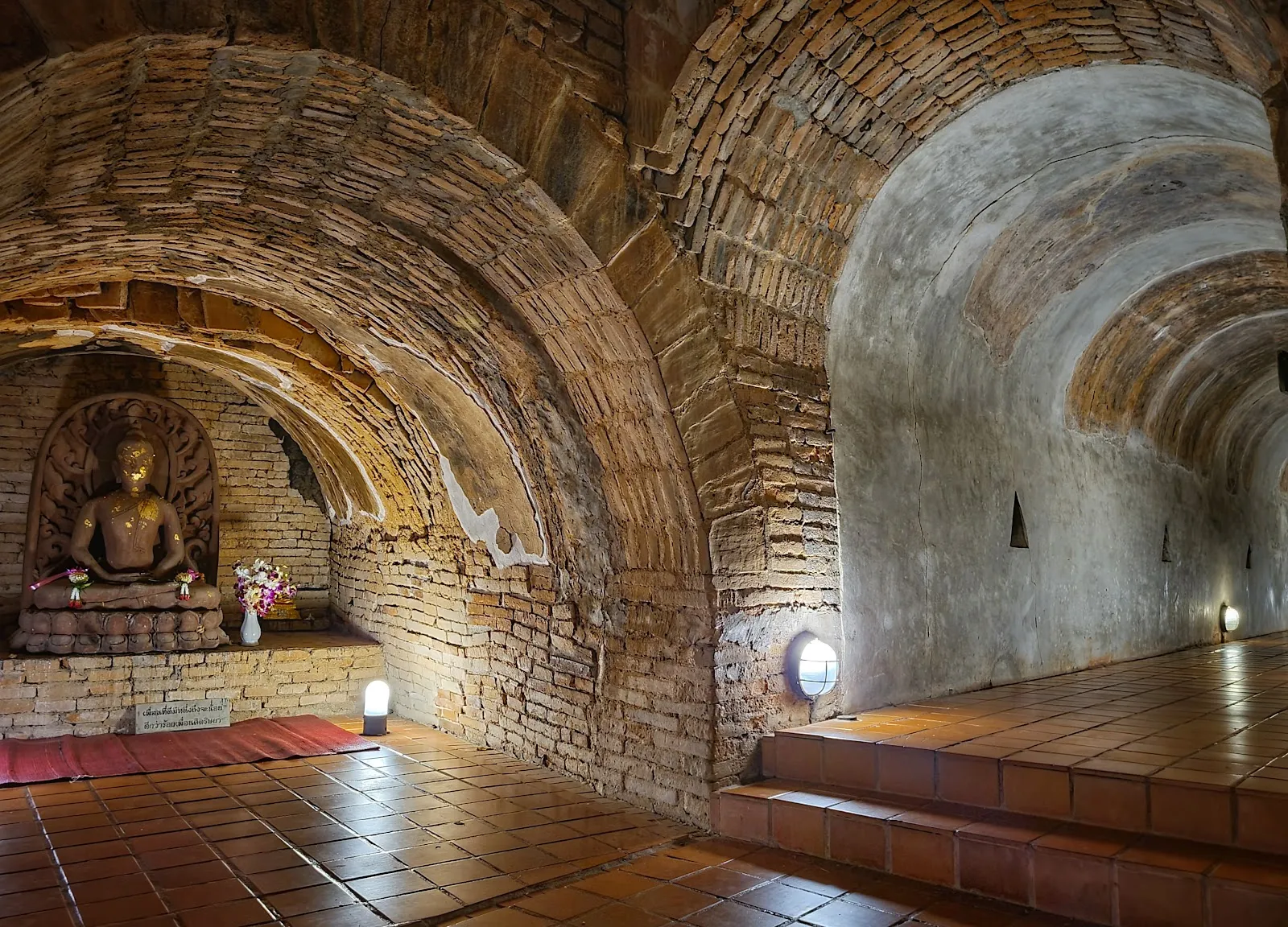
Wat Umong Suan Putthatham

Wat Umong is known as the Tunnel Temple for its network of passages cut into a mound below the main chedi. The brick-lined corridors branch into connected routes, with Buddha figures placed in shrine niches along the way. Their low, enclosed setting feels quite different from the open courtyards of many Chiang Mai temples.

The tunnels are a place of worship as well as a visitor attraction. Move quietly through the shrine areas and remove your shoes before entering. The passages are an invitation to look closely and pause, not simply a shortcut between parts of the grounds.

The forest grounds
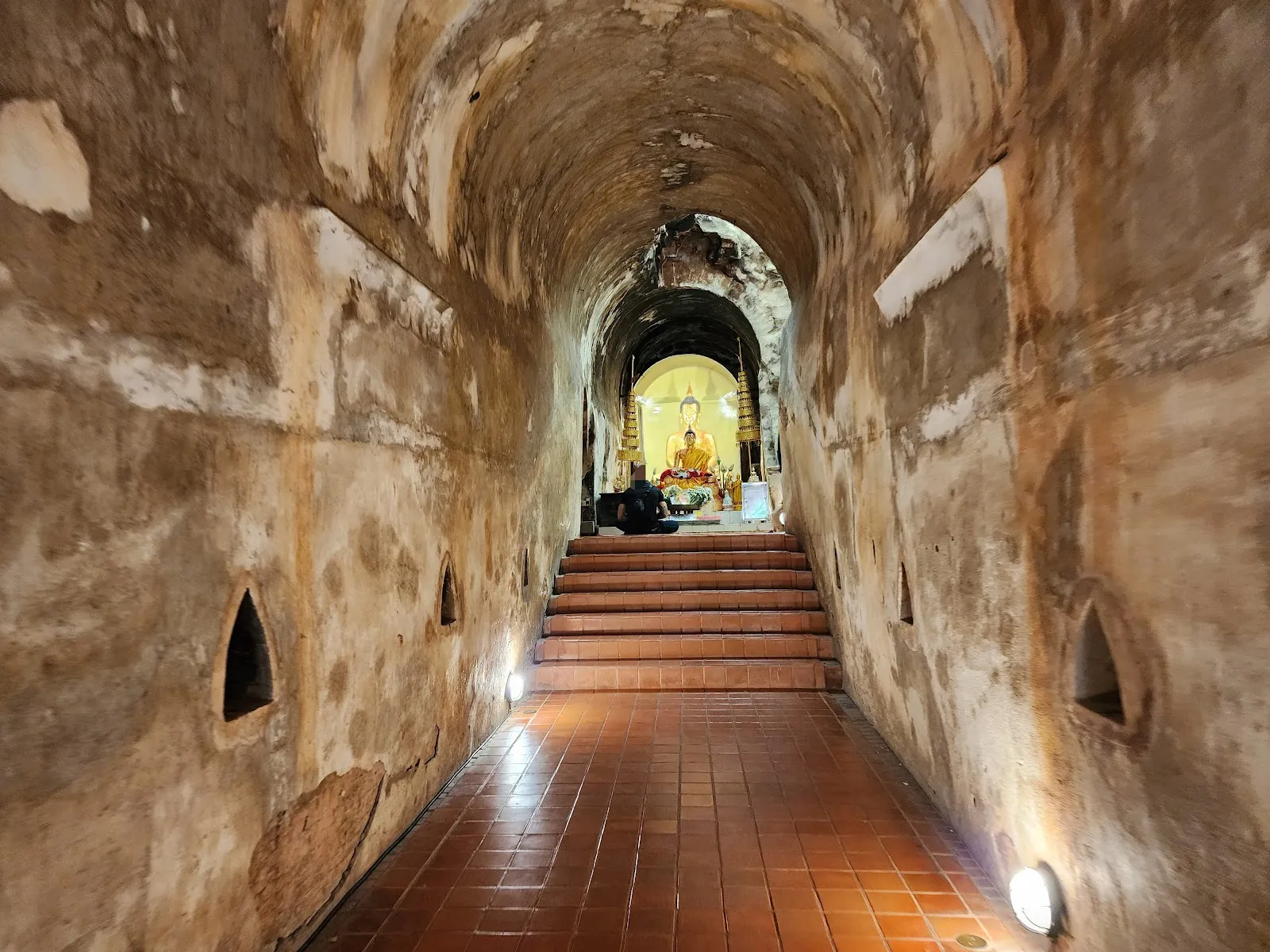
Wat Umong Suan Putthatham

The temple sits in wooded foothills near Doi Suthep, on the outskirts of Chiang Mai. Trees and paths surround the central mound, and the complex includes a pond where fish and turtles can be seen. Give yourself time to walk outside the tunnel area; the grounds are spread out, and the wooded setting is part of what makes this temple distinct.

Some trees display short teachings in Thai and English. They provide something to read as you move between the paths and the pond. Buddha statues also appear around the complex, including images in different styles and poses. The grounds combine active religious spaces with places for a quiet walk.

History and meditation

Wat Umong is an old Lanna temple associated with the early history of Chiang Mai. Its age is reflected in the weathered surface of the large chedi, which rises above the tunnels on a grassy platform. The complex is linked with forest-monastery practice, and meditation remains part of its identity.

A meditation centre operates on the grounds, and accounts of the temple describe opportunities to join meditation activities or longer retreats. Ask locally about what is available during your visit rather than assuming a session is running. Wat Umong suits visitors who want to spend time in a working temple and explore its setting at an unhurried pace.

Häufige Fragen

Where is Wat Umong?

It is in the Suthep area of Chiang Mai, outside the city centre and near the foothills of Doi Suthep.

What is Wat Umong known for?

The temple is known for its underground passageways, Buddha images, old chedi and forest setting.

How long should I spend at Wat Umong?

Allow about 40 minutes to an hour to explore the tunnels and walk around the grounds.

Is there a dress or footwear consideration?

Dress respectfully for a temple visit and remove your shoes before entering the tunnel shrine areas.

Weitere Highlights in Provinz Chiang Mai

Alle entdecken