Planear uma viagem
Idioma: Português
Planeador de viagensPlaneie a sua viagem num mapa

Principais destinos

EnglishDeutschFrançaisEspañolPortuguêsPortuguês (BR)Italiano
Aviso de viagem · MéxicoAlguns governos aconselham a não viajar para partes de México.Os avisos abrangem apenas estas áreas: Colima, Culiacán e arredores, Guerrero, Sinaloa, Sul de Michoacán, Acapulco, Chiapas, Chihuahua, Rodovia federal 199 (San Cristóbal de las Casas–Palenque), Região da fronteira com a Guatemala (Chiapas), Parque nacional Lagunas de Zempoala, Região da fronteira México–EUA, Michoacán, Rodovia Monterrey–Nuevo Laredo, Nayarit, faixa de 20 km na fronteira com Sinaloa e Durango, Nuevo León, Piedras Negras, Sonora, Sul da rodovia 45D (Guanajuato), Tamaulipas, Tecate, Tijuana, Zacatecas.As recomendações dependem do seu passaporte. Leia as recomendações do seu próprio governo antes de reservar.Recomendações oficiais
Áreas com avisos
  • Colima · evitar todas as viagens · Canadá, Alemanha, França, Nova Zelândia, Reino Unido
  • Culiacán e arredores · evitar todas as viagens · Espanha, França
  • Guerrero · evitar todas as viagens · Canadá, Alemanha, França, Nova Zelândia, Reino Unido
  • Sinaloa · evitar todas as viagens · Canadá, Alemanha, Espanha, França, Nova Zelândia, Reino Unido
  • Sul de Michoacán · evitar todas as viagens · Espanha, França
  • Acapulco · evitar viagens não essenciais · Espanha, França
  • Chiapas · evitar viagens não essenciais · Canadá, França
  • Chihuahua · evitar viagens não essenciais · Canadá, França, Reino Unido
  • Rodovia federal 199 (San Cristóbal de las Casas–Palenque) · evitar viagens não essenciais · França, Reino Unido
  • Região da fronteira com a Guatemala (Chiapas) · evitar viagens não essenciais · Alemanha, França, Nova Zelândia, Reino Unido
  • Parque nacional Lagunas de Zempoala · evitar viagens não essenciais · Canadá, Nova Zelândia
  • Região da fronteira México–EUA · evitar viagens não essenciais · Alemanha, França
  • Michoacán · evitar viagens não essenciais · Canadá, Alemanha, Nova Zelândia, Reino Unido
  • Rodovia Monterrey–Nuevo Laredo · evitar viagens não essenciais · Espanha, França
  • Nayarit, faixa de 20 km na fronteira com Sinaloa e Durango · evitar viagens não essenciais · Canadá, Nova Zelândia
  • Nuevo León · evitar viagens não essenciais · Canadá, Nova Zelândia
  • Piedras Negras · evitar viagens não essenciais · Espanha, França
  • Sonora · evitar viagens não essenciais · Canadá, Nova Zelândia
  • Sul da rodovia 45D (Guanajuato) · evitar viagens não essenciais · Canadá, Nova Zelândia, Reino Unido
  • Tamaulipas · evitar viagens não essenciais · Canadá, França, Reino Unido
  • Tecate · evitar viagens não essenciais · França, Reino Unido
  • Tijuana · evitar viagens não essenciais · França, Reino Unido
  • Zacatecas · evitar viagens não essenciais · Canadá, Alemanha, Espanha, França, Reino Unido

Também indicado por um governo: Norte de Tamaulipas (ao norte de Ciudad Victoria) (Alemanha), Rodovia 129 Martínez de la Torre–Teziutlán (França), Rodovia 131 Tlapacoyan–Perote (França), Rodovia 40 Monterrey–Reynosa (França), Estradas secundárias Martínez de la Torre–Papantla (França), Triângulo Celaya–Irapuato–Salamanca (França), Baja Califórnia (França), Zonas turísticas de Chiapas (Espanha), Ciudad Acuña (Espanha), Ciudad Juárez e arredores (Espanha), Ciudad Obregón (França), Coahuila (Nova Zelândia), Coatzacoalcos (França), Colônias ao norte e nordeste do Zócalo (França), Durango (França), Leste de Nuevo León (França), Ecatepec (Espanha), Rodovia 45 entre León e Irapuato (Nova Zelândia), Jalisco, faixa de 50 km ao longo da fronteira com Michoacán (Canadá), Monclova (Espanha), Morelos (França), Naucalpan (Espanha), Nayarit (França), Nezahualcóyotl (Espanha), Nogales (França), Municípios do norte de Jalisco (Reino Unido), Norte de Tamaulipas (San Fernando até a fronteira com os EUA) (Espanha), Norte de Veracruz (a partir de Martínez de la Torre) (França), Rodovia 150D Puebla–Orizaba (França), Rodovia 190 Oaxaca–Santo Domingo Tehuantepec (França), Rodovias 85 e 83 Monterrey–Ciudad Victoria–Tampico (França), Rodovia 95 Cidade do México–Cuernavaca (França), Selva Lacandona (França), Sul e sudoeste do Lago Chapala (Reino Unido), Sul do estado de Guanajuato (França), Sudoeste de Jalisco e Los Altos (França), Sudoeste de Michoacán (França), Sudoeste de Tamaulipas (França), Tepic (Nova Zelândia), Toluca (França), Veracruz (cidade) (França)

GovernoRecomendaçõesAtualizadoLer as recomendações
Reino Unido (FCDO)No advice against the whole country (regional advisories)–Ler as recomendações
Estados Unidos (Departamento de Estado)Exercise increased caution29/05/2026Ler as recomendações
Canadá (Assuntos Mundiais)Exercise a high degree of caution (regional advisories)–Ler as recomendações
Alemanha (Ministério dos Negócios Estrangeiros)Besondere Vorsicht walten lassen (Sicherheitslage) (regional advisories)19/10/2026Ler as recomendações
Nova Zelândia (SafeTravel)Exercise increased caution (regional advisories)–Ler as recomendações
França (Ministério para a Europa e Negócios Estrangeiros)Vigilance renforcée pour le reste du pays (regional advisories)–Ler as recomendações

Verificado diariamente a partir das recomendações publicadas pelos governos; última verificação 3/11/2026.RoamLedger resume as recomendações oficiais; não são recomendações de nenhum governo.

a city with many buildings
Museu

Museum of the Mummies of Guanajuato

The Museum of the Mummies sits beside the municipal cemetery on the edge of Guanajuato, a short ride from the center.

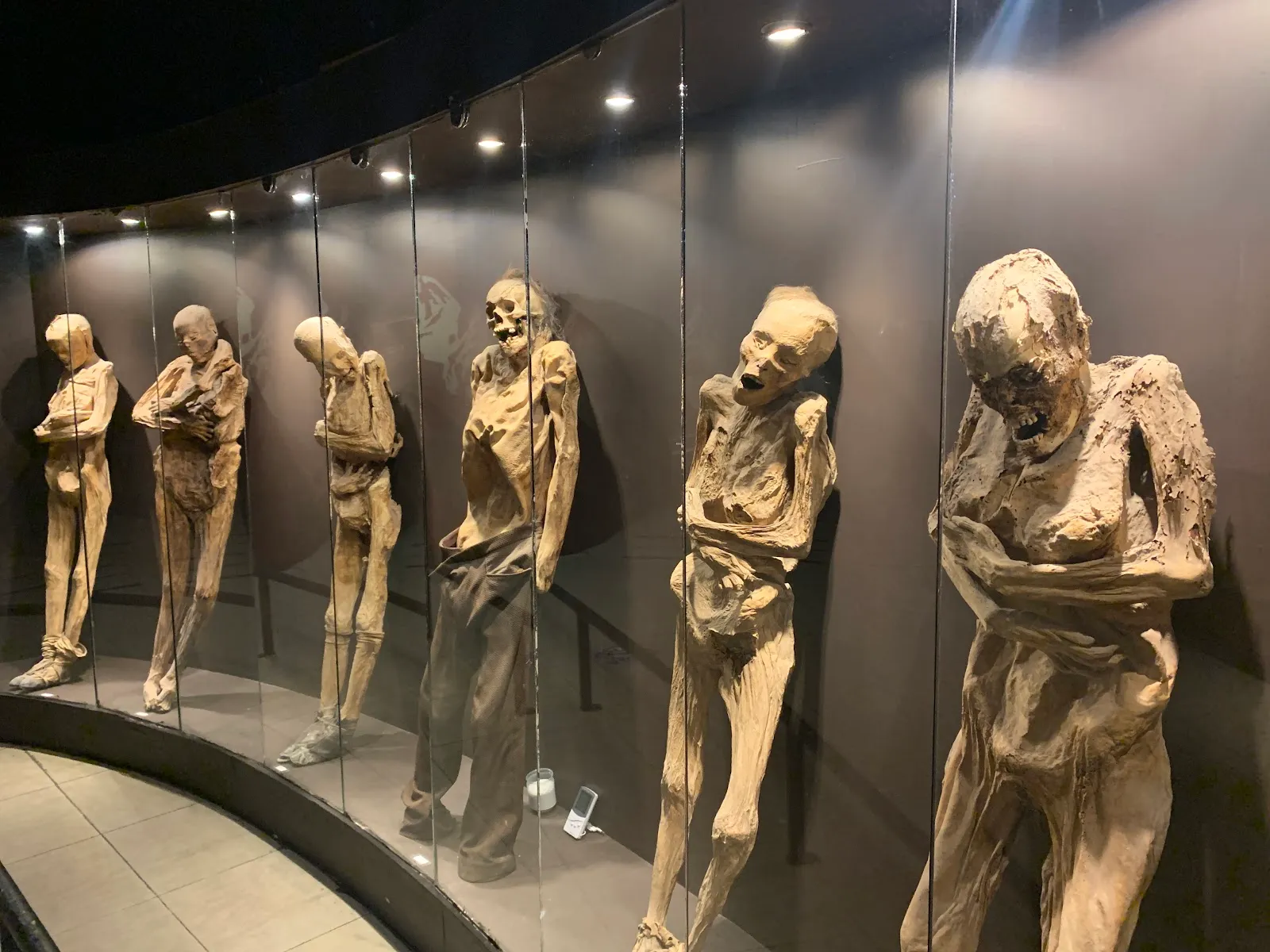
The Museum of the Mummies sits beside the municipal cemetery on the edge of Guanajuato, a short ride from the center. It displays dozens of naturally mummified bodies, many with faces and skin still intact. They were exhumed when families could no longer pay the cemetery's fees, and the dry climate and mineral-rich soil had preserved them. The collection includes people of all ages, among them a six-month-old baby. The visit is short and can be heavy, so go with a calm, respectful mind. Written panels give the stories behind some of the mummies in Spanish and English.

Why the bodies were exhumed
Museum of the Mummies of Guanajuato

The mummies come from the municipal cemetery of Guanajuato, which was overcrowded. Graves were held under a paid arrangement, and when relatives did not keep up the payments, the remains were exhumed to make room. Instead of skeletons, the workers found bodies that had kept their skin and features.

The dry climate and the mineral-rich soil are the usual explanations. The mummification was natural, so there was no embalming and no ritual, which sets these bodies apart from the deliberate mummies of ancient Egypt. Many of the dead are linked to a cholera outbreak in the 19th century.

The museum began almost by accident. Cemetery staff started charging curious visitors a small fee to see the bodies, word spread, and the display grew into one of the city's best-known sights. Mexicans often associate Guanajuato with it, and the country's long familiarity with death, seen in the Day of the Dead on 2 November, is part of the context.

What you see inside
Museum of the Mummies of Guanajuato

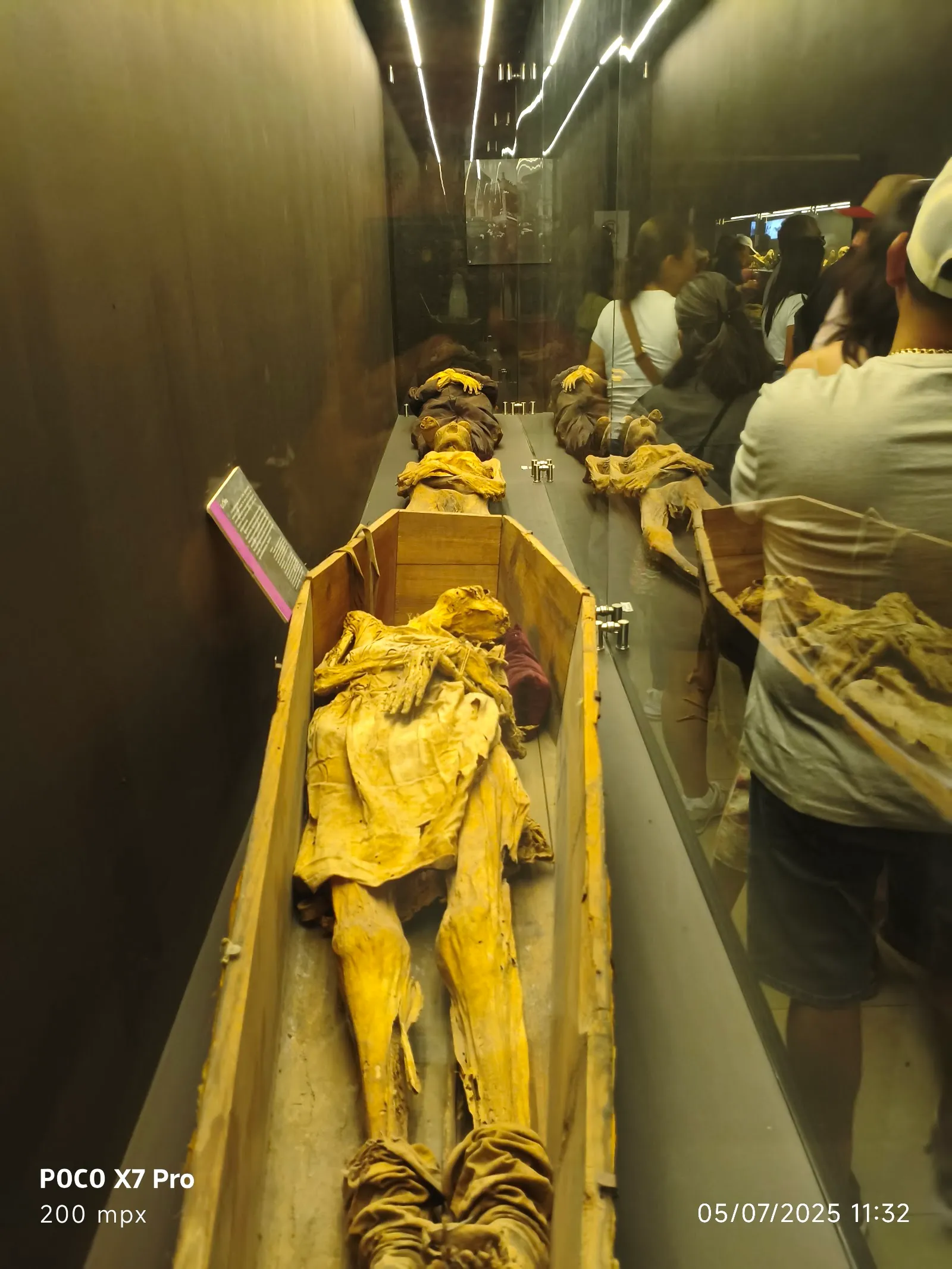
The bodies on display include men, women and children, as well as fetuses and pregnant women. Many show facial expressions, which is what makes the rooms affecting. The collection numbers dozens of mummies.

Two stories are told more often than the rest. The first mummy ever found was a priest, which is why he is well known locally. The most moving is the mummy of a six-month-old baby.

Panels tell the stories of some of the mummies in Spanish and English, but not all of them. If you want to understand the history of the exhumations and the burial fees, do some background reading first, because the explanations inside are brief.

Some areas of the museum are only open with the full ticket, so ask what your ticket includes before you go in.

Getting there and planning the visit

The museum is on the Explanada del Panteón Municipal, on the northwest edge of Guanajuato and up a hill from the center. A short walk from the center is possible but uphill. A local bus marked "Momias" leaves from the Plaza de la Paz, and you can ask the driver to tell you when to get off. A taxi works too. Both cost only a few US dollars.

Outside the entrance, vendors sell souvenirs in the parking area, and prices at the shop and the stalls differ, so compare before you buy. The museum has a wheelchair accessible entrance, restroom and parking lot, and buying tickets in advance is recommended.

Group tours are led by a guide, and the rooms are small, so a busy day makes it hard to hear. Arriving early gives you more space and time to read each panel.

Who it suits

This is a place to approach quietly. The people on display were real residents of the city, and some visitors find the experience moving as much as eerie. If you are not comfortable seeing human remains, you may prefer to skip it.

Parents should decide for themselves. The museum is open to families, but the display includes babies and faces with strong expressions.

Perguntas frequentes

Is there an entry fee at the Museum of the Mummies?

Yes, there is an admission fee. A basic ticket does not cover every area, so ask for the full ticket if you want to see the whole museum.

How long does a visit take?

Plan 30 to 60 minutes. The museum is small and the visit can take under half an hour, but queues and guided groups can add time on busy days.

How do I get to the museum from the center of Guanajuato?

Take the local bus marked "Momias" from the Plaza de la Paz, or a taxi. The museum is on the northwest edge of the city, up a hill, and both options cost only a few US dollars.

Are the explanations available in English?

The written stories are in Spanish and English, though only some of the mummies have one. Guided tours are in Spanish, so reading about the history beforehand helps.

Is the museum suitable for children?

It is open to families, but it displays human remains, including babies and fetuses. Parents should decide based on how their child reacts to such things.

When is the best time to avoid crowds?

Early morning, and Monday, which is usually the quietest day. Sundays bring long lines and crowded rooms.

Mais locais imperdíveis em Guanajuato

Explorar tudo