Planear uma viagem
Idioma: Português
Planeador de viagensPlaneie a sua viagem num mapa

Principais destinos

EnglishDeutschFrançaisEspañolPortuguêsPortuguês (BR)Italiano
Aviso de viagem · IndonésiaAlguns governos aconselham a não viajar para partes de Indonésia.Os avisos abrangem apenas estas áreas: Papua Central, Terras altas de Papua, Papua Indonésia, Província de Papua, Província de Papua do Sul, Província de Papua Ocidental.As recomendações dependem do seu passaporte. Leia as recomendações do seu próprio governo antes de reservar.Recomendações oficiais
Áreas com avisos
  • Papua Central · evitar todas as viagens · Alemanha, Nova Zelândia, EUA
  • Terras altas de Papua · evitar todas as viagens · Alemanha, Nova Zelândia, EUA
  • Papua Indonésia · evitar viagens não essenciais · Canadá, Espanha, Itália
  • Província de Papua · evitar viagens não essenciais · Alemanha, Nova Zelândia
  • Província de Papua do Sul · evitar viagens não essenciais · Alemanha, Nova Zelândia
  • Província de Papua Ocidental · evitar viagens não essenciais · Alemanha, Espanha, Nova Zelândia

Também indicado por um governo: Fronteira com a Malásia (França), Fronteira com as Filipinas (França), Fronteira com Singapura (Estreito de Malaca) (França), Águas interiores (mares de Banda, de Java e de Celebes) (França), Jayawijaya (França), Monte Ibu (7 km ao redor da cratera) (Itália), Monte Lewotobi Laki-Laki (7 km ao redor da cratera) (Itália), Monte Marapi (3 km ao redor da cratera) (Itália), Monte Ruang (7 km ao redor da cratera) (Itália), Monte Semeru (5 km ao redor da cratera) (Itália), Monte Sinabung (5 km ao redor da cratera) (Itália), Paniai (França), Regência de Poso (Nova Zelândia), Puncak Jaya (França), Timika (França)

GovernoRecomendaçõesAtualizadoLer as recomendações
Reino Unido (FCDO)No advice against the whole country–Ler as recomendações
Estados Unidos (Departamento de Estado)Exercise increased caution7/07/2026Ler as recomendações
Canadá (Assuntos Mundiais)Exercise a high degree of caution (regional advisories)–Ler as recomendações
Alemanha (Ministério dos Negócios Estrangeiros)No advice against the whole country (regional advisories)15/10/2026Ler as recomendações
Nova Zelândia (SafeTravel)Exercise increased caution in Indonesia (regional advisories)–Ler as recomendações
Irlanda (Departamento dos Negócios Estrangeiros)High Degree of Caution–Ler as recomendações
França (Ministério para a Europa e Negócios Estrangeiros)No advice against the whole country (regional advisories)–Ler as recomendações

Verificado diariamente a partir das recomendações publicadas pelos governos; última verificação 2/11/2026.RoamLedger resume as recomendações oficiais; não são recomendações de nenhum governo.

Arjuna Wijaya Statue
Monumento

Arjuna Wijaya Statue

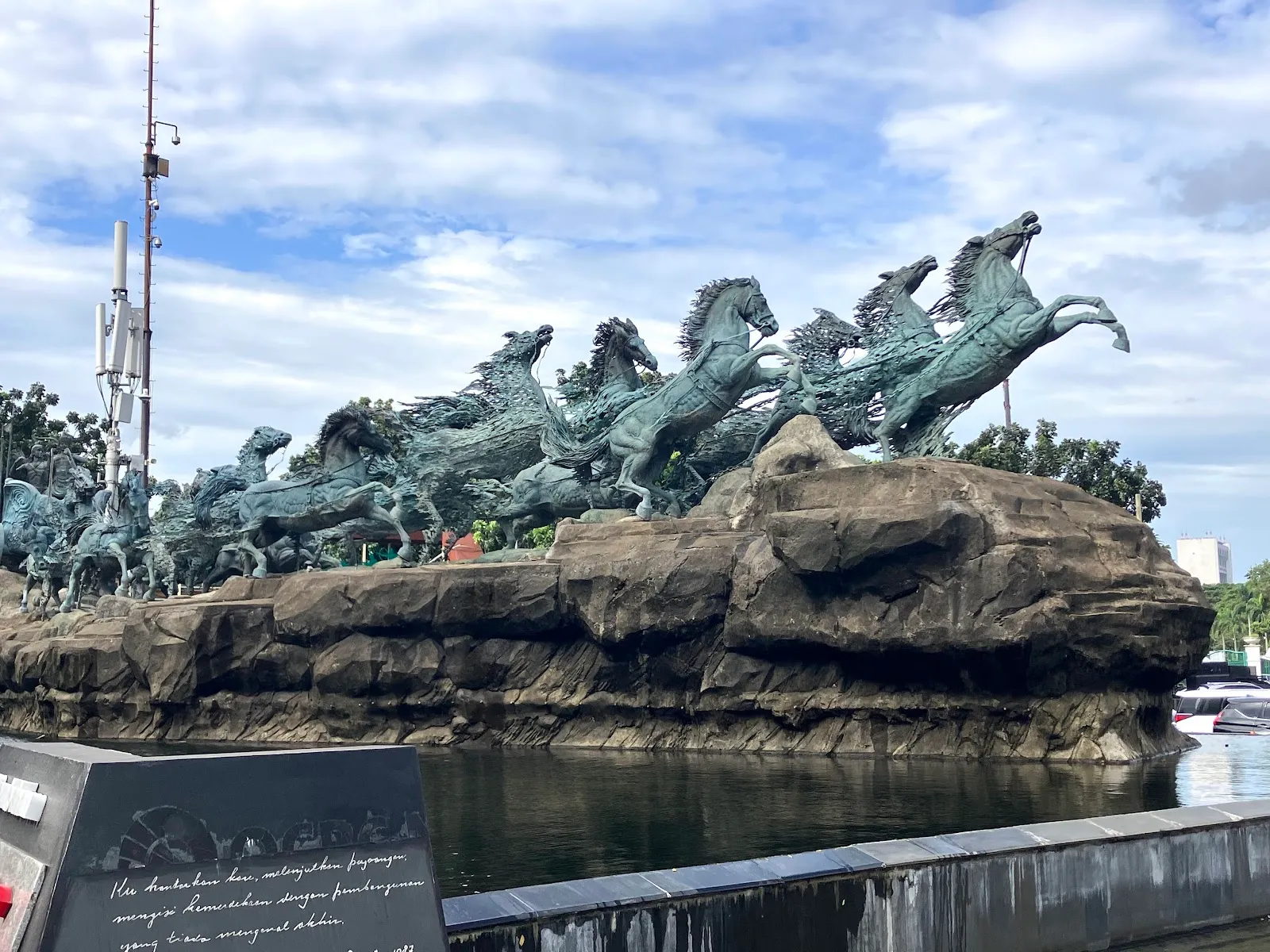
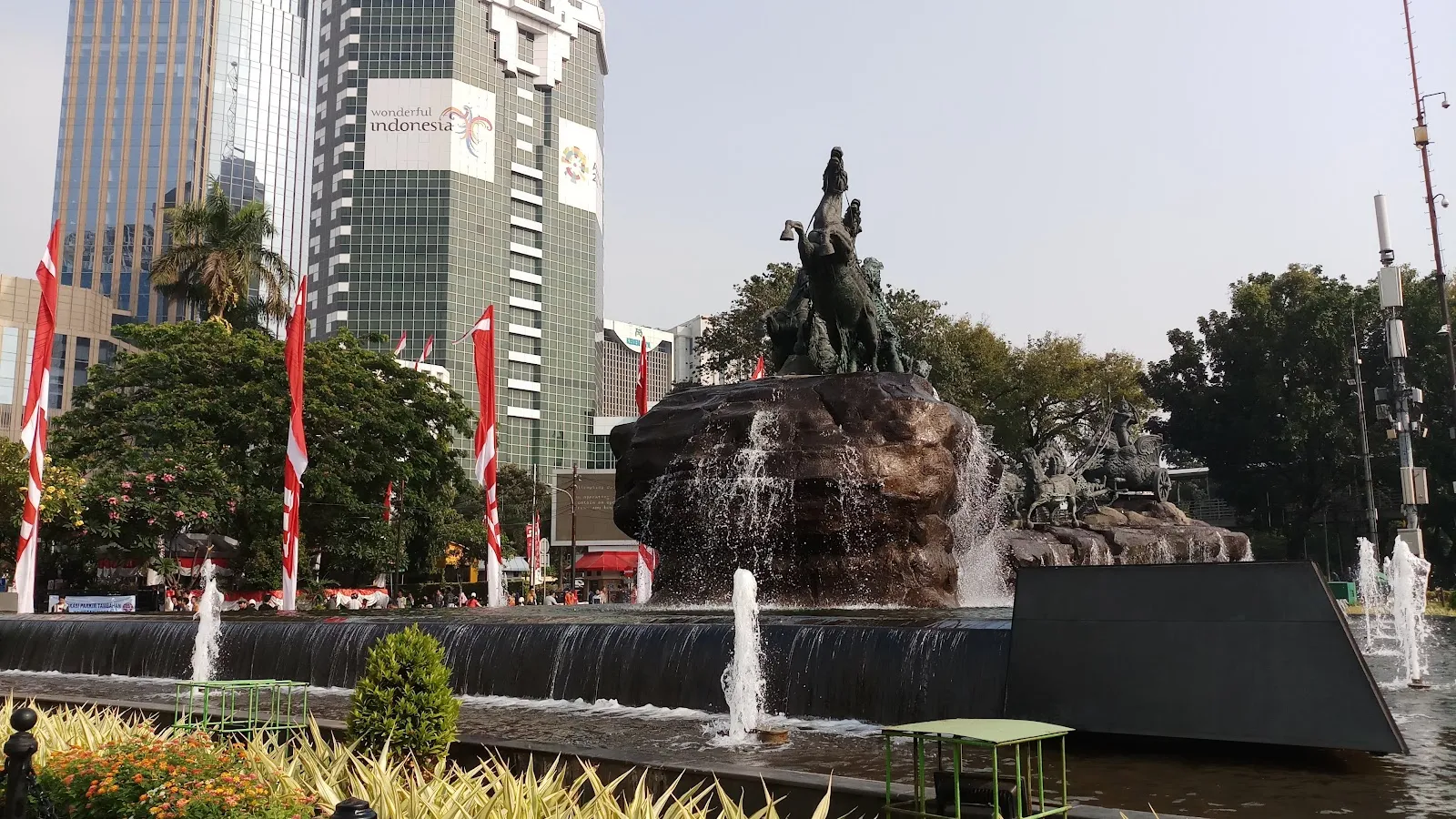
The Arjuna Wijaya Statue is a horse-drawn chariot sculpture with a copper fountain, set on a traffic island at the junction of Jalan MH Thamrin and Jalan Medan Merdeka Barat in Central Jakarta.

The Arjuna Wijaya Statue is a horse-drawn chariot sculpture with a copper fountain, set on a traffic island at the junction of Jalan MH Thamrin and Jalan Medan Merdeka Barat in Central Jakarta. It stands in front of the Indosat headquarters, near the National Monument (MONAS) and the MH Thamrin statue. The sculpture shows a scene from the Mahabharata, with Arjuna and Krishna in battle. It is worth a look in the evening or at night, when traffic is lighter and the figures are easier to see and photograph. The surroundings are clean and green, and the spot makes a simple stop between Jakarta's historic monuments.

Why the statue was made
Arjuna Wijaya Statue

The statue was built around 1987. The idea came from President Soeharto's state visit to Turkey that year, where he saw many monuments on the streets that explained Turkey's past.

The designer is Nyoman Nuarta, an Indonesian sculptor from Tabanan, Bali. The work combines a horse-drawn chariot with a fountain, and the fountain is made of copper.

The Mahabharata scene
Arjuna Wijaya Statue

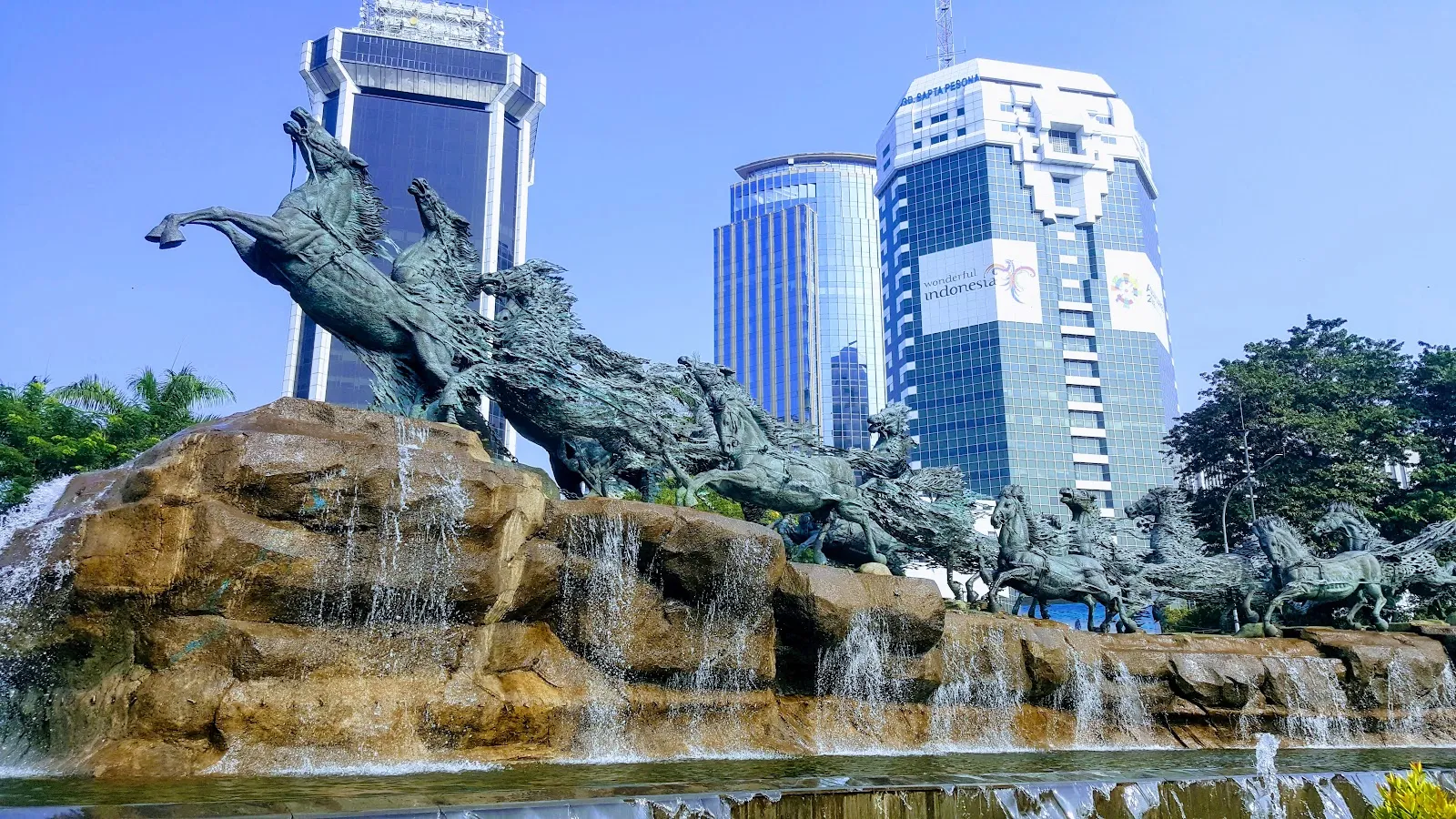
The sculpture shows Arjuna holding a bow, with Batara Kresna beside him as the charioteer. Their chariot has a garuda head and is pulled by eight horses. The eight horses stand for the eight principles of leadership known as Asta Brata.

The two figures come from the Pandava side and are shown in battle against Adipati Karna, who fights for the Kurawa camp. Knowing these names helps you read the scene: Arjuna is the figure with the bow, and Kresna guides the horses.

Visiting the junction

The statue stands at the junction of Jalan MH Thamrin and Jalan Medan Merdeka Barat, in front of the Indosat headquarters. It sits close to the National Monument (MONAS) and the MH Thamrin statue, which honours one of Indonesia's national heroes. The three can be seen on one visit.

The surroundings are clean and green, and the area is open at all hours. Because the statue is on a traffic island, the daytime traffic is loud and busy around it. Evening or night is the calmer time to look at the work and take pictures.

Perguntas frequentes

Where is the Arjuna Wijaya Statue?

It stands at the junction of Jalan MH Thamrin and Jalan Medan Merdeka Barat in Central Jakarta, in front of the Indosat headquarters.

Is the statue open at night?

Yes. It is open 24 hours a day, every day. Night is the calmer time to visit, with less traffic around the island.

Who made the Arjuna Wijaya Statue?

The designer is Nyoman Nuarta, an Indonesian sculptor from Tabanan, Bali. The statue was built around 1987.

What story does the statue show?

It shows a scene from the Mahabharata, with Arjuna holding a bow and Batara Kresna as charioteer, in battle against Adipati Karna.

Is it a good place for photos?

Photos are easier at night, when traffic is lighter. During the day, traffic activity around the island makes photography harder.
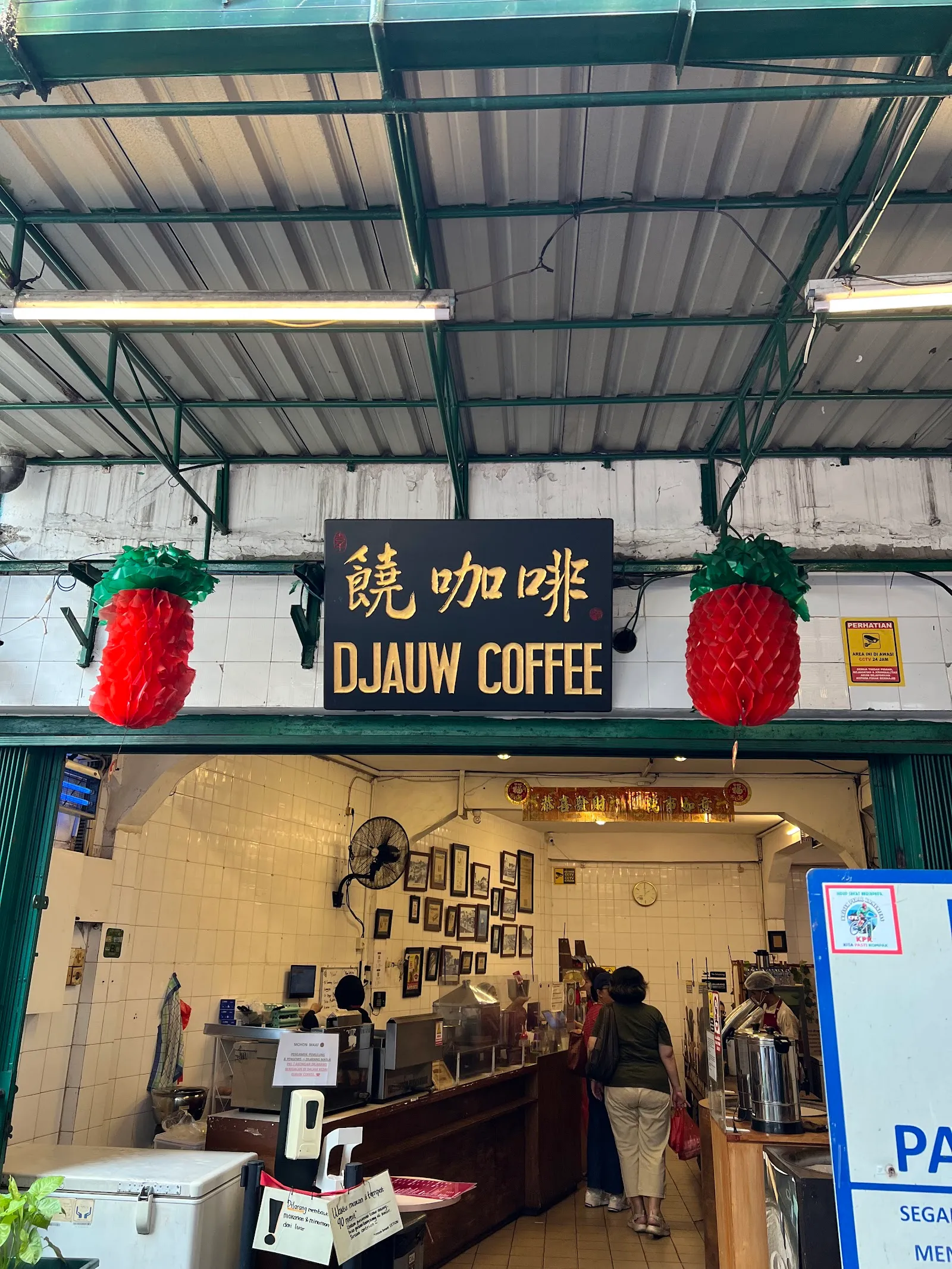
Mais locais imperdíveis em Jacarta

Explorar tudo