Planifica un viaje
Idioma: Español
Planificador de viajesPlanifica tu viaje en un mapa

Destinos principales

EnglishDeutschFrançaisEspañolPortuguêsPortuguês (BR)Italiano
Aviso de viaje · IndonesiaAlgunos gobiernos desaconsejan viajar a determinadas zonas de Indonesia.Las advertencias cubren únicamente estas zonas: Papúa Central, Tierras altas de Papúa, Papúa indonesia, Provincia de Papúa, Provincia de Papúa del Sur, Provincia de Papúa Occidental.Los consejos dependen de tu pasaporte. Lee los de tu propio gobierno antes de reservar.Recomendaciones oficiales
Zonas con advertencias
  • Papúa Central · evitar todo viaje · Alemania, Nueva Zelanda, Estados Unidos
  • Tierras altas de Papúa · evitar todo viaje · Alemania, Nueva Zelanda, Estados Unidos
  • Papúa indonesia · evitar viajes no esenciales · Canadá, España, Italia
  • Provincia de Papúa · evitar viajes no esenciales · Alemania, Nueva Zelanda
  • Provincia de Papúa del Sur · evitar viajes no esenciales · Alemania, Nueva Zelanda
  • Provincia de Papúa Occidental · evitar viajes no esenciales · Alemania, España, Nueva Zelanda

También señalada por un gobierno: Frontera con Malasia (Francia), Frontera con Filipinas (Francia), Frontera con Singapur (estrecho de Malaca) (Francia), Aguas interiores (mares de Banda, Java y Célebes) (Francia), Jayawijaya (Francia), Monte Ibu (7 km alrededor del cráter) (Italia), Monte Lewotobi Laki-Laki (7 km alrededor del cráter) (Italia), Monte Marapi (3 km alrededor del cráter) (Italia), Monte Ruang (7 km alrededor del cráter) (Italia), Monte Semeru (5 km alrededor del cráter) (Italia), Monte Sinabung (5 km alrededor del cráter) (Italia), Paniai (Francia), Regencia de Poso (Nueva Zelanda), Puncak Jaya (Francia), Timika (Francia)

GobiernoConsejosActualizadoLeer las recomendaciones
Reino Unido (FCDO)No advice against the whole country–Leer las recomendaciones
Estados Unidos (Departamento de Estado)Exercise increased caution7 jul 2026Leer las recomendaciones
Canadá (Asuntos Globales)Exercise a high degree of caution (regional advisories)–Leer las recomendaciones
Alemania (Auswärtiges Amt)No advice against the whole country (regional advisories)15 oct 2026Leer las recomendaciones
Nueva Zelanda (SafeTravel)Exercise increased caution in Indonesia (regional advisories)–Leer las recomendaciones
Irlanda (Departamento de Asuntos Exteriores)High Degree of Caution–Leer las recomendaciones
Francia (Ministerio de Europa y Asuntos Exteriores)No advice against the whole country (regional advisories)–Leer las recomendaciones

Revisado a diario según los consejos publicados por los gobiernos; última revisión 3 nov 2026.RoamLedger resume las recomendaciones oficiales; no son consejos de ningún gobierno.

Arjuna Wijaya Statue
Monumento

Arjuna Wijaya Statue

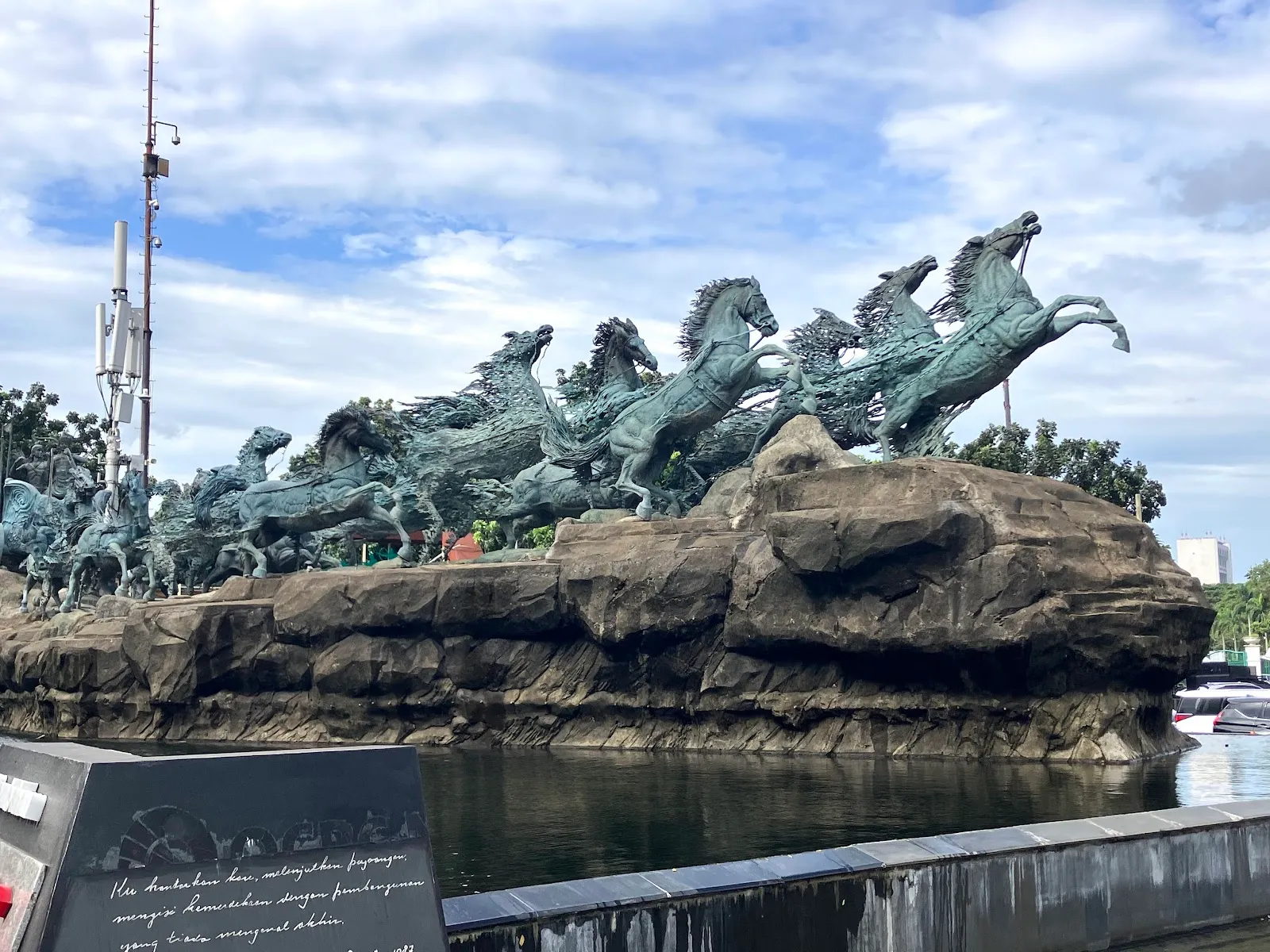
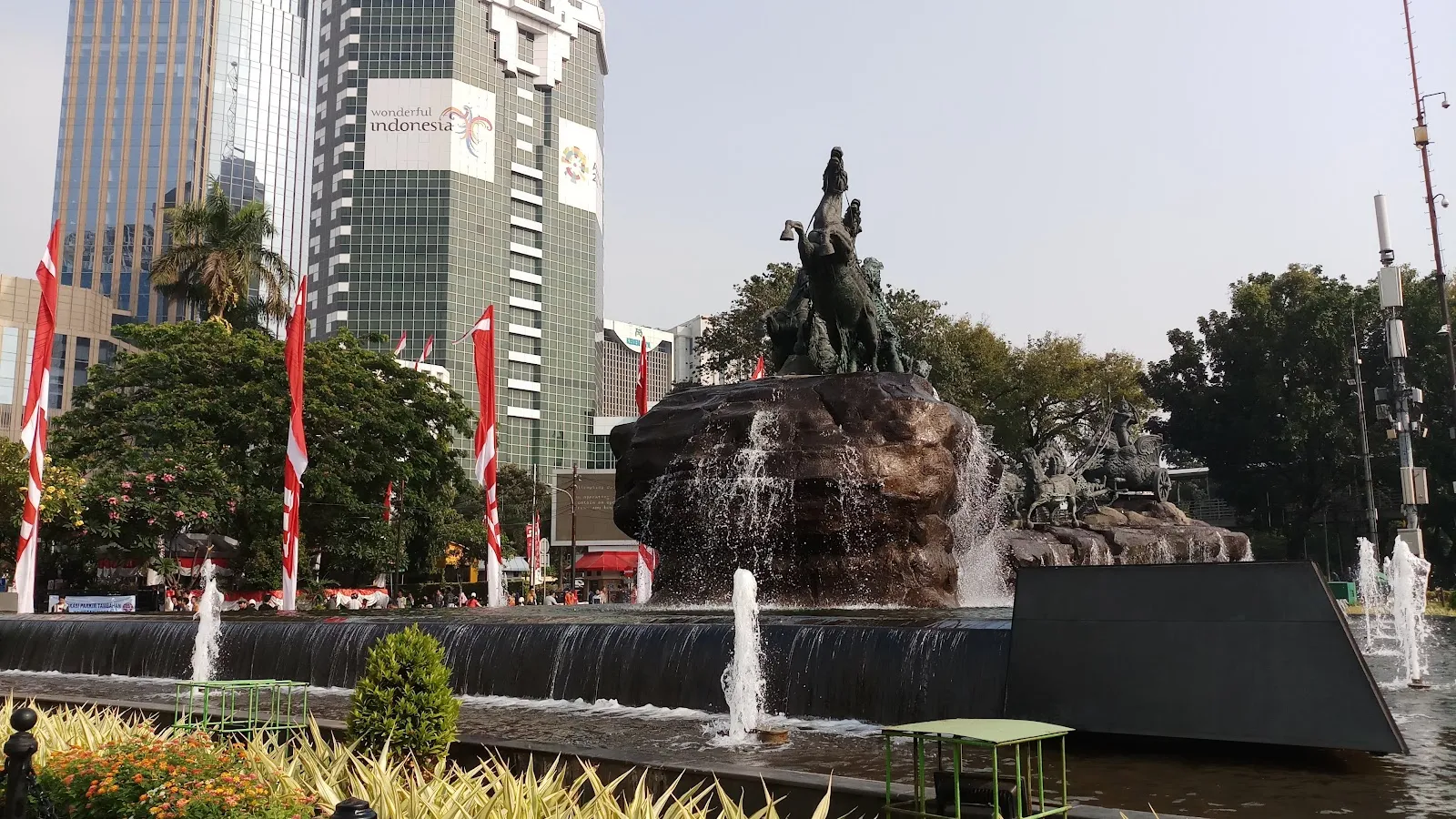
The Arjuna Wijaya Statue is a horse-drawn chariot sculpture with a copper fountain, set on a traffic island at the junction of Jalan MH Thamrin and Jalan Medan Merdeka Barat in Central Jakarta.

The Arjuna Wijaya Statue is a horse-drawn chariot sculpture with a copper fountain, set on a traffic island at the junction of Jalan MH Thamrin and Jalan Medan Merdeka Barat in Central Jakarta. It stands in front of the Indosat headquarters, near the National Monument (MONAS) and the MH Thamrin statue. The sculpture shows a scene from the Mahabharata, with Arjuna and Krishna in battle. It is worth a look in the evening or at night, when traffic is lighter and the figures are easier to see and photograph. The surroundings are clean and green, and the spot makes a simple stop between Jakarta's historic monuments.

Why the statue was made
Arjuna Wijaya Statue

The statue was built around 1987. The idea came from President Soeharto's state visit to Turkey that year, where he saw many monuments on the streets that explained Turkey's past.

The designer is Nyoman Nuarta, an Indonesian sculptor from Tabanan, Bali. The work combines a horse-drawn chariot with a fountain, and the fountain is made of copper.

The Mahabharata scene
Arjuna Wijaya Statue

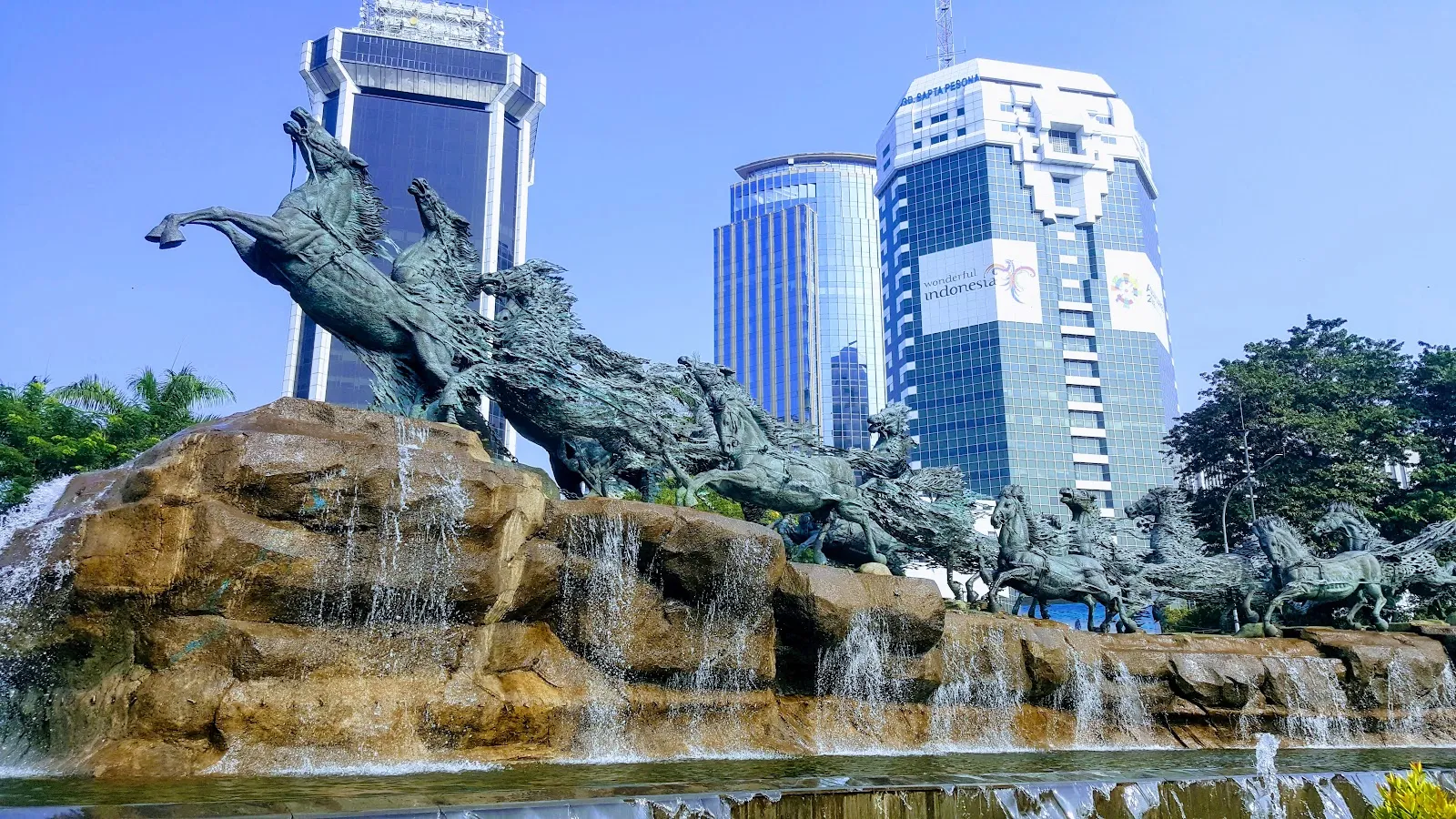
The sculpture shows Arjuna holding a bow, with Batara Kresna beside him as the charioteer. Their chariot has a garuda head and is pulled by eight horses. The eight horses stand for the eight principles of leadership known as Asta Brata.

The two figures come from the Pandava side and are shown in battle against Adipati Karna, who fights for the Kurawa camp. Knowing these names helps you read the scene: Arjuna is the figure with the bow, and Kresna guides the horses.

Visiting the junction

The statue stands at the junction of Jalan MH Thamrin and Jalan Medan Merdeka Barat, in front of the Indosat headquarters. It sits close to the National Monument (MONAS) and the MH Thamrin statue, which honours one of Indonesia's national heroes. The three can be seen on one visit.

The surroundings are clean and green, and the area is open at all hours. Because the statue is on a traffic island, the daytime traffic is loud and busy around it. Evening or night is the calmer time to look at the work and take pictures.

Preguntas frecuentes

Where is the Arjuna Wijaya Statue?

It stands at the junction of Jalan MH Thamrin and Jalan Medan Merdeka Barat in Central Jakarta, in front of the Indosat headquarters.

Is the statue open at night?

Yes. It is open 24 hours a day, every day. Night is the calmer time to visit, with less traffic around the island.

Who made the Arjuna Wijaya Statue?

The designer is Nyoman Nuarta, an Indonesian sculptor from Tabanan, Bali. The statue was built around 1987.

What story does the statue show?

It shows a scene from the Mahabharata, with Arjuna holding a bow and Batara Kresna as charioteer, in battle against Adipati Karna.

Is it a good place for photos?

Photos are easier at night, when traffic is lighter. During the day, traffic activity around the island makes photography harder.
Más lugares imprescindibles en Yakarta

Explorar todo