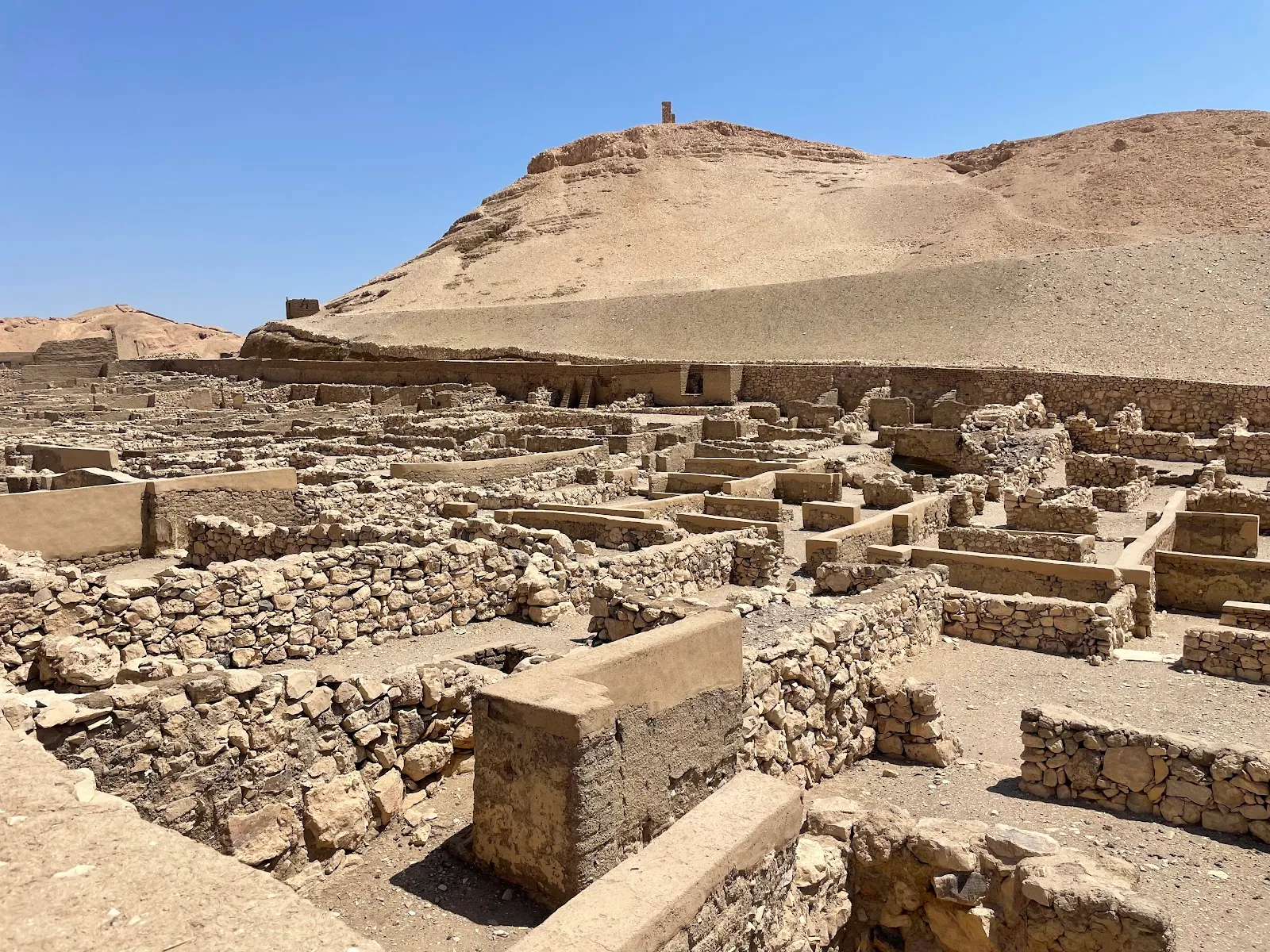
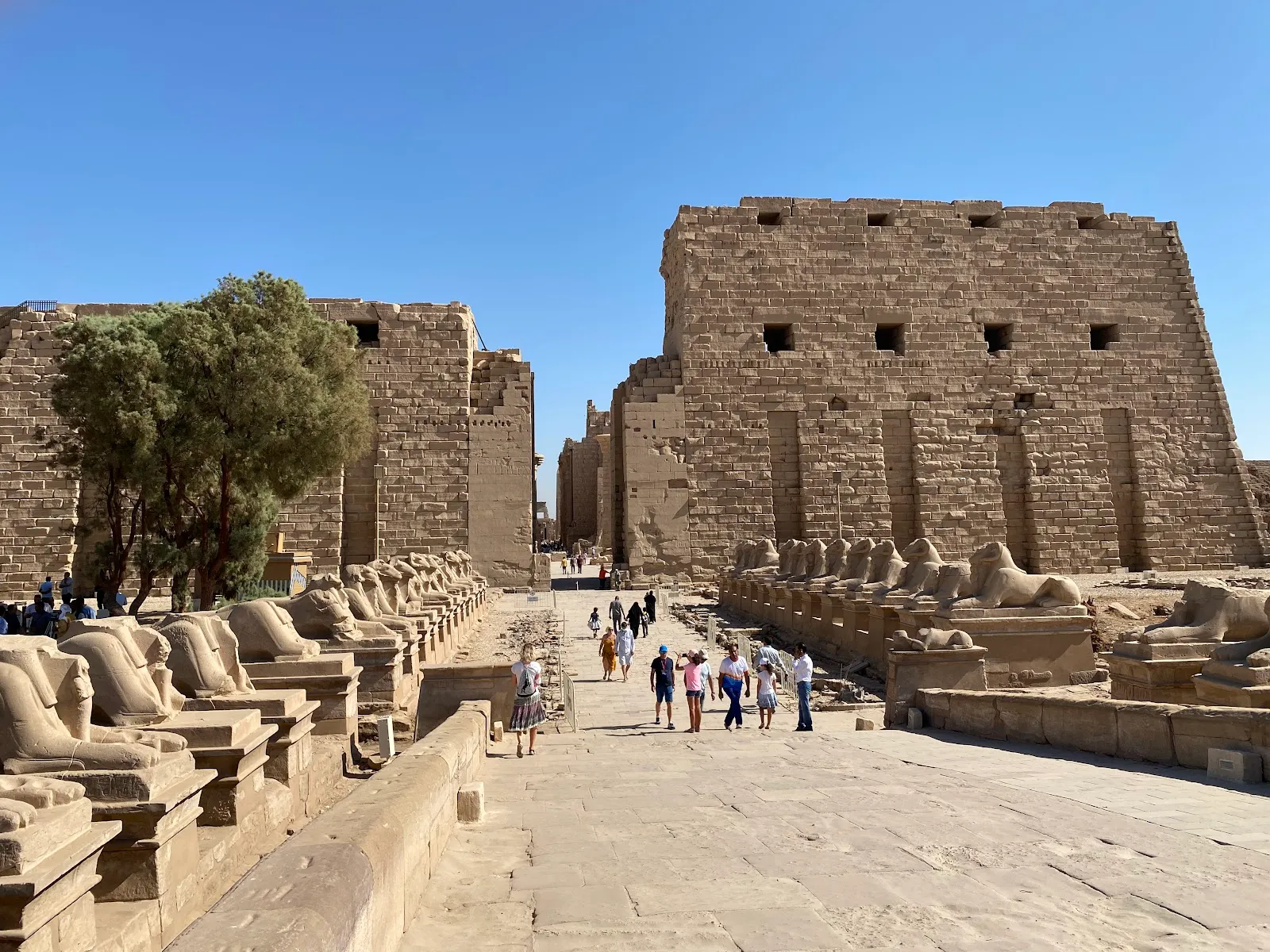
The Valley of the Kings is a royal burial ground on Luxor's West Bank, set between rocky desert slopes. Kings of the 18th, 19th and 20th dynasties were buried here, and the painted walls of their tombs have kept much of their colour and carved detail. The best known is Tutankhamun's tomb, small but still holding the king's mummy. Larger tombs, such as that of Seti I, show how far the decoration could go. The standard ticket covers three tombs, so choose which ones to see before you go in.
A royal burial ground in the desert
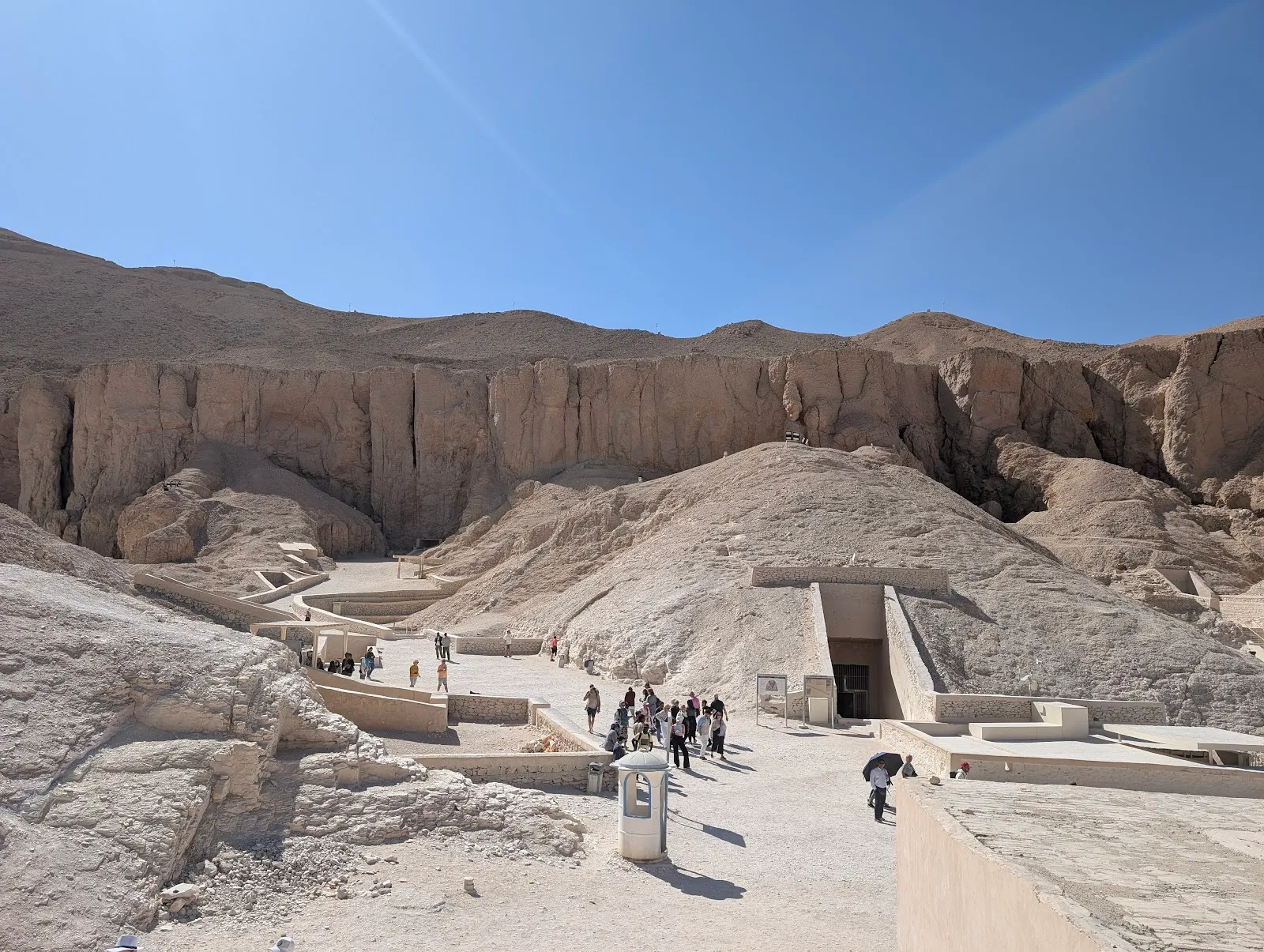
The Valley of the Kings lies between rocky slopes on the West Bank of the Nile at Luxor. It was the final resting place of kings of the 18th, 19th and 20th dynasties. After the great pyramids of earlier periods were plundered, later pharaohs chose to place their tombs deep in the desert instead.
The site drew wider attention after Howard Carter opened Tutankhamun's tomb and revealed the treasures of the young king. Today the tombs are known less for gold than for their walls, where carvings and paintings survive in strong colour.
Many visitors pair the valley with the nearby Temple of Hatshepsut, and most Luxor day tours cover both on the West Bank in one morning.
Tutankhamun's tomb
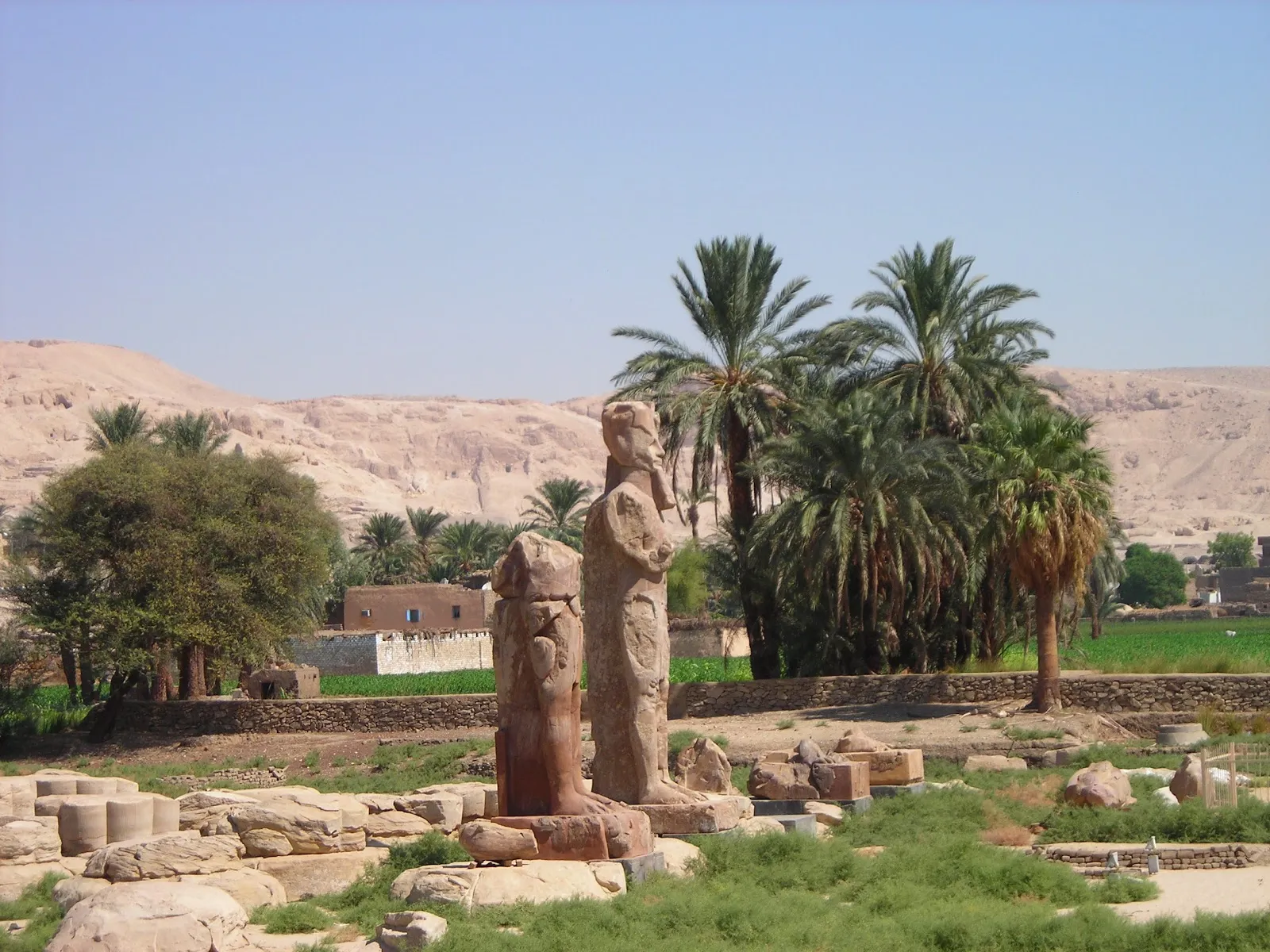
The tomb of Tutankhamun is small compared with others in the valley, so do not expect a grand scale. What draws people is the king himself: his mummy remains inside the tomb. It is a short visit, and it needs a separate ticket in addition to the standard entry.
The tomb of Seti I
Seti I's tomb is the long one. It runs for 137 metres and was fully decorated and well preserved when Giovanni Belzoni opened it in 1817. It has suffered since, but the art from Seti's reign is still counted among the finest in Egypt.
The tomb was closed to visitors for a long time and has since reopened. It carries the highest extra ticket of the well-known tombs, at around 2,000 EGP, and visitors who have paid it describe the size, the carving and the colour as worth the cost.
Other tombs worth choosing
Among the painted tombs often recommended are those of Ramses I, VI, VII and IX, along with Thutmose and Amenhotep. The tomb of Ramses III is known for its large size and bright wall paintings. Ramses V and VI share one extra ticket, at around 220 EGP.
The Tomb of Tausert and Setnakht is one of the largest in the valley and tends to draw far fewer people, which makes it a calm choice in a busy place. One of the open tombs goes deep underground, with a walk of around 300 metres to reach the interior.
Tickets, heat and crowds
The main ticket includes entry to three tombs. Tutankhamun's tomb (around 700 EGP), Ramses V and VI (around 220 EGP) and Seti I (around 2,000 EGP) are sold separately. These prices have been quoted by recent visitors, so check the current rates at the site.
Inside, the tombs can get stuffy when groups arrive together. A weekday visit can mean little or no wait at the entrance. In summer the valley is very hot, which is why early starts are advised, and a morning visit also leaves the afternoon free for other West Bank sights.
The entrance and parking are wheelchair accessible, and there is both free and paid parking.
Perguntas frequentes
What does the Valley of the Kings ticket include?
The main ticket covers entry to three tombs. Tutankhamun's tomb, Ramses V and VI, and Seti I need extra tickets, at roughly 700, 220 and 2,000 EGP. Check current prices on site.
How long do you need at the Valley of the Kings?
Allow several hours if you want to see multiple tombs, since each one has its own details. A shorter visit is possible if you choose only a few.
When is the best time to visit?
Early in the morning, soon after opening, before the heat builds and the tour groups arrive. A weekday can also mean a shorter wait at the entrance.
Is Tutankhamun's mummy in his tomb?
Yes. His mummy is inside the tomb in the valley, which is small but needs an extra ticket.
Should I bring cash?
Yes. Card payment may not be accepted everywhere, and some facilities on site, such as toilets, charge a small fee.