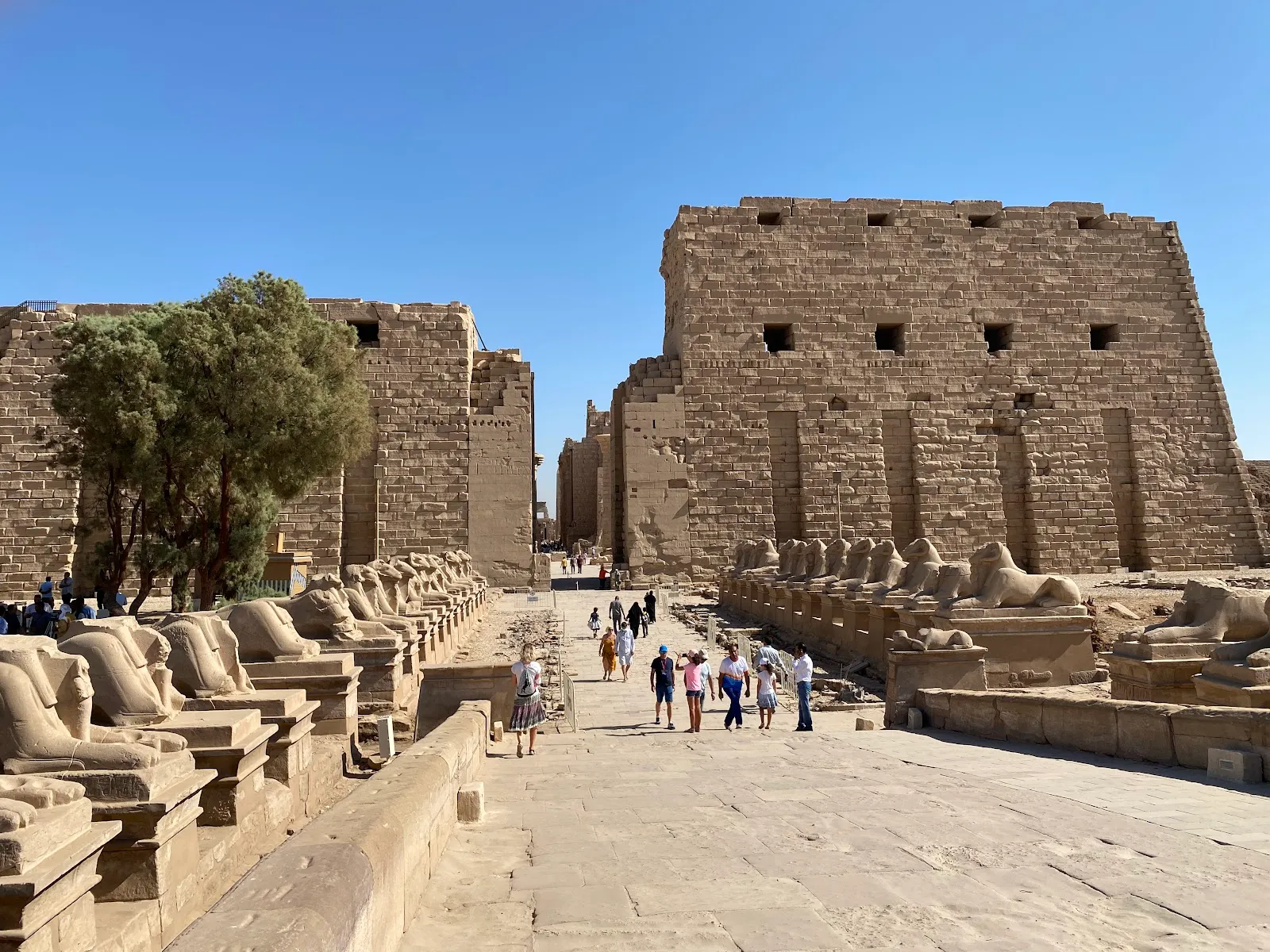
Luxor Temple stands on the East Bank in the centre of Luxor, close to the Nile and the modern city. Built mainly under Amenhotep III and expanded by Ramses II, it is one of Egypt’s best-preserved ancient temples. Walk past the statues at the entrance, then explore the courts, columns and carved walls. Look for the Avenue of Sphinxes, once the ceremonial route linking the temple with Karnak, and scenes of Alexander the Great shown in Egyptian dress. At night, floodlighting brings out the stonework and its shadows.
A temple in the centre of Luxor
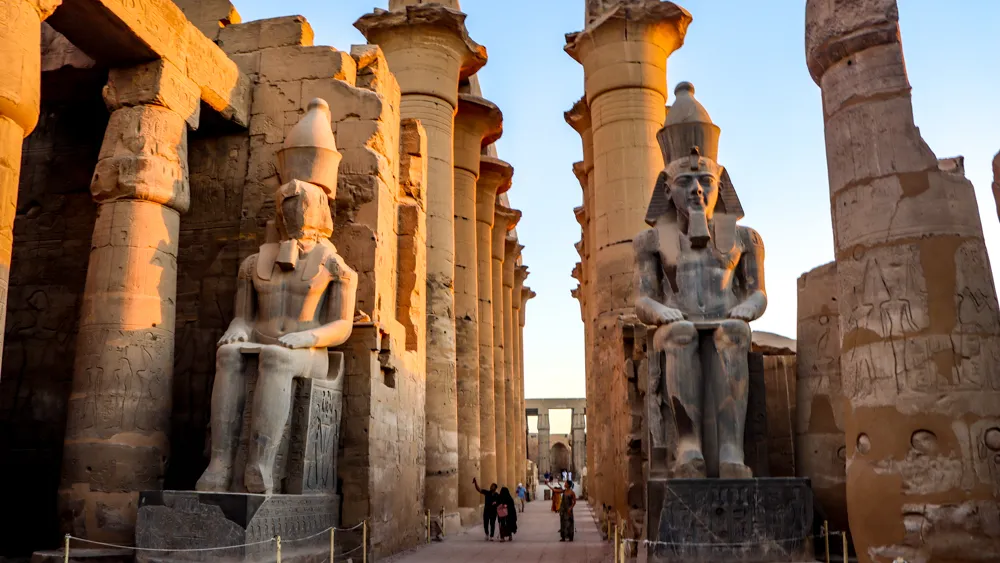
Luxor Temple is on the East Bank of the Nile, in the middle of the modern city. Its setting brings ancient stonework close to present-day streets, with the Nile also nearby. The temple is among Egypt’s best-preserved ancient monuments.
Construction began under the 18th Dynasty, with Amenhotep III responsible for much of the complex. Later rulers added to it, including Tutankhamun and Ramses II. Its long building history is visible in the courts, gateways, statues and carved surfaces. One obelisk that once stood at the entrance was later moved to Paris, where it stands at Place de la Concorde.
The Avenue of Sphinxes and the Feast of Opet
The Avenue of Sphinxes linked Luxor Temple with the temple complex at Karnak. During the annual Feast of Opet, statues of Amun, Mut and Khonsu travelled in procession between the two places. The route helped make Luxor Temple a setting for important ceremonies tied to the royal role of the pharaoh.
The temple is also associated with the renewal of kingship and royal coronations, whether carried out in person or understood symbolically. Alexander the Great was shown in Egyptian dress in temple scenes and claimed a connection to his coronation there, though the available material does not establish that he visited Luxor.
What to look for inside
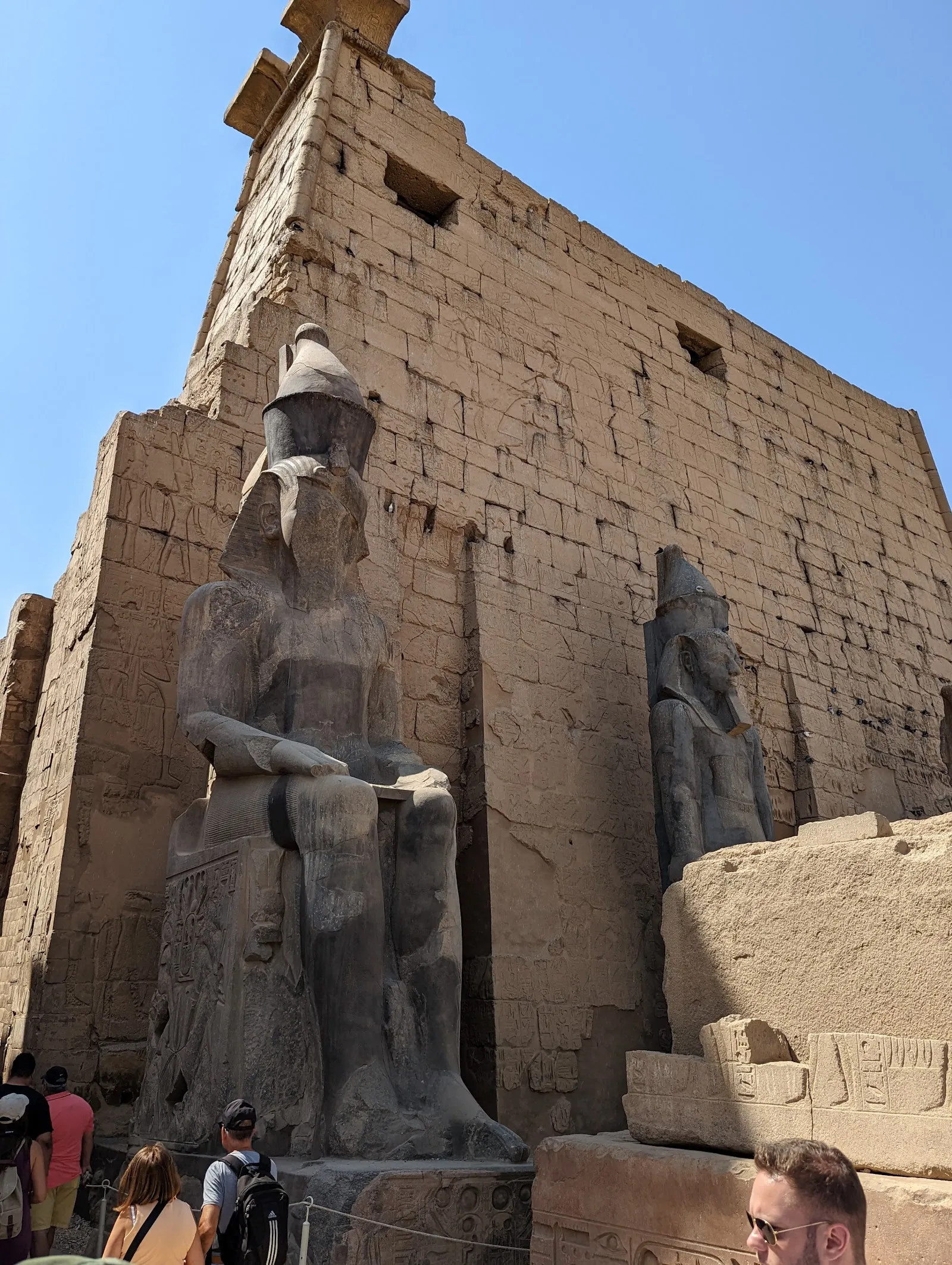
At the entrance, large seated statues of Ramses II flank the approach. The first pylon carries carved scenes, including images of the king’s military achievements. Beyond it, explore the temple’s open spaces and rows of columns, taking time to notice the hieroglyphs and reliefs cut into the walls.
A chamber contains scenes commonly called the Divine Birth scenes, which tell the story of Amenhotep III’s divine lineage. The complex also has a mosque built over an earlier church; it remains part of the site. These later layers are a reminder that the temple precinct continued to have a place in religious life after ancient Egypt.
Planning your visit
The temple is open daily from 6 am to 8 pm. Arriving early can help you avoid crowds and the strongest heat of the day. If you visit later, the temple’s floodlighting brings out the scale of the statues and the lines of the columns; the Avenue of Sphinxes is illuminated too.
Carry water and sunscreen, especially around midday, and factor in the higher cost of water inside. Online ticket purchase is suggested as a way to save time at the entrance. Seasonal flooding has been mentioned as a possible issue, so ask locally about conditions when planning your visit. The site has wheelchair-accessible entrance, seating and parking.
Perguntas frequentes
Where is Luxor Temple?
It is on the East Bank of the Nile, in the centre of Luxor.
When is Luxor Temple open?
It is open daily from 6 am to 8 pm.
What should I see at Luxor Temple?
Look for the statues of Ramses II at the entrance, the Avenue of Sphinxes, carved scenes and the columns. A chamber contains scenes about Amenhotep III’s divine birth.
Is Luxor Temple accessible to wheelchair users?
The site has a wheelchair-accessible entrance, seating and parking.