Planear uma viagem
Idioma: Português
Planeador de viagensPlaneie a sua viagem num mapa

Principais destinos

EnglishDeutschFrançaisEspañolPortuguêsPortuguês (BR)Italiano
Aviso de viagem · EgitoAlguns governos aconselham a não viajar para partes de Egito.Os avisos abrangem apenas estas áreas: Faixa de 50 km ao longo da fronteira com a Líbia, Faixa de Gaza, Fronteira com a Líbia (sem profundidade definida), Governadoria do Sinai Norte, Fronteira com o Sudão (sem profundidade definida), Deserto Ocidental, Governadoria de Ismailia (a leste do Canal de Suez), Norte da Governadoria do Sinai Sul (além da estrada Santa Catarina–Nuweiba).As recomendações dependem do seu passaporte. Leia as recomendações do seu próprio governo antes de reservar.Recomendações oficiais
Áreas com avisos
  • Faixa de 50 km ao longo da fronteira com a Líbia · evitar todas as viagens · Canadá, Nova Zelândia
  • Faixa de Gaza · evitar todas as viagens · Canadá, França, Nova Zelândia
  • Fronteira com a Líbia (sem profundidade definida) · evitar todas as viagens · Alemanha, Espanha, França, Itália
  • Governadoria do Sinai Norte · evitar todas as viagens · Canadá, Espanha, França, Irlanda, Nova Zelândia, Reino Unido
  • Fronteira com o Sudão (sem profundidade definida) · evitar todas as viagens · Alemanha, Espanha, França, Itália
  • Deserto Ocidental · evitar todas as viagens · Canadá, Nova Zelândia, Reino Unido, EUA
  • Governadoria de Ismailia (a leste do Canal de Suez) · evitar viagens não essenciais · Canadá, Reino Unido
  • Norte da Governadoria do Sinai Sul (além da estrada Santa Catarina–Nuweiba) · evitar viagens não essenciais · Canadá, Nova Zelândia, Reino Unido

Também indicado por um governo: Faixa de 20 km ao longo da fronteira com a Líbia (Reino Unido), Zonas de fronteira (zonas militares) (EUA), Área da fronteira Egito-Israel (Alemanha), Península do Sinai norte e central (EUA), Governadoria de Port Said (a leste do Canal de Suez) (Canadá), Zona de fronteira de Rafah (Espanha), Governadoria de Suez (a leste do Canal de Suez) (Canadá), Estrada Bahariya–Siwa (Reino Unido), Trapézio de Bir Tawil (Reino Unido), Deserto a oeste de Mersa Matruh, Faium e Abu Simbel (França), Região do Gebel Uweinat ao Gilf el-Kebir (Itália), Triângulo de Halaib (Reino Unido), Áreas desérticas não turísticas (Itália), Posto de fronteira de Rafah (Irlanda), Península do Sinai Sul (Alemanha)

GovernoRecomendaçõesAtualizadoLer as recomendações
Reino Unido (FCDO)No advice against the whole country (regional advisories)–Ler as recomendações
Estados Unidos (Departamento de Estado)Exercise increased caution (regional advisories)15/07/2025Ler as recomendações
Canadá (Assuntos Mundiais)Exercise a high degree of caution (regional advisories)–Ler as recomendações
Alemanha (Ministério dos Negócios Estrangeiros)Besondere Vorsicht walten lassen (keine Gesamtwarnung) (regional advisories)13/10/2026Ler as recomendações
Nova Zelândia (SafeTravel)Exercise increased caution elsewhere in Egypt (regional advisories)–Ler as recomendações
Irlanda (Departamento dos Negócios Estrangeiros)High degree of caution (regional advisories)–Ler as recomendações
França (Ministério para a Europa e Negócios Estrangeiros)Increased vigilance for the rest of the country (regional advisories)–Ler as recomendações

Verificado diariamente a partir das recomendações publicadas pelos governos; última verificação 2/11/2026.RoamLedger resume as recomendações oficiais; não são recomendações de nenhum governo.

Bab Al Futuh
Local histórico

Bab al-Futuh

Bab al-Futuh is a Fatimid-era city gate at the northern end of Al-Muizz Street in Islamic Cairo.

Bab al-Futuh is a Fatimid-era city gate at the northern end of Al-Muizz Street in Islamic Cairo. Built in 1087, its broad stone arch and rounded towers mark the former boundary of the old city. Look closely at the carved stonework, then walk the nearby historic streets, where mosques, markets and small shops line the route. The gate works well as a stopping point at the end of a walk through Al-Muizz Street, or as a starting point for exploring this part of Cairo on foot.

A northern gate of Fatimid Cairo
Bab al-Futuh
Bab al-Futuh

Bab al-Futuh stands at the northern end of Al-Muizz Street and once formed part of the defences around Cairo. The gate was completed in 1087 under the Fatimid caliph al-Muntasir Billah, during the rule of commander Badr al-Jamali. Its name is also rendered as the Gate of Conquests.

The city walls controlled access to the capital and could be closed in times of danger. Bab al-Futuh was one of three major gates associated with Fatimid Cairo, alongside Bab al-Nasr and Bab Zuweila. Its military purpose is still legible in its scale and solid construction.

Stone towers and a broad arch
Bab al-Futuh
Bab al-Futuh

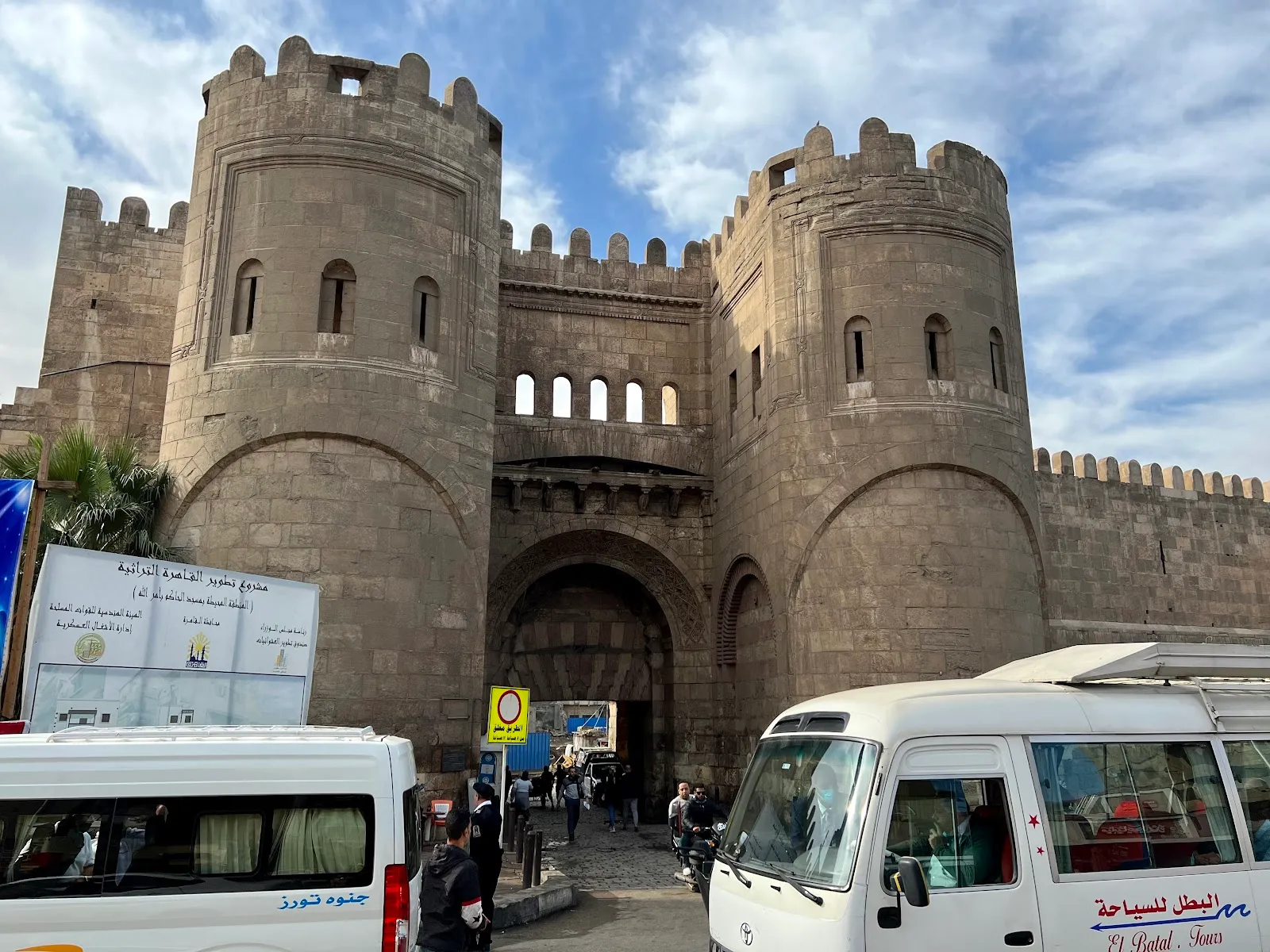
The gate's rounded towers flank a large stone arch. Carved details soften the defensive form, bringing ornament into a structure designed for protection. The curved walls and heavy masonry make the gate distinct from the busy streets around it.

Take time to look at the stonework from both sides as you pass through. The arch marks a transition between the historic street and the area beyond the old city boundary. Returning pilgrims from Mecca once entered Cairo symbolically through this gate.

Walking Al-Muizz Street

Bab al-Futuh is a natural endpoint for a walk along Al-Muizz Street, passing historic mosques and market lanes. The Al-Hakim Mosque is nearby, and Bab al-Nasr lies farther along the city wall. Shops and bazaars around the route sell handmade souvenirs and other goods.

A longer visit can include several landmarks and a pause for tea or coffee along the way. The walk takes place in active streets, with shops opening and local activity gathering as the day goes on. An early Saturday visit is suggested for a quieter start, while the surrounding market offers more to browse once shops are open.

Perguntas frequentes

When was Bab al-Futuh built?

The gate was completed in 1087 under Fatimid caliph al-Muntasir Billah, during the rule of Badr al-Jamali.

How long should I allow for a visit?

Allow 2 to 3 hours for a walk through the nearby historic area if you plan to enter several landmarks and stop for a drink.

What can I see near Bab al-Futuh?

Al-Muizz Street, historic mosques, market lanes and Bab al-Nasr are nearby. Shops along the route sell handmade souvenirs.

When is a quieter time to visit?

Saturday before 10 am is suggested for a quieter walk, while shops are just beginning to open.

Mais locais imperdíveis em Cairo

Explorar tudo