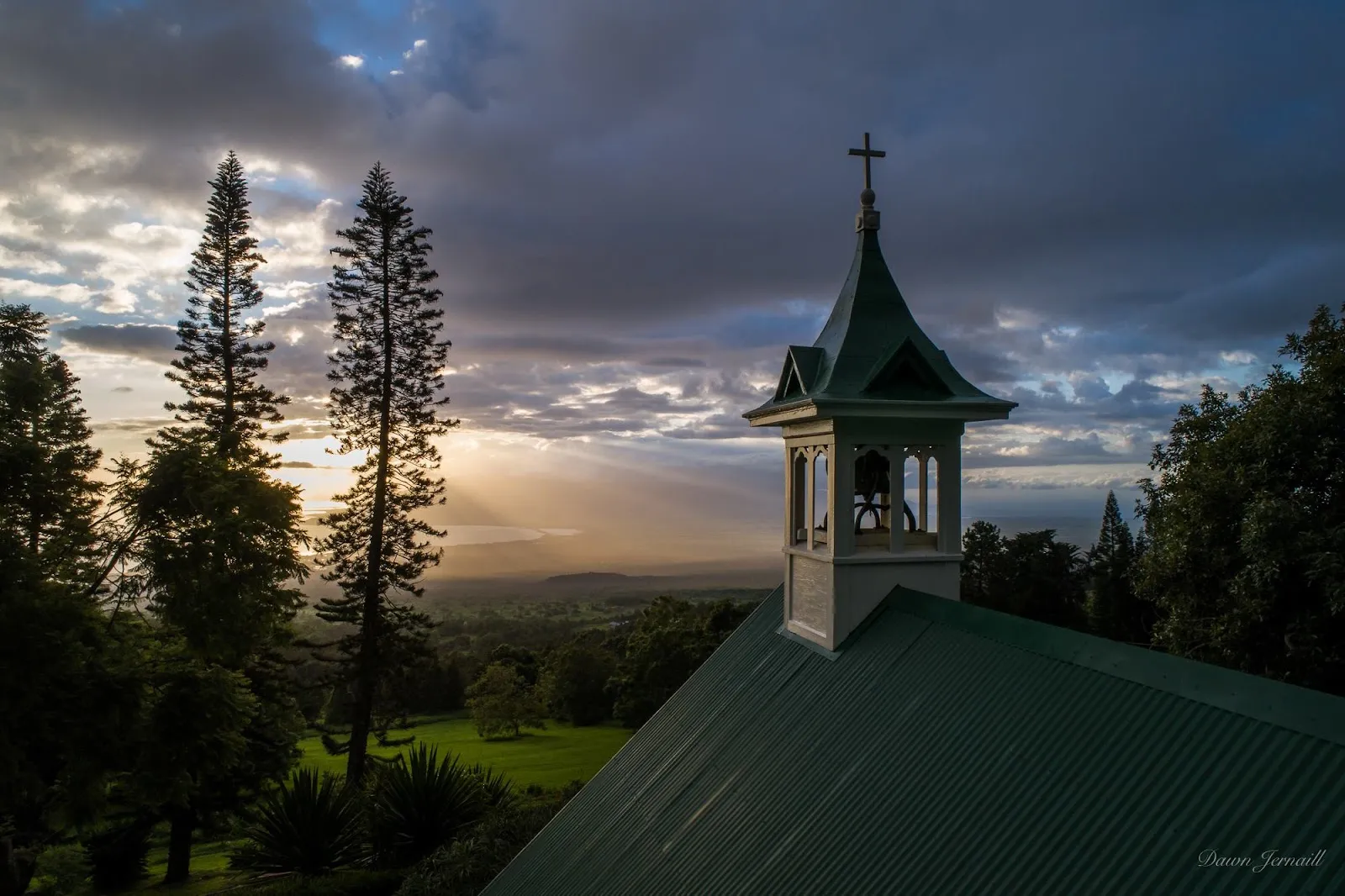
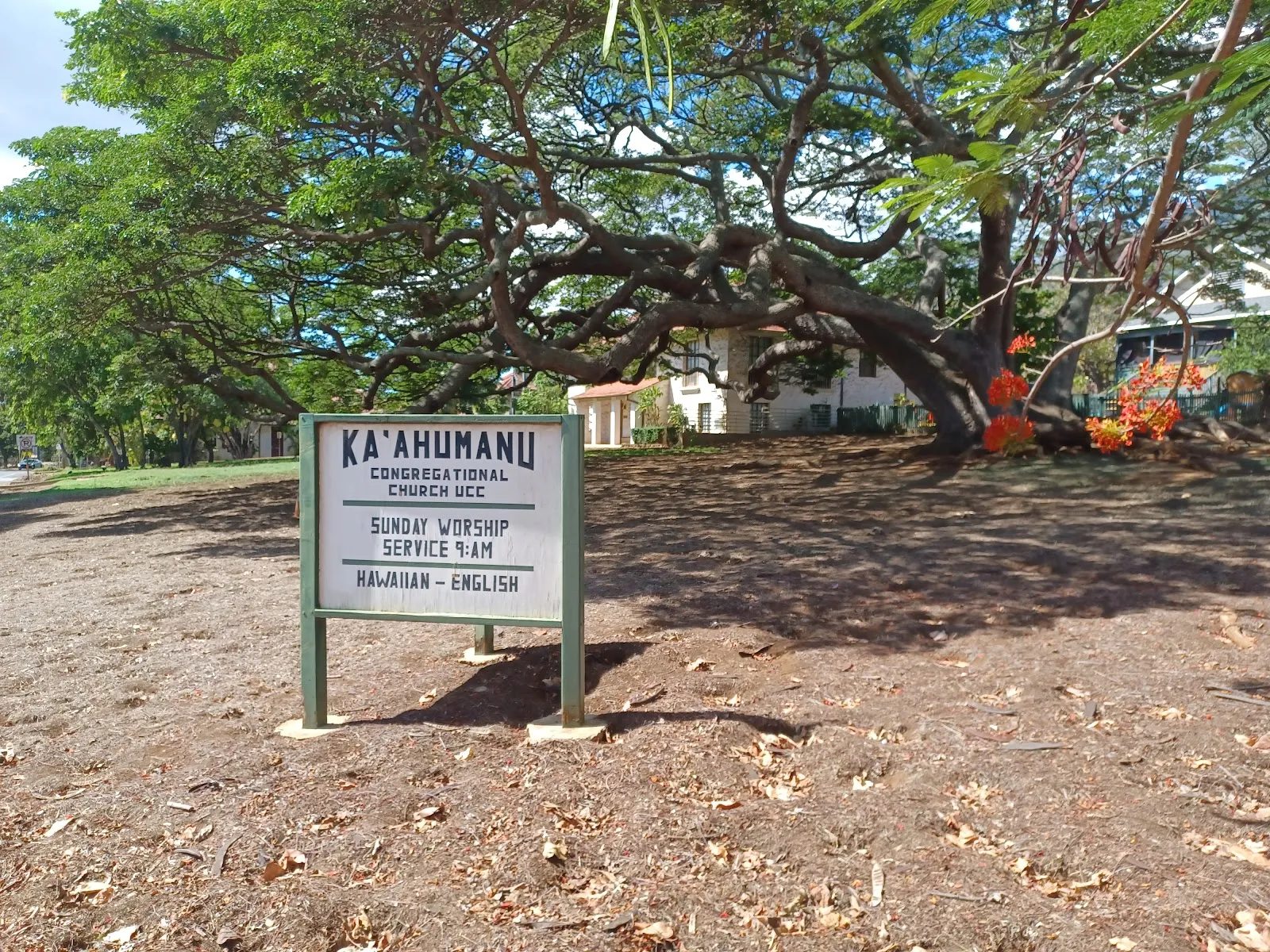
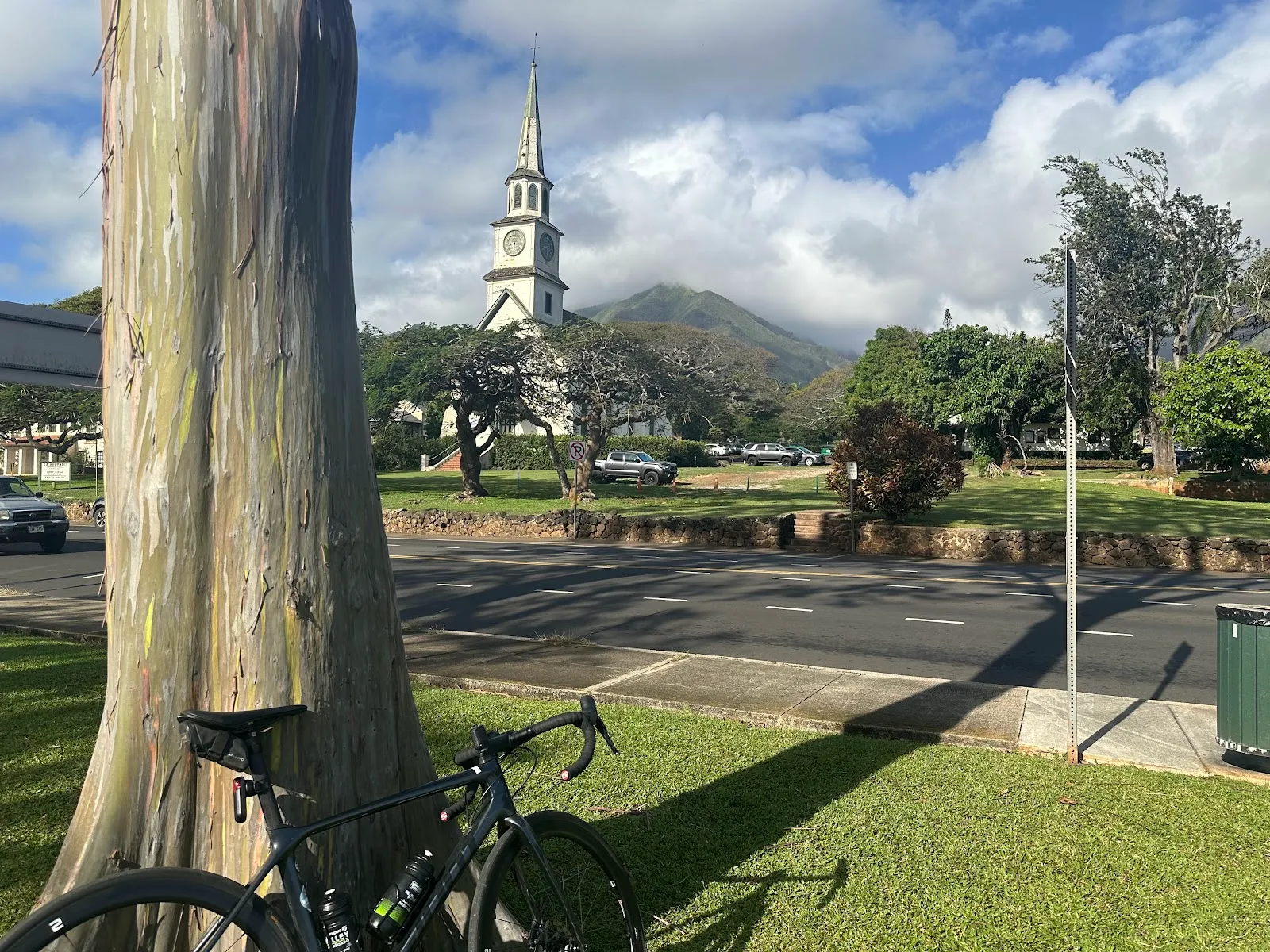
Kaahumanu Church stands on South High Street in Wailuku, Maui, and welcomes visitors to its Sunday worship. The congregation was established in 1832, and the present Gothic Revival building, designed in a New England style, dates to the 1870s. Queen Kaʻahumanu, after whom the church is named, visited the congregation in 1832. Attend a service to hear worship in both Hawaiian and English, or take time to view the church and its peaceful grounds. The church has wheelchair-accessible parking, an entrance and a restroom.
A church named for Queen Kaʻahumanu
The congregation began in Wailuku in 1832. Queen Kaʻahumanu, a Christian convert and an influential figure in Hawaiian history, visited that year. The church is named for her; accounts of its history connect the name with her request that a church bear it.
The present building was erected in the 1870s by missionary Edward Bailey. Its Gothic Revival form draws on New England church architecture, a style visible in its white exterior. The church’s history brings together its missionary origins and its continuing connection to Hawaiian heritage.
Worship and a visit
Sunday worship includes both Hawaiian and English. Attending a service gives visitors a chance to hear the languages used in the congregation’s religious life. The church also livestreams services, an option for those who cannot attend in person.
Visitors are welcomed at the church, and the surrounding grounds provide space to pause or take photographs. The site has an accessible entrance, parking and restroom. For current service arrangements, check the church website before setting out.
Preguntas frecuentes
Where is Kaahumanu Church?
It is at 103 S High St in Wailuku, Maui.
When can I attend a service?
Sunday morning worship is held in person. The church also livestreams services; check its website for current details.
What languages are used during worship?
Sunday worship includes both Hawaiian and English.
How old is Kaahumanu Church?
The congregation was established in 1832. The present building dates to the 1870s.