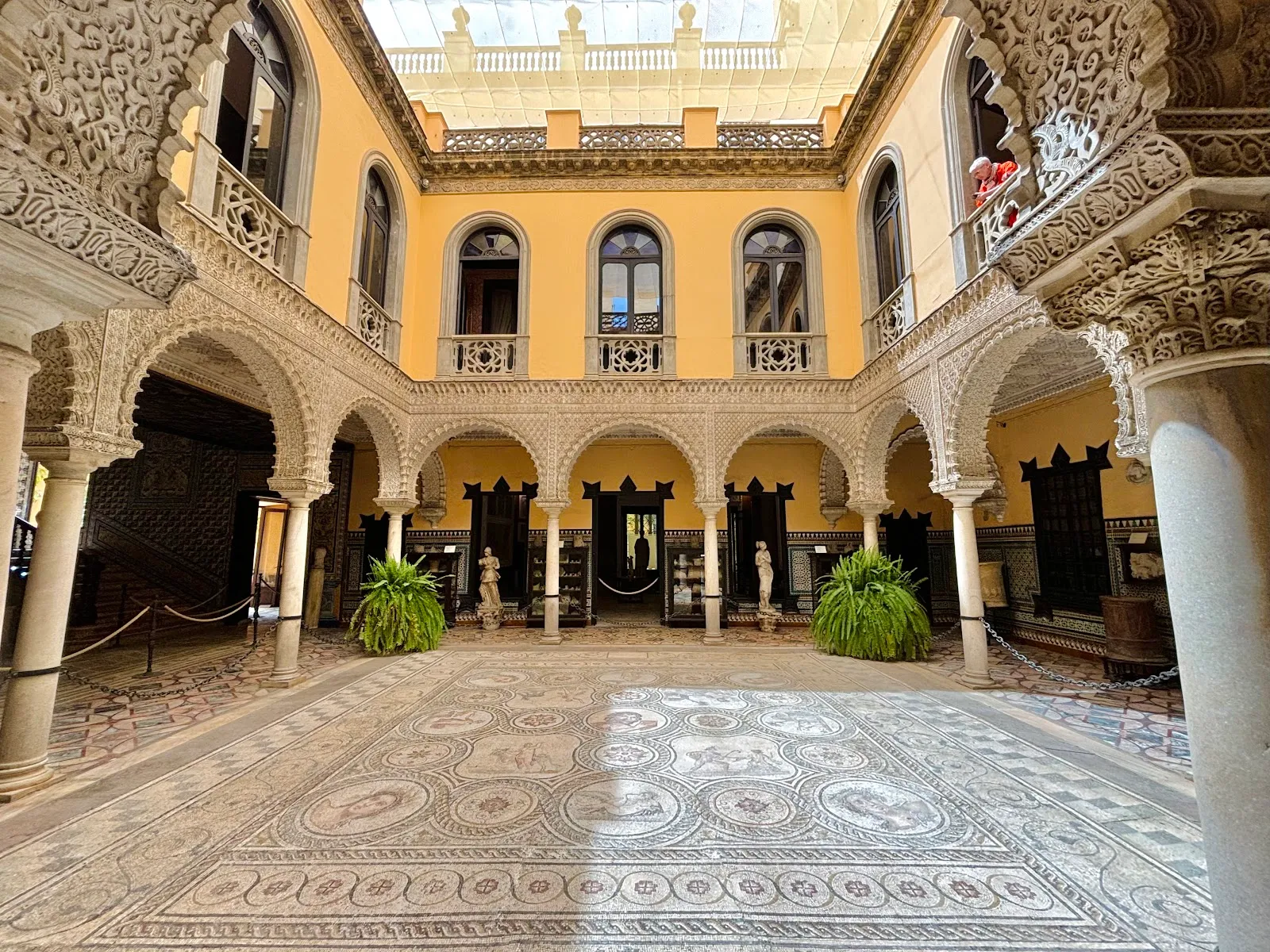
On Cuna Street in Seville’s old town, this 16th-century palace brings together decorated interiors and a collection assembled by the Countess of Lebrija. Its ground floor is known for Roman mosaic floors, including pieces brought from Itálica, alongside patterned tiles and courtyards. A visit upstairs, available by guided tour, reveals the countess’s rooms and more of her collection, with objects from Spain, China and Morocco. Go on a weekday for a quieter look around, and book ahead if you want to see the upper floor.
A 16th-century house shaped by its owner
The palace dates to the 16th century. In 1901, Regla Manjón Mergelina, the Countess of Lebrija, bought the house and began restoring it. Its interiors reflect her interest in archaeology and art: she brought decorative elements and objects from different places into the building and used them to shape its character.
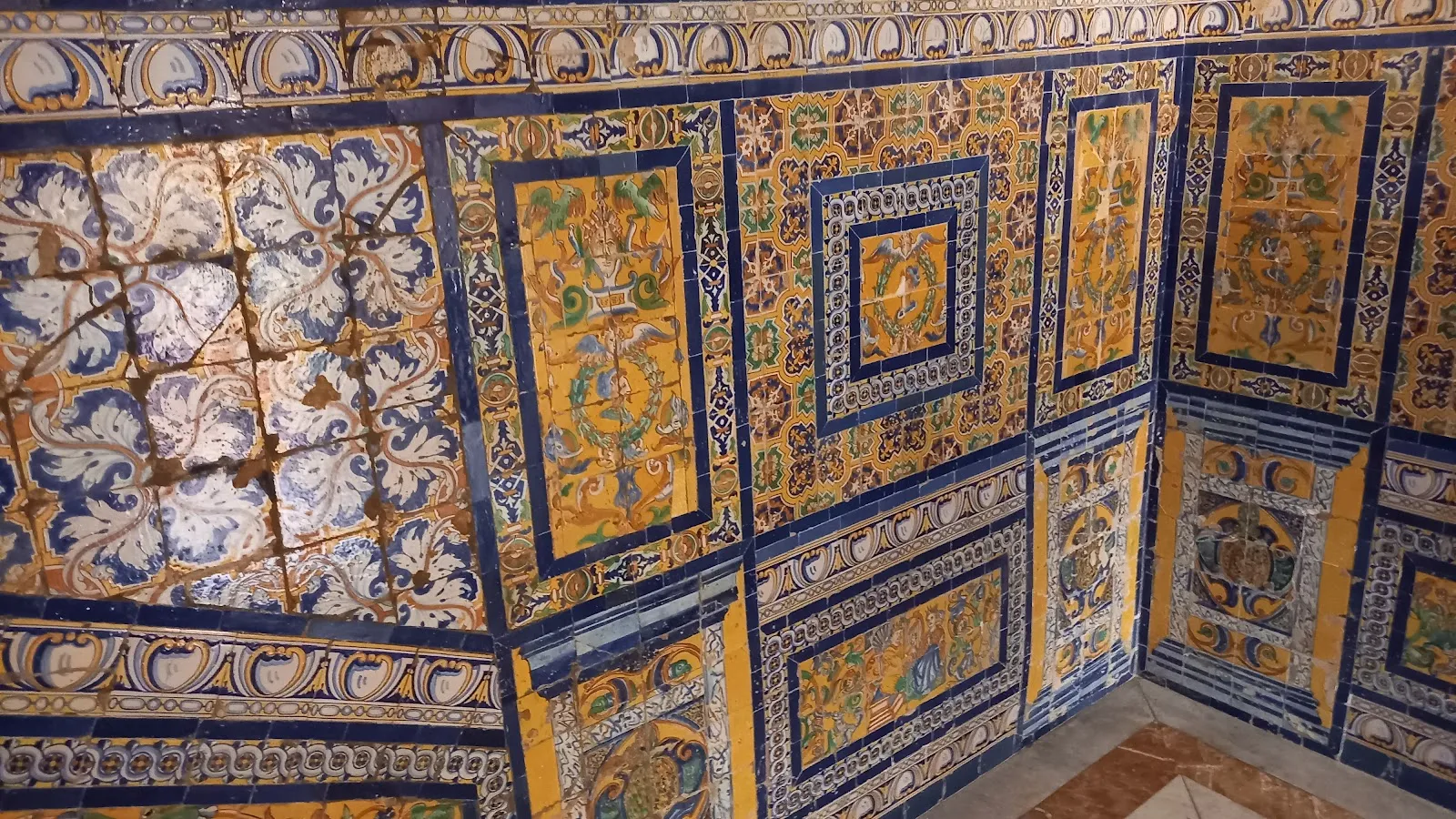
Some rooms retain their original decor. Elsewhere, restored details include tiles and coffered wooden ceilings salvaged from convents and palaces. Arabic-inspired arches and patterned surfaces add to the varied interiors. The building is a collection in its own right, as well as a setting for the objects the countess gathered.
Mosaics from Itálica
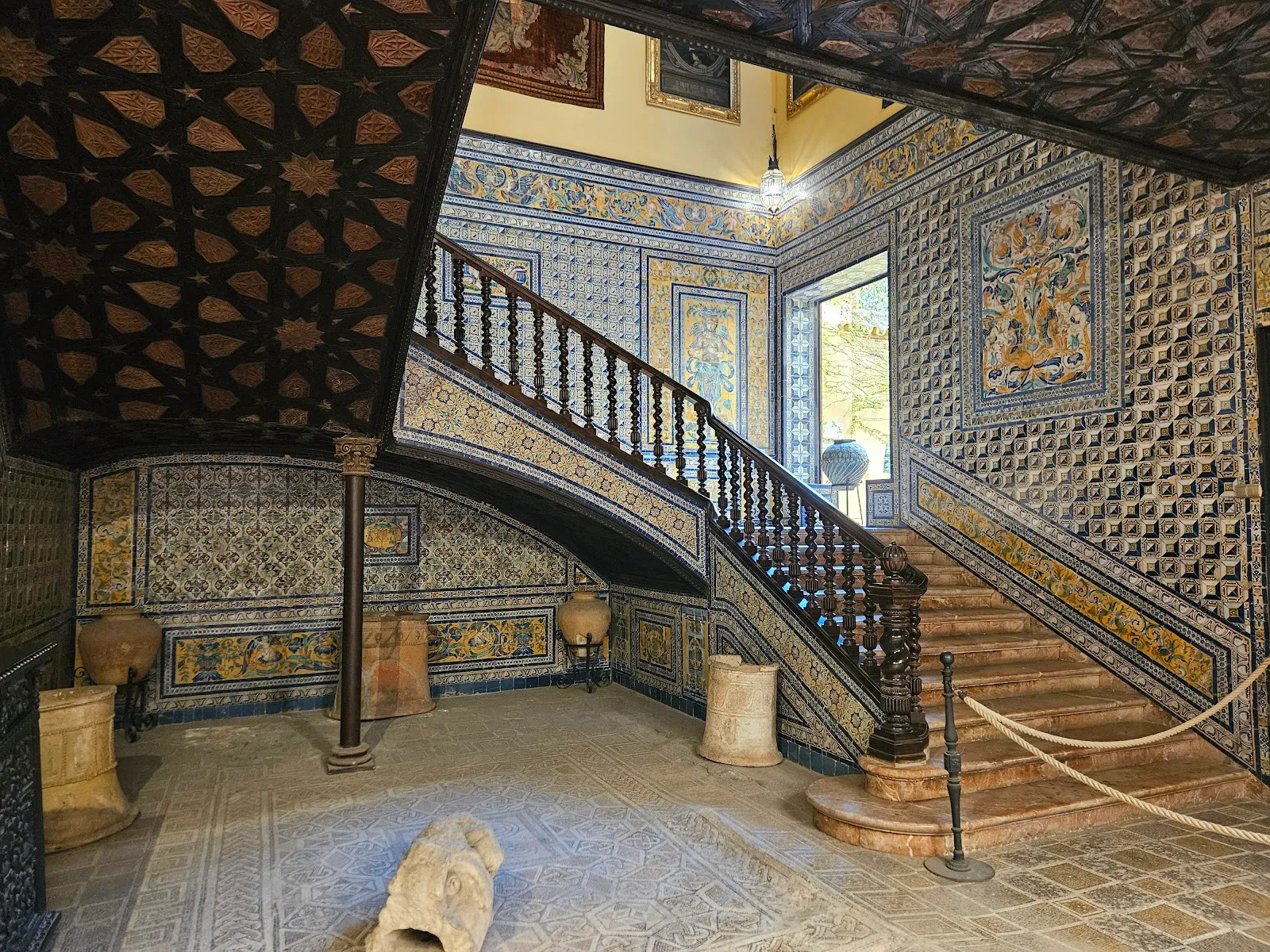
Roman mosaics are among the palace’s defining features. Several were brought from archaeological remains, including a mosaic floor from Itálica, the Roman city outside Seville. Mosaic work appears across the ground floor, with a prominent example set into the central courtyard.
Take time to look down as you move through the rooms and courtyards: the floors are a central part of the visit. Tiles, sculpture and pottery sit alongside the mosaics, bringing together decorative details from different periods and cultures.
The collection and upper rooms
The palace holds objects collected by the countess from Spain and farther afield, including pieces associated with Europe, China and Morocco. The ground floor gives you a look at the collection and the decorated rooms. A guided visit upstairs adds a more personal dimension: the rooms show how the family lived, with furniture, dishes, a library and a chapel among the spaces described in visitor accounts.
The upper floor also gives insight into the countess’s life and collecting. It is the part of the palace to choose if you want more than a look at the mosaics and interiors downstairs. Photography is not allowed upstairs, so plan to take in the rooms without relying on pictures.
Preguntas frecuentes
Can you visit the upper floor of Palacio de la Condesa de Lebrija?
Yes. A guided tour provides access to the upper rooms, which include family interiors and parts of the countess’s collection.
What can you see at the palace?
The palace has Roman mosaics, patterned tiles, courtyards and a collection of objects gathered by the Countess of Lebrija. Upstairs, a guided visit includes rooms such as the library and chapel.
Where did the palace’s Roman mosaics come from?
Some mosaics were brought from archaeological remains, including Itálica, the Roman city outside Seville.
Can you take photos upstairs?
A visitor account says photography is not permitted on the upper floor.