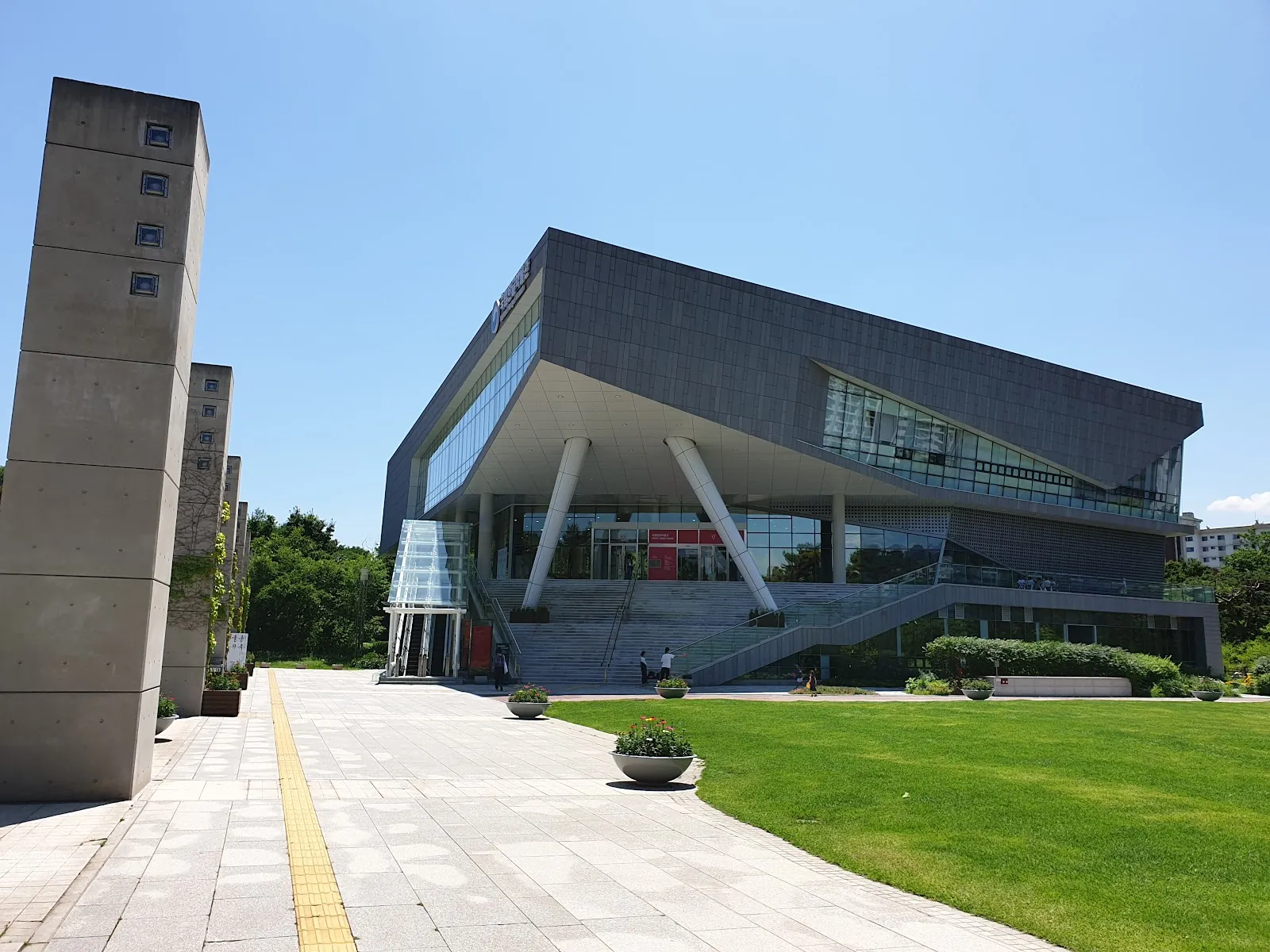
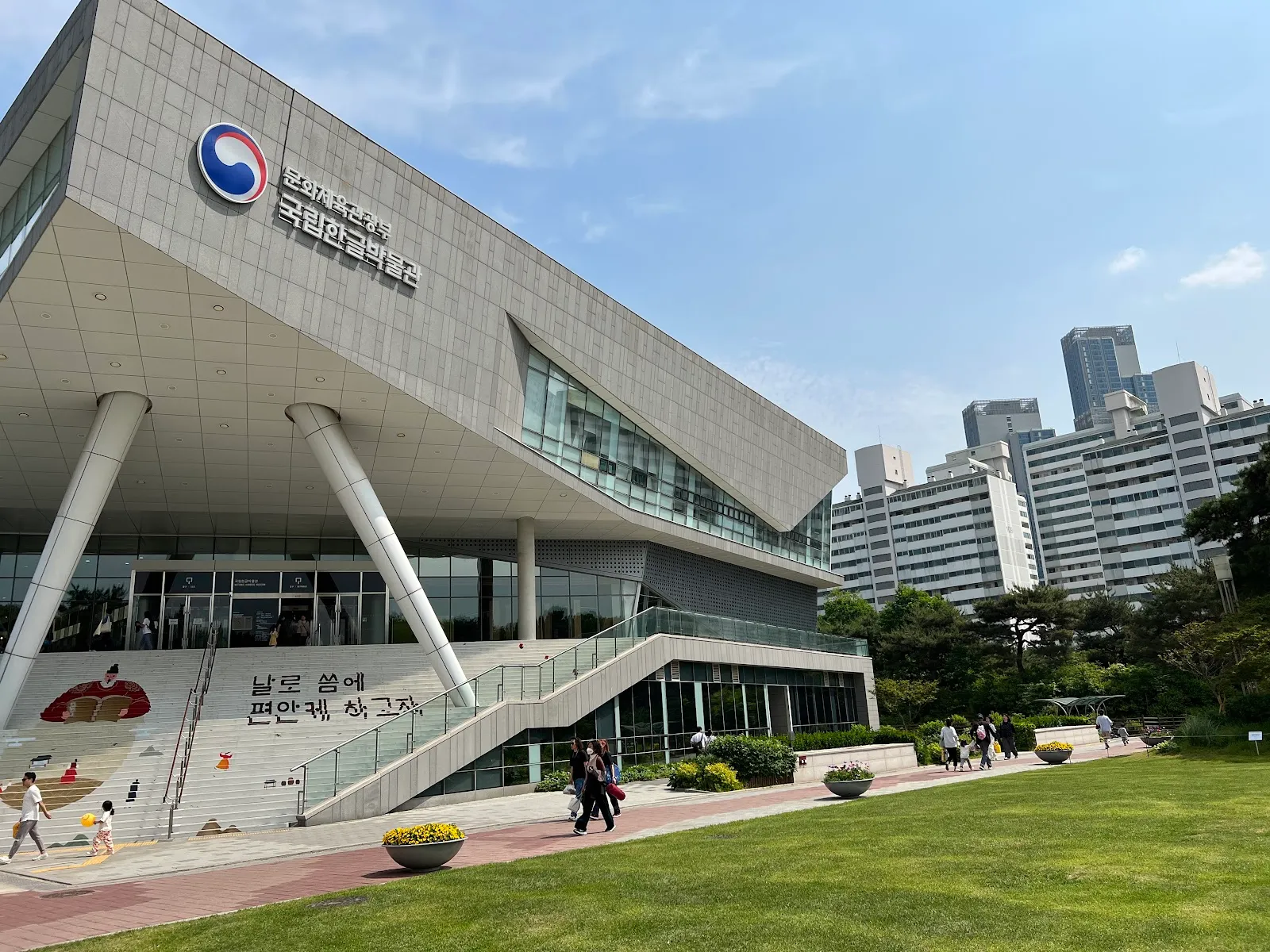
At 139 Seobinggo-ro in Yongsan, the National Hangeul Museum traces the history of Korea’s writing system. Its main exhibition explains how King Sejong created Hangeul in the 15th century to help more people read and write. Displays also cover the Chinese characters used before Hangeul and the design of the letters, whose shapes follow the vocal organs used to pronounce them. QR codes provide additional information in multiple languages. The museum is on the grounds of the National Museum of Korea, so you can visit both in one outing.
Why Hangeul was created
Before Hangeul, Korean writing relied on Chinese characters, which only the upper classes could read and write. In the 15th century, King Sejong created a writing system intended to make literacy accessible to ordinary people. The museum explains this change and the place of Hangeul in Korea’s history.
The Korean alphabet is a writing system, not a language invented by the king. Its letters represent speech sounds, and the shapes of the consonants reflect the vocal organs used to pronounce them.
Reading the exhibits
The permanent exhibition uses QR codes to provide additional information in multiple languages. Scan the barcode with your phone before entering so you can access this material as you explore. English translations are limited in some areas, so the QR information can be useful.
The museum is on the grounds of the National Museum of Korea. Visiting both makes a practical cultural outing in Yongsan; allow a few hours for the Hangeul Museum itself.
Preguntas frecuentes
Is admission to the National Hangeul Museum free?
The museum has free admission.
How long should I spend at the National Hangeul Museum?
Allow a few hours to explore the museum.
Does the museum have information in English?
Some information is available through QR codes in multiple languages, but English translations are limited in some areas.
Can I visit the National Museum of Korea at the same time?
Yes. The National Hangeul Museum is on the grounds of the National Museum of Korea.