Planifica un viaje
Idioma: Español
Planificador de viajesPlanifica tu viaje en un mapa

Destinos principales

EnglishDeutschFrançaisEspañolPortuguêsPortuguês (BR)Italiano
Aviso de viaje · PakistánAlgunos gobiernos desaconsejan todo viaje a Pakistán salvo el esencial.Los consejos dependen de tu pasaporte. Lee los de tu propio gobierno antes de reservar.Recomendaciones oficiales
Zonas con advertencias
  • Azad Jammu y Cachemira · evitar todo viaje · Canadá, Alemania, España, Francia, Italia, Nueva Zelanda, Reino Unido
  • Bajaur · evitar todo viaje · España, Reino Unido
  • provincia de Baluchistán · evitar todo viaje · Canadá, Alemania, España, Francia, Nueva Zelanda, Reino Unido, Estados Unidos
  • Frontera con la India (toda la frontera) · evitar todo viaje · Francia, Nueva Zelanda
  • antiguas áreas tribales (ex FATA) · evitar todo viaje · Francia, Italia, Estados Unidos
  • Carretera del Karakórum, de Mansehra a Chilas · evitar todo viaje · Canadá, Nueva Zelanda, Reino Unido
  • Khyber · evitar todo viaje · España, Reino Unido
  • provincia de Jyber Pastunjwa · evitar todo viaje · Canadá, España, Francia, Nueva Zelanda, Estados Unidos
  • Kurram · evitar todo viaje · España, Reino Unido
  • Línea de Control · evitar todo viaje · Canadá, Nueva Zelanda, Reino Unido, Estados Unidos
  • Waziristán Sur Inferior · evitar todo viaje · España, Reino Unido
  • Mohmand · evitar todo viaje · España, Reino Unido
  • Waziristán Norte · evitar todo viaje · España, Reino Unido
  • Orakzai · evitar todo viaje · España, Reino Unido
  • Waziristán Sur Superior · evitar todo viaje · España, Reino Unido
  • Región fronteriza con Afganistán · evitar viajes no esenciales · Italia, Nueva Zelanda

También señalada por un gobierno: Franja de 10 km a lo largo de la frontera china (Canadá), Franja de 10 km a lo largo de la frontera india (Canadá), Franja de 10 km a lo largo de la frontera iraní (Canadá), 10 millas de la frontera afgana (Reino Unido), Franja de 50 km a lo largo de la frontera afgana (Canadá), Franja de 50 km a lo largo de la frontera afgana en Gilgit-Baltistán (Nueva Zelanda), Bannu (Reino Unido), Buner (Reino Unido), Charsadda (Reino Unido), Dera Ismail Khan (Reino Unido), Hangu (Reino Unido), Karak (Reino Unido), Kohat (Reino Unido), Lakki Marwat (Reino Unido), Dir Inferior (Reino Unido), Carretera N45, de Mardan a Chitral (Reino Unido), Peshawar (Reino Unido), Punjab, excepto la zona Faisalabad-Lahore-Islamabad (Francia), Swat (Reino Unido), Tank (Reino Unido), Dir Superior (Reino Unido), Franja de 20 km a lo largo de la frontera con India, incluida la LoC (Alemania), Franja de 5 millas a lo largo de la frontera con India (Reino Unido), Distrito de Chitral (Canadá), Dera Ghazi Khan (Reino Unido), Zona Faisalabad-Lahore-Islamabad (Francia), Karachi (Canadá), Ruta terrestre hacia y desde Afganistán (Alemania), Ruta terrestre hacia y desde Irán (Alemania), Malakand (Reino Unido), Mardan (Reino Unido), Nowshera (Reino Unido), Shangla (Reino Unido), Sind al norte de Nawabshah, incluido Nawabshah (Reino Unido), Swabi (Reino Unido), Áreas tribales de Baluchistán (Italia)

GobiernoConsejosActualizadoLeer las recomendaciones
Reino Unido (FCDO)No advice against the whole country (regional advisories)–Leer las recomendaciones
Estados Unidos (Departamento de Estado)Reconsider Travel16 jun 2026Leer las recomendaciones
Canadá (Asuntos Globales)Exercise a high degree of caution (regional advisories)–Leer las recomendaciones
Alemania (Auswärtiges Amt)No advice against the whole country; partial warnings for named regions (regional advisories)13 oct 2026Leer las recomendaciones
Nueva Zelanda (SafeTravel)Avoid non-essential travel–Leer las recomendaciones
Francia (Ministerio de Europa y Asuntos Exteriores)Le reste du territoire est déconseillé sauf raison impérative–Leer las recomendaciones

Revisado a diario según los consejos publicados por los gobiernos; última revisión 2 nov 2026.RoamLedger resume las recomendaciones oficiales; no son consejos de ningún gobierno.

a zebra standing next to a bird on top of it
Zoológico

Lahore Zoo

Lahore Zoo sits on Shahrah-e-Quaid-e-Azam (Mall Road), next to Bagh-e-Jinnah, and has been open since 1872, which makes it one of the oldest zoos in South Asia.

Lahore Zoo sits on Shahrah-e-Quaid-e-Azam (Mall Road), next to Bagh-e-Jinnah, and has been open since 1872, which makes it one of the oldest zoos in South Asia. Shaded walking paths run between enclosures for lions, Bengal tigers, monkeys and peacocks, and a large aviary holds colourful birds. A reptile enclosure, an aquarium and a hippo enclosure add variety. It is a calm, family-oriented stop in the middle of the city, with food stalls, seating areas and a playground. Most visitors spend about two hours here.

From a menagerie to a public zoo
Lahore Zoo
Lahore Zoo

Lahore Zoo began as a menagerie in the 1860s. It took shape as a zoo in 1872, when Lala Mela Ram donated an aviary. That date is the one the zoo gives for its founding, and it is why Lahore Zoo is counted among the oldest zoos in South Asia and one of the oldest in the world.

From 1872 to 1921 the zoo was run by the Lahore Municipal Committee. Control then passed to the Deputy Commissioner and the Commissioner of Lahore. Over the years the collection grew, and the zoo took on conservation, education and research alongside its role as a public recreation ground.

What you see inside
Lahore Zoo
Lahore Zoo

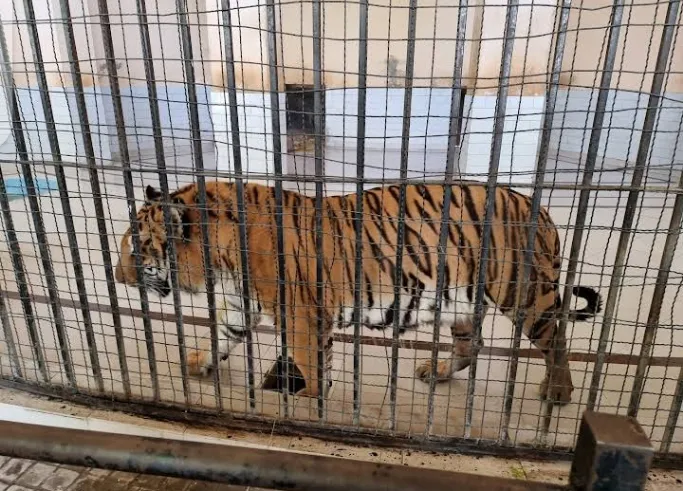
The big cats are the main draw. Lions and Bengal tigers are the animals children most often ask to see, and a white tiger has been among the animals that visitors can see up close. Monkeys and peacocks are also on the route.

The bird aviary holds a wide range of colourful birds. A reptile enclosure, an aquarium and a hippo enclosure give the visit more variety. The collection changes over time, so some animals may be away on a given day.

The paths are smooth and easy to walk. Trees give plenty of shade, and bins are placed at short intervals along the way. A map of the grounds helps you follow the route from one enclosure to the next.

Facilities and extra tickets

Inside the grounds you will find food stalls, seating areas and washrooms. There is also a cafe, a gift shop, a playground and a petting zoo, and the zoo offers tours. Some sections charge a separate fee on top of the main ticket. These include the aquarium, the snake house and the VR or hologram area. Skip the VR area if you are short on time.

The entrance, restrooms and parking lot are wheelchair accessible. Parking is available both free and paid, in the lot and on the street.

Where it is and what is nearby

The zoo is on Mall Road (Shahrah-e-Quaid-e-Azam) in Jinnah Town. The main gateway is decorated with a colourful animal mural. It is about 3 to 4 kilometres from Lahore Railway Station.

Bagh-e-Jinnah lies directly opposite. It is a large park with trimmed lawns, flower beds and big trees, and it holds the Quaid-e-Azam Library. It makes a quiet walk before or after the zoo.

Preguntas frecuentes

Where is Lahore Zoo?

It is on Shahrah-e-Quaid-e-Azam (Mall Road) in Jinnah Town, next to Bagh-e-Jinnah. The railway station is about 3 to 4 kilometres away.

How long do you need at Lahore Zoo?

Plan on about 2 hours to walk the main route, see the big cats and visit the aviary. Add time if you want to enter the aquarium, the snake house or the other paid sections.

Is there an entry fee?

Yes, the zoo is ticketed, and some sections, such as the aquarium and the snake house, charge extra. Check the zoo's website for current prices, and buy tickets in advance if you can.

When is the best time to visit?

Early morning or late afternoon is the most comfortable, with less heat and thinner crowds.

Is Lahore Zoo suitable for children and wheelchair users?

Yes. There is a playground and a petting zoo, and the paths are smooth. The entrance, restrooms and parking lot are wheelchair accessible.

Más lugares imprescindibles en Lahore

Explorar todo