Planifica un viaje
Idioma: Español
Planificador de viajesPlanifica tu viaje en un mapa

Destinos principales

EnglishDeutschFrançaisEspañolPortuguêsPortuguês (BR)Italiano
Aviso de viaje · PakistánAlgunos gobiernos desaconsejan todo viaje a Pakistán salvo el esencial.Los consejos dependen de tu pasaporte. Lee los de tu propio gobierno antes de reservar.Recomendaciones oficiales
Zonas con advertencias
  • provincia de Baluchistán · evitar todo viaje · Canadá, Alemania, Francia, Nueva Zelanda, Reino Unido, Estados Unidos
  • Frontera con India, distancia no especificada (incl. LoC) · evitar todo viaje · Francia, Nueva Zelanda
  • Carretera del Karakórum, de Mansehra a Chilas · evitar todo viaje · Canadá, Nueva Zelanda, Reino Unido
  • provincia de Jyber Pastunjwa · evitar todo viaje · Canadá, Francia, Nueva Zelanda, Estados Unidos
  • Cachemira administrada por Pakistán (Azad Jammu y Cachemira) · evitar todo viaje · Canadá, Alemania, Francia, Italia, Nueva Zelanda, Reino Unido
  • Región fronteriza con Afganistán, distancia no especificada · evitar viajes no esenciales · Italia, Nueva Zelanda
  • Antiguas áreas tribales de la FATA · evitar viajes no esenciales · Francia, Italia

También señalada por un gobierno: Franja de 10 km a lo largo de la frontera con China (Canadá), Franja de 10 km a lo largo de la frontera con India (Canadá), Franja de 10 km a lo largo de la frontera con Irán (Canadá), Franja de 10 km a lo largo de la Línea de Control (Canadá), Franja de 10 millas a lo largo de la frontera con Afganistán (Reino Unido), Franja de 10 millas a lo largo de la Línea de Control (Reino Unido), Franja de 50 km a lo largo de la frontera con Afganistán (Canadá), Franja de 50 km a lo largo de la frontera con Afganistán en Gilgit-Baltistán (Nueva Zelanda), Bajaur (Reino Unido), Bannu (Reino Unido), Buner (Reino Unido), Charsadda (Reino Unido), Dera Ismail Khan (Reino Unido), Hangu (Reino Unido), Inmediaciones de la Línea de Control (Estados Unidos), Karak (Reino Unido), distrito de Khyber (Reino Unido), Kohat (Reino Unido), Kurram (Reino Unido), Lakki Marwat (Reino Unido), Dir Inferior (Reino Unido), Waziristán del Sur Inferior (Reino Unido), Mohmand (Reino Unido), Carretera N45, desde el norte de la circunvalación de Mardan hasta las afueras de Chitral, incl. valle Kalash (Reino Unido), Waziristán del Norte (Reino Unido), Orakzai (Reino Unido), Peshawar (Reino Unido), Provincia de Punjab, excepto la zona Faisalabad-Lahore-Islamabad (Francia), Swat (Reino Unido), Tank (Reino Unido), Dir Superior (Reino Unido), Waziristán del Sur Superior (Reino Unido), Franja de 20 km a lo largo de la frontera india, incl. LoC (Alemania), Franja de 5 millas a lo largo de la frontera india (Reino Unido), Distrito de Chitral (Canadá), Dera Ghazi Khan (Reino Unido), Zona Faisalabad-Lahore-Islamabad (Francia), Karachi (Canadá), Ruta terrestre hacia y desde Irán y Afganistán (Alemania), Malakand (Reino Unido), Mardan (Reino Unido), Nowshera (Reino Unido), Shangla (Reino Unido), Provincia de Sindh al norte de Nawabshah, incluida (Reino Unido), Swabi (Reino Unido), Áreas tribales de Baluchistán (Italia)

GobiernoConsejosActualizadoLeer las recomendaciones
Reino Unido (FCDO)No advice against the whole country (regional advisories)–Leer las recomendaciones
Estados Unidos (Departamento de Estado)Reconsider Travel16 jun 2026Leer las recomendaciones
Canadá (Asuntos Globales)Exercise a high degree of caution (regional advisories)–Leer las recomendaciones
Alemania (Auswärtiges Amt)No advice against the whole country; partial warnings for named regions (regional advisories)13 oct 2026Leer las recomendaciones
Nueva Zelanda (SafeTravel)Avoid non-essential travel–Leer las recomendaciones
Francia (Ministerio de Europa y Asuntos Exteriores)Le reste du territoire est déconseillé sauf raison impérative–Leer las recomendaciones

Revisado a diario según los consejos publicados por los gobiernos; última revisión 3 nov 2026.RoamLedger resume las recomendaciones oficiales; no son consejos de ningún gobierno.

Badshahi Mosque
Mezquita

Badshahi Mosque

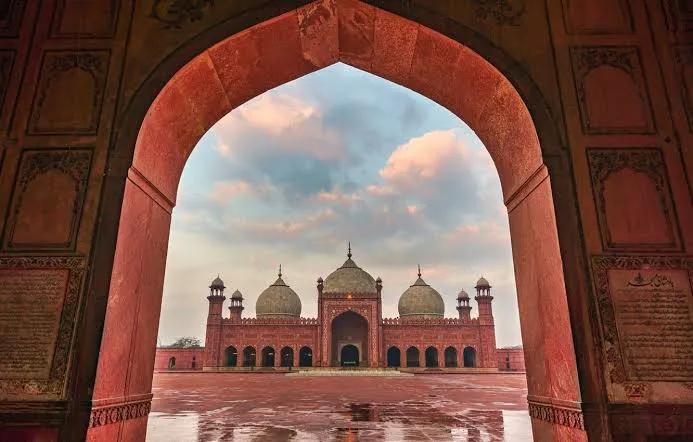
Badshahi Mosque stands in the Walled City of Lahore, on Fort Road, directly across from Lahore Fort.

Badshahi Mosque stands in the Walled City of Lahore, on Fort Road, directly across from Lahore Fort. Emperor Aurangzeb had it built in the 1670s, and its red sandstone walls, white marble inlay and large domes still define the city's skyline. The courtyard is vast and open to worshippers and visitors alike. Inside you can look at the calligraphy, the carved sandstone and the hand-painted details. Come in the last light of the day, when the stone turns amber, and plan to pair the visit with the fort next door.

Built under Aurangzeb
Badshahi Mosque
Badshahi Mosque

Badshahi Mosque, the Royal Mosque, was commissioned by the Mughal Emperor Aurangzeb Alamgir, the sixth Mughal emperor. Construction began in 1671 and the mosque was finished within the following few years. Sources give slightly different completion dates between 1673 and 1674.

It stands at the western end of the Walled City, west of Lahore Fort. A dedicated gate on the fort side, the Alamgiri Gate, once connected the two. The ground between the gate and the mosque served as a parade ground, where Aurangzeb inspected his forces. For well over three centuries the mosque was counted among the largest in the world, and its size made it visible from far outside the city.

Sandstone, marble and calligraphy
Badshahi Mosque
Badshahi Mosque

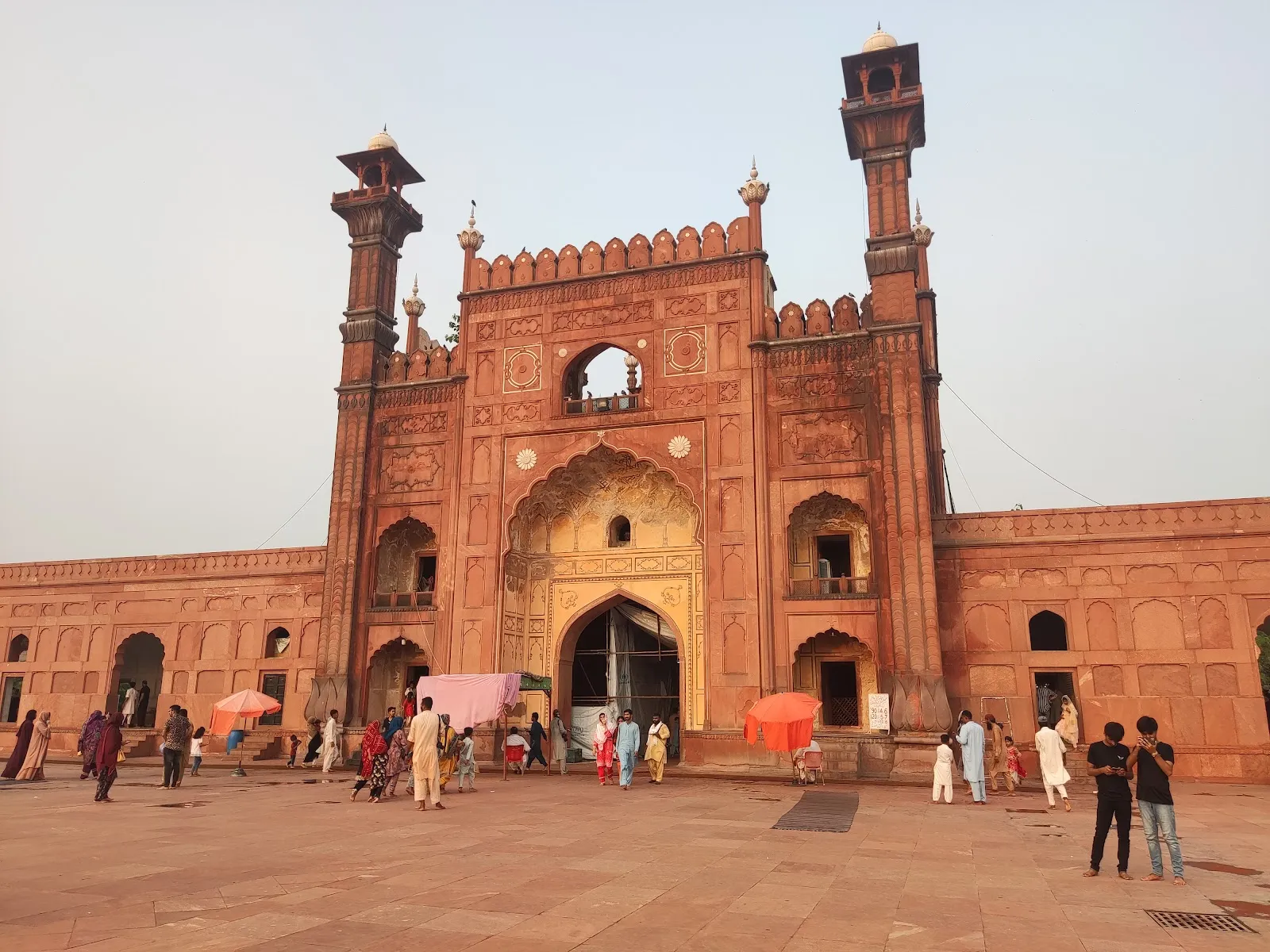
The structure is built of red sandstone, the material typical of Mughal building, set off by white marble inlay and marble domes. Walk through the courtyard first. It is wide and open, and the symmetry of the sandstone buildings around it is easiest to see from the middle.

Then look closer. The walls and ceilings carry calligraphy, carved patterns and hand-painted decoration, and some wall paintings depict scenes from Islamic history. The minarets are reported to rise more than 53 meters. The sandstone foundations and walls are part of what has kept the building standing for more than 350 years.

The mosque is still a working place of prayer. Friday prayers draw large crowds, and a women's prayer section is available.

Garrison and restoration

Under Sikh rule and then British rule, the mosque was used by troops as a garrison. The damage this caused was repaired in a restoration in 1939, funded by Sikandar Hayat Khan. He is buried in the garden next to the mosque. The building was returned to Muslim use afterwards.

Conservation work in the area continues. The Punjab Government has asked the Aga Khan Trust for Culture, which has worked on other monuments in the Walled City, to take on further sites, and Badshahi Mosque is among those named.

Planning the visit

The mosque is open daily into the evening, and after dark the domes and minarets are lit. That makes a late visit possible after a day at the fort. A common plan is to see the mosque in the morning and spend the rest of the day at Lahore Fort and Wazir Khan Mosque.

The old bazaars are a few minutes away on foot. Several restaurants nearby, including Cuckoo's Den, Haveli and Andaz, have views of the mosque.

Facilities on site include restrooms, a nursing room, free parking, a wheelchair accessible entrance and accessible parking. Expect the courtyard to be busiest on Fridays and weekends.

Preguntas frecuentes

Who built Badshahi Mosque and when?

Emperor Aurangzeb Alamgir had it built. Work began in 1671 and finished in the 1670s. Sources differ by a year on the exact completion date.

When is the best time to visit Badshahi Mosque?

Just before sunset, when the red sandstone changes colour. A weekday is quieter, since Friday, Saturday and Sunday are crowded.

Is Badshahi Mosque close to Lahore Fort?

Yes. It stands directly across from the fort's main gateway, so the two are easy to visit together.

What happens with shoes at Badshahi Mosque?

Shoes are left outside. A keeping service with baskets charges Rs. 450 per basket whatever the number of pairs. You can carry your shoes in a bag instead.

Is Badshahi Mosque wheelchair accessible?

It has a wheelchair accessible entrance, restroom and parking lot.

Más lugares imprescindibles en Lahore

Explorar todo