Tokyo Skytree is a 634-metre broadcasting and observation tower in Sumida City, east of central Tokyo. Ride up to the Tembo Deck at 350 metres for wide city views, then take the glass-walled Tembo Galleria to 450 metres for a higher, spiralling walkway. On clear days, Mount Fuji may be visible. The tower’s design combines modern lines with elements inspired by traditional pagodas. At its base, Tokyo Solamachi has shops, cafés and restaurants, so you can make the tower part of a longer visit.
Two observation levels
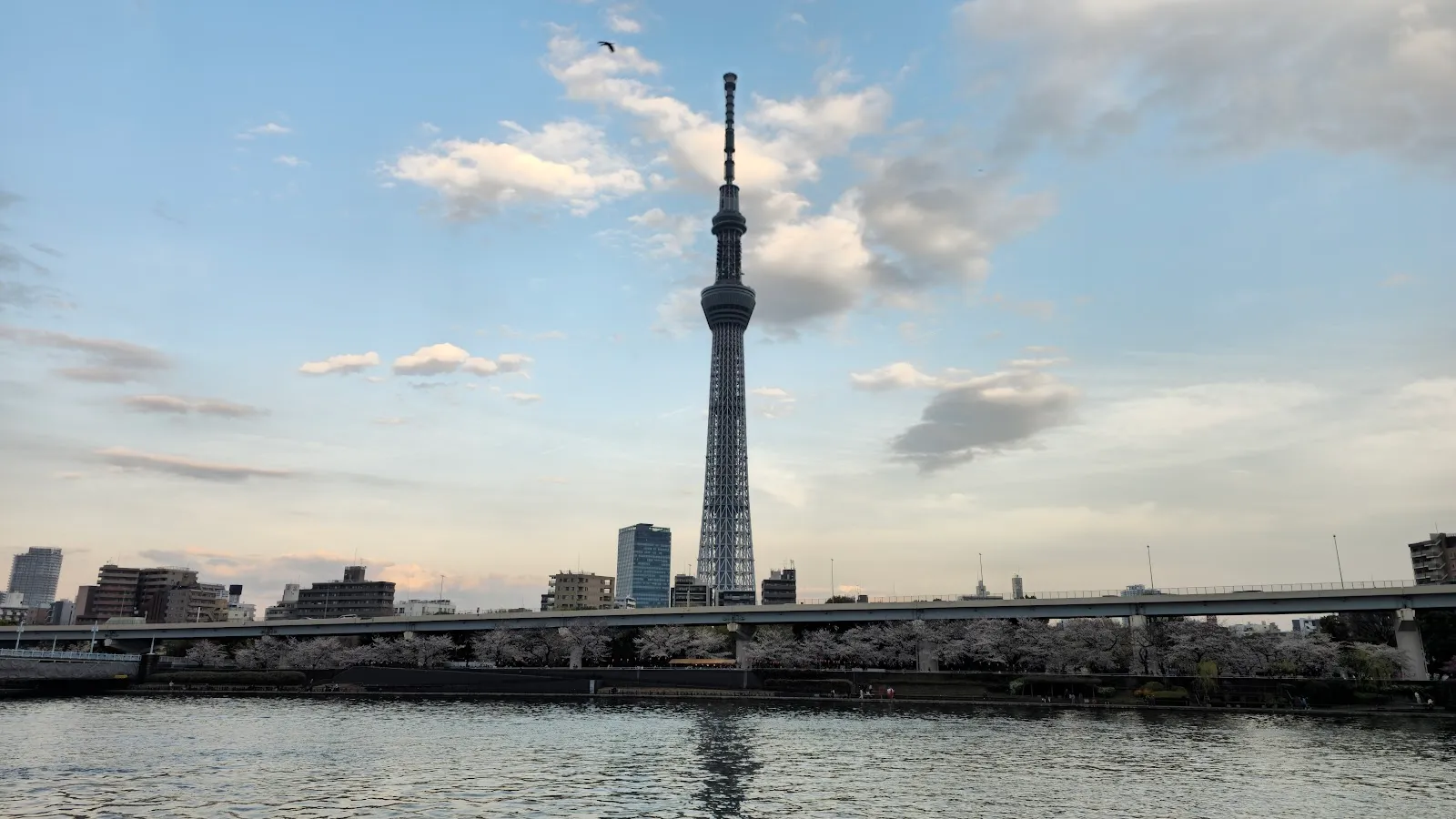
Tokyo Skytree is a broadcasting tower and visitor attraction in Sumida City. At 634 metres, it is Japan’s tallest structure. Its two observation areas give you different ways to look out across the city.
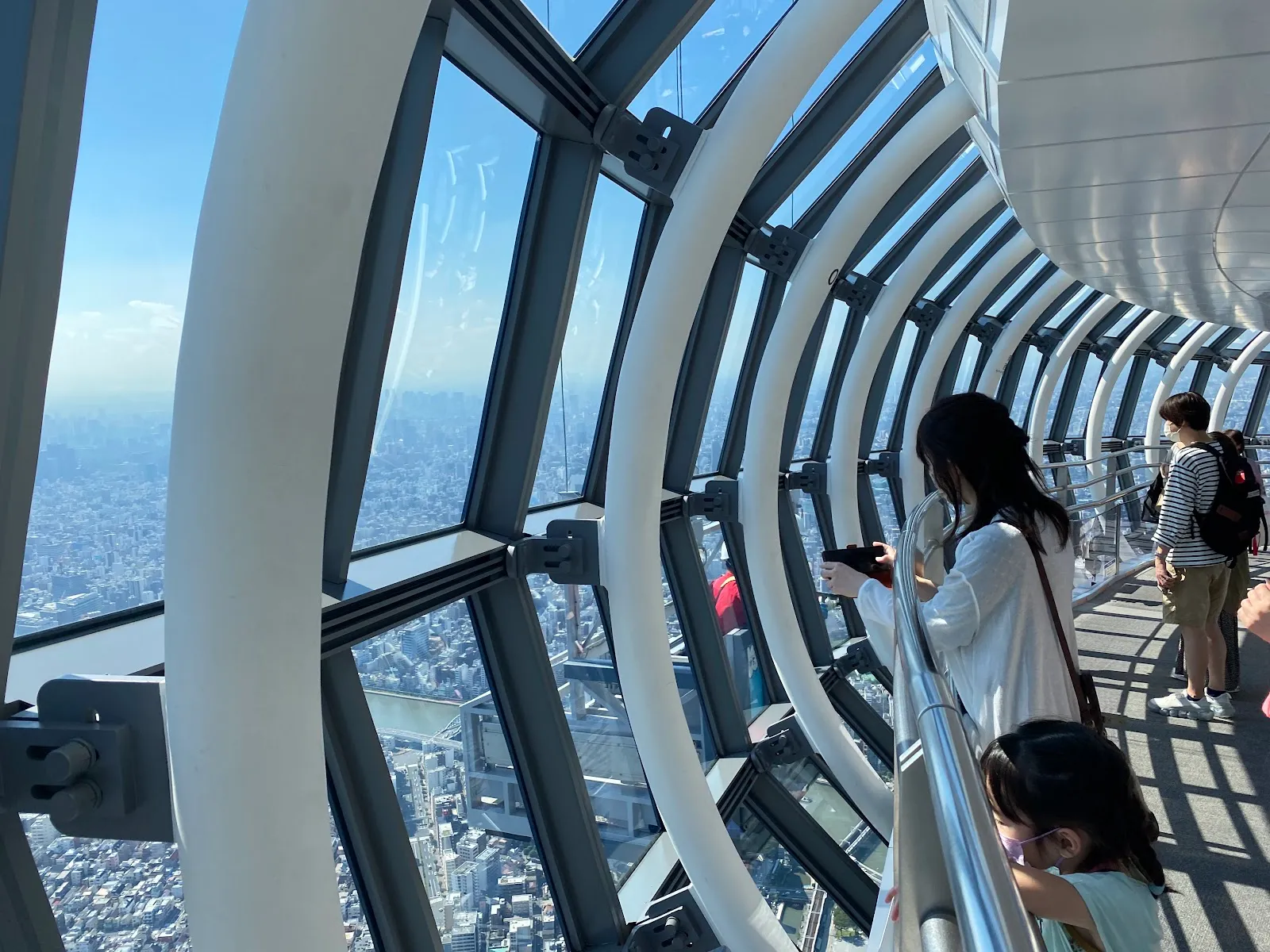
The Tembo Deck sits 350 metres above ground and has broad windows for panoramic views. The Tembo Galleria, at 450 metres, is reached from the lower deck. Its glass-walled route spirals upwards, creating a walkway with views along the way. If you have time for only one level, the Tembo Deck is the main observation area; the Galleria is an additional paid upgrade, according to the supplied visit information.
On a clear day, you may be able to make out Mount Fuji. The view depends on visibility, so choose a clear forecast if distant scenery is a priority. The city’s lights give the tower a different feel after dark, while a late-afternoon visit can take in the change from daylight to evening.
A tower shaped by old and new
The tower’s design pairs a modern structure with details inspired by traditional Japanese pagodas. One account connects its height, 634 metres, with the sounds “mu,” “sa” and “shi,” a reference to the area’s traditional name. The name Tokyo Skytree was selected through a public vote.
Built as broadcasting infrastructure, the tower also became a place to view Tokyo from above. Its scale is part of the experience: buildings and streets appear much smaller from the observation levels, and the higher deck adds another perspective on the city.
Tokyo Solamachi at the base
Tokyo Solamachi, the commercial complex around the tower, brings together shops, cafés and restaurants. The wider Tokyo Skytree Town also includes Sumida Aquarium and the Konica Minolta Planetarium Tenku. Shopping ranges from character and collectible stores to shops selling local crafts and souvenirs, alongside larger retailers.
You can spend time here without going up the tower, or leave room after the observation decks to browse and eat. There is a food court below the tower entrance, as well as cafés and places serving food and drinks upstairs. The complex is large, so allow extra time if you want to explore its shops as well as the views.
Planning your visit
Advance tickets are recommended, particularly in busy periods, when waiting times can grow. If the view is your main reason for going, check for clear skies before choosing a date. Arriving in late afternoon gives you the option of seeing the city in daylight and staying as the lights come on.
Dining plans can affect what you pack: the supplied visit information notes a dress code at an upscale restaurant in the complex that excludes sporty clothing and running shoes. For a more casual meal, the food court and other eateries are at the base of the tower.
Preguntas frecuentes
How tall is Tokyo Skytree?
Tokyo Skytree is 634 metres tall and is Japan’s tallest structure.
How high are the observation decks?
The Tembo Deck is 350 metres above ground, and the Tembo Galleria is at 450 metres.
Can you see Mount Fuji from Tokyo Skytree?
Mount Fuji may be visible on a clear day.
How long should I plan for a visit?
Allow about 2 to 3 hours for the tower and a look around the complex at its base.