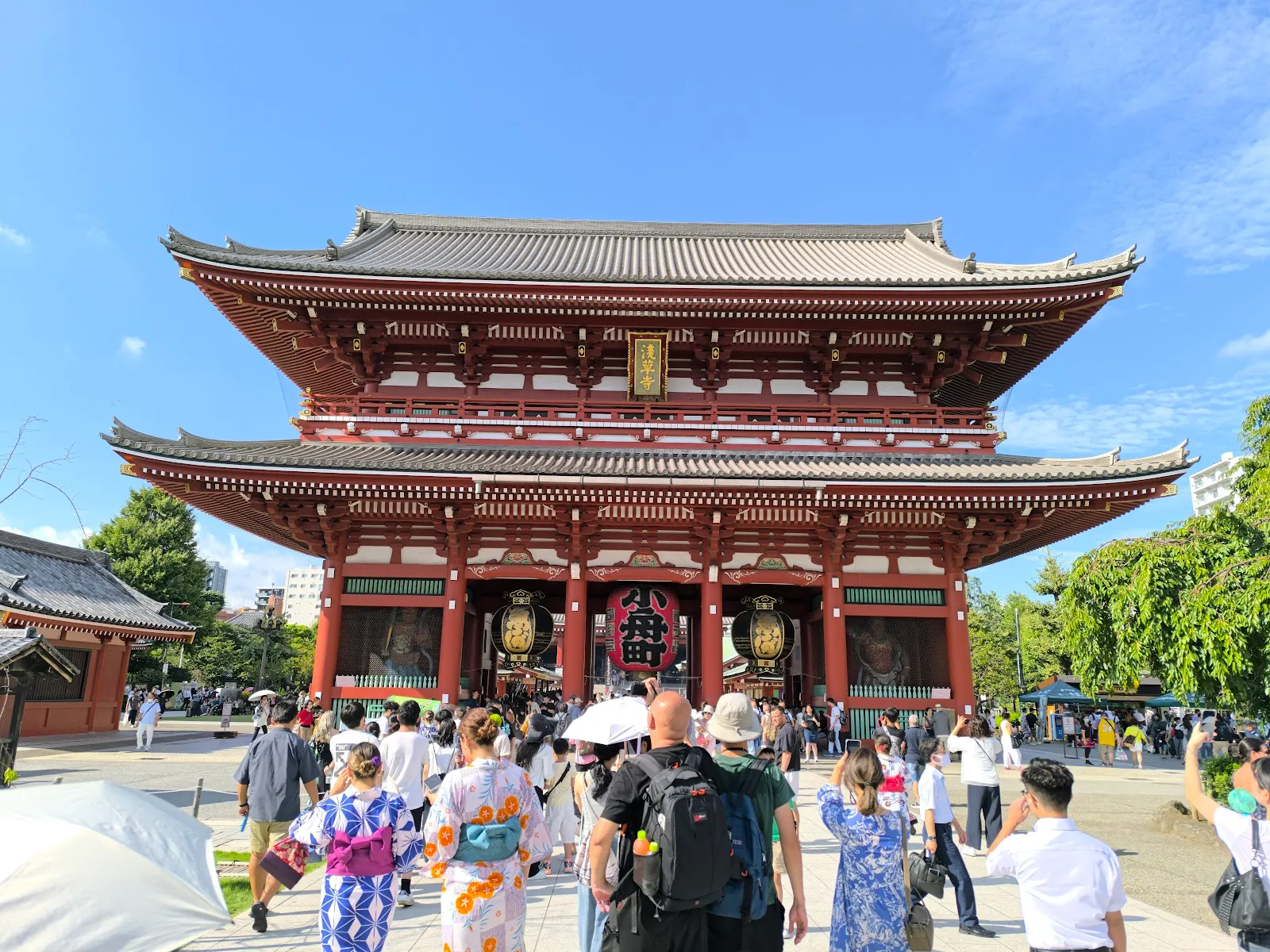
Hozomon Gate is the inner of Senso-ji’s two large entrance gates, on the temple grounds in Asakusa, Tokyo. Its broad wooden structure, large red lantern and Nio statues make it a landmark to pause at on the way to the main hall. Look for the giant waraji sandals, then continue toward the Five-storied Pagoda just beyond the gate. Nakamise shopping street ends at a plaza in front of it, with shops along the roughly 250-metre route from the station. The gate was rebuilt in 1964 and stores temple treasures upstairs.
The inner gate to Senso-ji
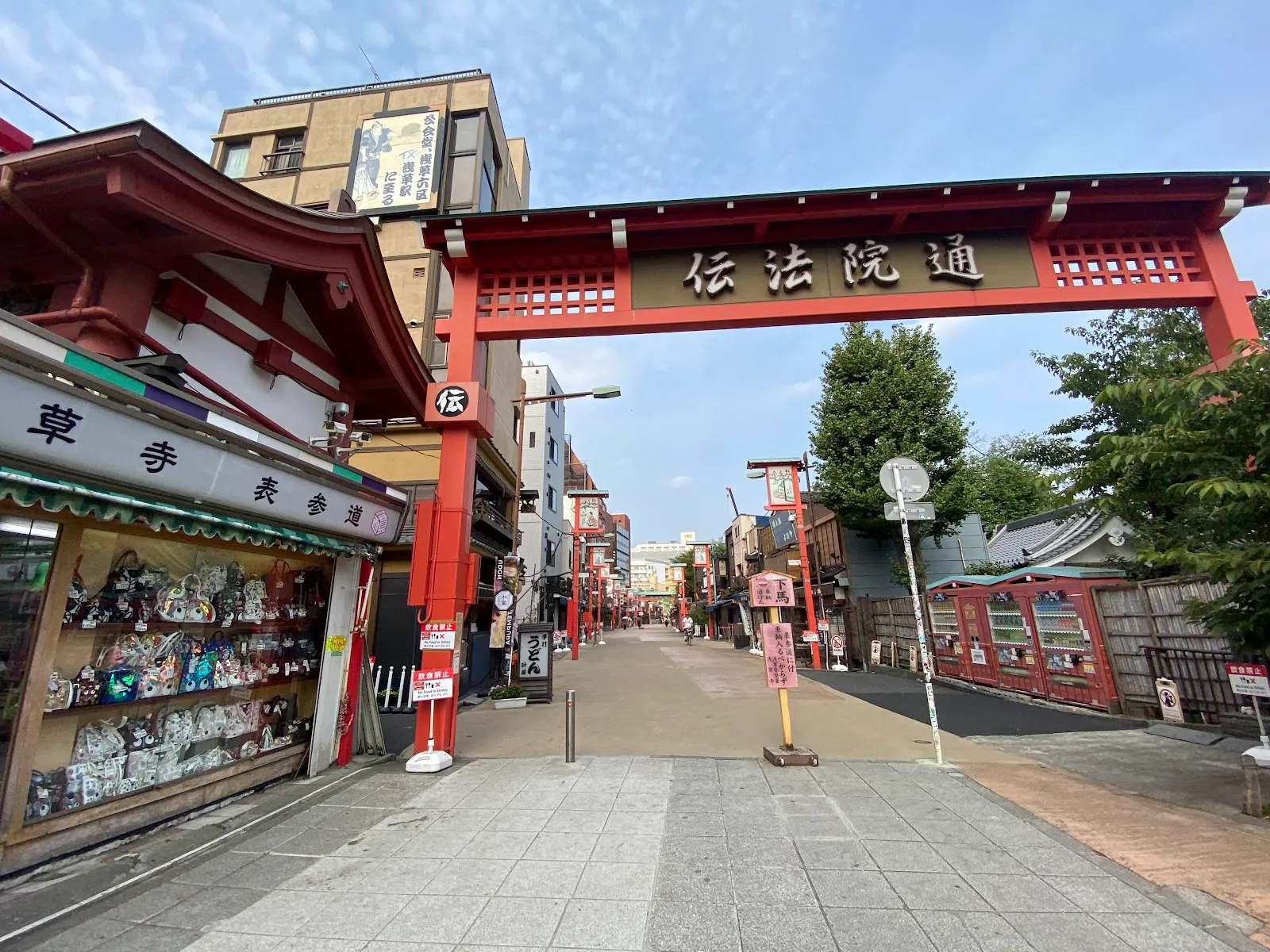
Hozomon is the inner of Senso-ji’s two large entrance gates in Asakusa. Nakamise street approaches from the direction of Asakusa Station and runs roughly 250 metres north to south, ending at a plaza before the gate. The shops along the route are generally open from around 9 a.m.
The gate is known as the Treasure House Gate. Rebuilt in 1964, it also stores important temple treasures upstairs. Its scale and wooden structure make it a clear landmark on the way through the temple grounds.
What to look for
Pause to see the Nio statues and the giant waraji sandals, then look up at the large red paper lantern and the carvings. The Five-storied Pagoda stands just beyond the gate, to the left; Senso-ji’s main hall is also nearby.
An early visit gives you more room to look around and take photographs before the area gets crowded. Nakamise is part of the approach, so you can browse its shops on the way to or from the gate.
Preguntas frecuentes
Where is Senso-ji Hozomon Gate?
It is on the grounds of Senso-ji in Asakusa, Tokyo, at the end of Nakamise street.
What can you see at Hozomon Gate?
Look for the Nio statues, giant waraji sandals, red lantern and carvings. The Five-storied Pagoda is just beyond the gate, to the left.
When should you visit Hozomon Gate?
Go very early in the morning for a quieter visit and photos.
How long do you need at Hozomon Gate?
The available information does not specify a typical visit length.