In Ueno Park, the National Museum of Nature and Science brings Japan’s natural history together with the story of science and technology. Its Japan Gallery follows the islands’ wildlife, geology and human history; the Global Gallery ranges across life on Earth, dinosaurs, space and inventions. Look for the blue whale model outside, then head in for dinosaur skeletons, animal specimens and displays on Japanese science. The collection is large enough to fill several hours, and some explanations are not in English, so a translation app or audio guide can help.
Two galleries, different journeys
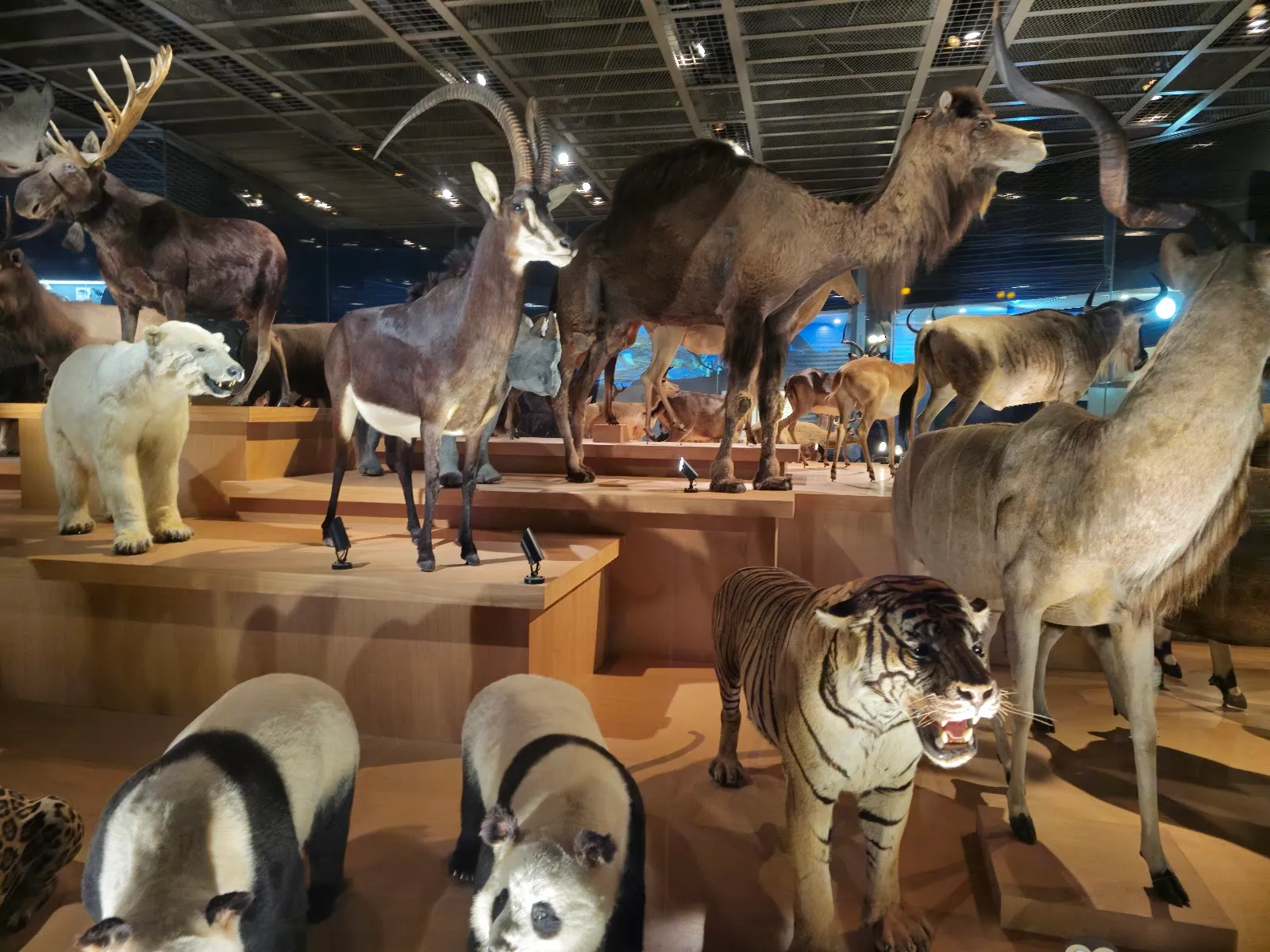
The museum’s permanent displays are arranged across the Japan Gallery and the Global Gallery. Together, they cover natural history and the development of science and technology, with themes extending from the origins of the Japanese islands to life on Earth and space.
In the Japan Gallery, displays trace the archipelago’s geology and wildlife alongside the history of the people who lived there. Topics include early communities such as the Jomon and Yayoi, and the Ainu and Ryukyuans. The exhibits also examine rice cultivation and its links to technology, giving the story of Japan’s environment a human dimension.
From fossils to technology
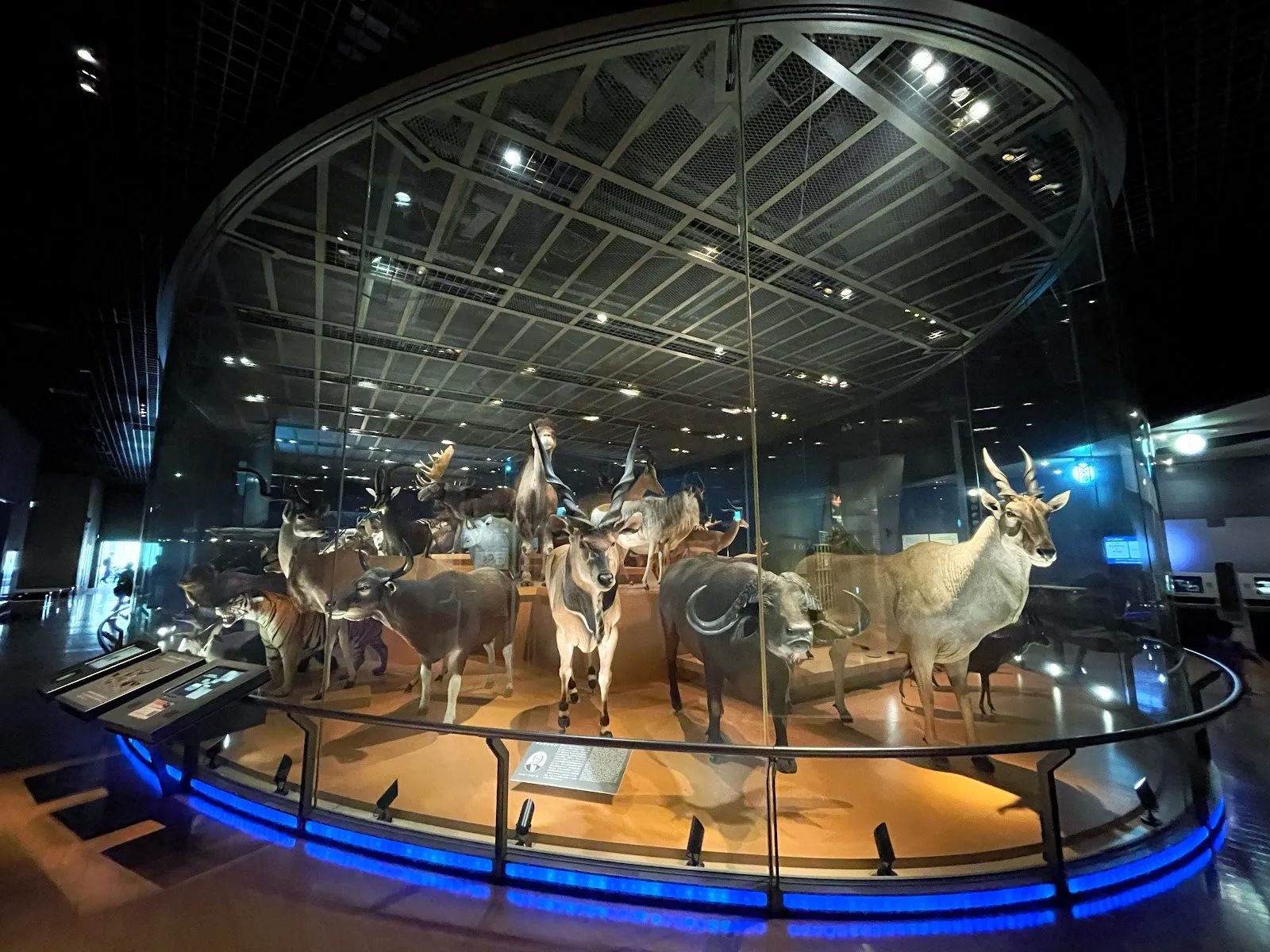
The Global Gallery ranges across the evolution of living things, biodiversity, Earth science and human innovation. Dinosaur skeletons and fossils sit among displays of animals, minerals and scientific inventions. The collection also includes material on space travel and the history of technology in Japan, including inventions from the Edo period onwards.
The subjects are presented across different levels, with links between themes that can help you follow the story as you move through the building. There is enough to see that a quick circuit will leave many sections unexplored. If you have a particular interest, choose a few galleries to focus on; if you want a fuller visit, set aside several hours.
Look for the museum’s signature displays
The large blue whale model outside is an easy landmark to spot before you enter. Inside, dinosaur skeletons are among the most prominent displays. Other notable objects include a fragment of the Nantan meteorite, which fell in China in the 16th century, and specimens connected with Hachiko and pandas.
Displays also cover the natural world at very different scales, from Japanese plants and animals to specimens from elsewhere. Some exhibits use interactive elements, while others rely on objects and explanatory displays. English is not available for every explanation, so a phone translation app or audio guide can be useful if you want to read more than the main display text.
Theater, shop and a longer visit
The museum has a 360-degree theater that screens films. A wait of around 20 to 25 minutes has been reported, so consider whether you want to spend part of your visit there before joining a queue. There is also a rooftop garden on the top floor, with views from above the museum.
A museum shop sells science- and nature-related items, including fossils. The collection is extensive, so families and visitors with a specific interest can easily spend hours inside. Seating areas provide places to pause, but plan your time around the galleries you most want to see rather than assuming you can cover everything in a short stop.
Preguntas frecuentes
How long do you need at the National Museum of Nature and Science?
Allow at least three to four hours to explore a good portion of the collection. A full visit can take longer.
What can you see at the museum?
The Japan Gallery covers the islands’ nature and human history, while the Global Gallery explores subjects including dinosaurs, biodiversity, Earth science and technology.
Are the exhibits available in English?
Not all exhibit explanations are in English. An audio guide or phone translation app can help.
Is there a 360-degree theater?
Yes. The museum has a 360-degree theater that screens films; a reported wait is around 20 to 25 minutes.
When is a good time to visit?
Weekdays can help you avoid weekend crowds and queues for special exhibitions.