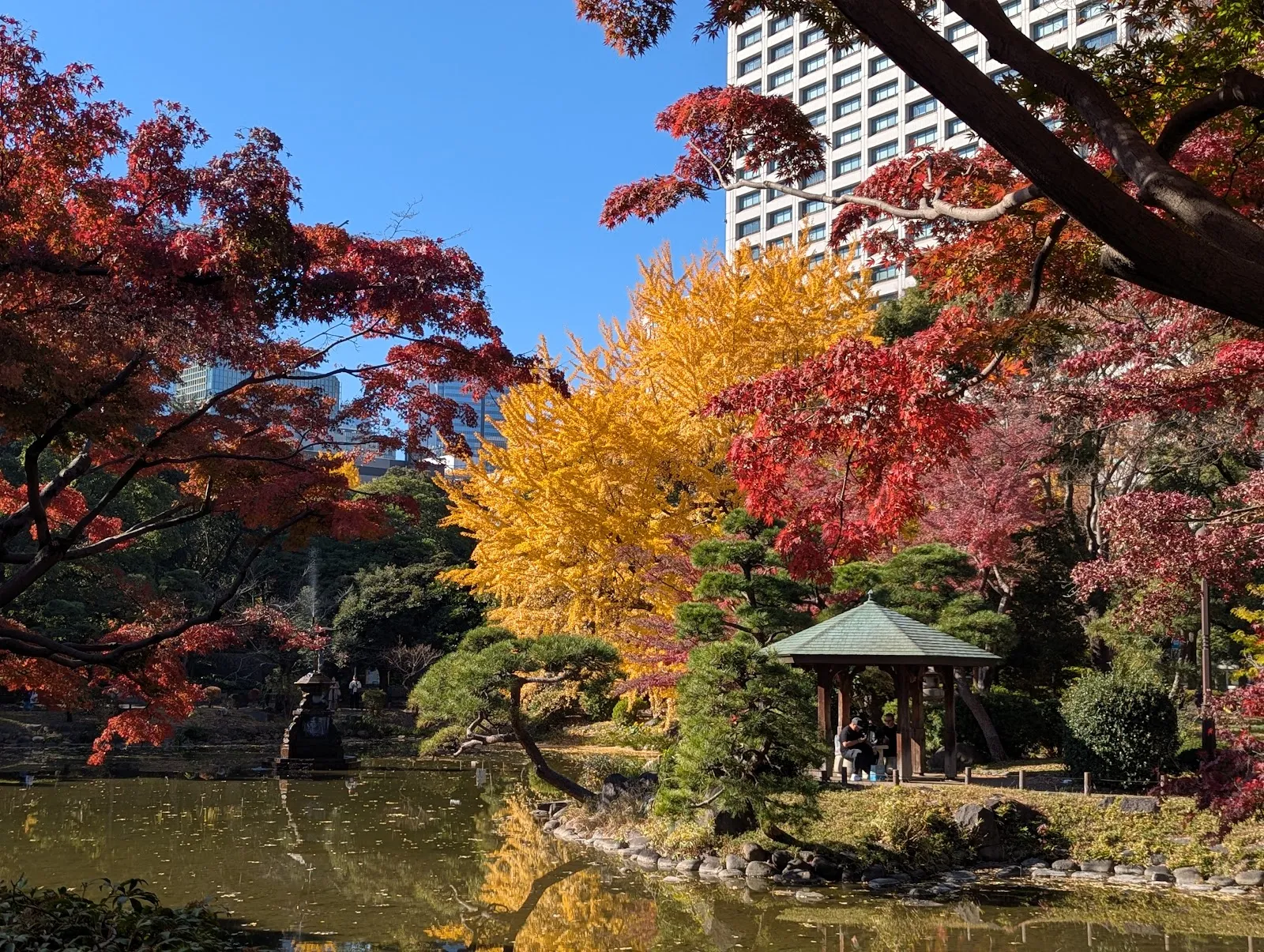
Hibiya Park is a public green space in Chiyoda, central Tokyo, near the Imperial Palace and Ginza. Opened in 1903 as Japan’s first Western-style park, it combines flower gardens and open lawns with ponds, fountains and tree-lined paths. Walk around Kumogata Pond for autumn color, or find a bench for a quiet break between city sights. Flower displays change with the seasons, and the park also hosts festivals and outdoor performances. It suits a relaxed stroll more than a day devoted to elaborate garden design.
From feudal estate to public park
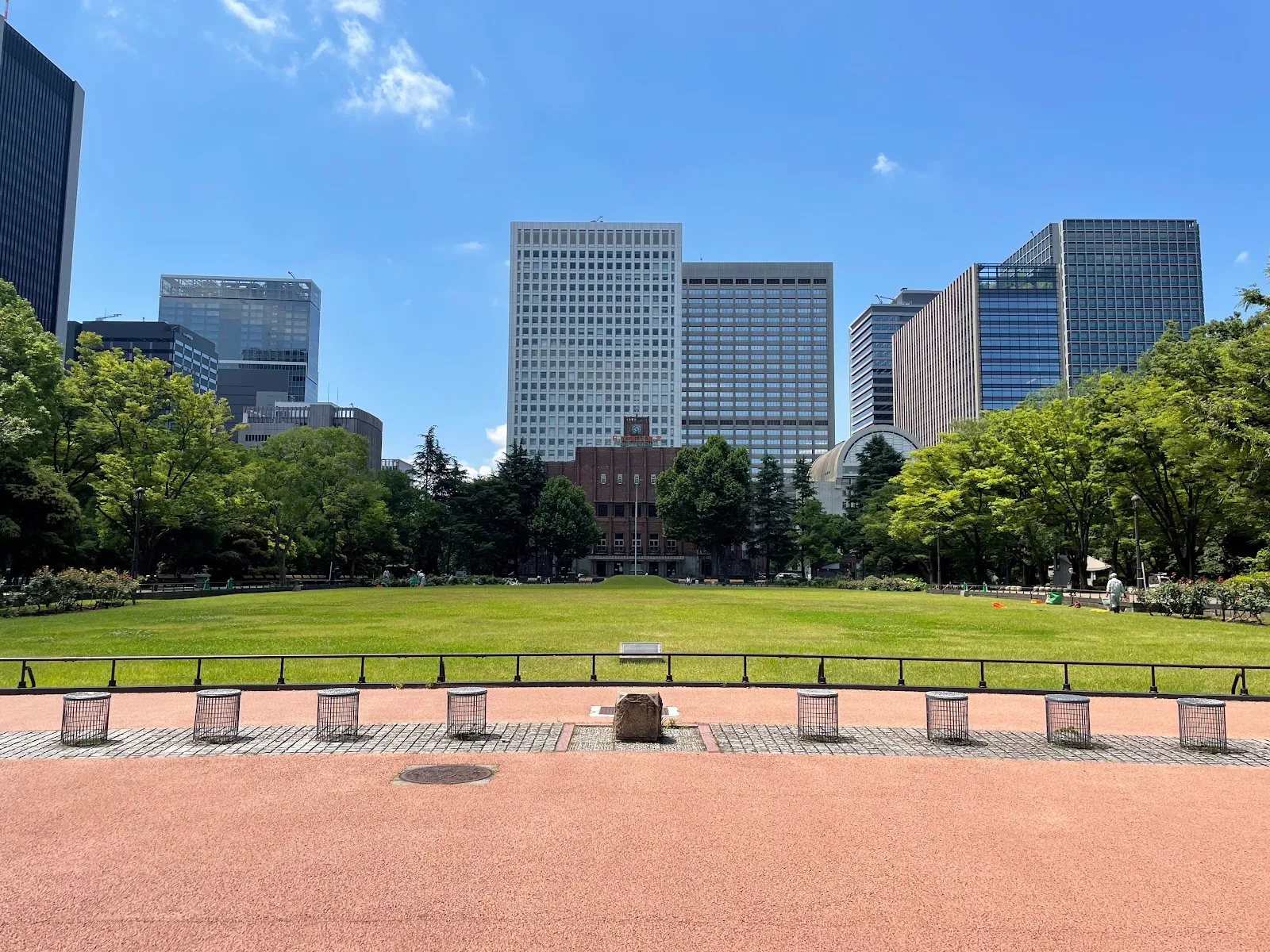
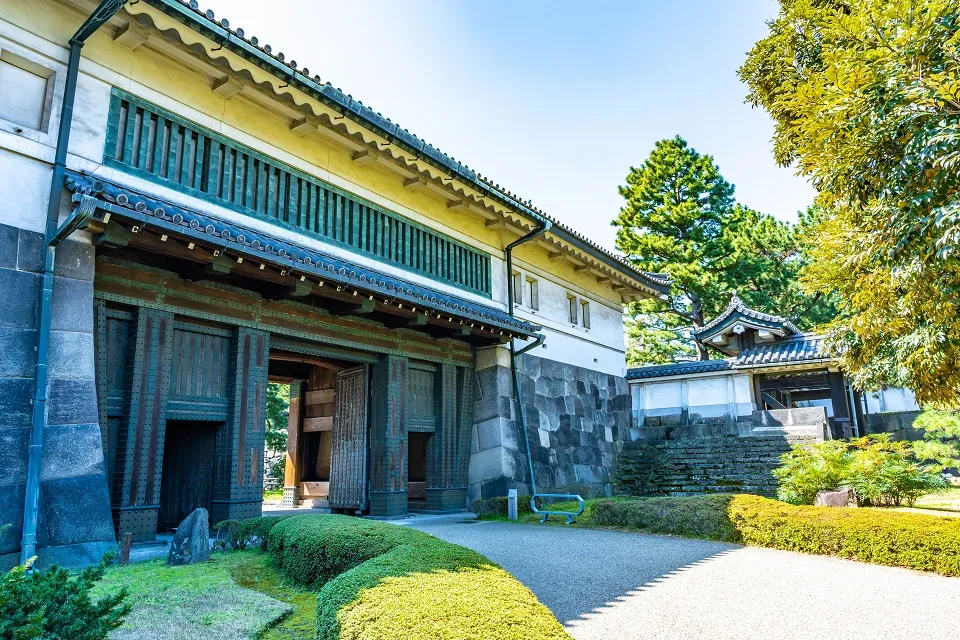
The grounds now occupied by Hibiya Park once belonged to a daimyo, a feudal lord. During the Meiji period, the site was used as an army training area. The city opened the park in 1903, creating Japan’s first Western-style public park.
That history sits alongside a landscape shaped for city life. Paths pass flowerbeds, lawns, ponds and fountains, with room both to stroll and to stop for a break. Office workers use the park at lunchtime, while its central location makes it an easy place to pause between nearby districts.
Gardens, ponds and seasonal color
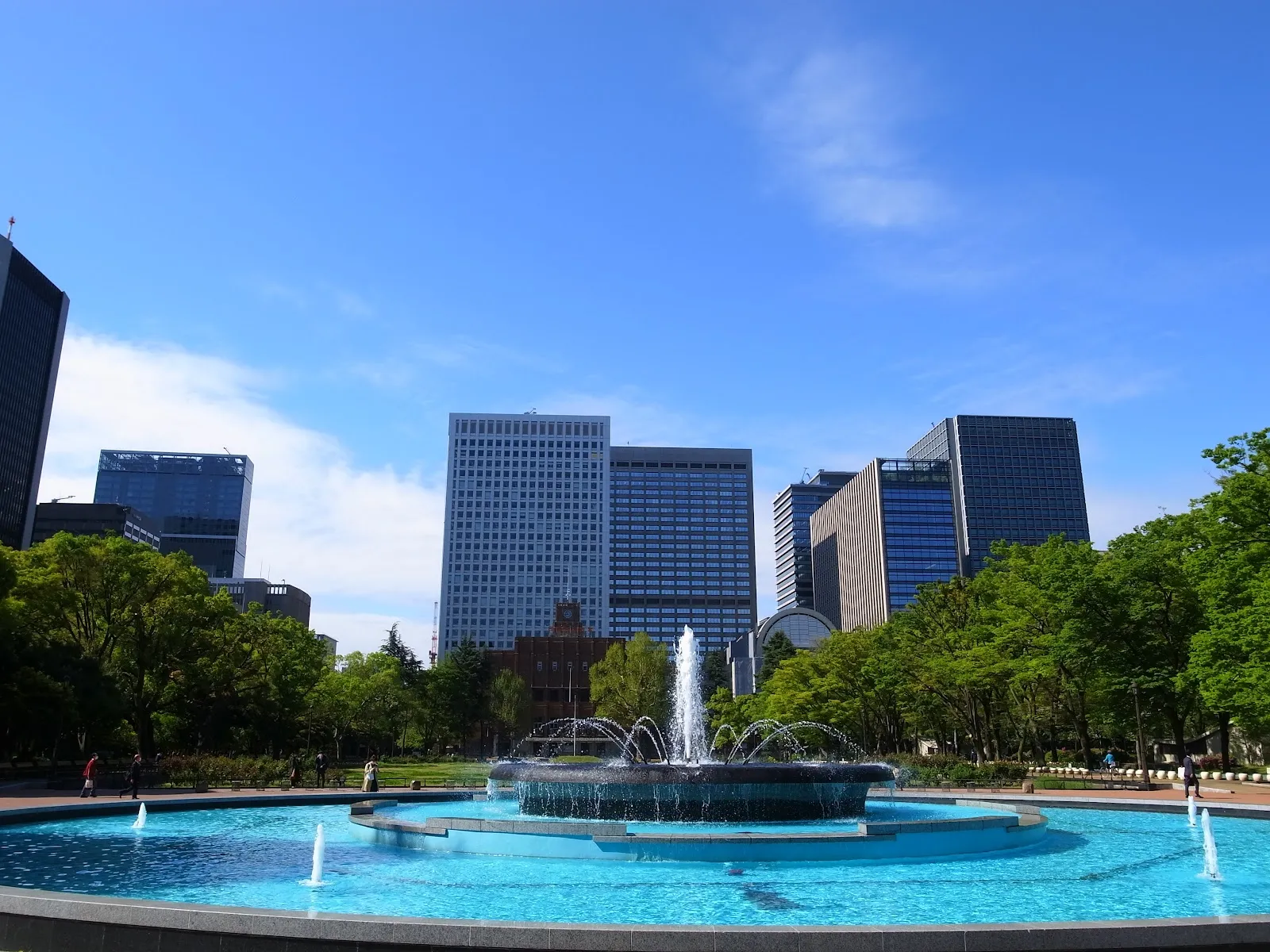
Hibiya Park brings together Western-style flower gardens and Japanese garden elements. The First Flower Garden arranges blooms in geometric patterns, and the park has two large flower gardens with displays that change through the year. Spring brings tulips and other flowers; roses are another feature of the grounds.
Kumogata Pond is a particularly good place to see autumn leaves. Red maples and yellow ginkgo trees frame the water, where their colors are reflected. The pond’s fountain is inspired by a crane, a Japanese symbol of good fortune. Shinji-Ike Pond gives you another waterside route through the park. Fountains, bridges and mature trees offer more points of interest along the way.
Events and places to explore
The park is also a venue for gatherings and performances. Two outdoor music halls host events, and the Hibiya Public Hall is among the park’s cultural spaces. Festivals held during the year include Oktoberfest and a Christmas market; food events bring international stalls into the grounds. Check what is scheduled if you want to combine a walk with a performance or festival, as event days can make the park livelier.
There is more to find beyond the main paths, including a small park museum, a library and a Japanese garden with a stone wall and a moat dating from the Edo period. The park’s historic brick Shisei Kaikan building is another landmark to look out for. Benches provide places to rest, and playgrounds and sports areas make the grounds useful for more than sightseeing.
Preguntas frecuentes
When is the best time to see autumn leaves at Hibiya Park?
Late November is a good time to see fall color, especially around Kumogata Pond, where maples and ginkgo trees grow beside the water.
How long should I spend at Hibiya Park?
Allow about 30 to 60 minutes for a walk among the ponds, gardens and fountains. Stay longer if you plan to attend an event.
What events take place at Hibiya Park?
The park hosts outdoor performances and festivals, including Oktoberfest and a Christmas market. Food events are also held in the grounds.
Is Hibiya Park close to Ginza?
Yes. The park is within walking distance of Ginza, so you can combine the two for a city outing.