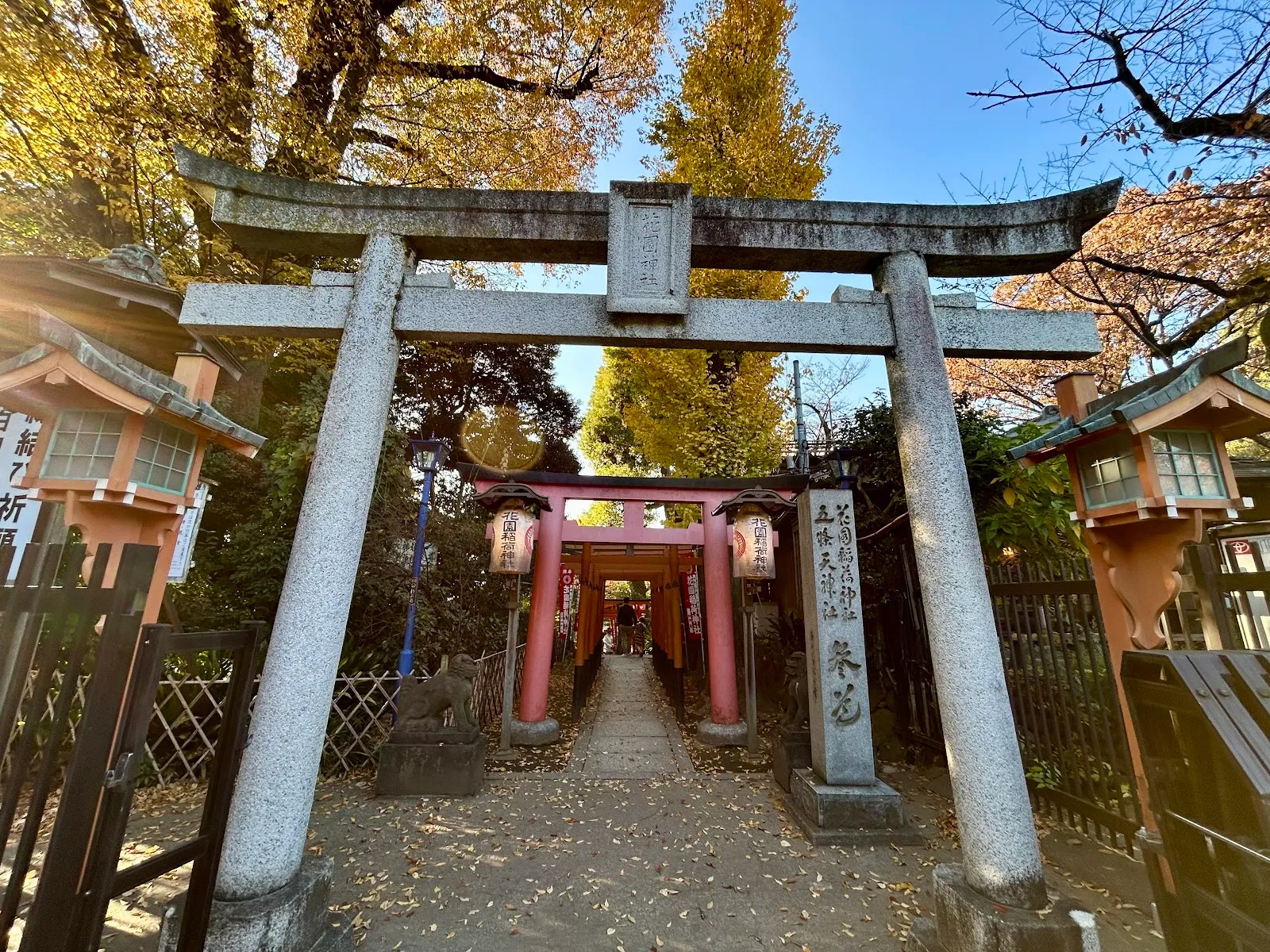
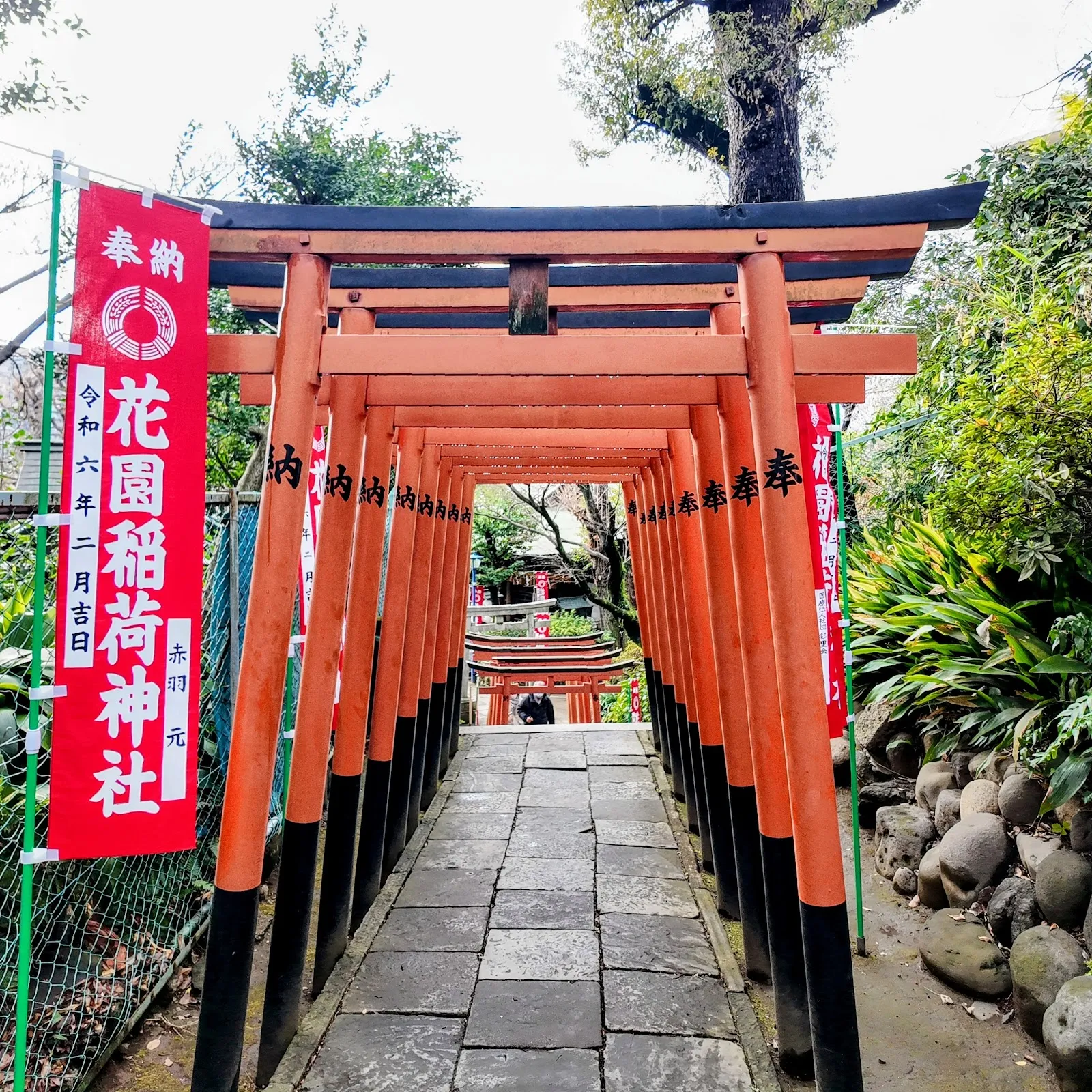
In Ueno Park, Hanazono Inari and Gojoten Shrines offer two distinct stops close together. Hanazono Inari is known for its vivid red torii gates and prayers for prosperity; Gojoten is associated with medicine and health, with red-lacquered details on its buildings. You can pause at both shrines, look for inscriptions near the torii and tunnel arches, and see ema and small offerings. Go early if you want to photograph the gates with fewer people around.
Two shrines in Ueno Park
Hanazono Inari and Gojoten Shrines sit in Ueno Park, giving you two places to visit in one stop. Their associations differ: Gojoten is connected with medicine and health, while Hanazono Inari is linked with prosperity.
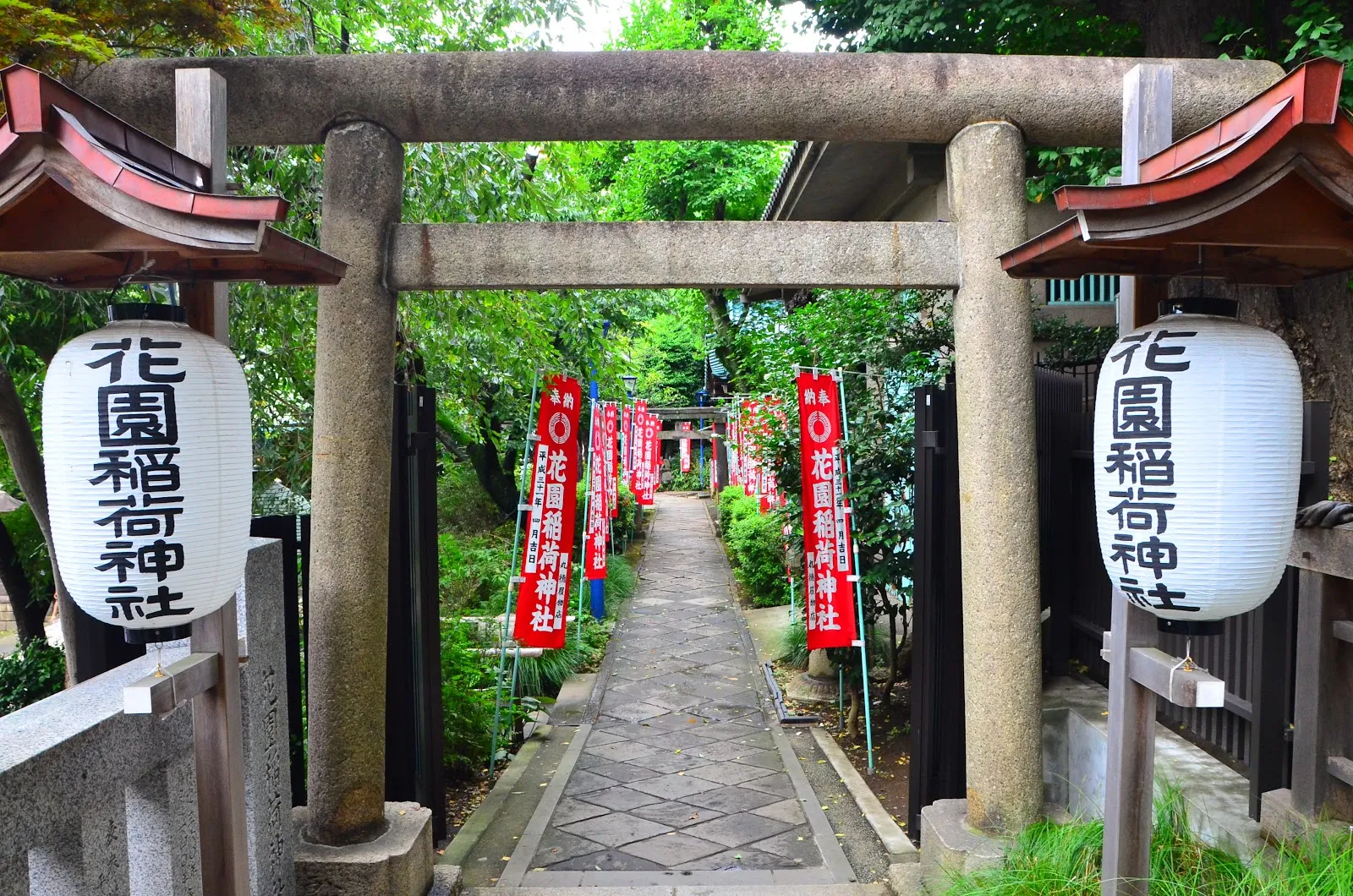
Gojoten's buildings have red-lacquered details. At Hanazono Inari, vivid red torii gates create a striking approach. Inscriptions near the torii and tunnel arches are another detail to look for as you walk through the grounds.
What to look for
At Gojoten Shrine, look for ema, the wooden plaques left by people, and small offerings. The shrine is associated with prayers for good health and success in examinations. Hanazono Inari is associated with prosperity, and people also pray at the shrines for fertility and learning.
The torii gates can draw people taking photographs, so an early visit is a practical choice if you want more room around the path. Ueno Zoo is nearby, making the shrines an easy addition after a visit there.
Preguntas frecuentes
Where are Hanazono Inari and Gojoten Shrines?
Both shrines are in Ueno Park in Tokyo.
What is Hanazono Inari Shrine known for?
It is known for its vivid red torii gates and its association with prayers for prosperity.
What is Gojoten Shrine associated with?
Gojoten Shrine is associated with medicine and health. People also pray there for success in examinations.
When is a good time to visit?
Go early if you want to avoid crowds around the torii gates.