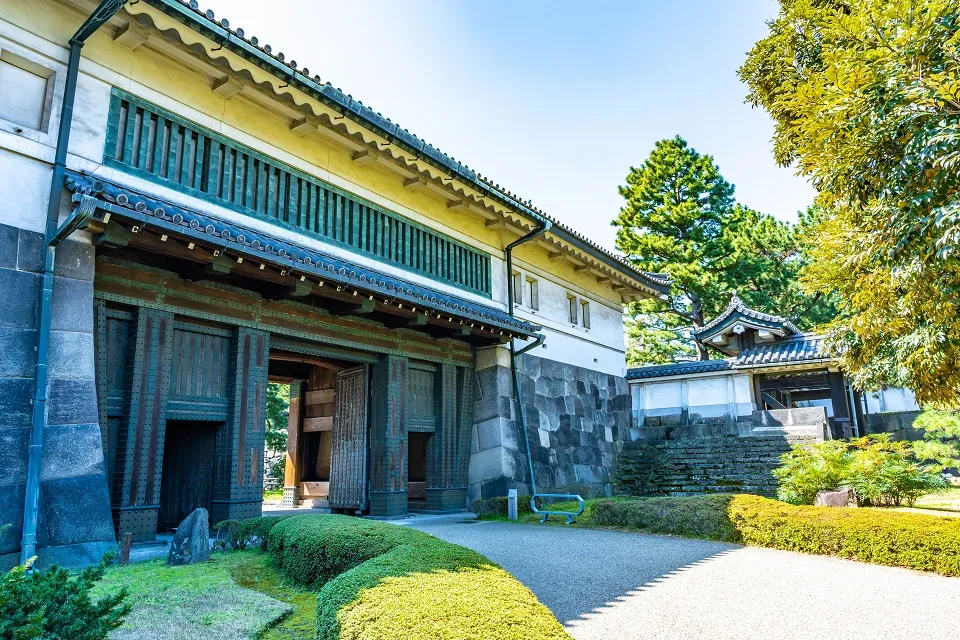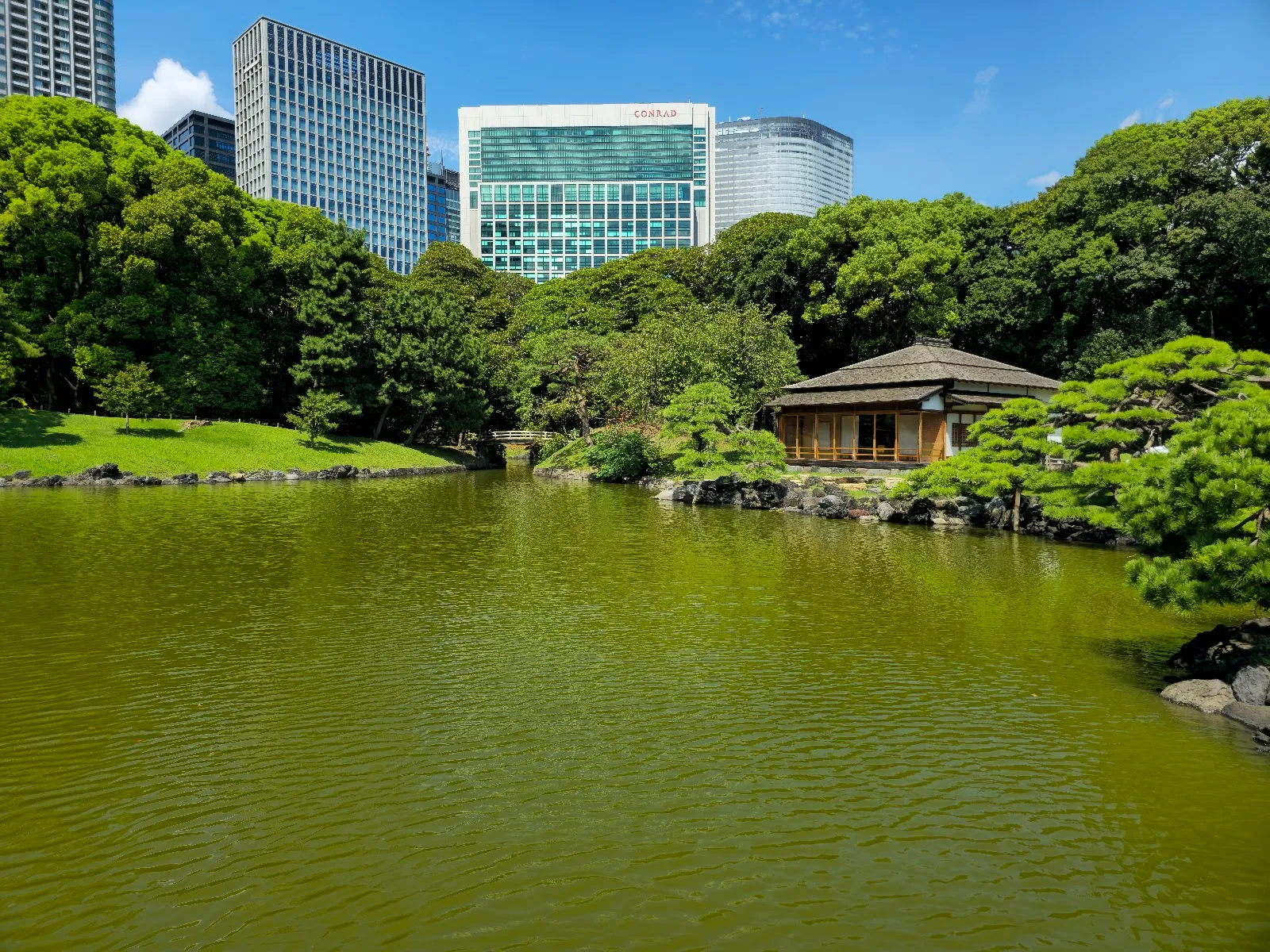
Hamarikyu Gardens is an Edo-period landscape garden in Tokyo’s Chuo City, beside Tokyo Bay and the Sumida River. Its seawater pond changes with the tide, and an island teahouse gives you a place to pause over matcha and Japanese sweets. Wide paths pass ponds, bridges, lawns and carefully shaped pines, with Shiodome’s skyscrapers rising beyond the greenery. Look for the 300-year-old black pine near the Ote-mon entrance, and check the season for plum blossoms, cherry trees or autumn color.
A garden shaped by the tide
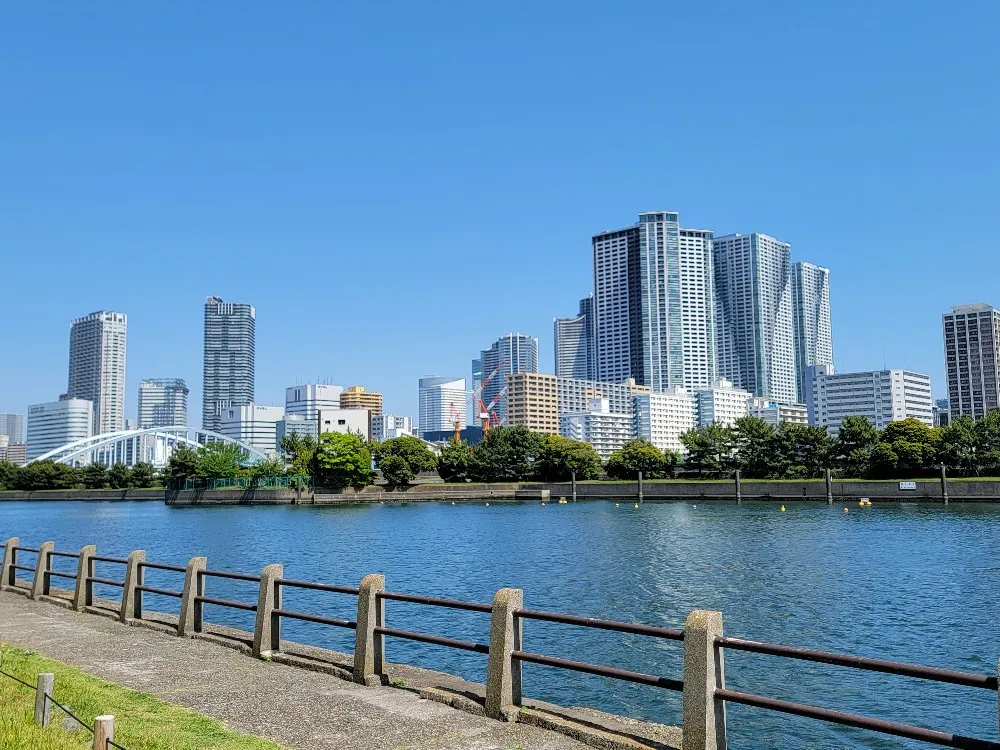
Hamarikyu’s history reaches back to the Edo period, when the grounds served as a residence and hunting land for the ruling Tokugawa family. The estate changed over time as successive shoguns reshaped it. After the Meiji Restoration, it became an imperial villa, and the garden opened to the public in 1946.
Its setting beside Tokyo Bay shaped the design. Shioiri-no-ike draws in seawater, so its water level shifts with the tide. The garden is surrounded by a seawater moat, and its ponds, islands and bridges create changing views as you walk. The contrast between the water and the Shiodome skyline is part of the experience.
Duck hunting and the garden’s past
Hunting was one of the grounds’ former uses. The Tokugawa shoguns used the area for falconry and duck hunting, and remnants of that practice remain within the garden. Historical plaques explain the site’s past, including how trained falcons were used in duck hunting.
The grounds also served other purposes during the Edo period, including rice cultivation, military training and recitals. These changing roles give the garden’s paths and ponds a history beyond their present-day use as a place to stroll.
Flowers, trees and changing views
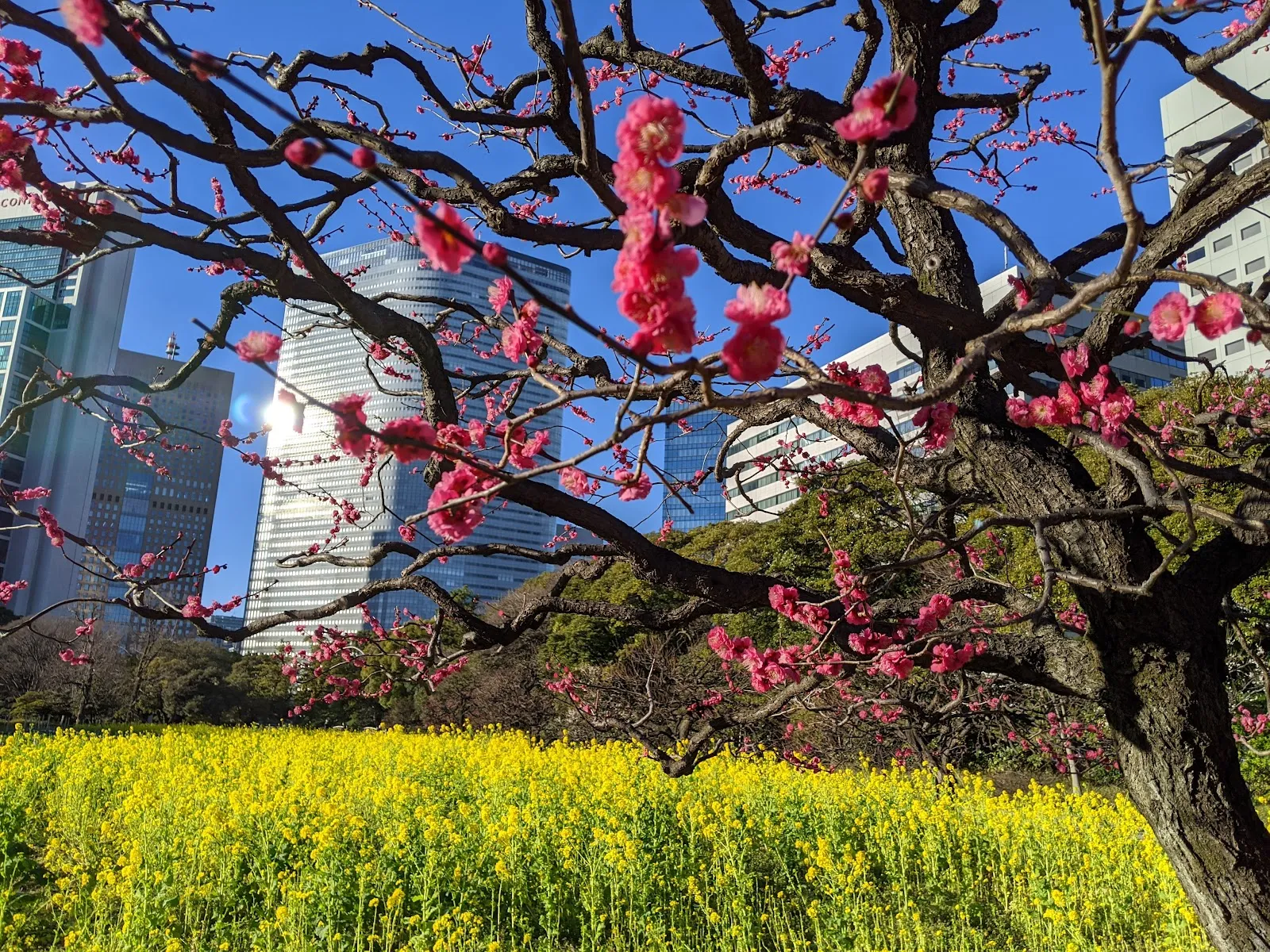
The garden’s character shifts with the seasons. Its plum trees are known for their bright pink blossoms in late winter. Cherry trees and fields of yellow rapeseed bring color in spring, while hydrangeas bloom in summer and maple leaves draw attention to the pond in autumn. The number of flowering trees varies by season, so the garden is not a dependable choice if you want a large cherry-blossom display.
Near the Ote-mon entrance, look for the carefully shaped black pine said to be 300 years old. Wide lawns and open paths give way to quieter trails, and the pond’s wooden bridges link the islands. Pause to notice how the views change between the garden’s greenery and the surrounding buildings.
The teahouse on the pond
Nakajima-no-Ochaya stands on an island in Shioiri-no-ike. You can stop there for matcha and traditional Japanese sweets while looking across the water. Its position gives you a close view of the pond and the city beyond, and the island makes a natural pause during a walk around the grounds.
The pond is especially rewarding in autumn, when the bridges and islands frame the changing leaves. In other seasons, the water reflects the garden’s trees and flowers. Take time to look across the pond from more than one point along the paths; the views vary as you move through the landscape.
Preguntas frecuentes
What is distinctive about Hamarikyu Gardens?
Its main pond draws seawater from Tokyo Bay, so the water level changes with the tide. An island in the pond is home to the traditional teahouse Nakajima-no-Ochaya.
When do the plum trees bloom?
The garden’s bright pink plum blossoms are a late-winter attraction.
Can you have tea in Hamarikyu Gardens?
Yes. Nakajima-no-Ochaya serves matcha and traditional Japanese sweets on an island in the pond.
How long should you spend at Hamarikyu Gardens?
Allow about 1 to 2 hours to walk the grounds and pause at the pond.