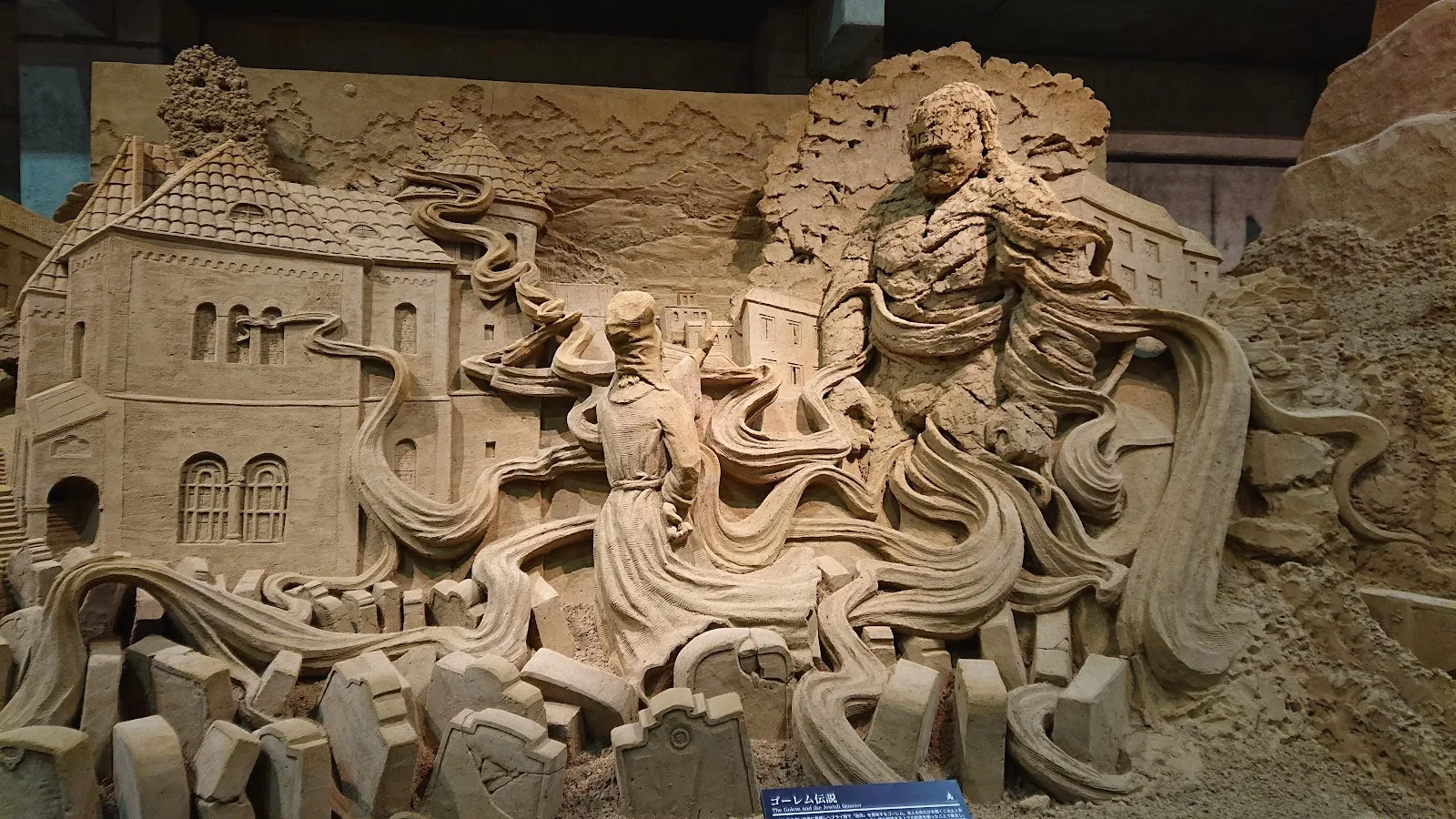
The Sand Museum sits beside the Tottori Sand Dunes in Tottori, where artists from around the world build large sculptures from sand and water. Each year the exhibition takes a new theme, usually a country or region, so the displays change from one visit to the next. Pieces include detailed replicas of famous landmarks and scenes from history. Read the write-ups, which come in Japanese and English, then walk out to the dunes, a short walk away.
From a temporary outdoor show to a permanent building
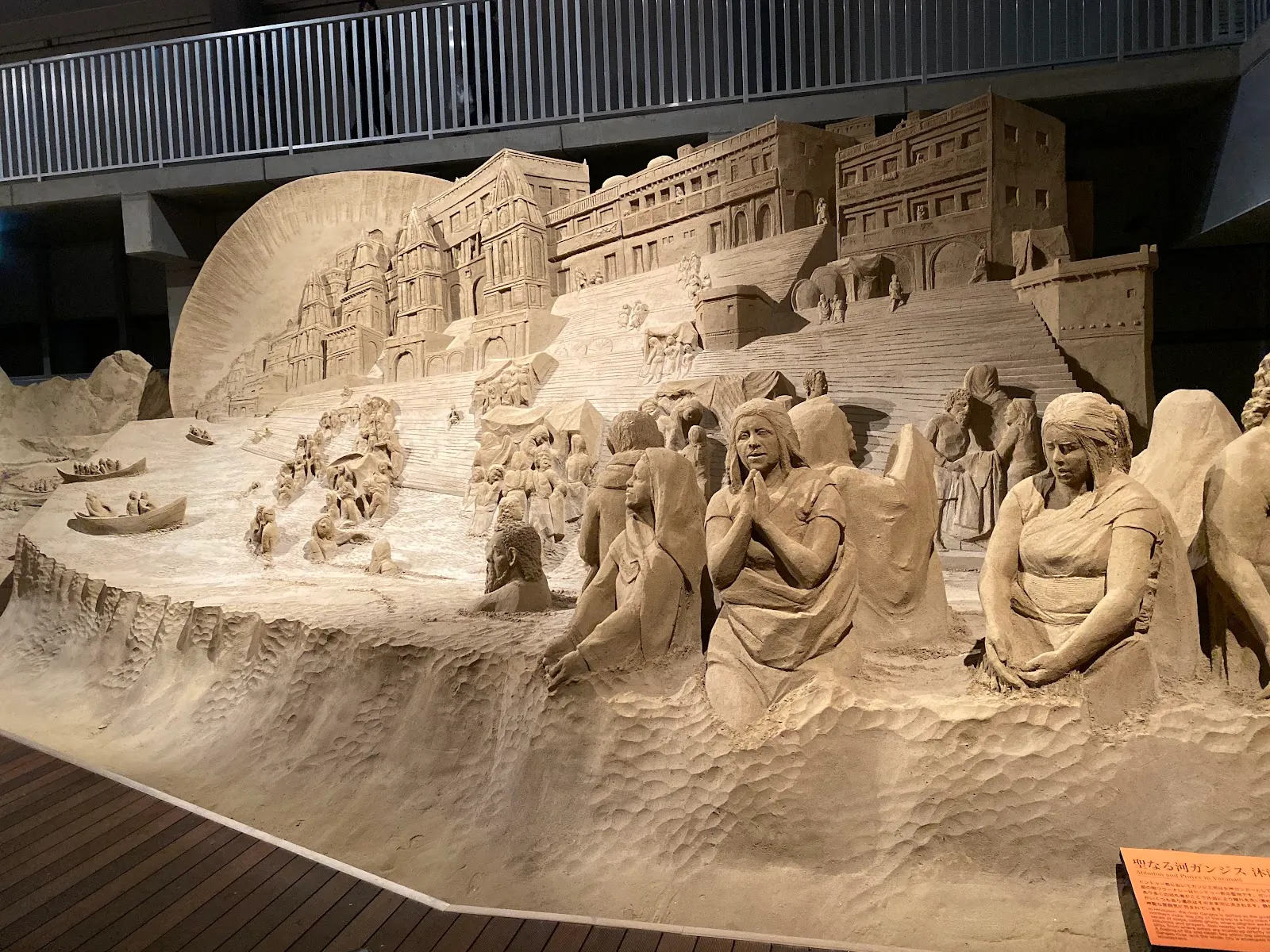
The museum began as an outdoor exhibition held in temporary structures. It first opened in 2006, and the sculptures later moved into a permanent building in 2012.
The museum claims to be the world's first permanent indoor museum devoted to sand sculpture. Its sculptures are made only of sand and water, so no single piece is kept for good. Each one eventually collapses, and new work replaces it.
How each year's exhibition is made
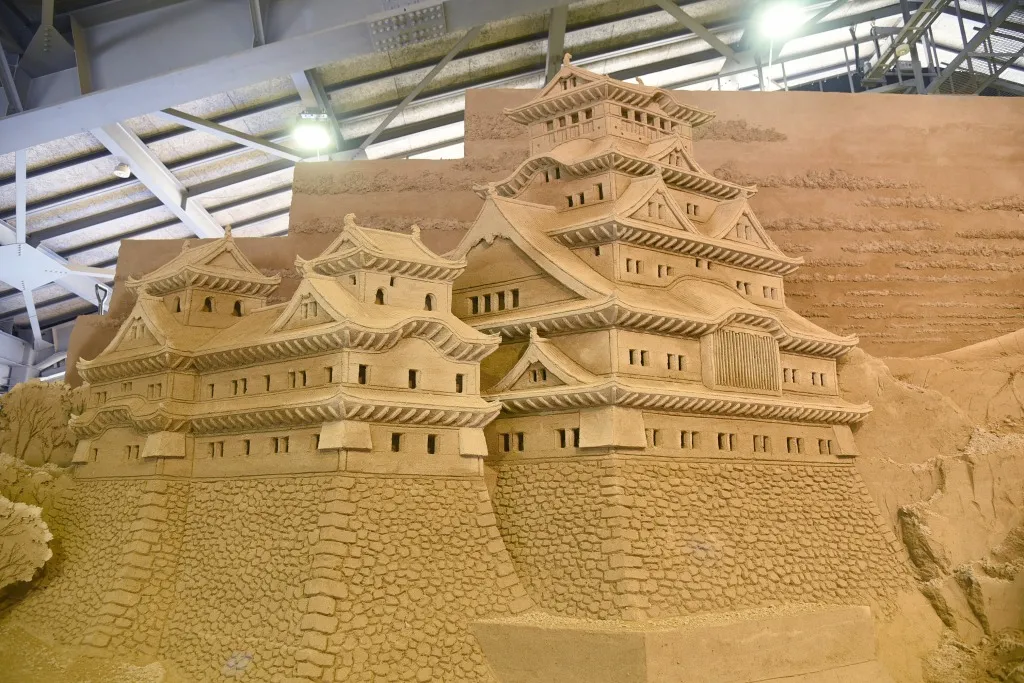
The museum invites sand artists from around the world to create the works. Each year's project is built around one theme, usually a country or region, under the museum's guiding idea of touring the world through sand.
A single annual project can take up to three months to complete. The current display, which runs from mid-April to early January, is also built around a theme, so the work on show is only in place for part of the year.
What the exhibits show
The sculptures range from recreations of world-famous landmarks to scenes from history. Past themes have included Spain, Japan, the Czech Republic and Slovakia, South America, the United States, Africa, Russia, Southeast Asia, Great Britain, Germany and Egypt. The Spain theme included a figure from the Islamic golden age, the scientist Ibn Rusyd, and the museum's write-ups tell that story in English as well as Japanese.
The museum also presents the year's theme as a sequence of works, so the pieces can be read as a route through a region's history and culture.
Inside the museum
Inside, the sculptures fill the exhibition hall, and each has a written description beside it. A cafe and a restaurant are on site, and the gift shop on the third floor sells local snacks, gifts and museum souvenirs.
An outdoor path leads from the building to a viewing area over the dunes. A wishing bell hangs just above the viewing area.
Getting there and planning the visit
The museum is a short walk from the Tottori Sand Dunes. The Sand Park at Tottori Sand Dunes Kodomo no Kuni is within a 20-minute drive, which makes it a practical pairing for families.
The museum has a free parking lot, step-free entrance and parking, a wheelchair accessible restroom, seating for wheelchair users, a changing table, a gender-neutral restroom and assisted listening devices. Tickets can be bought in advance, and the museum is open every day of the week.
Preguntas frecuentes
Is there an entry fee?
Yes, the museum charges admission. One published figure is 600 yen, so check the official site for the current price.
How long do you need at the museum?
Plan 45 minutes to 1 hour. One visitor found 30 minutes felt rushed.
Are the sculptures permanent?
No. The sculptures are made of sand and eventually collapse, and new works are made for each year's theme. The current display runs from mid-April to early January.
Is there parking?
Yes, there is a free parking lot, but it is not large and can be hard to fill on holidays.
Is the museum accessible?
Yes. The entrance, parking lot and restroom are wheelchair accessible, and there is seating for wheelchair users, a changing table and assisted listening devices.


