
South of the Circus Maximus, the Baths of Caracalla preserve the vast brick walls, arches and mosaics of one of ancient Rome’s largest public bath complexes. Built in the early third century, it was a place for bathing, exercise, reading and socialising, with libraries and sports facilities alongside pools. Walk through the remains of the central bathhouse and take in the scale of its rooms and surrounding grounds. In summer, the ruins also become an outdoor setting for opera and other performances.
A public complex beyond bathing
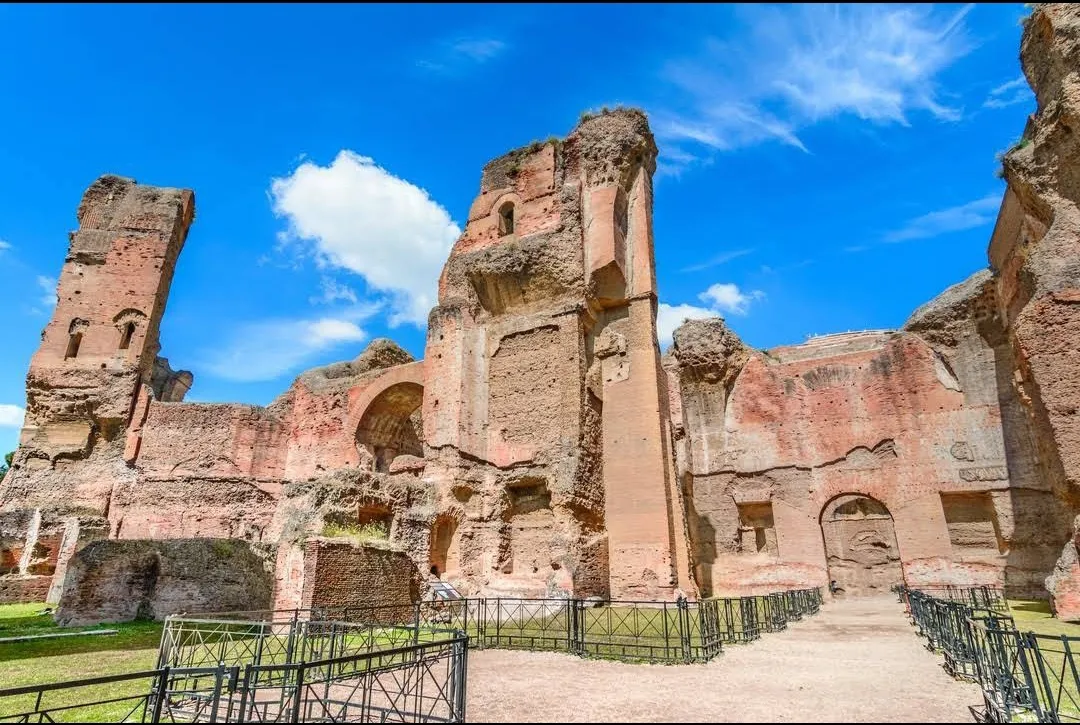
Built in the early third century under the emperors Septimius Severus and Caracalla, the Baths of Caracalla were among the largest public bathing complexes in ancient Rome. The site opened in the early 200s and remained in use until around the 530s.
Bathing was only one part of what happened here. The complex included spaces for exercise, libraries and gardens, as well as rooms for socialising. It was a place where Romans could spend time beyond the routines of washing, meeting others and taking part in leisure activities.
Reading the plan in the ruins
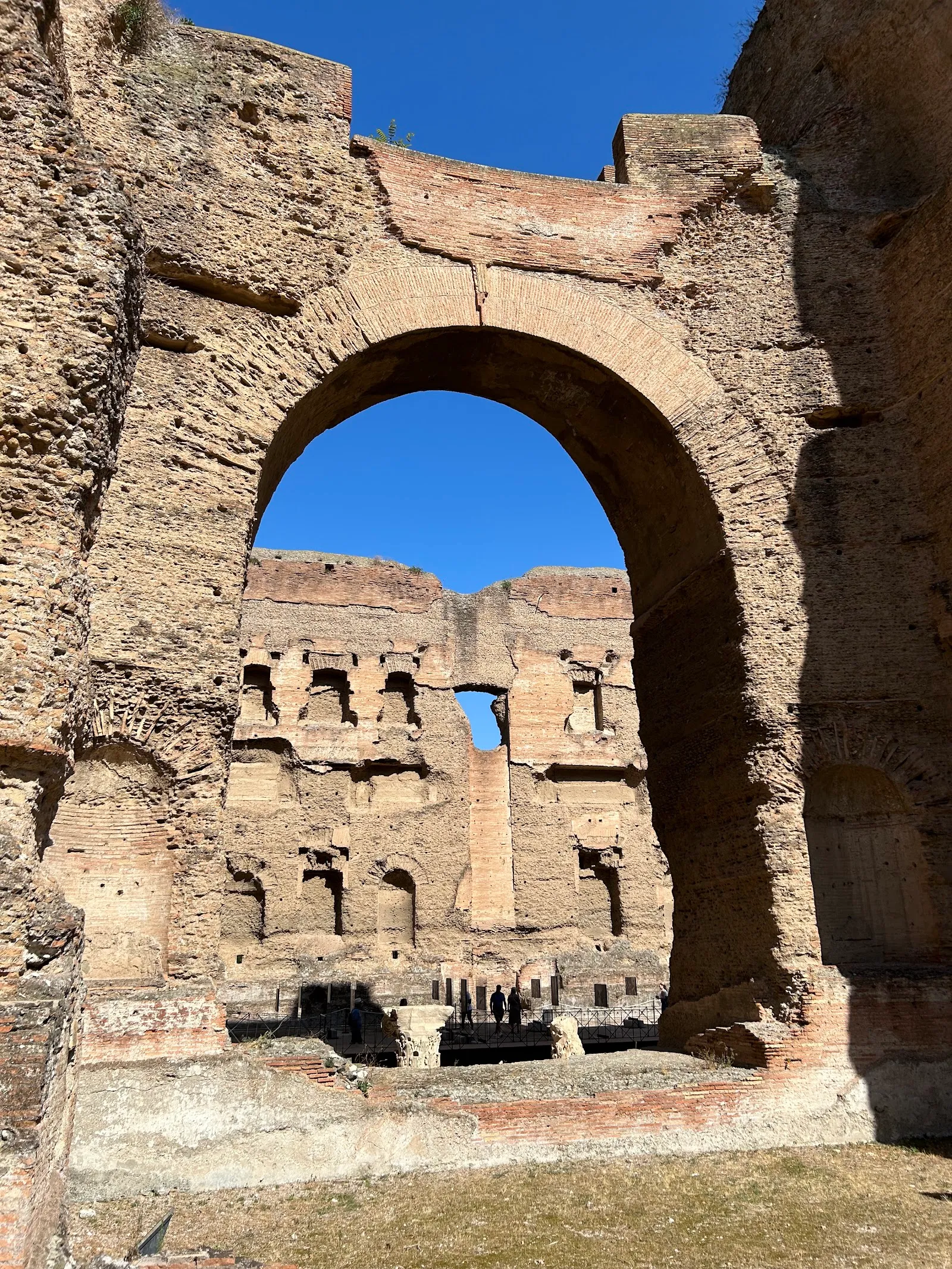
The surviving remains give a sense of the central bathhouse’s scale. Its main bathing rooms were arranged around a sequence of different temperatures: bathers moved between the hot caldarium, the warm tepidarium and the cold frigidarium. The wider complex also had gyms, known as palaestrae, and an open-air pool.
Much of the decoration and marble that once covered the buildings is gone, but sections of mosaic remain. Look down as you move through the ruins, as well as up at the high brick walls, arches and vaults. Together, they help show how large and carefully arranged the buildings were.
Water, heat and underground spaces
The baths depended on an extensive system to bring in water and keep it warm. Wood-fired ovens heated the water, while the heating system also warmed floors and walls. Workers tended the fires, and underground spaces formed part of the service areas that kept the baths operating.
Parts of the underground level can be visited. The spaces included working areas and a temple dedicated to Mithras, alongside the infrastructure associated with heating and running the complex. Their presence offers another perspective on the baths: the monumental rooms above ground relied on extensive work and practical systems below.
A summer performance setting
The remains have another role in Rome’s cultural life. During the summer, the Baths of Caracalla host outdoor opera and other performances, with the ancient walls as a backdrop. The site has also been used for ballet and concerts.
If you are considering a performance, check the programme and ticket arrangements before your visit. A show gives you a different way to experience the ruins, after the daytime archaeological site has been explored.
Preguntas frecuentes
Where are the Baths of Caracalla?
They are on Viale delle Terme di Caracalla in south Rome, near the Circus Maximus.
What can you see at the Baths of Caracalla?
Explore the remains of the central bathhouse, including large walls, arches and surviving mosaics. Parts of the underground spaces are also open to visitors.
When is the last entrance?
The supplied visit information lists the last entrance as 3:30 p.m. Plan to arrive earlier.
Are there performances at the Baths of Caracalla?
The ruins host outdoor opera and other performances during the summer. Check the programme and ticket arrangements before you go.


