
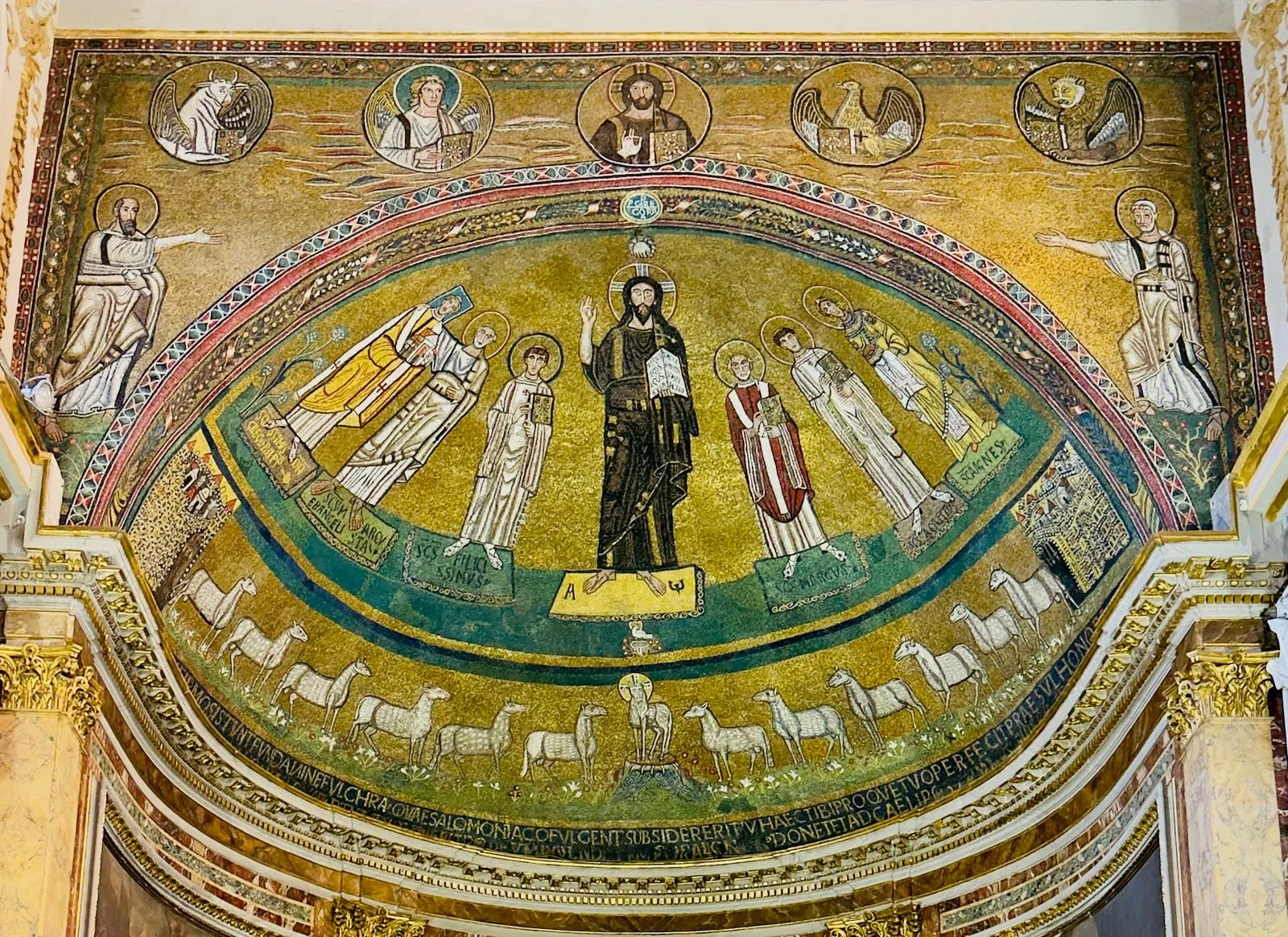
The Basilica of St Mark Evangelist stands beside Palazzo Venezia on Piazza di San Marco, close to Piazza Venezia in central Rome. Its history reaches back to the 4th century, with major rebuilding under Pope Gregory IV in 833 and Pope Paul II in 1465. Inside, look for the Byzantine apse mosaic, the original 15th-century wooden ceiling and paintings along the nave walls. The church’s calm interior also gives you a quieter stop amid the busy streets nearby.
A church rebuilt across the centuries
The church is dedicated to St Mark the Evangelist, patron saint of Venice. Its first construction is attributed to Pope Mark in 336. Pope Adrian I oversaw a major renovation in 792, followed by another substantial rebuilding under Pope Gregory IV in 833. Pope Paul II renewed the church again in 1465.
The bell tower dates to the 12th century. Baroque additions came in the 17th and 18th centuries, giving the building details from several periods of Rome’s history.
The façade and interior
The Renaissance-style façade was designed by Leon Battista Alberti. Its portico and loggia face Piazza di San Marco, beside Palazzo Venezia.
Inside, the paintings along the main walls reward a slower look. The apse mosaic is Byzantine in style and dates to 833. The wooden ceiling is one of only two original 15th-century examples remaining in Rome; Pope Paul II’s emblem is visible among its details.
Preguntas frecuentes
Where is the Basilica of St Mark in Rome?
It is at Palazzo Venezia, on Piazza di San Marco, beside Piazza Venezia.
What should I see inside the basilica?
Look for the Byzantine-style apse mosaic, the 15th-century wooden ceiling and paintings along the main walls.
When is a good time to visit?
Early morning or late afternoon is suggested for avoiding crowds.


