The Basilica of St. Anthony, known in Padua as Il Santo, stands on Piazza del Santo and holds the tomb of Saint Anthony, the city's patron. Building began in 1232, a year after his death. Byzantine-style domes crown a Romanesque and Gothic structure, and inside are chapels, bronzes by Donatello and sculpted scenes from the saint's life. Pilgrims come to touch the tomb and to see the relics in the Treasury Chapel. Entry is free, the cloisters can be visited too, and a first look takes an hour or two.
Saint Anthony and the foundation of 1232
Anthony was a Franciscan friar, born in Lisbon, who died in Padua in 1231. He was canonized quickly, and construction of a church to house his relics began the following year. He is remembered for his kindness to children, the poor and the sick, and many people turn to him as the saint of lost things.
Paduans call him simply the Saint, without adding his name, and the basilica takes its local name from that: Il Santo. The church is a Catholic minor basilica and one of the international shrines recognized by the Holy See. It is not the city's cathedral, a title that belongs to the Cathedral-Basilica of St. Mary of Padua. Pilgrims arrive every day, and the yearly total runs to millions.
Domes, spires and bell towers
The exterior mixes styles. The structure is Romanesque and Gothic, and the domes and the two bell towers follow an eastern, Byzantine pattern. Eight domes rise above the roofline, and from a distance their shapes recall St. Mark's Basilica in Venice. The domes and spires can be seen from across the city.
The mix comes from centuries of additions to the original building, each period leaving its own work. A golden angel on the highest dome is said to turn with the wind and so predict the weather.
Inside the chapels
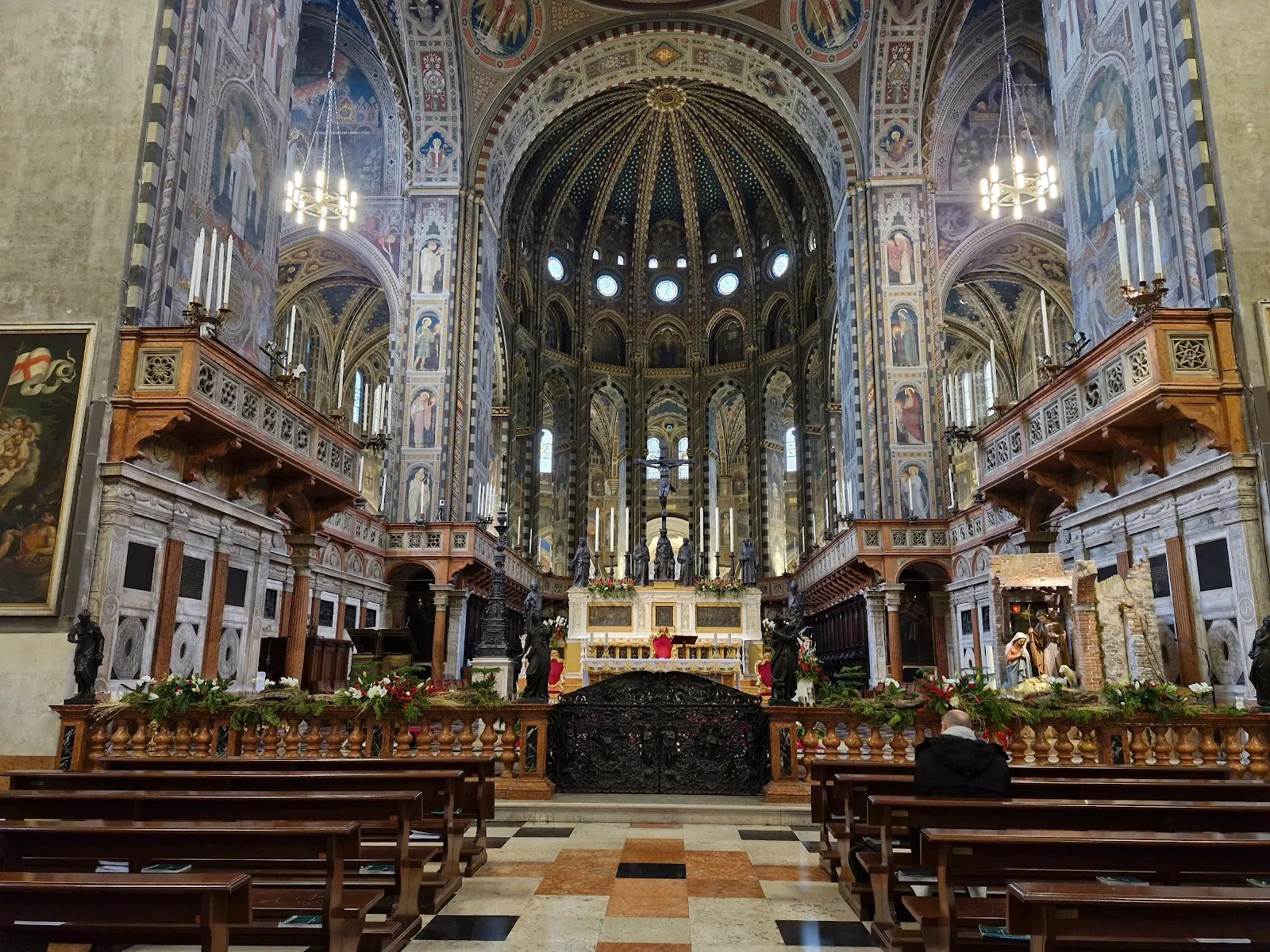
The interior is large, a network of chapels and corridors rather than a single hall. On the high altar are reliefs by Donatello, whose bronze works here are among the largest he made. In the Cappella del Santo, the Lombardi brothers carved a series of expressive sculpted scenes from the life of Saint Anthony.
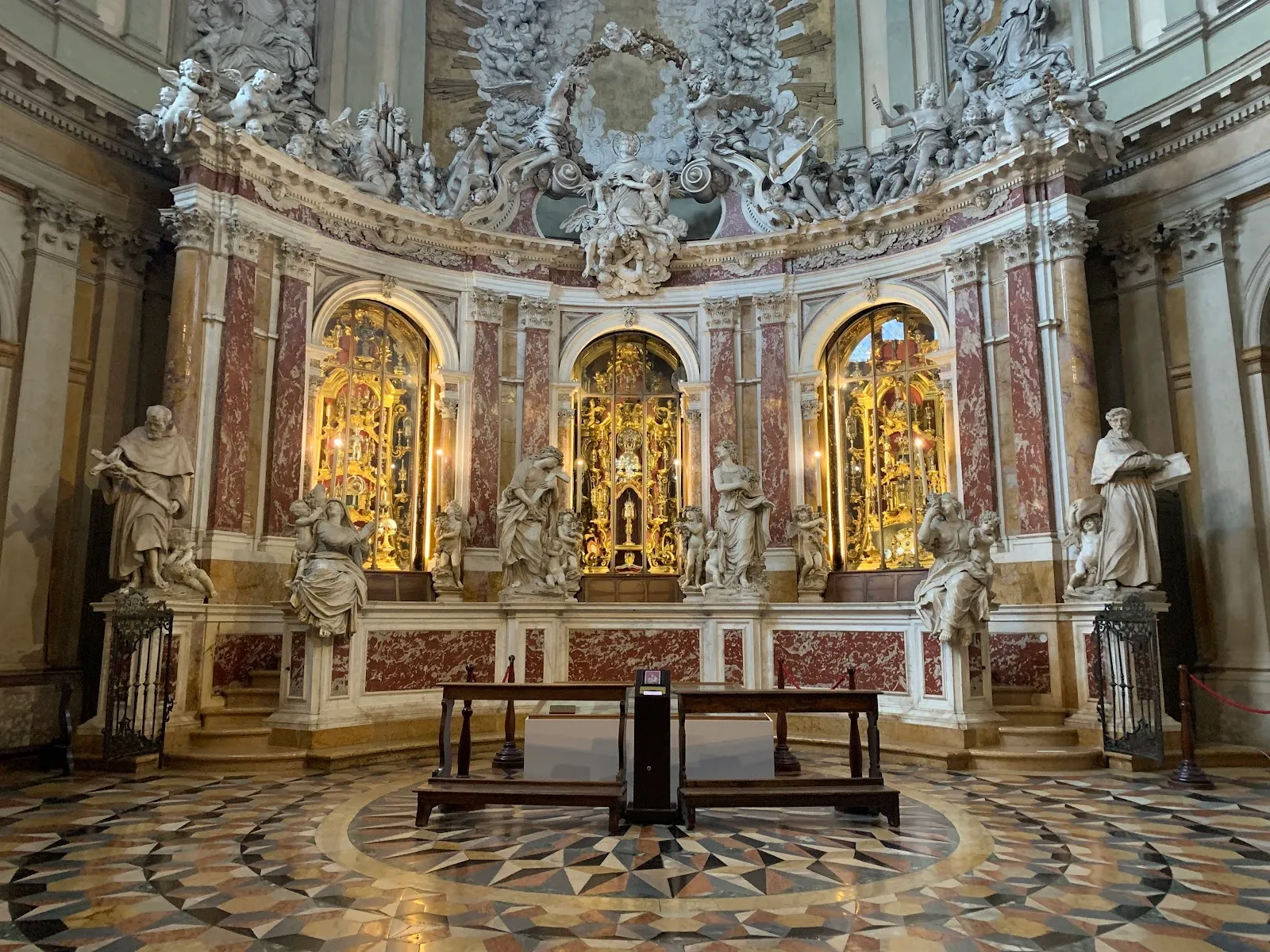
Behind the high altar, nine chapels radiate around a broad ambulatory that leads to the Cappella del Tesoro, the Treasury Chapel. There is also a Polish chapel, founded in the 16th century by Poles who were studying in Padua. Look up as well: stained glass, frescoes and a ceiling painted as a starry sky are among the details visitors remember. Several chapels hold art and relics connected to Saint Anthony.
The tomb and the relics
The tomb is the reason most pilgrims come. They gather at the Cappella del Santo, rest their hands on the marble slab covering the tomb and pray, then continue to the Treasury Chapel to venerate the relics. Among them are the saint's tongue, his vocal apparatus and his lower jaw, kept as a sign of his preaching.
Mass is celebrated several times a day, beginning early in the morning, and there is a blessing area at the back of the church. If you come during a service, move quietly and keep to the edges, since people are there to pray.
The square, the cloisters and the approach
Before you go in, look at the bronze equestrian monument of Gattamelata in Piazza del Santo, a work by Donatello. Stalls around the square sell rosaries, prayer cards and other religious items. The cloisters are open to visit and are free, like the basilica.
On foot, the basilica is about 10 minutes from Prato della Valle. Along Via Belludi, which links the two, porticoes shelter shops selling statuettes, sacred images and the sweets known as the Saint's sweets, filled with apricot jam. From the railway station the walk takes under 20 minutes.
Preguntas frecuentes
Is there an entry fee for the Basilica of St. Anthony?
No. Entry to the basilica is free, and so is a visit to its cloisters. The basilica accepts donations.
How long do you need at the basilica?
Plan on one to two hours. Even a quick walk through the chapels and courtyards takes more than an hour.
Can you take photos inside?
Photos inside are not allowed, so plan to look rather than shoot. Keep silent or speak very quietly, as the church is a place of prayer.
How do you get to the basilica from the center of Padua?
It is about a 10 minute walk from Prato della Valle and under 20 minutes on foot from the railway station. By car, leave the A4 at Padova Est from Venice or Padova Ovest from Milan. Paid parking is available.
Is the basilica wheelchair accessible?
Yes. There is a wheelchair accessible entrance, seating, restroom and parking lot, and a hearing loop for assistive listening.