
Sunan Ampel Great Mosque stands in the Ampel district of Surabaya's old town. Sunan Ampel, one of the Wali Songo, founded it in 1421, and it is the oldest mosque in East Java. His tomb lies within the same complex, and the site draws pilgrims and visitors throughout the year. Stone columns, a three-tier roof and a white tower mark the mosque, with old shade trees around the grounds. Three tombs are visited here, and guides are on hand to explain the history. The mosque is open 24 hours, so you can come for daytime prayers or for tahajud at night.
Founded in 1421
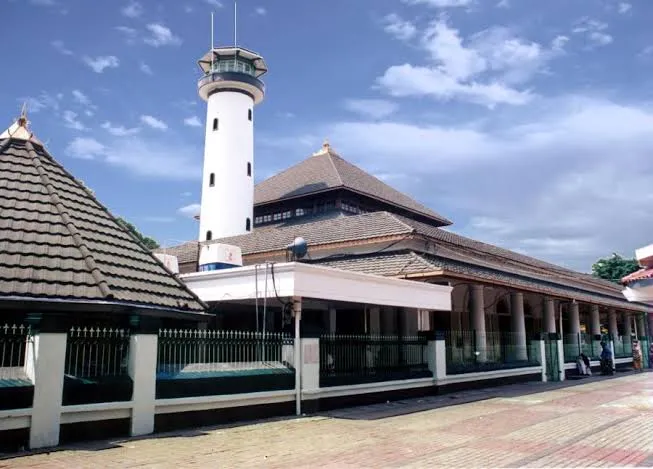
Sunan Ampel founded the mosque in 1421, with the help of several companions. He is one of the Wali Songo, the nine Islamic saints credited with spreading Islam across Java. That makes this the oldest mosque in East Java. It has been restored and updated over the centuries.
The site covers a plot of about 120 by 180 meters. In 1972 the Surabaya city government designated the area around the mosque as a religious tourism destination, and it remains one of the city's main ones.
Architecture and grounds
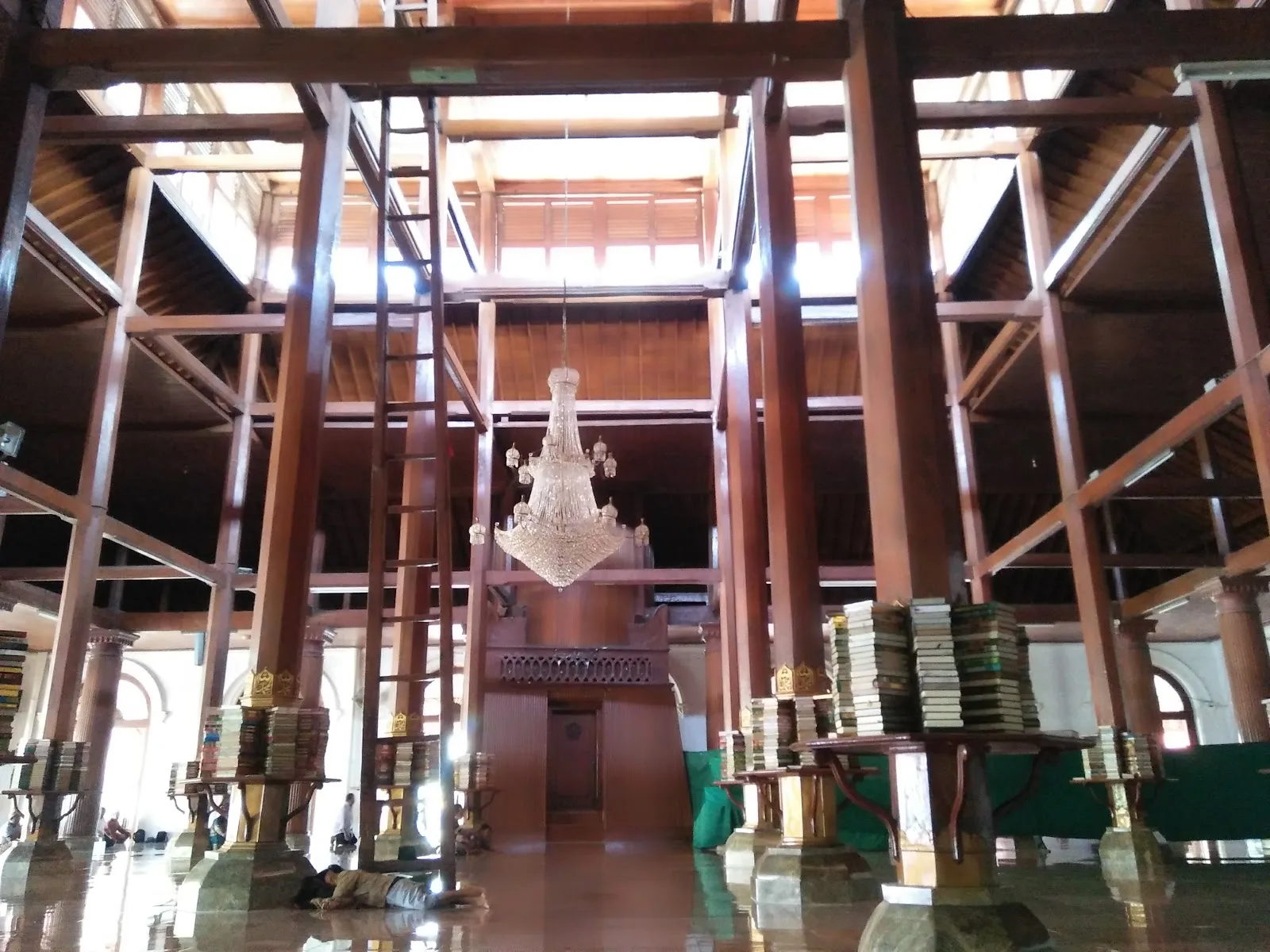
The building is understated. A row of stone columns carries a three-tier roof, and a white column-shaped tower beside it looks like a small lighthouse. The style blends traditional Javanese forms with Islamic design, and carvings and calligraphy decorate parts of the complex.
Old trees shade the grounds, and the air inside the mosque stays fresh without air conditioning. Wheelchair-accessible entrance, restroom and parking are available.
The tombs to visit
The cemetery beside the mosque is among the oldest Muslim burial grounds in Surabaya. Pilgrims commonly visit three tombs: that of Sunan Ampel himself, that of Mbah Bolong, and that of Mbah Sholeh, which lies roughly 100 meters from the men's wudhu area. The shrine of Wahid Hasyim is also among the graves around the mosque.
People come here to pray and to pay respects. Guided tours cover the early spread of Islam in Java and the way Javanese traditions and Islamic teaching came together. Guides and attendants are used to explaining the customs to first-time visitors.
Ramadan and night prayer
The mosque is open 24 hours, and some visitors come specifically for tahajud, the night prayer, in the old building. Local helpers can explain the order of the prayers.
Ramadan changes the scale of the place. Daily attendance roughly doubles to an average of about 2,000 people. On the maleman nights, the nights of 21, 23, 25, 27 and 29 Ramadan, the count passes 10,000 and can reach 20,000. If you want space to move and reflect, plan for another time of year.
The Arab Quarter around the mosque
The mosque sits in the Arab Quarter of Surabaya's old city. Middle Eastern buildings, shops selling Islamic and traditional goods, and food stalls line the surrounding streets, and a market runs close to the mosque.
The mosque fits easily into a wider day in the old town. A city tour might continue to the House of Sampoerna, Kembang Jepun (the Chinese quarter) and the Cheng Ho Chinese Mosque, or to Grahadi, the East Java governor's official residence, which houses a small museum on Surabaya's political history.
Preguntas frecuentes
When was Sunan Ampel Great Mosque built?
Sunan Ampel founded it in 1421, which makes it the oldest mosque in East Java. It has been restored over the years.
Is the mosque open at night?
Yes, it is open 24 hours every day. Some visitors come after dark for tahajud, the night prayer.
Whose tombs are in the complex?
The tomb of Sunan Ampel, one of the Wali Songo, is here. Pilgrims also visit the tombs of Mbah Bolong and Mbah Sholeh, and the area includes the shrine of Wahid Hasyim.
What should I wear?
Dress modestly out of respect for the mosque and the shrines.
When is it most crowded?
During Ramadan, when daily numbers roughly double. The maleman nights (21, 23, 25, 27 and 29 Ramadan) are the busiest, with over 10,000 people.
Is the mosque wheelchair accessible?
The entrance, the restroom and the parking lot are all wheelchair accessible.


