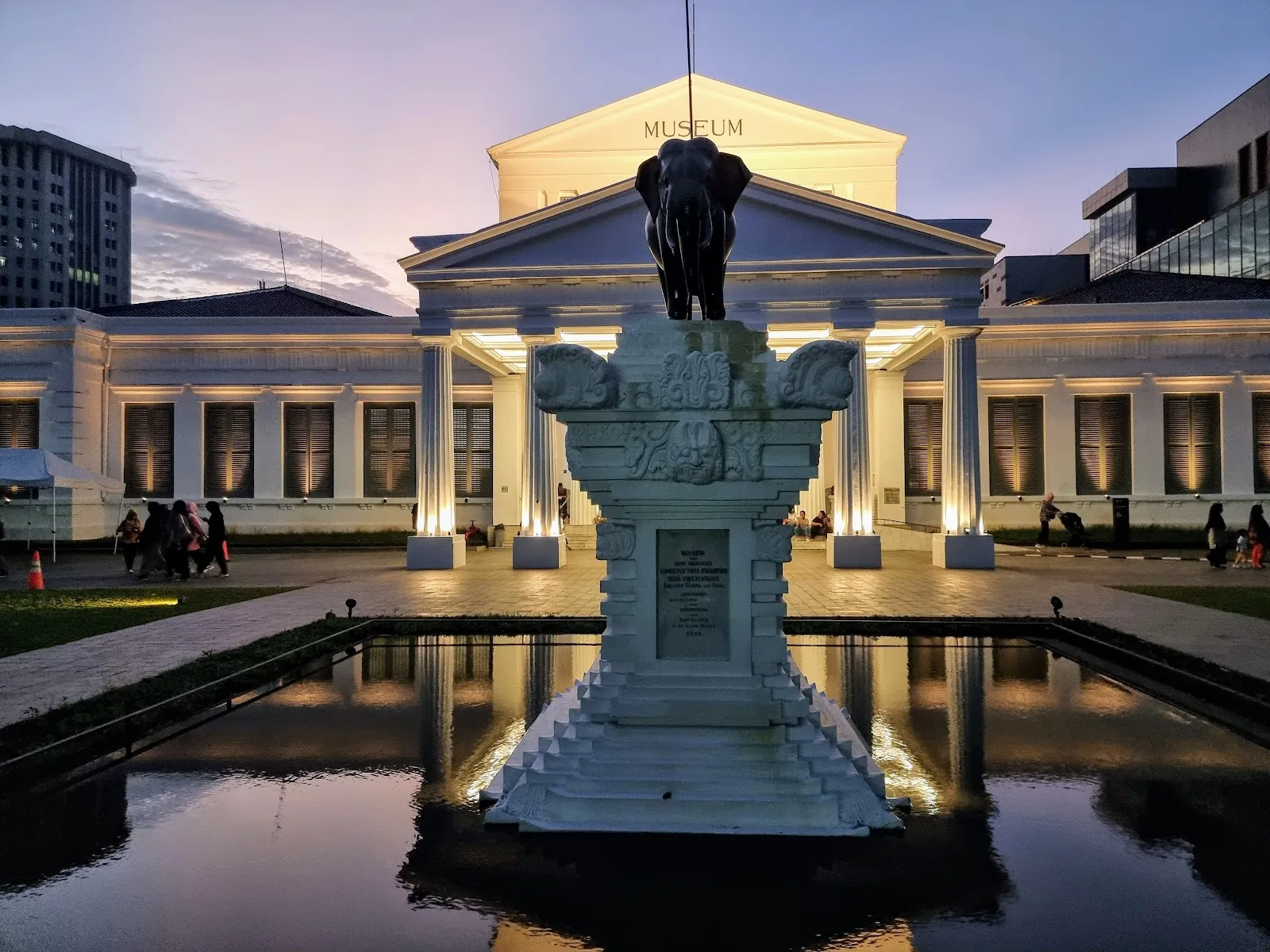
On the west side of Merdeka Square in Central Jakarta, the National Museum of Indonesia traces the country’s history through archaeological, cultural and ethnographic collections. Look for Hindu-Buddhist statues, stone carvings, textiles, ceramics and displays on Indonesia’s many communities. The bronze elephant outside the entrance gave the museum its familiar name, the Elephant Building. Interactive exhibits and the Imersifa 3D experience add a more immersive way to explore. Use a museum map to plan your route through the galleries, as some sections can be harder to navigate.
A museum with a long history
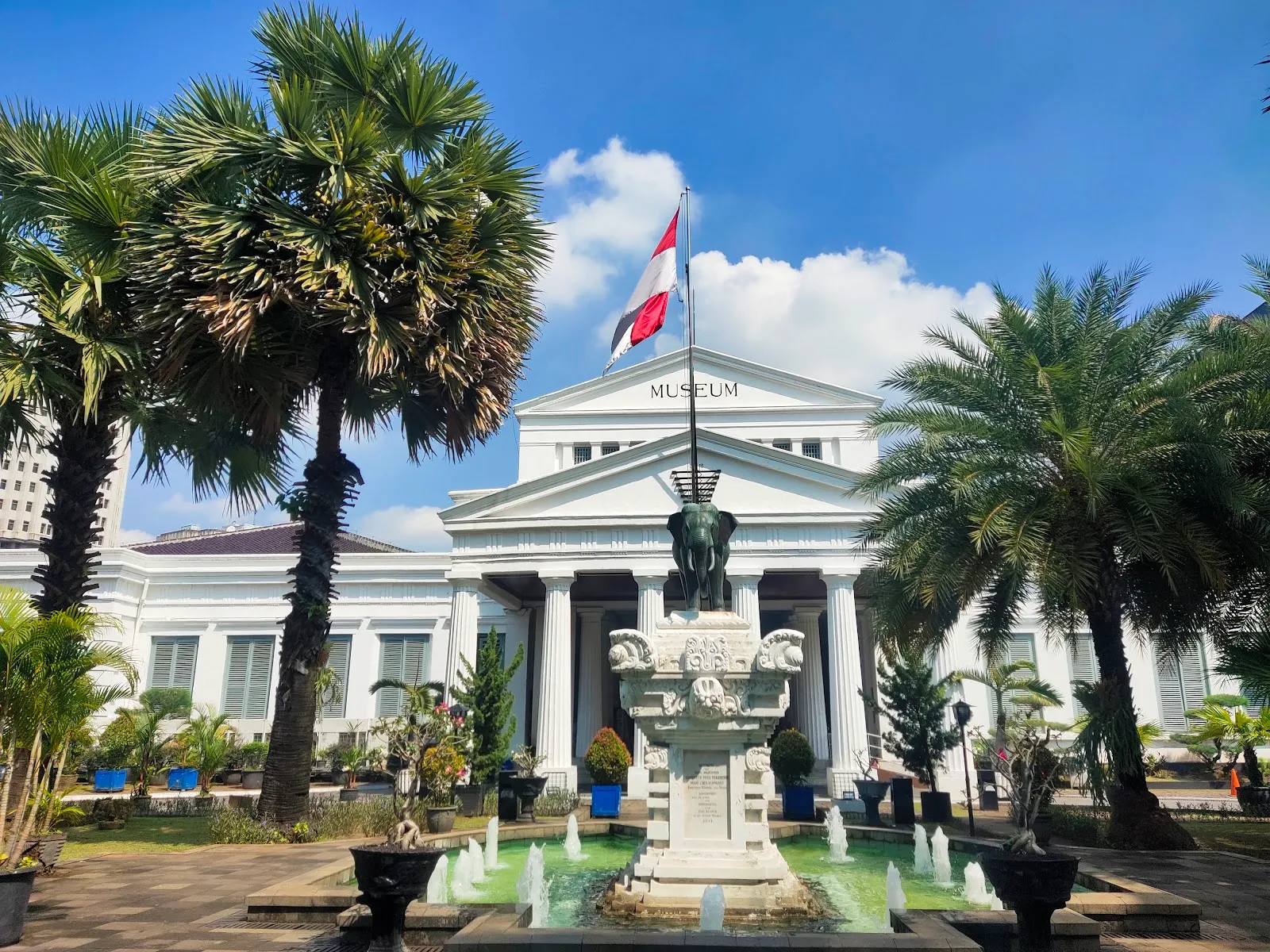
The museum’s origins go back to 1778, when the Batavia Society for Arts and Sciences began collecting and preserving objects. The institution later became the National Museum of Indonesia, officially opening in 1868. Its older building dates to 1862, and additions have expanded the museum over time.
The museum is often called Museum Gajah, or the Elephant Museum. The name refers to the bronze elephant statue at the entrance, presented by Thailand’s King Chulalongkorn in 1871. The building stands on the western side of Merdeka Square, close to the National Monument.
Collections from across the archipelago
The museum brings together archaeological, historical, ethnographic and geographical collections. Displays cover Indonesia’s past from prehistoric periods through later kingdoms and colonial history, with objects representing communities and regions across the archipelago.
Among the collections are Hindu-Buddhist sculptures, stone carvings, ceramics and textiles. You can also encounter traditional crafts and everyday objects, including items associated with different ethnic groups. The range makes the museum useful for understanding how varied Indonesia’s history and cultures are, though the galleries cover a lot of ground. A map can help you choose which sections to focus on.
Statues, textiles and themed exhibitions
The museum’s stone and bronze sculptures are a strong reason to spend time in the galleries. Taman Arca brings together Hindu-Buddhist statues from different parts of Indonesia. Look closely at the pieces and their labels for clues about their artistic and religious context.
Other displays explore subjects such as Indonesian cultural diversity and Islamic civilization. Exhibitions can change, and the museum has presented special displays across its floors. If you have a particular topic in mind, check what is currently on before your visit.
The Imersifa experience
Imersifa adds a visual, storytelling-led element to a museum visit, using an immersive 3D presentation about Indonesian history and culture. It is a separate experience from general entry. One reported ticket price was IDR 35,000 per person, but prices can change; check the museum’s current ticket information before you go. Advance online purchase has been recommended for this experience.
The museum also has interactive and sensory displays. These give visitors a different way to engage with the material than reading labels alone, and can suit families visiting with children.
Planning your route
The museum is in Gambir, Central Jakarta, at Jl. Medan Merdeka Barat No. 12. TransJakarta route 01 is one option for getting there, and the museum has parking on site. Once inside, allow time to move between galleries and use a map to orient yourself, since signage can be less clear in some areas.
The museum reopened after a fire and subsequent renovation. Check its social media before visiting on a public holiday, when operating hours may differ. For a focused visit, choose a few collection areas in advance; for a broader overview, leave several hours to explore.
Preguntas frecuentes
How long should I spend at the National Museum of Indonesia?
Allow about 2 to 3 hours to explore the collections. The museum is spacious, so a map can help you plan your route.
What is the Elephant Museum?
It is another name for the National Museum of Indonesia, referring to the bronze elephant statue at the entrance. Thailand’s King Chulalongkorn presented the statue in 1871.
Is the Imersifa experience included with general admission?
It is described as an add-on experience. Check current ticket details with the museum, and buy online in advance if you plan to attend.
How can I get to the museum?
The museum is on Jl. Medan Merdeka Barat in Central Jakarta. TransJakarta route 01 is one suggested option, and on-site parking is available.