Planifica un viaje
Idioma: Español
Planificador de viajesPlanifica tu viaje en un mapa

Destinos principales

EnglishDeutschFrançaisEspañolPortuguêsPortuguês (BR)Italiano
Aviso de viaje · IndiaAlgunos gobiernos desaconsejan viajar a determinadas zonas de India.Las advertencias cubren únicamente estas zonas: franja de 10 km a lo largo de la frontera con Pakistán, Jammu y Cachemira, valle de Cachemira, Manipur, Bihar, Chhattisgarh, Jharkhand, Odisha, carretera Srinagar–Ladakh, Bengala Occidental.Los consejos dependen de tu pasaporte. Lee los de tu propio gobierno antes de reservar.Recomendaciones oficiales
Zonas con advertencias
  • franja de 10 km a lo largo de la frontera con Pakistán · evitar todo viaje · Canadá, Alemania, España, Francia, Irlanda, Italia, Nueva Zelanda, Reino Unido, Estados Unidos
  • Jammu y Cachemira · evitar todo viaje · Canadá, Alemania, Irlanda, Nueva Zelanda, Reino Unido, Estados Unidos
  • valle de Cachemira · evitar todo viaje · España, Francia, Italia
  • Manipur · evitar todo viaje · Canadá, Alemania, España, Irlanda, Italia, Nueva Zelanda, Reino Unido
  • Bihar · evitar viajes no esenciales · España, Italia
  • Chhattisgarh · evitar viajes no esenciales · España, Italia, Nueva Zelanda
  • Jharkhand · evitar viajes no esenciales · España, Italia
  • Odisha · evitar viajes no esenciales · España, Italia
  • carretera Srinagar–Ladakh · evitar viajes no esenciales · Francia, Italia
  • Bengala Occidental · evitar viajes no esenciales · España, Italia

También señalada por un gobierno: región de Jammu (España), Línea de Control (LdC) (Francia), Tripura (Irlanda), Andhra Pradesh (España), zonas fronterizas de Assam con Bangladés (Nueva Zelanda), zona fronteriza con China (Ladakh) (Francia), Gulmarg (Italia), frontera entre India y Birmania (Francia), Ladakh (España), zonas fronterizas de Nagaland con Birmania (Nueva Zelanda), Pahalgam (Italia), Sonamarg (Italia), Srinagar (Italia)

GobiernoConsejosActualizadoLeer las recomendaciones
Reino Unido (FCDO)No advice against the whole country (regional advisories)–Leer las recomendaciones
Estados Unidos (Departamento de Estado)Exercise increased caution (regional advisories)16 jun 2025Leer las recomendaciones
Canadá (Asuntos Globales)Exercise a high degree of caution (regional advisories)–Leer las recomendaciones
Alemania (Auswärtiges Amt)No warning against the whole country; partial warnings for specific areas (regional advisories)14 oct 2026Leer las recomendaciones
Nueva Zelanda (SafeTravel)Exercise increased caution (regional advisories)–Leer las recomendaciones
Irlanda (Departamento de Asuntos Exteriores)High Degree of Caution (regional advisories)–Leer las recomendaciones
Francia (Ministerio de Europa y Asuntos Exteriores)Pays relativement sûr dans son ensemble, sous réserve de respecter certaines règles et de tenir compte du risque terroriste (regional advisories)–Leer las recomendaciones

Revisado a diario según los consejos publicados por los gobiernos; última revisión 3 nov 2026.RoamLedger resume las recomendaciones oficiales; no son consejos de ningún gobierno.

Padmaja Naidu Himalayan Zoological Park
Zoológico

Padmaja Naidu Himalayan Zoological Park Darjeeling

The Padmaja Naidu Himalayan Zoological Park, also called the Darjeeling Zoo, sits on Jawahar Parbat hill at about 2,134 meters (7,000 feet).

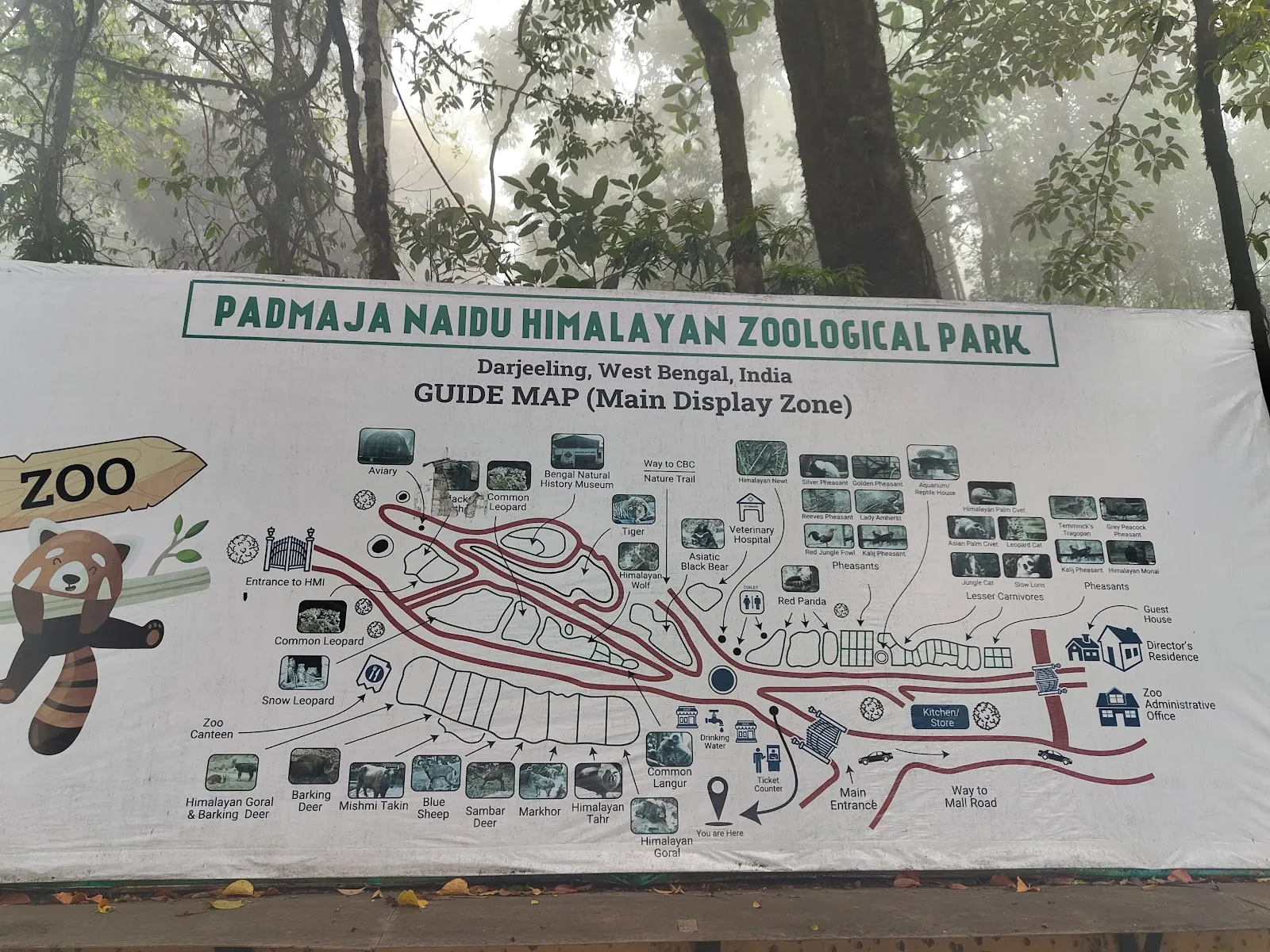
The Padmaja Naidu Himalayan Zoological Park, also called the Darjeeling Zoo, sits on Jawahar Parbat hill at about 2,134 meters (7,000 feet). It is the largest high-altitude zoo in India and focuses on animals of the Himalayan region. Its breeding work for red pandas and snow leopards is the main reason to visit. Walk the paths under pine trees to see Siberian tigers, Himalayan wolves, goral, yaks and birds in enclosures built to resemble their native habitats. The Bengal Natural History Museum is inside the grounds.

From a joint venture in 1958 to today
Padmaja Naidu Himalayan Zoological Park Darjeeling

The zoo was set up in 1958 as a joint venture of the Government of India and the Government of West Bengal, under the name Himalayan Zoological Park. In 1975, Indira Gandhi, then Prime Minister of India, visited the park, and it was renamed in memory of Padmaja Naidu, a poet and the daughter of the freedom fighter Sarojini Naidu.

The zoo has received the Royal Bank of Scotland Earth Hero Award for its in situ and ex situ conservation work. The Central Zoo Authority has also ranked it the best zoo in the country.

Breeding and conservation work
Padmaja Naidu Himalayan Zoological Park Darjeeling

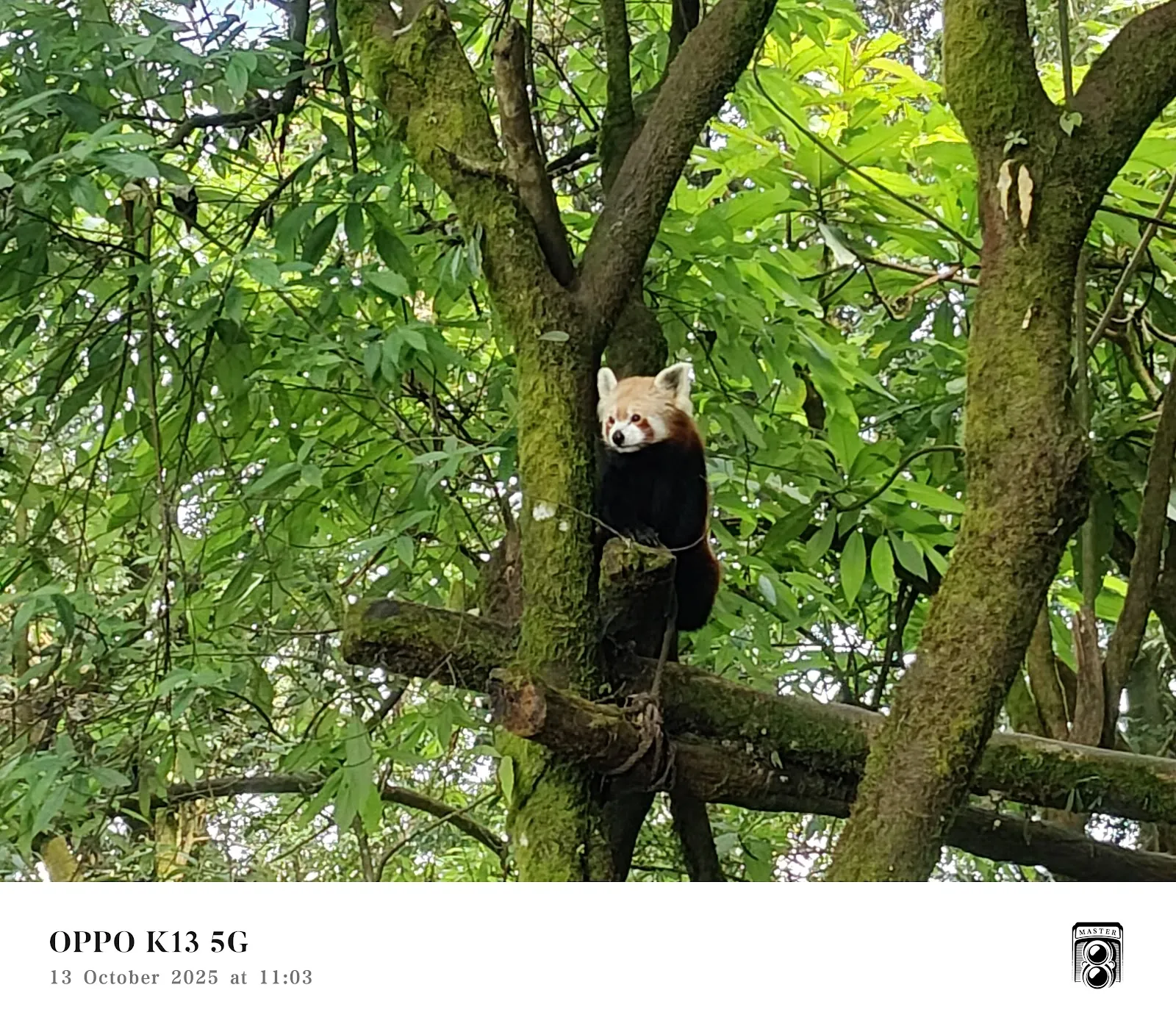
Most of the zoo's work is the breeding of endangered Himalayan species. The snow leopard programme has run for more than twenty years, and the zoo holds one of the largest captive populations of the species. Red pandas have their own breeding programme, and an off-display breeding centre supports both species.

Only about 10 acres are open to visitors. The rest of the site is a conservation breeding centre. The zoo collects DNA samples as part of its conservation work. It is also the only zoo in India that breeds the Tibetan wolf in captivity.

What you see along the paths

Animals on show include red pandas, snow leopards, Siberian tigers, Himalayan and Tibetan wolves, Himalayan tahr, blue sheep, goral, yaks, Himalayan black bears and clouded leopards. The bird collection includes macaws, Himalayan monals and a bird aviary.

The enclosures are spacious and set up to resemble natural habitats. The grounds hold more than 200 species of trees and plants, including some 60 varieties of orchids. Signboards along the paths give facts about the animals and about conservation.

Bengal Natural History Museum and the mountaineering institute

The Bengal Natural History Museum is inside the park grounds. It began as a small building in the Botanical Garden to show the butterflies and birds of the hills. Today it holds about 4,300 specimens, including mammals, birds, reptiles, insects and fishes. The specimens are preserved from real animals and displayed in replicas of their natural habitats. A display of regional minerals is also on show.

The Himalayan Mountaineering Institute sits next to the zoo. Its displays cover the history of climbing in the region.

Planning the visit

The zoo has a cafe, a gift shop and a playground, and it is good for children. Free and paid parking are both available. The entrance, restrooms and parking are wheelchair accessible.

The zoo is closed on Thursdays. Allow about half a day to cover the highlights.

Preguntas frecuentes

Is there an entry fee?

Yes. For Indian visitors the fee is ₹110 per person. Other visitor rates are not listed here, so check the official website, darjeelingzoo.in.

How long do you need at the zoo?

Allow about 4 to 5 hours to see the highlights, or half a day in total.

Is the zoo open every day?

No. The zoo is closed on Thursdays.

Can you buy tickets in advance?

Yes, and advance tickets are recommended because queues can be long.

Más lugares imprescindibles en Darjeeling

Explorar todo