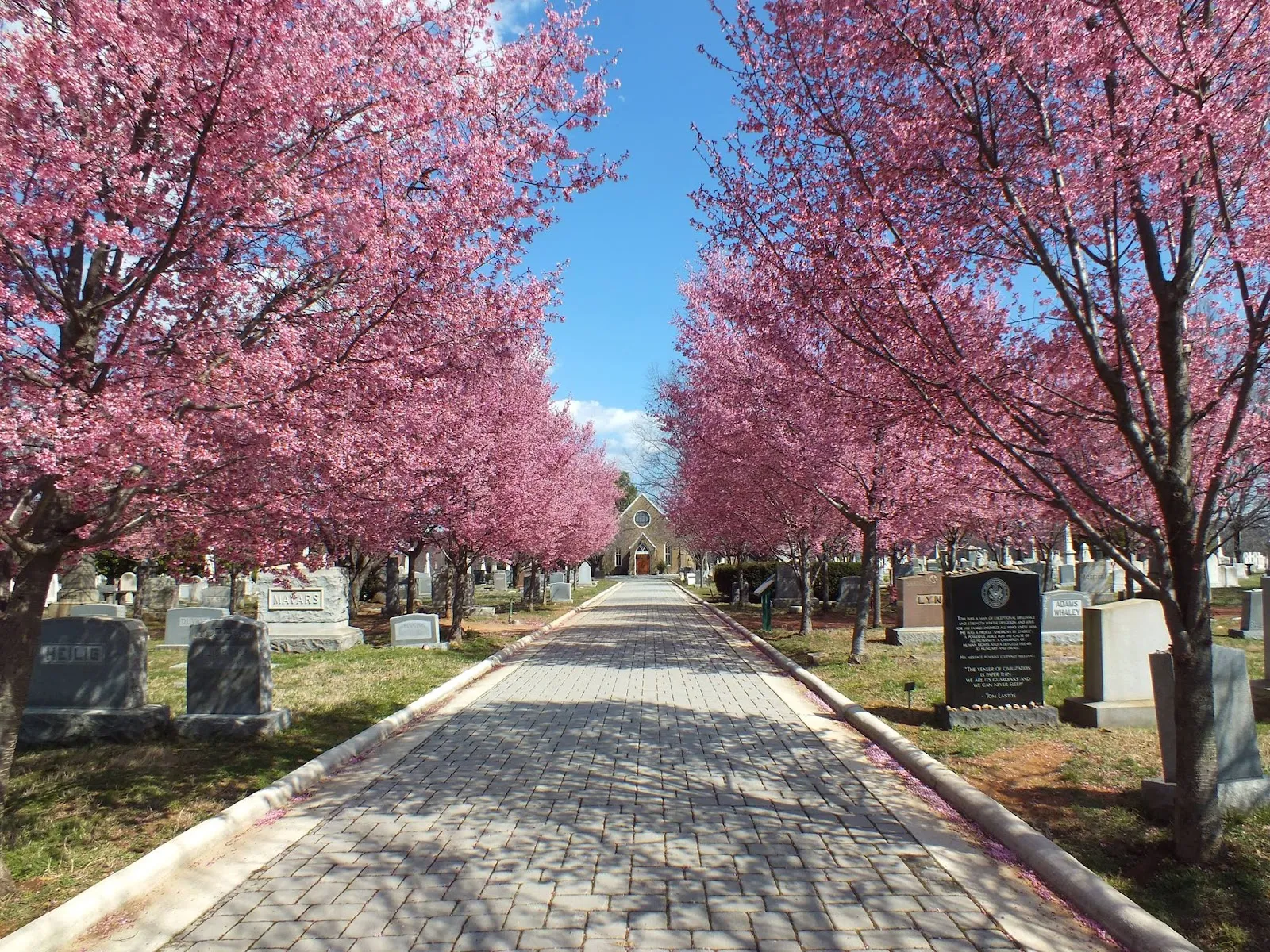
Congressional Cemetery is a historic burial ground in Southeast Washington, at 1801 E St SE. Founded in 1807, it is known for its rows of distinctive markers, graves of notable Washingtonians and cherry trees that bloom at different points in spring. Look for the matching cenotaphs commemorating members of Congress, or walk the grounds among the Okame and Kwanzan trees. Dogs are welcome under the cemetery’s dog-park arrangements, and the grounds also host history programs and events.
A burial ground founded in 1807
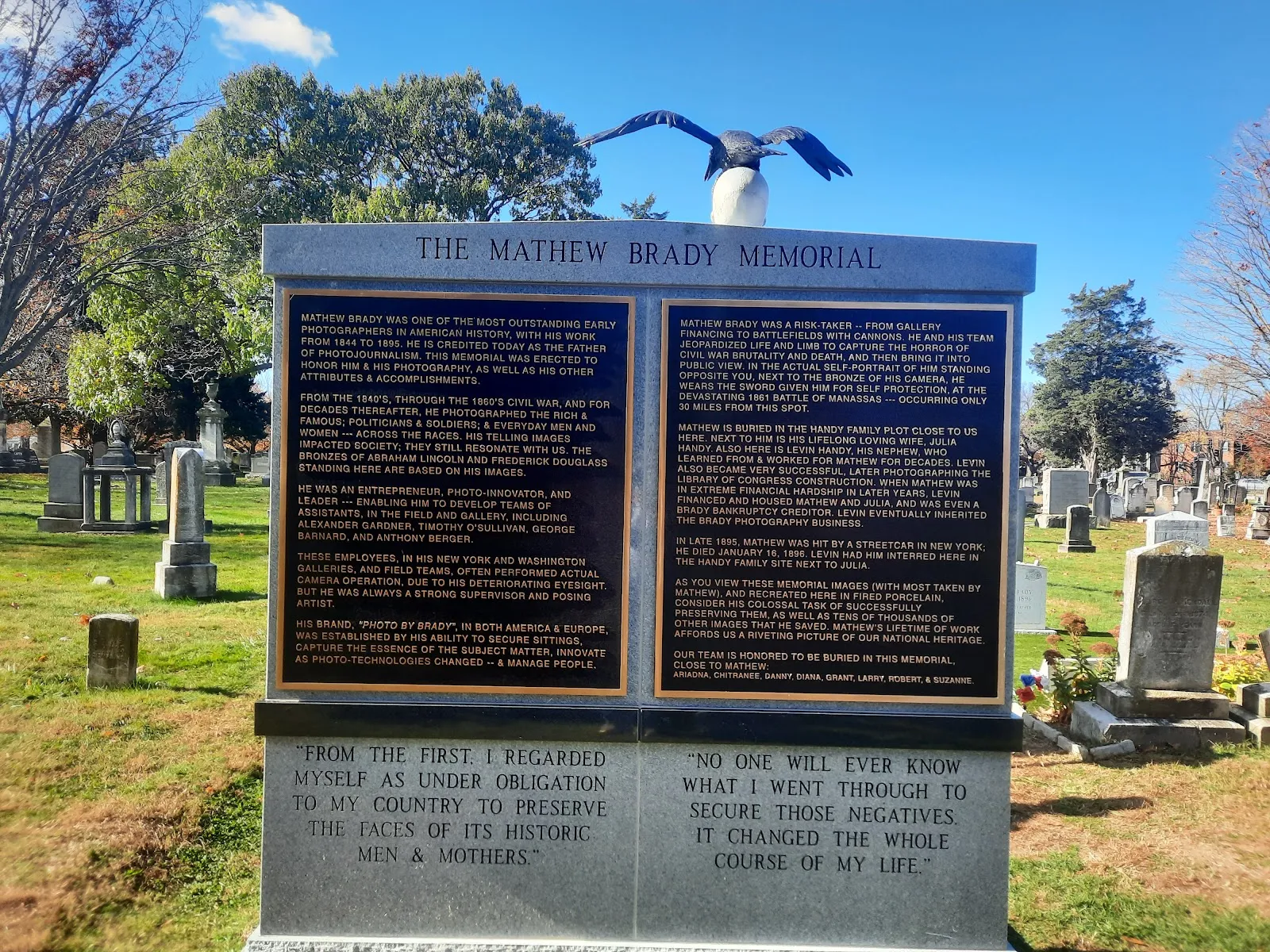
Congressional Cemetery was established in 1807 as a burial place open to people of all denominations. It became a burial site for members of Congress and their families, and its grounds hold more than 65,000 people. Today, the cemetery remains active and is open to the public.
Its history is visible in the range of people buried here. They include Elbridge Gerry, vice president under James Madison; architect William Thornton, who designed the U.S. Capitol; composer John Philip Sousa; Civil War photographer Mathew Brady; and former FBI director J. Edgar Hoover. Alain Locke, the first African American Rhodes Scholar, is also buried here. Marion Barry, a former Washington mayor, is among the cemetery’s later notable residents.
The rows of congressional markers
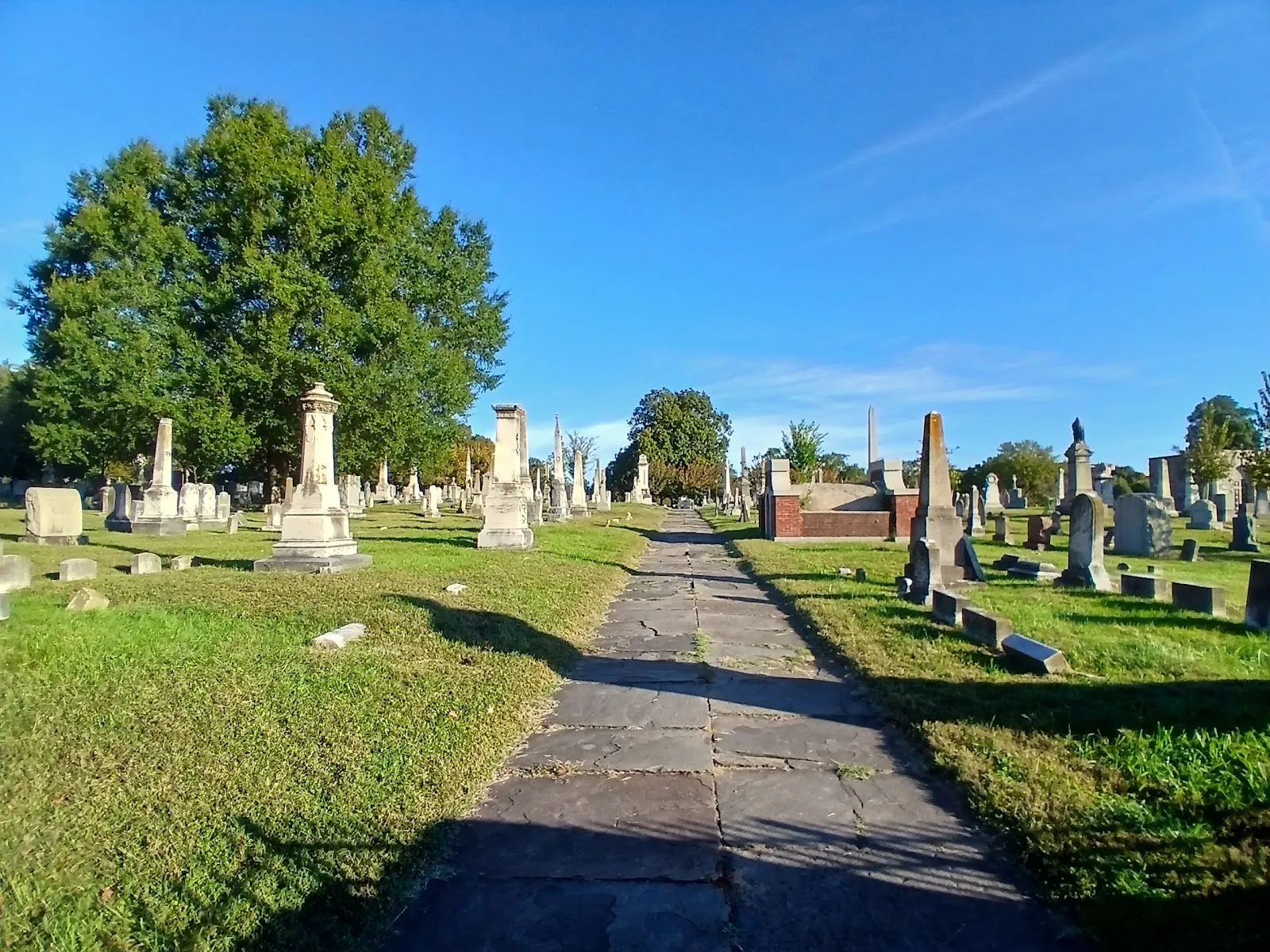
More than 150 matching cenotaphs stand in orderly rows. They commemorate members of Congress who died in Washington during the early 19th century. These markers are cenotaphs, not individual graves, and their repeated design gives this part of the cemetery a distinct appearance.
Elsewhere, headstones and monuments vary in form. Take time to look closely as you walk, and use the local history information on site to learn more about the people and markers. Self-guided visits are possible, and seasonal docent-led tours are also held.
Cherry trees with different bloom times
Congressional Cemetery has both Okame and Kwanzan cherry trees. Their flowering periods fall on different sides of the Yoshino bloom around the Tidal Basin: Okame trees can flower one to two weeks earlier, while Kwanzan trees can flower roughly one to two weeks later. That makes the cemetery a place to look for blossoms beyond the Tidal Basin’s main bloom period.
The timing depends on the season, so check local updates if blossoms are the main reason for your visit. The trees are spread through the grounds, where they add spring color among the historic markers.
Walking, dogs and events
The cemetery is also used as a walking space, with benches and water stations across the grounds. The route has some uneven rises and falls, though visitors describe it as generally manageable. Free street parking is available nearby, but spaces can be limited, particularly on Saturdays; weekdays are a more practical choice if you are driving.
Dogs can use a designated off-leash area through a pass or membership arrangement. Check the cemetery’s current requirements before bringing a dog, since access is not the same as a general walk through the grounds. The cemetery also holds public programs and events, including seasonal tours and film screenings. Check its alerts before going for updates on closures and scheduled activities.
Perguntas frequentes
When do the cherry trees bloom at Congressional Cemetery?
Okame trees can bloom one to two weeks before the Yoshino trees around the Tidal Basin. Kwanzan trees can bloom roughly one to two weeks after them.
Can I bring my dog to Congressional Cemetery?
Dogs are allowed under the cemetery’s dog-park arrangements, including an off-leash area. Check current pass or membership requirements before visiting with a dog.
Is Congressional Cemetery open to the public?
Yes. The cemetery is open to the public, with self-guided visits and seasonal docent-led tours.
Who is buried at Congressional Cemetery?
Notable people buried there include John Philip Sousa, Mathew Brady, J. Edgar Hoover, Elbridge Gerry, William Thornton, Alain Locke and Marion Barry.