Fort Worth Botanic Garden sits in the city's Cultural District, close to downtown Fort Worth. Founded in 1934, it is the state's longest-running major botanic garden, with more than 20 specialty gardens and some 2,500 plant species. The Japanese Garden is the main draw, with koi ponds, waterfalls, stone bridges and a teahouse along winding paths. Pair it with the rose gardens and the tropical conservatory near the entrance, and leave time for the Native Texas boardwalk.
From 1934 to today
The garden opened in 1934 and now covers more than 100 acres. It shares a campus with the Botanical Research Institute of Texas, a partner focused on plant research and discovery.
The garden holds more than 2,500 plant species across more than 20 specialty gardens. Its Philecology Herbarium is among the largest of its kind in the United States.
The Japanese Garden
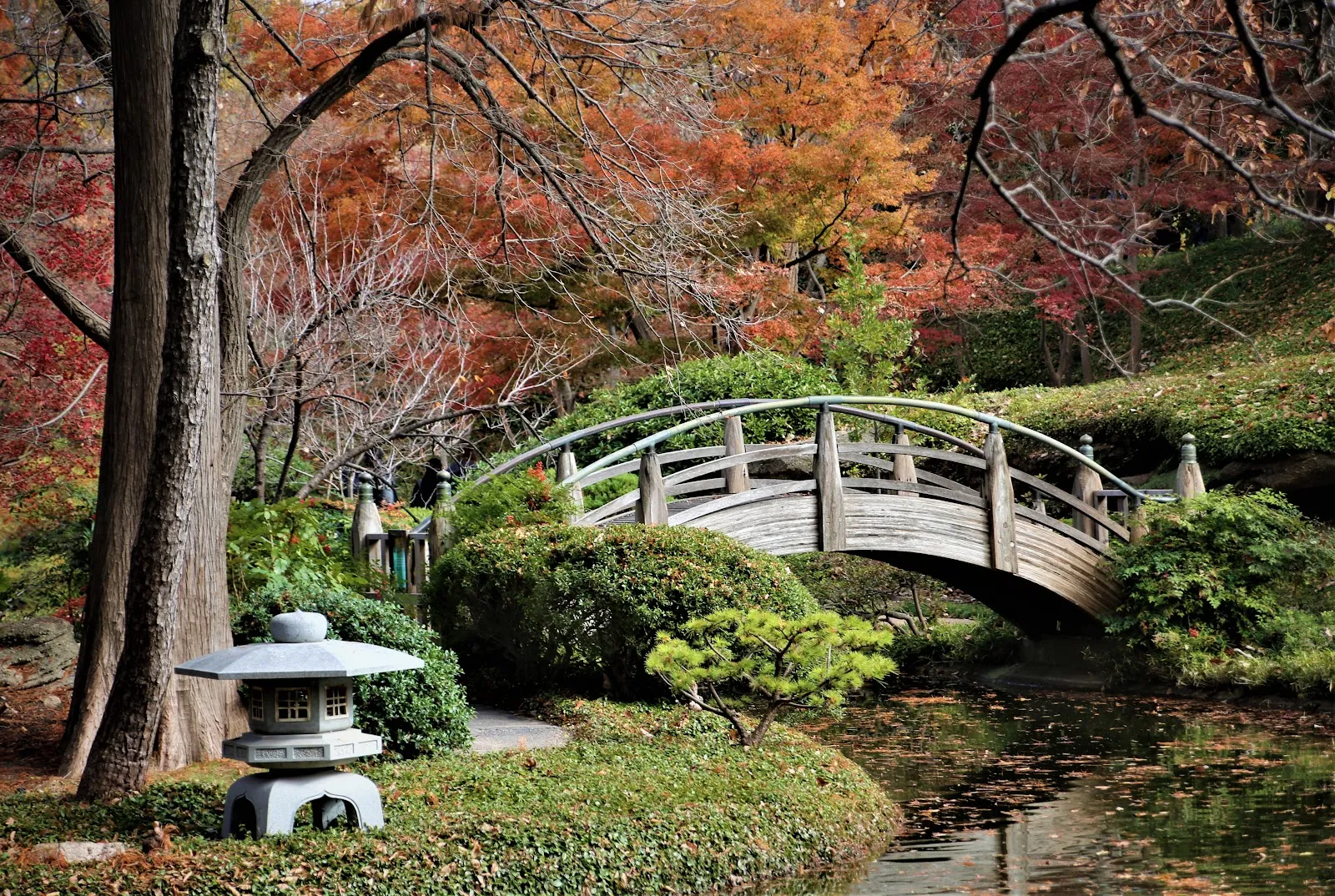
The Japanese Garden covers about seven acres and is laid out as a traditional stroll garden. Paths lead around the ponds, over bridges and past pagodas and a teahouse. Sculpted hillsides, bamboo, Japanese maples and cherry trees frame the water, and koi swim in the pools. Stepping stones cross the water in places, which children tend to enjoy.
Go slowly and stop at the water's edge. Great Blue Herons have been seen here, so keep an eye on the ponds.
Roses and the conservatory
The Oval Rose Garden displays hundreds of roses, including many Texas varieties. The Lower Rose Garden follows a classical design inspired by the Villa Lante gardens in Bagnaia, Italy.
The 10,000 square foot conservatory sits near the entrance. Its tropical plants and flowers bloom almost year round, and paths wind through the foliage. The Butterflies in the Garden exhibit, held in the Rainforest Conservatory, brings live butterflies from Central, North and South America, Africa and Asia. It is billed as the largest live exotic butterfly exhibit in North Central Texas.
Trails, boardwalks and children's areas
The Native Texas boardwalk works as an outdoor classroom. Whispering tubes, hollow logs and question boards invite children to explore native plants and wildlife.
Beyond the boardwalk, the Cactus Garden adds a Southwestern note, Rock Springs has a series of ponds and a waterfall, and the Fernery offers a shaded section. Many birds native to eastern North America can be seen here, and neotropical migrants pass through in spring and fall.
Seasons and winter events
Autumn turns the maples in the Japanese Garden to color, and spring brings cherry and other blossoms.
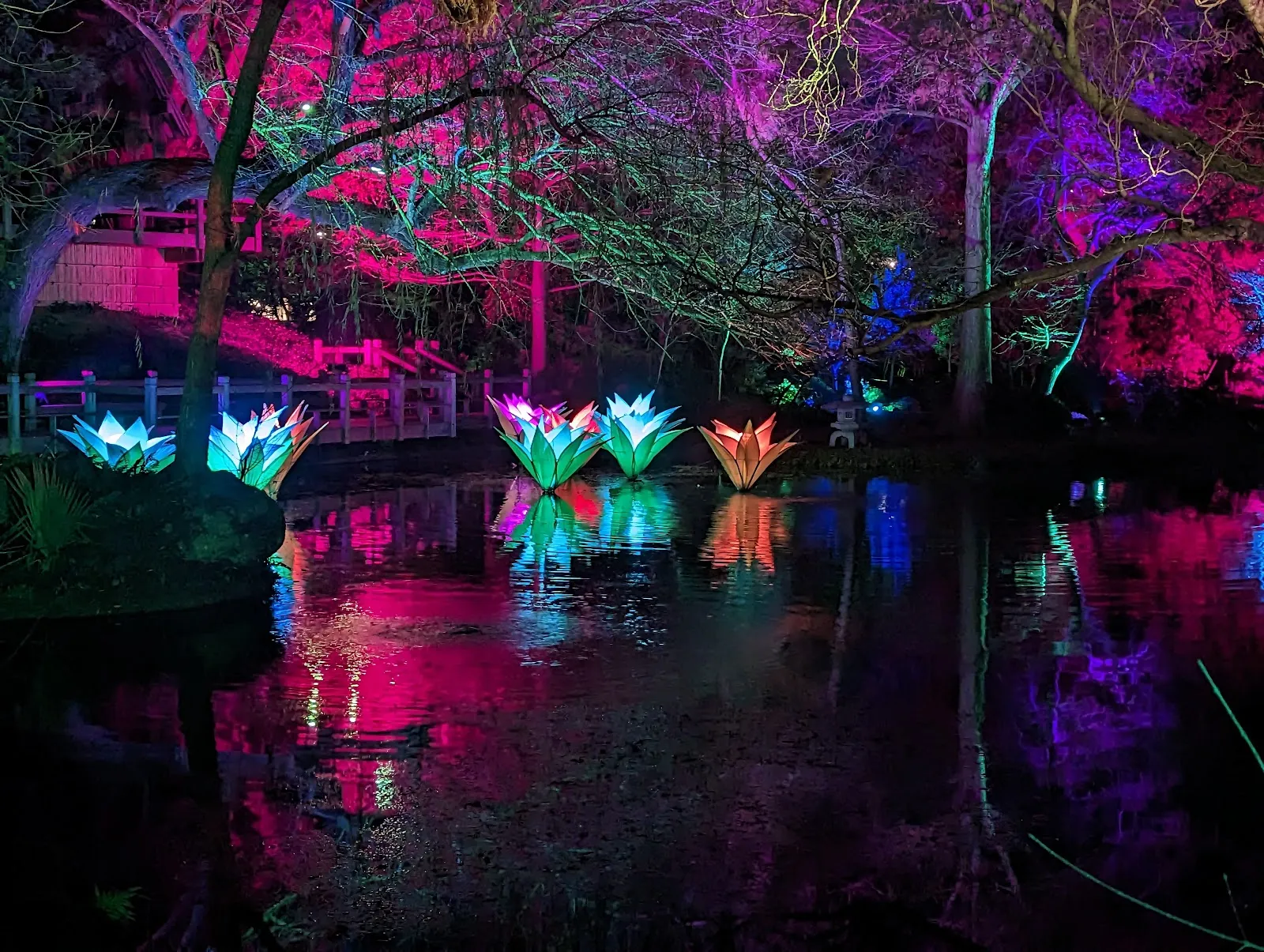
In winter, the garden hosts a holiday light display with a walking trail, along with a village with fire pits, s'mores, holiday music and a photo spot with Santa. Spiked hot cocoa stands are part of the winter scene.
Getting there and planning the visit
The garden is on Botanic Garden Boulevard in the Cultural District. From I-30, take the University Drive exit and head north. The Garden Center is at the second entrance.
The entrance, paths, seating, restrooms and parking lot are all listed as wheelchair accessible. A shuttle loops around the grounds for visitors who would rather not walk the full distance. Booking tickets in advance is recommended.
Perguntas frequentes
Is there an entry fee?
Admission details can change, so check fwbg.org before you go. Booking tickets in advance is recommended.
How long do you need?
Allow 2 to 3 hours to see the Japanese Garden, the rose gardens and the conservatory at a relaxed pace.
Is the garden wheelchair accessible?
Yes. The entrance, paths, seating, restrooms and parking lot are listed as wheelchair accessible.
Can you feed the koi?
Yes. Buy fish food at the front desk before you walk to the Japanese Garden.
Is there a shuttle around the garden?
Yes. A shuttle bus goes around the garden, which helps you reach the farther areas.