The National Memorial Cemetery of the Pacific, commonly called Punchbowl Cemetery, sits inside an extinct volcanic crater above Honolulu. Its quiet grounds honor U.S. service members, with memorial walls bearing the names of those missing in action, a chapel, statues and mosaic maps. From the cemetery, you can look across Honolulu toward Waikīkī and the ocean. Walk the grounds at an unhurried pace, leaving time to pause at the memorials and reflect on the people they commemorate.
A cemetery inside Punchbowl Crater
The cemetery occupies part of Punchbowl Crater, an extinct volcanic formation in Honolulu. Its Hawaiian name, Puowaina, is commonly translated as “Hill of Sacrifice.” The crater’s setting gives the memorial a distinct shape: the surrounding slopes form a natural bowl around its open grounds.
The site is a national cemetery and a place of remembrance for members of the U.S. armed forces who died in service. Its landscaped lawns, trees, headstones and monuments create a calm setting for a visit. People come to honor those buried here, as well as those whose names appear on memorial walls because their remains were not recovered.
The Courts of the Missing and memorial galleries
A central part of the memorial is the series of Courts of the Missing. Their walls bear the names of American service members missing in action in the Pacific during World War II and in later conflicts. Take time to read the inscriptions; they make the scale of those still unaccounted for personal and immediate.
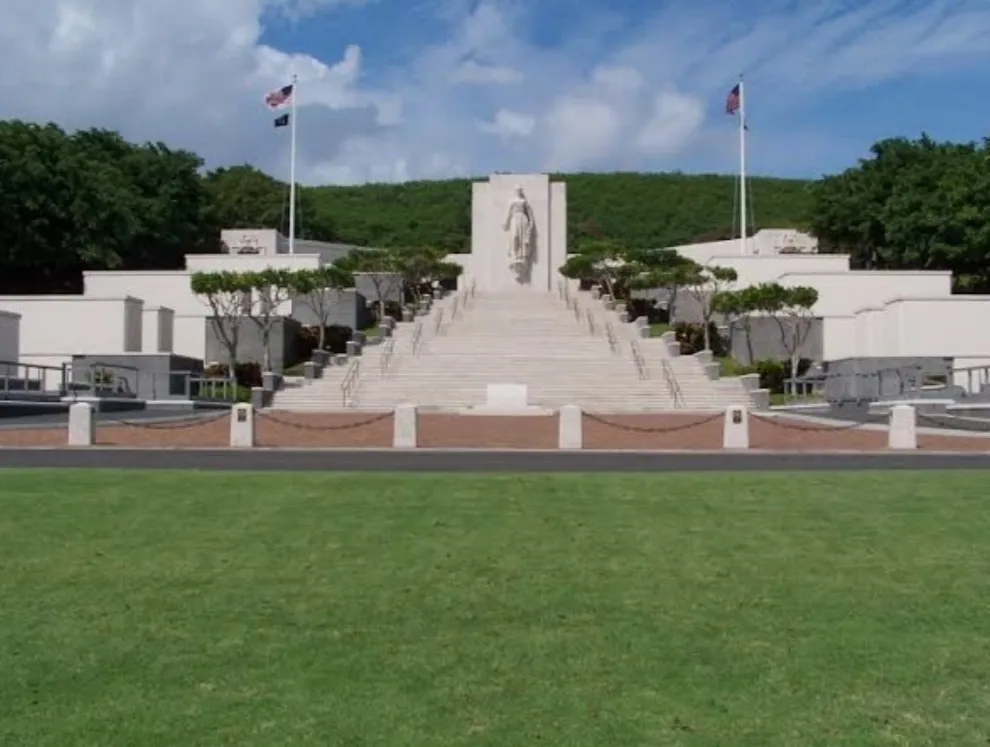
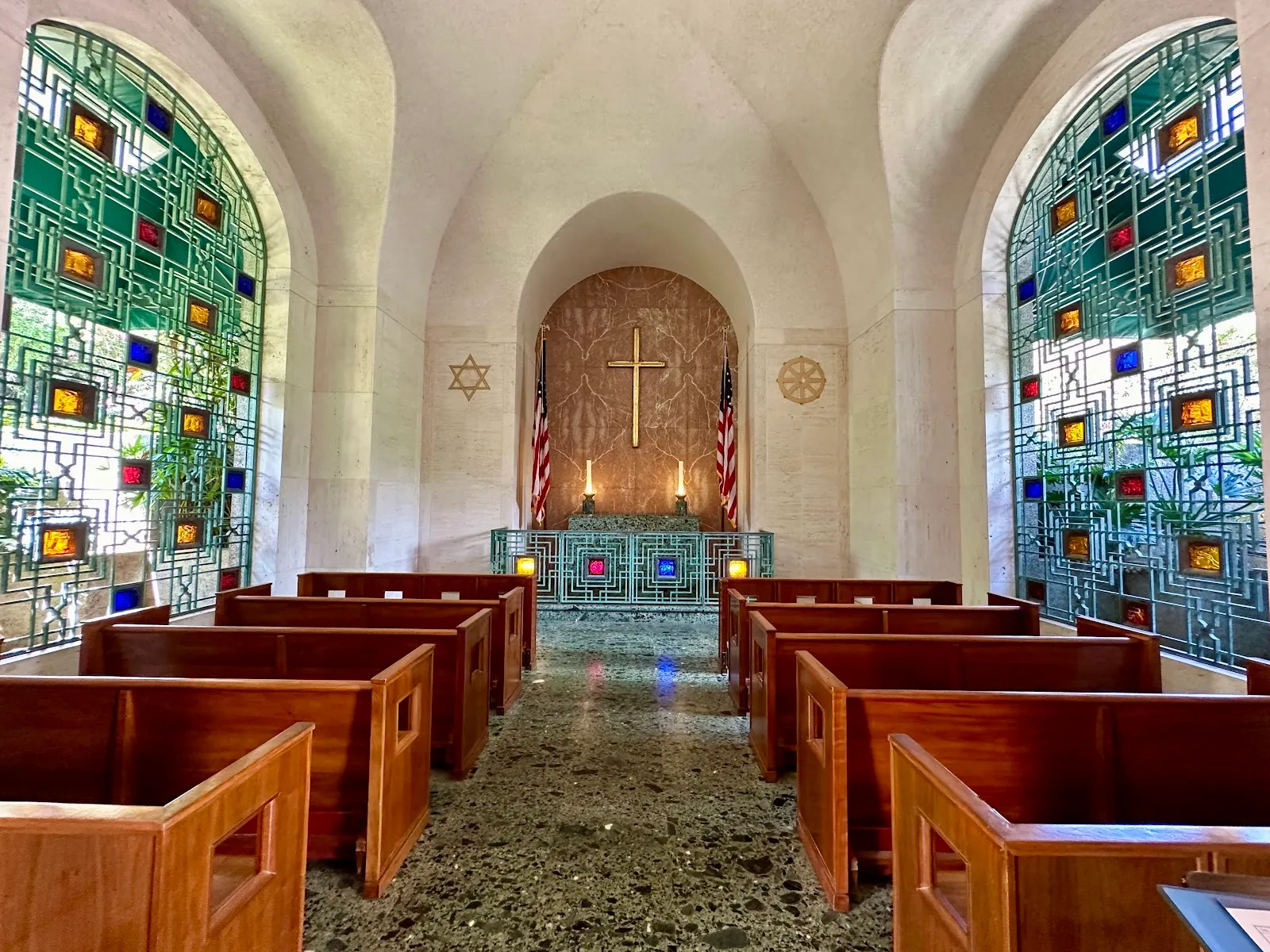
At the top of the grand staircase is a chapel, with galleries alongside it. Mosaic maps and accompanying descriptions trace U.S. military operations in the central and south Pacific and in Korea. The maps give context to the conflicts commemorated at the cemetery. Statues and other monuments across the grounds add further places to stop, but the inscribed walls and galleries are among the most meaningful parts of a walk here.
A short, unhurried visit
You can explore the grounds on foot, stopping at the memorial walk, monuments and open green areas. A kiosk near the entrance can help locate graves. If you have a particular person in mind, use it before setting out across the cemetery.
Plan for a reflective visit rather than a quick photo stop. The views across Honolulu and toward Waikīkī and the ocean provide a striking contrast to the solemn purpose of the site. Move quietly and give people paying their respects room to do so. The cemetery is open daily, and free parking is available.
How the cemetery was established
After World War II, Congress and veterans’ organizations sought a permanent burial place in Hawaiʻi for service members whose remains were awaiting burial on Guam. The first interment at Punchbowl took place on January 4, 1949. The cemetery became the resting place for thousands of Americans who died in the Pacific theater, including people whose remains were recovered from battlefields such as Guadalcanal, Saipan, Guam and Iwo Jima.
The memorial also honors those who served in the Korean and Vietnam wars. Its purpose extends beyond the graves: the Courts of the Missing commemorate service members whose remains were never found. Together, the burial grounds, inscriptions and galleries tell a story of service and loss across several conflicts.
Perguntas frequentes
Is there an entry fee?
The cemetery is free to visit.
How long should I plan for a visit?
About 30 minutes is enough for a short visit. Allow longer if you want to walk the grounds and spend time at the memorial walls.
Can tour buses stop at the cemetery?
Tour buses do not stop at the cemetery, so plan to travel in your own vehicle.
Is parking available?
Yes. Free parking is available at the cemetery.