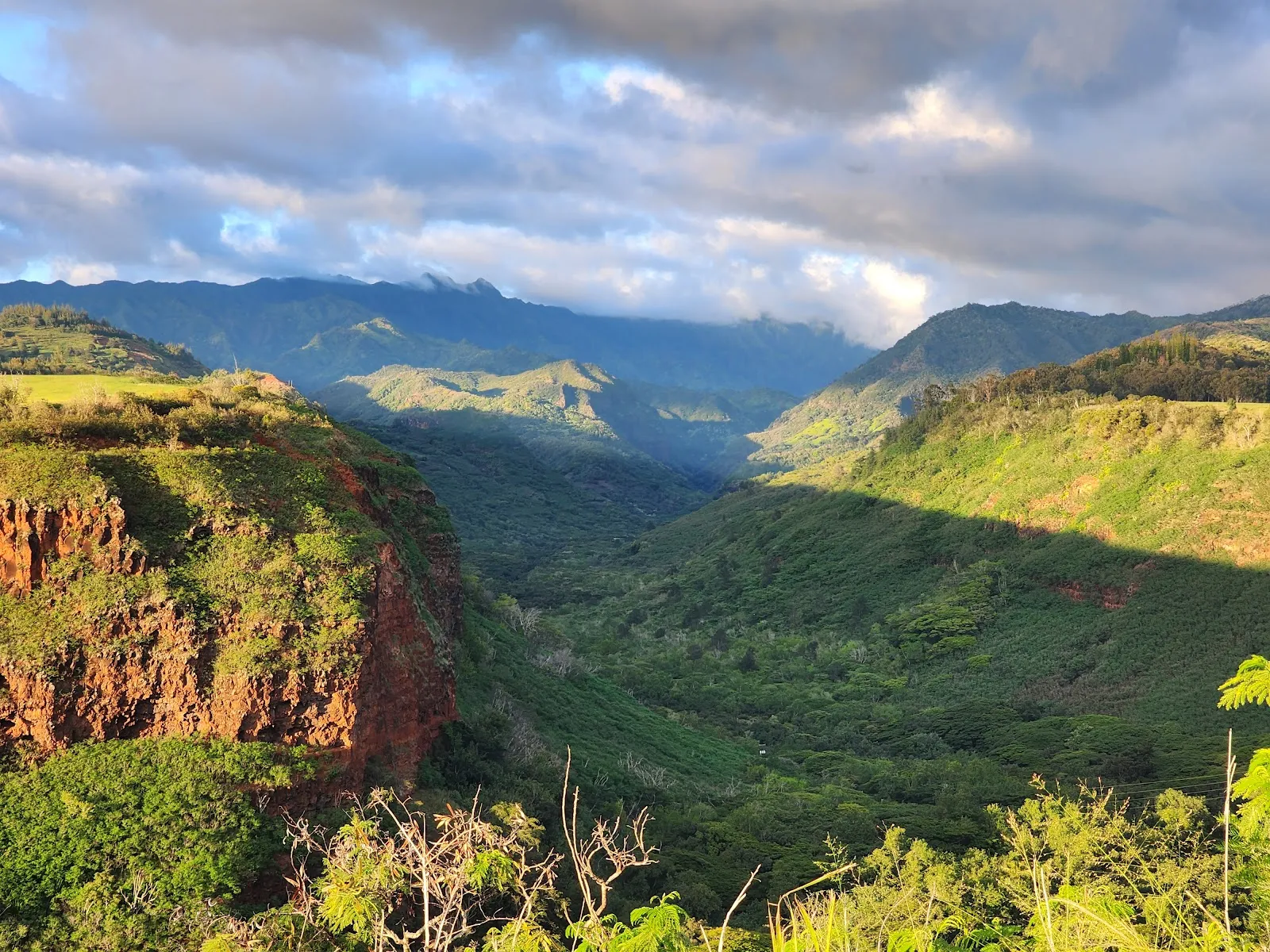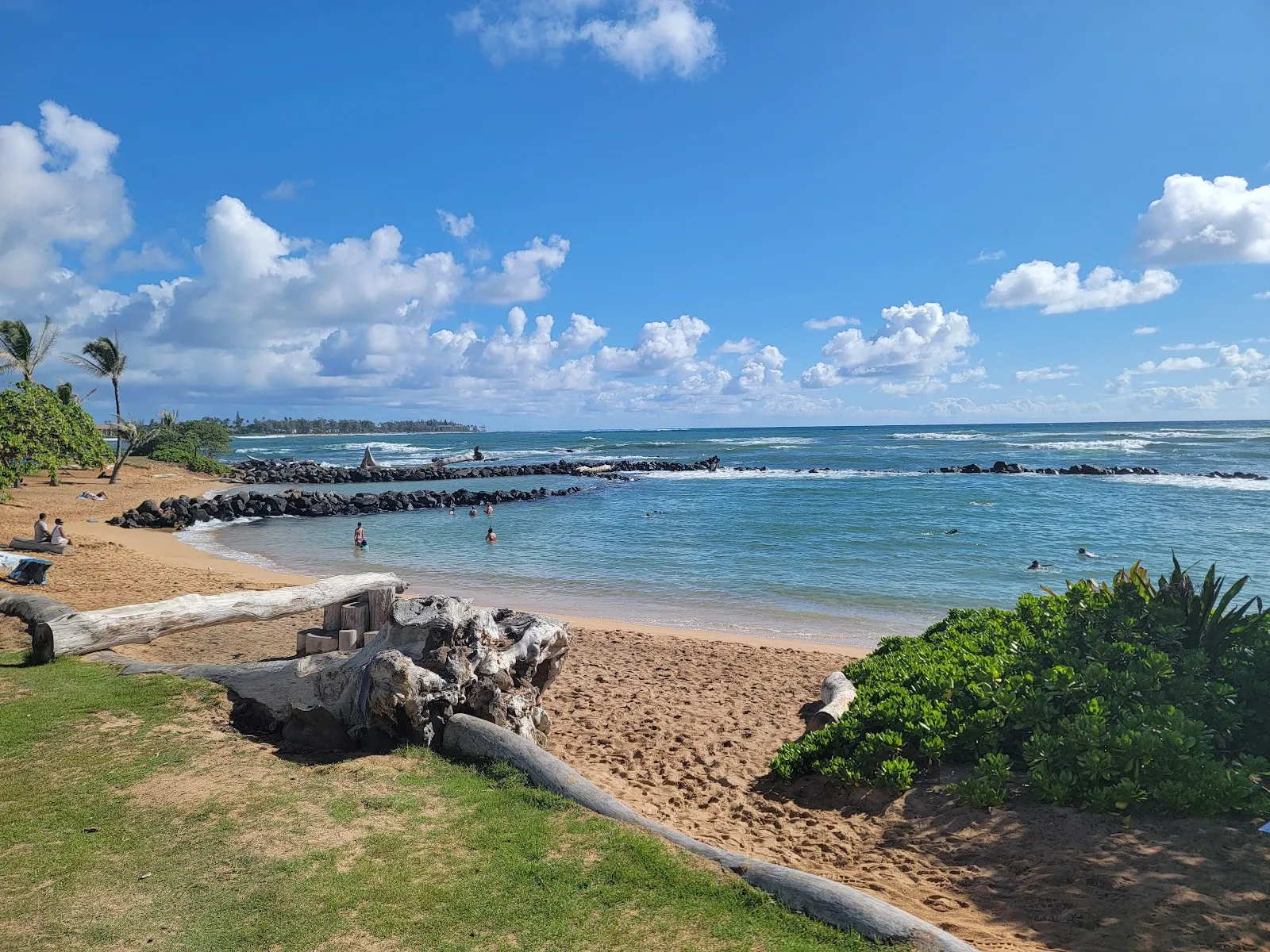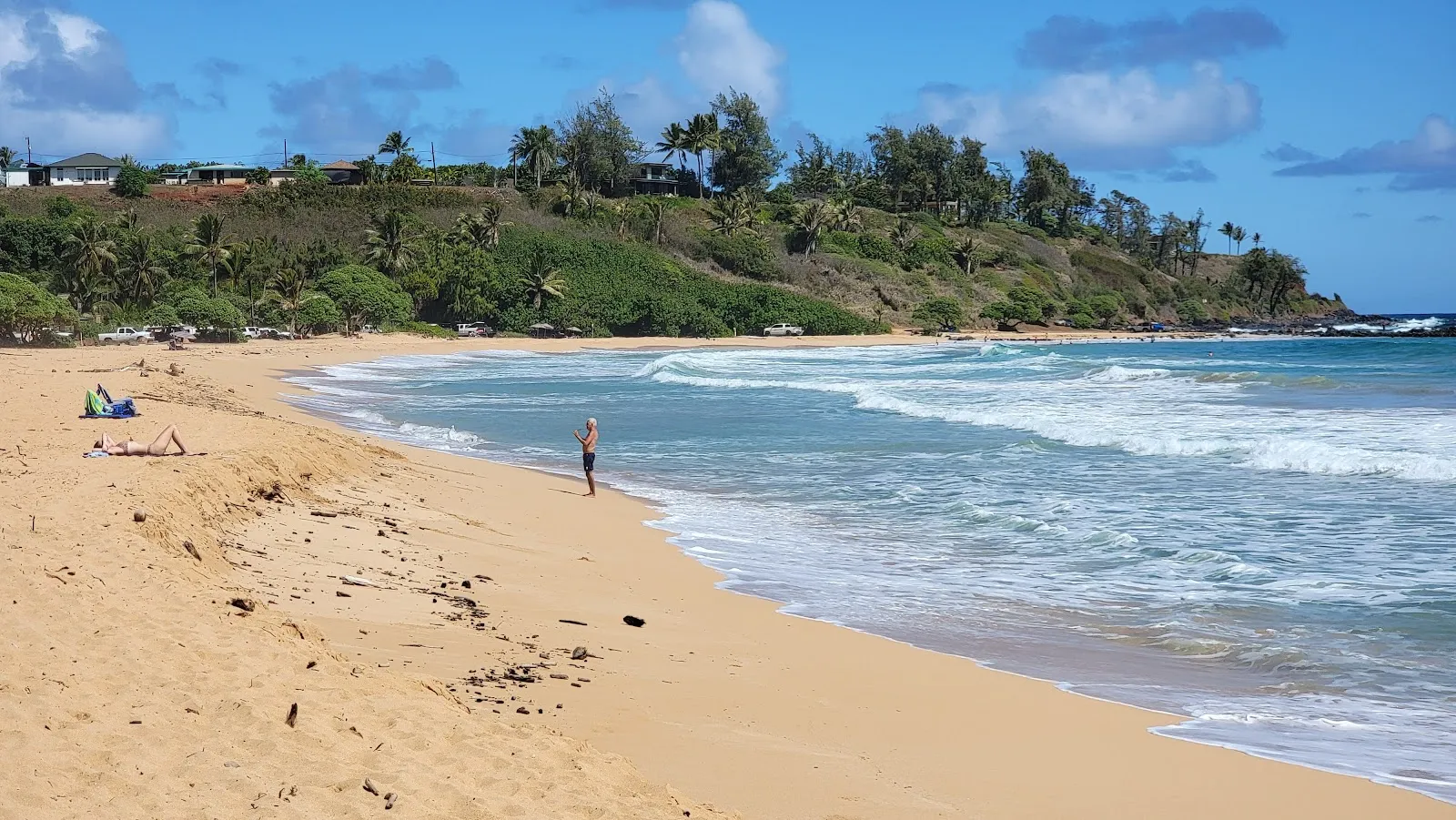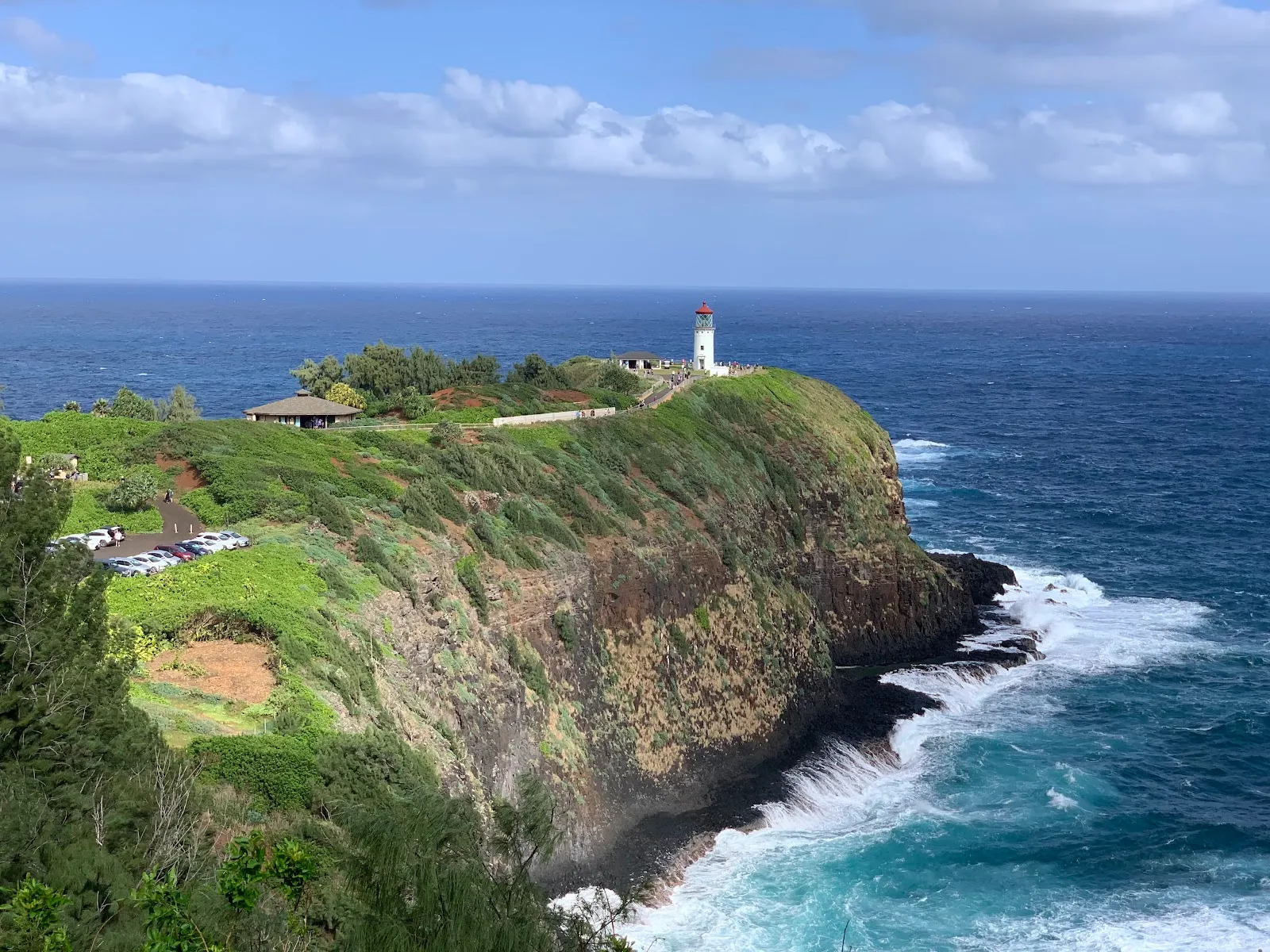
Kīlauea Lighthouse stands on Kauaʻi’s northern coast inside Kīlauea Point National Wildlife Refuge. From the cliffs, you can look out over the Pacific and watch for seabirds such as Laysan albatrosses, red-footed boobies and nēnē. The 1913 lighthouse is the historic focus, while the refuge’s coastal plants and wildlife give the visit its wider interest. Timed reservations are required to enter the refuge; once inside, you can borrow binoculars and find information about the birds. A viewpoint outside the entrance gives you a look at the lighthouse without entering.
A lighthouse on Kauaʻi’s northern coast
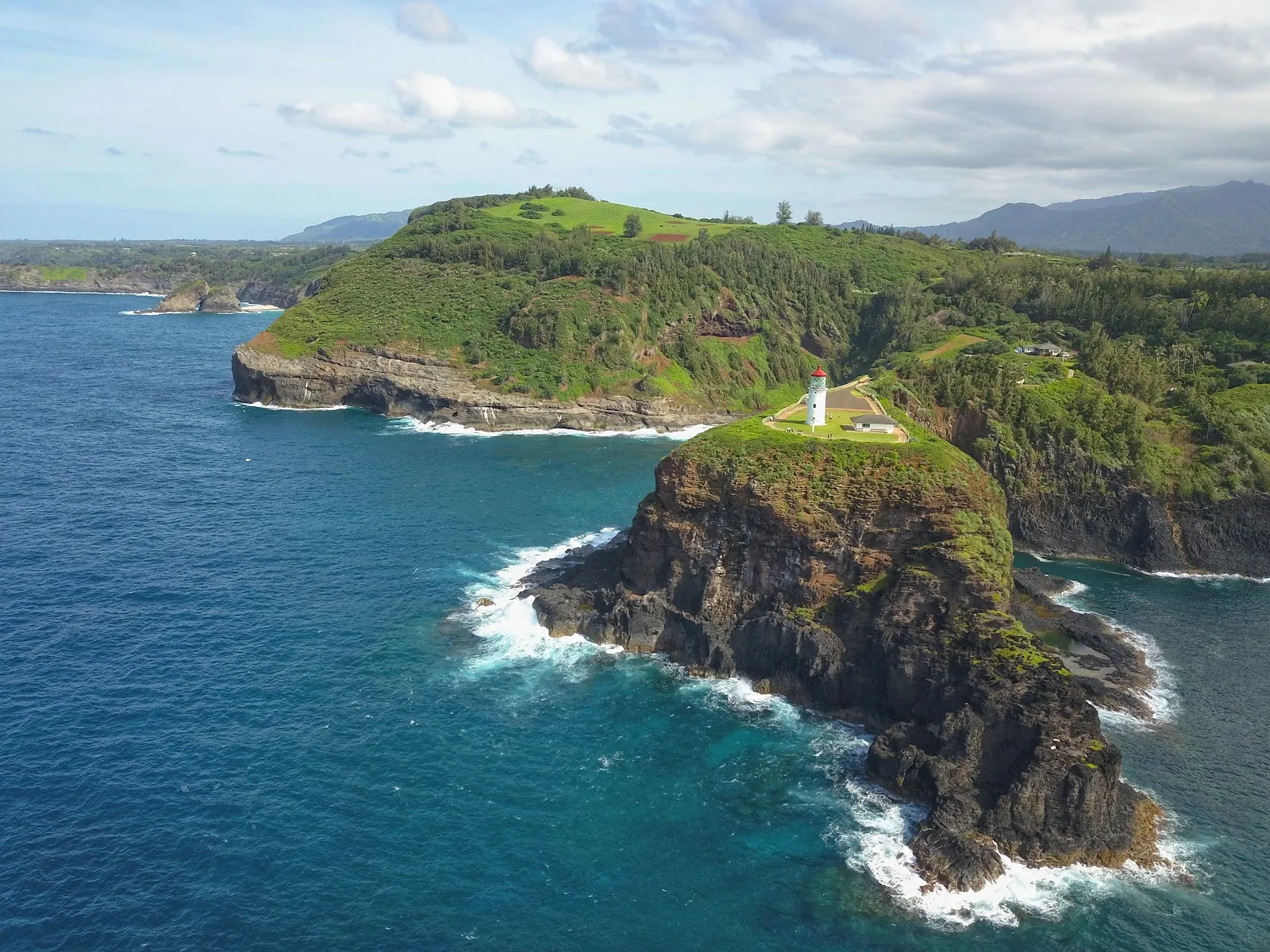
Kīlauea Lighthouse sits on Kīlauea Point, the northernmost point of the main Hawaiian Islands. Built in 1913, the 52-foot lighthouse stands on cliffs about 180 feet above the Pacific. Its light once guided ships past the rocky coast. It also helped a pilot identify Kauaʻi during the first flight from the mainland to Honolulu in 1927, when poor weather had made navigation difficult.
The lighthouse stopped operating as a beacon in the 1970s. Its original Fresnel lens is a notable part of its history; the lens could project light 22 miles out to sea. The lens is no longer used as a rotating beacon. Information about guided access to the lighthouse appears in the visit material, but access can depend on current arrangements, so check the refuge website before planning around an interior visit.
Birdlife and ocean views
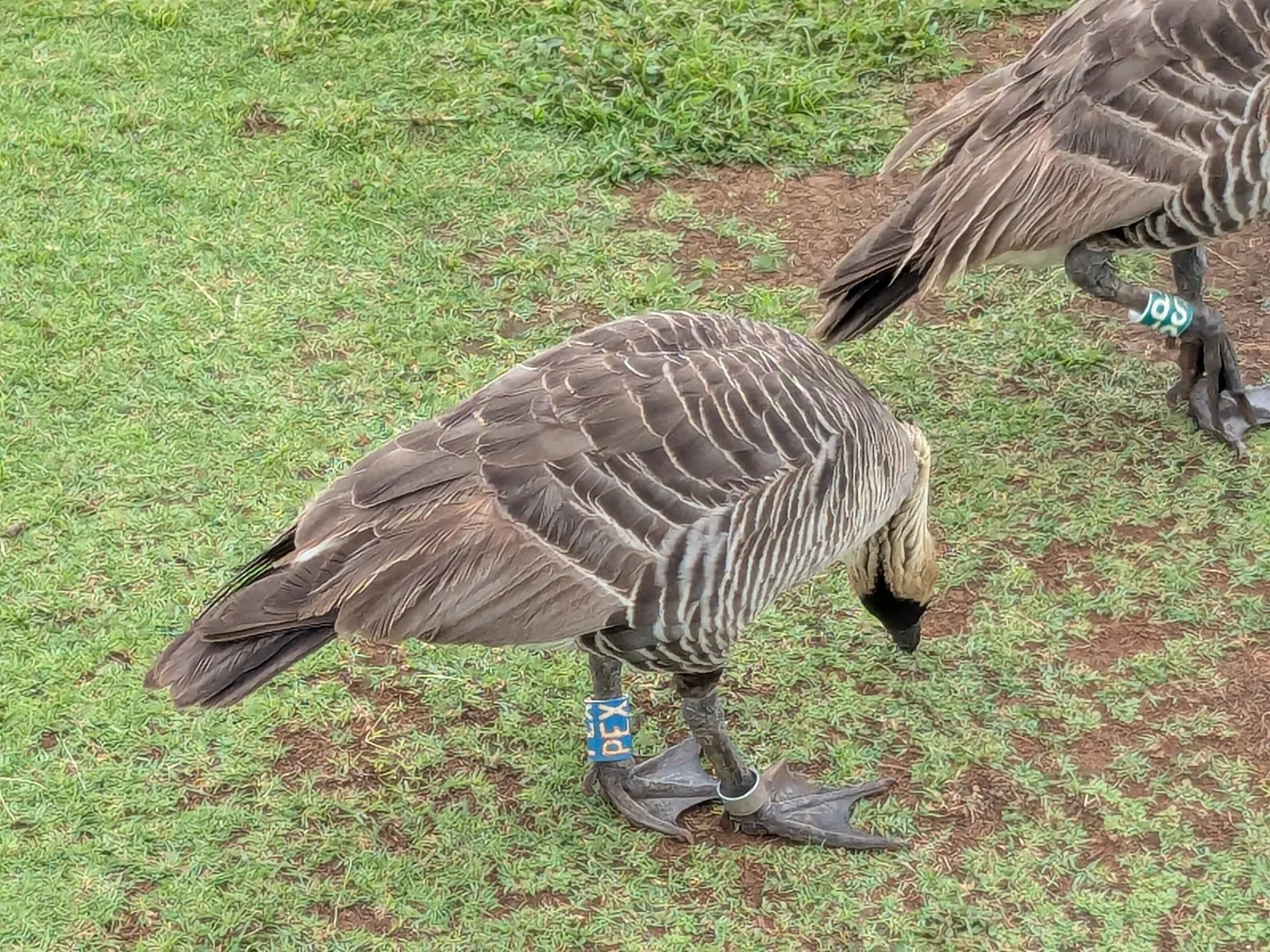
The lighthouse is part of Kīlauea Point National Wildlife Refuge, established in 1985 to protect seabirds and their habitat. The refuge’s cliffs and slopes provide nesting and resting places for Hawaiian birds. Look for nēnē, the Hawaiian goose, as well as Laysan albatrosses, red-footed boobies, red-tailed tropicbirds and wedge-tailed shearwaters. Birdlife changes with the season, and the refuge is also a place to watch migratory seabirds.
The elevated point gives you a broad view of the Pacific and Kauaʻi’s rugged northern coastline. Marine life may also be visible offshore, including green sea turtles, Hawaiian monk seals and dolphins. Humpback whales pass the island during the winter season; sightings are possible from the point, but never guaranteed. Bring binoculars if you have them. Binoculars are also available to borrow inside the refuge, and posted information helps identify the birds.
Planning your visit
Entry to the refuge requires an advance timed reservation. The site is open Wednesday through Saturday, from 10 a.m. to 4 p.m., and closed Sunday through Tuesday. Check the official visit page before setting out, especially if construction or closures could affect access. The refuge has restrooms, indoor exhibits and a nature store.
From the parking area, the lighthouse is a short walk. The terrain is described as easy to walk, though the exposed coastal setting can be hot, so carry water and sun protection. If you do not have a reservation or prefer not to enter, an outside viewpoint near the parking area provides a view of the lighthouse. The refuge is a wildlife sanctuary, so keep to the visitor areas and give birds and other animals space.
Perguntas frequentes
Do you need a reservation for Kīlauea Lighthouse?
Yes. A timed reservation is required to enter the refuge. Book ahead and check the official visit page for current access information.
When is Kīlauea Point National Wildlife Refuge open?
The refuge is open Wednesday through Saturday, 10 a.m. to 4 p.m. It is closed Sunday through Tuesday.
Can you see the lighthouse without entering the refuge?
Yes. There is a viewpoint outside the gates near the parking area where you can see the lighthouse without entering.
What wildlife can you see at Kīlauea Lighthouse?
Look for seabirds including nēnē, Laysan albatrosses and red-footed boobies. Turtles, monk seals, dolphins and seasonal humpback whales may also be visible offshore.