Bishop Museum, at 1525 Bernice St in Honolulu’s Kalihi district, brings Hawaiian and wider Polynesian history together with natural history and hands-on science. Its collections include royal heirlooms and cultural objects, while exhibits explore navigation, island life and the natural forces that shaped Hawai‘i. Leave time for the Science Adventure Center, the planetarium and the LEGO exhibit, especially if you’re visiting with children. The grounds and galleries are spread across several buildings, so a short stop will only cover part of the museum.
A museum founded to preserve Hawaiian heritage
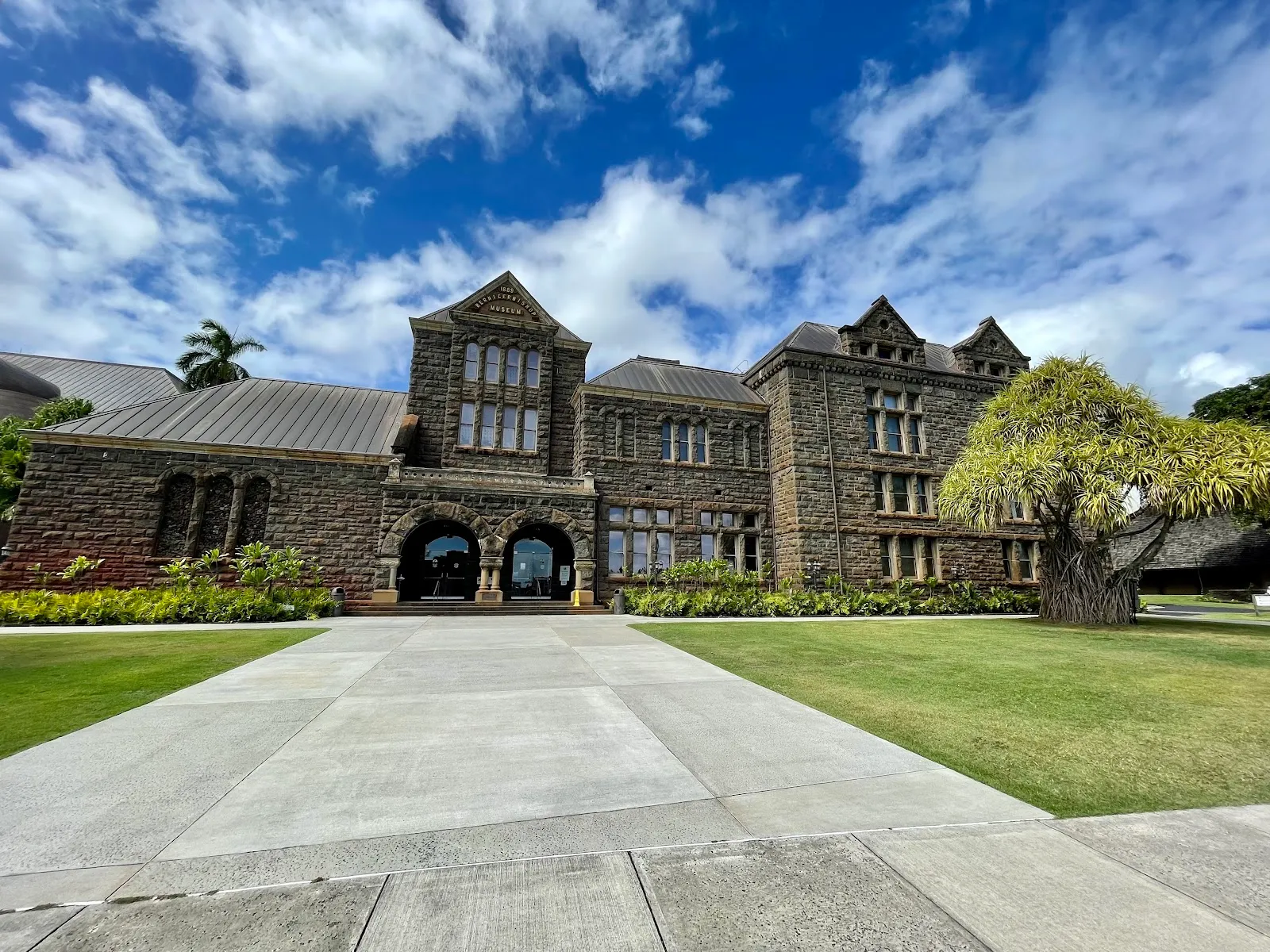
The Bernice Pauahi Bishop Museum was established in 1889 by Charles Reed Bishop in memory of his wife, Princess Bernice Pauahi Bishop, a member of the Kamehameha royal family. It began with her family’s heirlooms and Hawaiian cultural objects. Over time, the museum expanded its collections and research to include the histories and natural worlds of Hawai‘i and other Pacific islands.
Today, the museum is known as Hawai‘i’s State Museum of Natural and Cultural History. Its holdings span cultural objects, documents, photographs and natural history specimens. The scale is substantial, and the material covers both Native Hawaiian life and the many Pacific communities connected through voyaging, culture and language.
Hawaiian Hall and Pacific connections
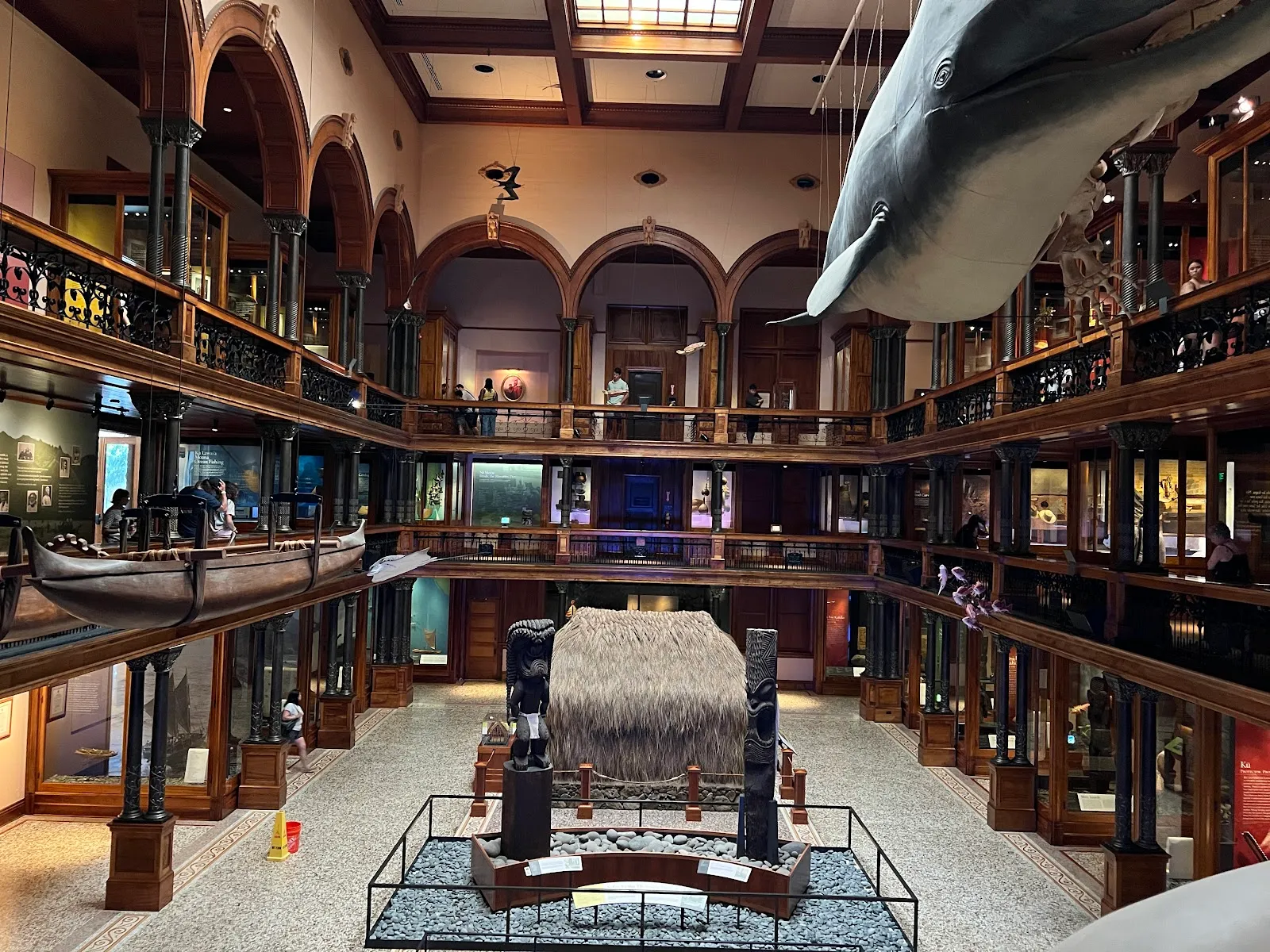
The historic Hawaiian Hall is a central stop for understanding Hawaiian culture and history. Displays include royal regalia and objects used in daily life, such as tools for fishing. Exhibits also introduce Hawaiian beliefs and traditions, and show how people’s lives were shaped by the natural environment.
The museum’s Pacific collections put Hawai‘i in a wider regional context. Exhibits trace connections among Polynesian islands and explore the knowledge that made long-distance voyaging possible. Look for material on traditional navigation and wayfinding, a subject also brought to life in planetarium programming. Cultural displays and natural history exhibits sit alongside one another, so you can move between the people, environments and forces that shaped the islands.
Science exhibits, planetarium and family activities
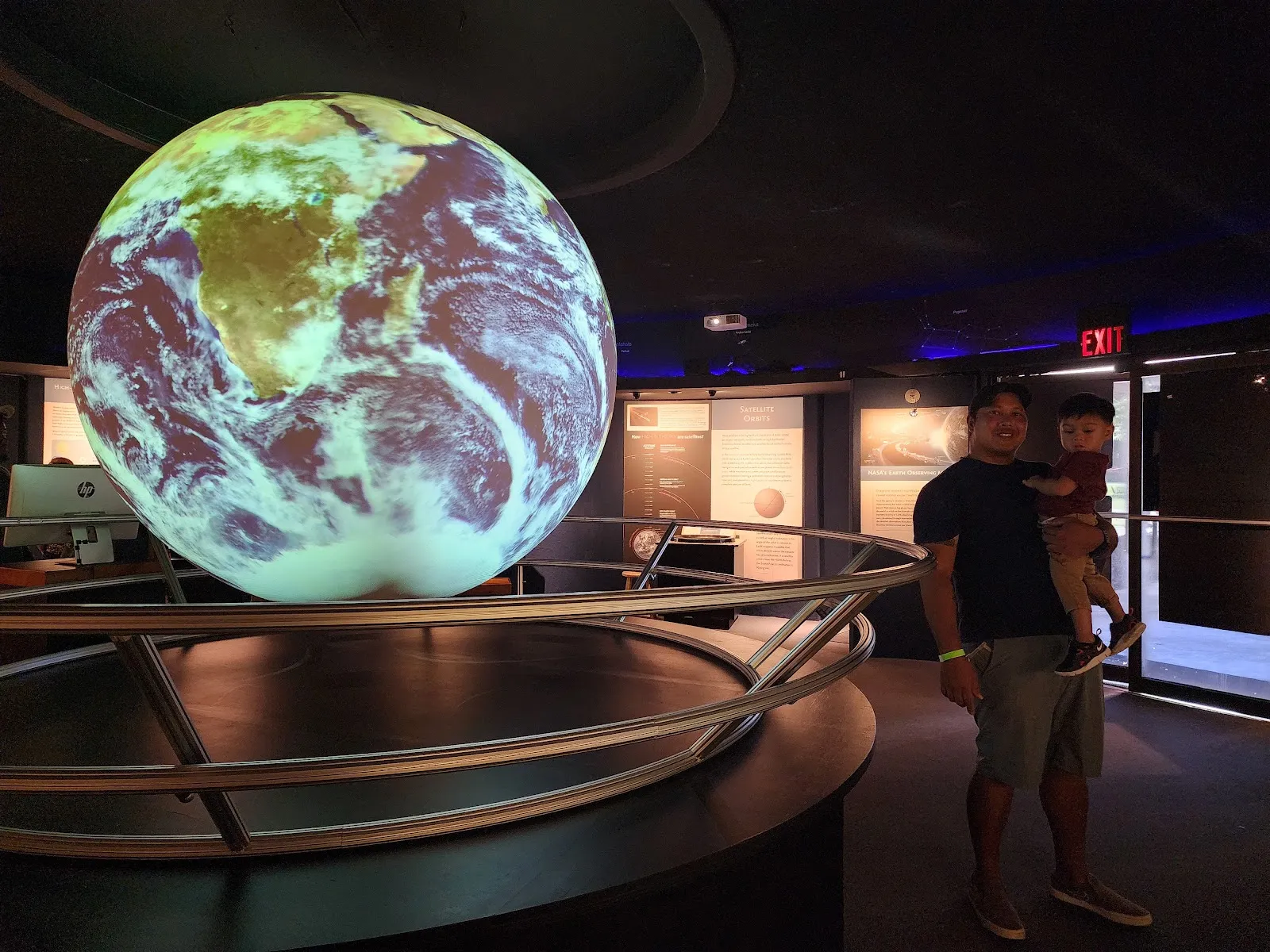
The Science Adventure Center focuses on the geology and living systems of Hawai‘i. Interactive displays explore volcanic activity, the ocean and biodiversity, with hands-on models that help explain processes such as plate movement, wind and ocean currents. A walk-through feature takes visitors into a representation of a lava tube, and a staged eruption demonstrates volcanic activity.
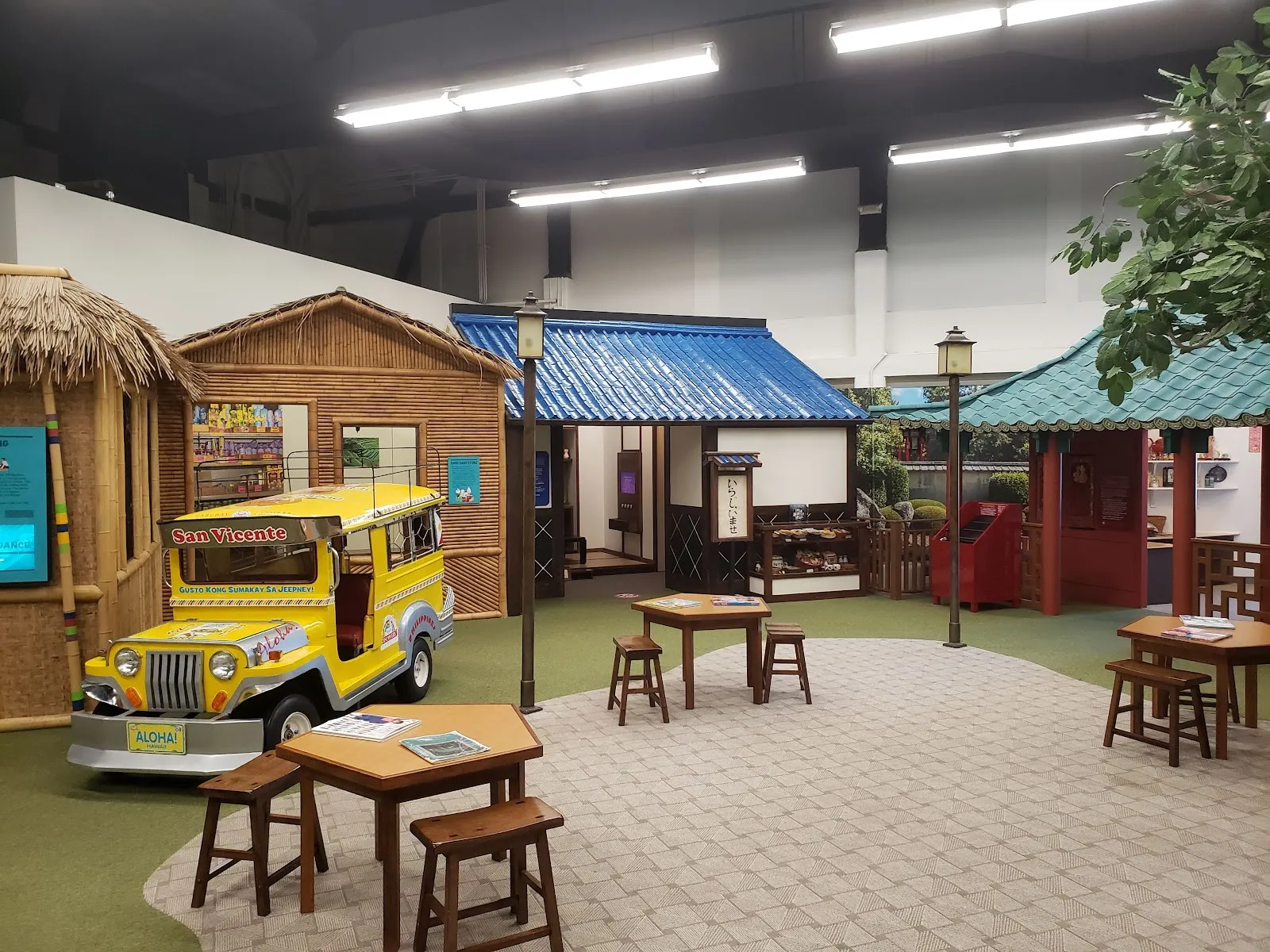
Families can mix the science galleries with the LEGO exhibit and other interactive activities. The planetarium gives the visit another perspective, with shows that include the night sky and Polynesian navigation. Show content and schedules can differ, so check the museum’s current program before planning around a particular presentation.
Several exhibit buildings make it easy to underestimate how much there is to see. Choose a few priorities if you have limited time, or allow most of a day to explore at a more relaxed pace. Free walking tours are available in English and Japanese; ask the museum about current arrangements when you arrive.
Perguntas frequentes
How long should I spend at Bishop Museum?
Allow at least several hours for the exhibits across its different buildings. A full day gives you more time to explore the collections, science displays and planetarium.
What can you see at Bishop Museum?
The museum covers Hawaiian and Polynesian culture, natural history and science. Highlights include royal heirlooms, Pacific cultural objects, interactive science exhibits and a planetarium.
Are there activities for children?
Yes. Children can explore hands-on science displays and the LEGO exhibit, and families can attend planetarium shows.
Does Bishop Museum have guided tours?
Free walking tours in English and Japanese are listed among the museum’s visitor offerings. Check with the museum for current details.