Cambridge University Botanic Garden covers 40 acres on Brookside, a short walk from the railway station and about 15 minutes from the city centre. It holds more than 8,000 plant species from around the world, and the university uses the collections for teaching and research. The glasshouses are the main draw, with tropical and desert plants under glass. Outdoors, look for the lake, the rock garden and the Lebanese cedar. Allow a few hours for a full visit.
John Henslow, Darwin and the garden's purpose
The garden is closely tied to John Stevens Henslow, a professor who was a mentor to Charles Darwin. Many visitors come knowing that connection, and the garden still keeps its scientific role.
The garden belongs to the Department of Plant Sciences at the University of Cambridge. Its collections are used for teaching and research, and it provides plant material, horticultural expertise and facilities to researchers and lecturers. Some of the plants grown here are endangered species, and the garden keeps them as a preserve.
Landscapes across 40 acres
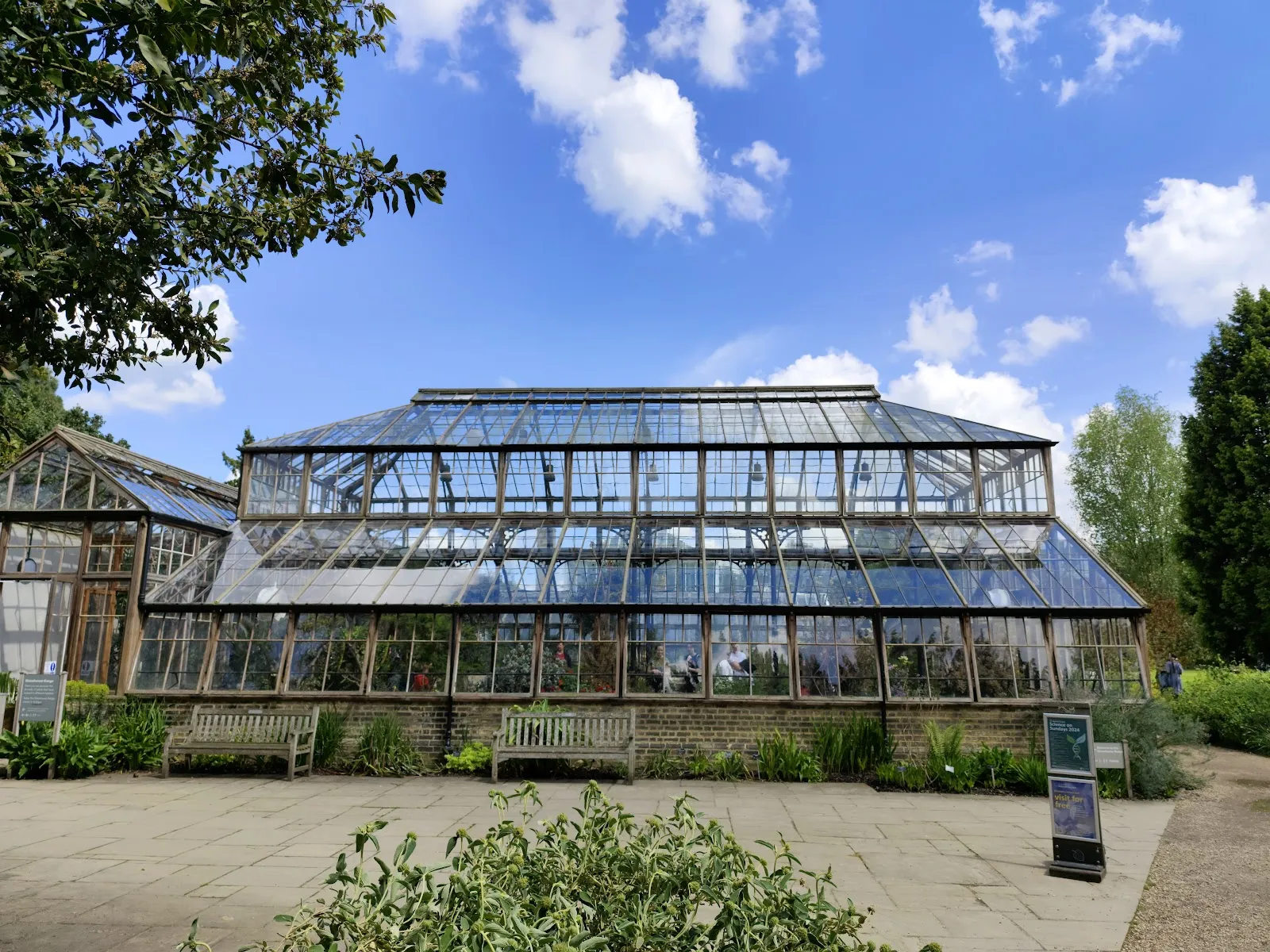
The garden covers 40 acres (16 hectares) and holds more than 8,000 plant species. It is laid out in several kinds of landscape, from a rock garden and a lake to a large glasshouse range. Other areas include a scented garden, a grass maze, a rose garden and an outdoor collection of UK native plants, which includes a lavender bed. Herbaceous borders and themed beds add colour through the year.
The planting is arranged so that you cannot see from one end of a view to the other. The garden therefore feels larger than its size. Paths lead through the areas, so you can move between them without retracing your steps.
Inside the glasshouses
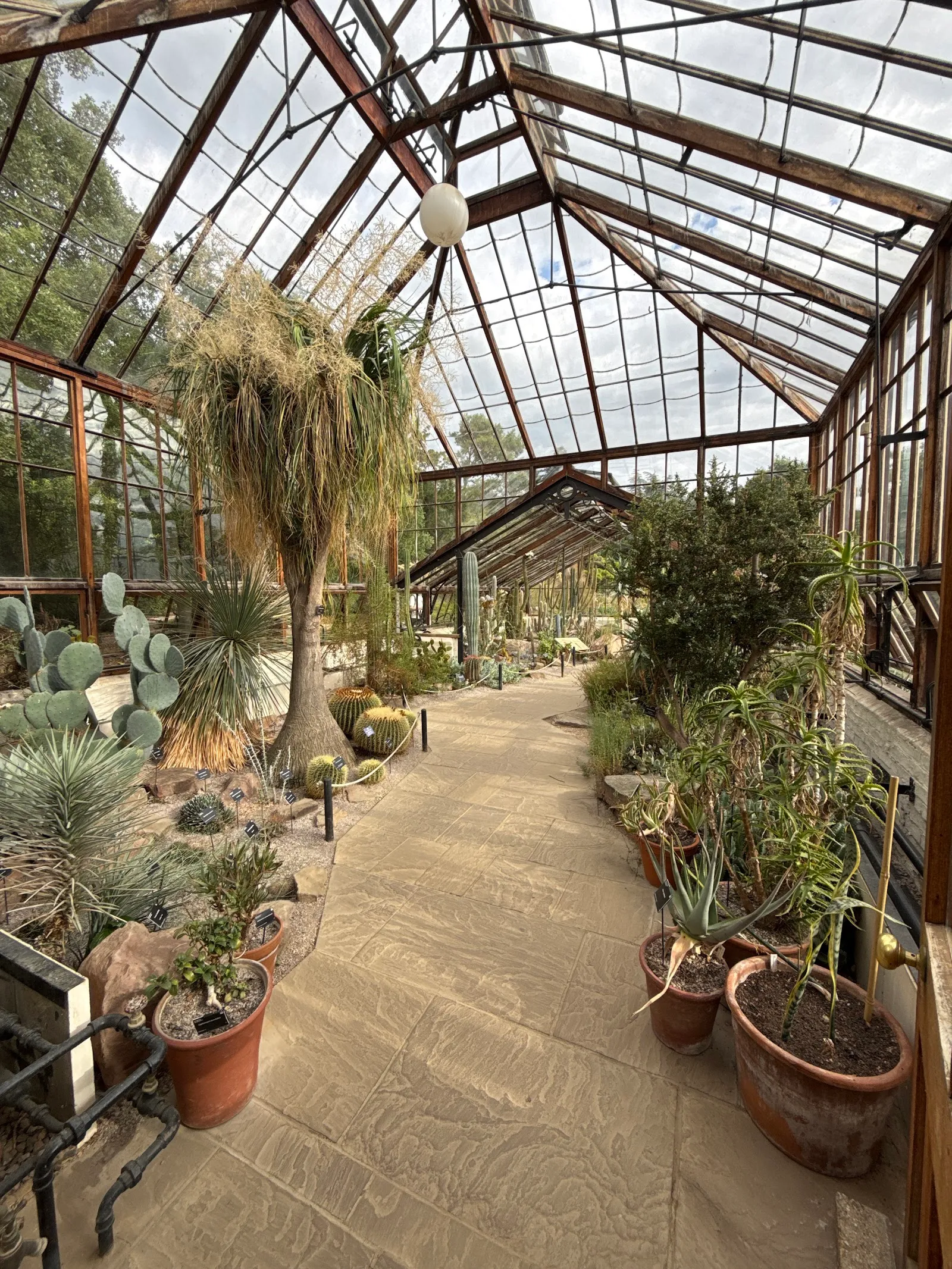
The glasshouses are split into nine climate zones. Many of the plants are kept in conditions that copy their natural homes, such as rainforest, mountain, arid desert and island settings. Close to half the collection is under glass.
The desert displays include succulents, and the tropical houses hold carnivorous pitcher plants and the slipper orchid. Plants are labelled with their names, which makes the glasshouses useful if you want to learn what you are looking at. A corridor runs through several of the spaces, so you move from one climate to the next.
What to see through the seasons
In spring, cherry blossom and magnolia flowers bring colour to the grounds. Summer brings a fragrant garden and wildflowers. In autumn the trees change colour, and in winter the bare trees and bold shapes of the trees are the main feature. The winter garden and a snowdrop trail are also part of the winter visit.
The Sophora macrocarpa from Chile has golden, bell-shaped flowers. The arboretum includes giant redwoods, which were grown from some of the earliest seed of that species brought to England. The heated tropical glasshouses are a good place to shelter when the weather turns.
Visiting with children and families
Children under 16 go in free. In the school holidays the garden runs a family trail with six points to find. Children collect stamps at each point and get a sticker at the end. The grass maze, the lake and the fountains also give younger visitors something to do.
Free guided tours run for an hour on Sundays, starting at 2.30pm, from May to September.
The paths include sloped ramps. The garden has wheelchair-accessible seating and an accessible restroom, as well as an assistive hearing loop and a gender-neutral restroom.
Getting there, eating and shopping
The garden is about a five-minute walk from the railway station and about 15 minutes from the city centre. Trumpington Park and Ride is an option if you want to avoid driving into the city.
The garden café has outdoor seating and is a good place for lunch. Many visitors bring a picnic and eat near the water fountain. The shop is at the Hills Road entrance.
People who live nearby can join as Friends of the Garden, which allows repeat visits over a set period.
Perguntas frequentes
Is there an entry fee?
Adults pay an entry fee, and children under 16 go in free. Advance tickets are recommended, so check the garden's website for current prices before you travel.
How long do you need at Cambridge University Botanic Garden?
A typical visit takes 2 to 3 hours. Plant enthusiasts often need longer to see the glasshouses and the outdoor collections.
Is the garden accessible for wheelchair users?
The paths include sloped ramps. The garden has wheelchair-accessible seating and an accessible restroom, and it has an assistive hearing loop.
Are there guided tours?
Free guided tours last an hour and run on Sundays at 2.30pm from May to September.
How do I get there from the city centre?
The garden is about a five-minute walk from the railway station and about 15 minutes on foot from the city centre. Trumpington Park and Ride is also an option.