
Near Topkapı Palace and Gülhane Park in Istanbul’s Fatih district, this complex brings three museums together: the Archaeological Museum, the Museum of the Ancient Orient and the Tiled Kiosk Museum. Its collection spans ancient civilizations across Anatolia, Mesopotamia, Egypt, Greece and Rome. Make time for the Alexander Sarcophagus, carved with scenes associated with Alexander the Great, and the Kadesh Treaty tablet. The museums also display sculptures, inscriptions and finds from the former Ottoman lands, in buildings that include a striking 19th-century neoclassical main museum.
Three museums in one complex
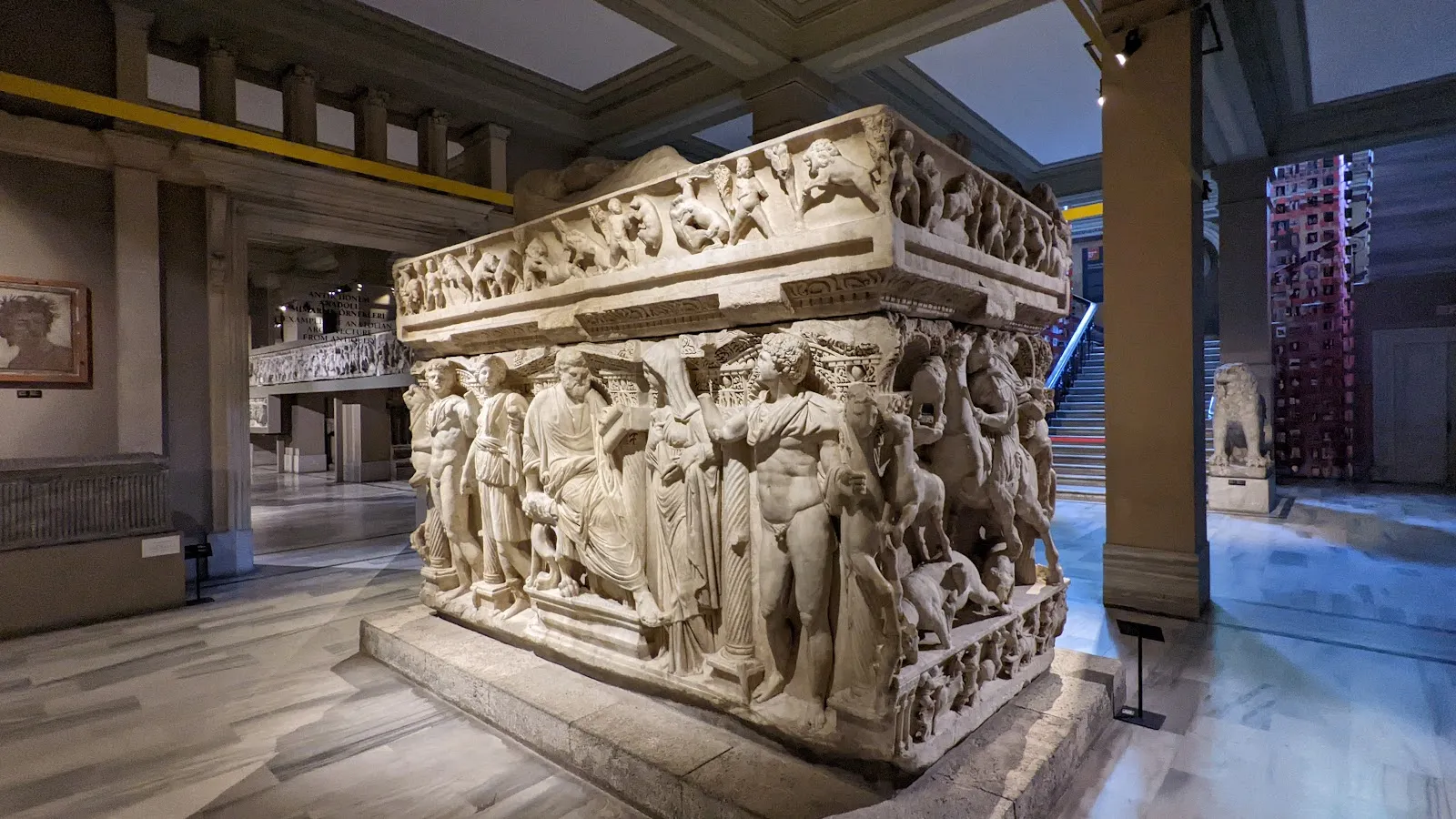
The Istanbul Archaeological Museums sit near Topkapı Palace and Gülhane Park. The complex has three separate institutions: the Archaeological Museum, the Museum of the Ancient Orient and the Tiled Kiosk Museum. Together, their collections cover objects from across Anatolia and the former Ottoman territories, as well as ancient Mesopotamia, Egypt, Greece and Rome.
The main museum is housed in a neoclassical building designed by Alexandre Vallaury. The complex developed in the late 19th century, when Osman Hamdi Bey helped establish the museum and build its collections. It opened as the Imperial Museum in 1891. The three museums share a garden where marble architectural pieces and sarcophagi are also displayed.
Highlights in the main museum
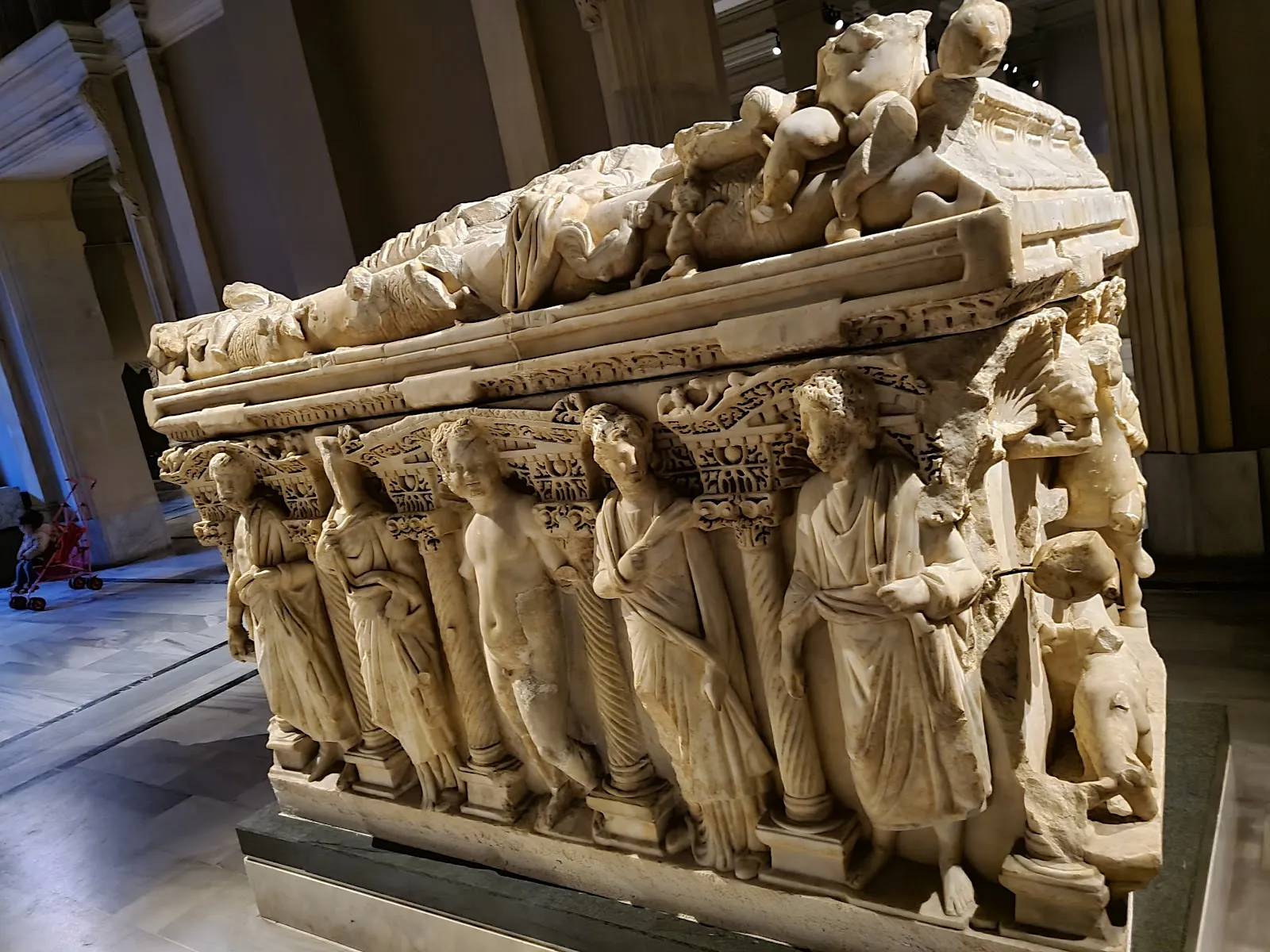
The main Archaeological Museum is known for its ancient sculpture and sarcophagi. The Alexander Sarcophagus, found in the royal necropolis at Sidon, is a major highlight. Its carved scenes are associated with Alexander the Great, although the sarcophagus is thought to have been made for an early governor of Babylon. Look closely at the sculpted details, then seek out the Sarcophagus of the Crying Women and other finds from Sidon.
The galleries also contain Greek and Roman statues, including a marble bust of Emperor Augustus and statues of Poseidon and Oceanus. Other displays include inscriptions, pottery and coins. A visit rewards a slower pace: the collections range across different periods and regions, and there is more to see than the best-known sarcophagi.
The Ancient Orient and Tiled Kiosk
The Museum of the Ancient Orient turns attention to early civilizations in Mesopotamia, Egypt and the surrounding regions. Its objects include cuneiform tablets and finds from Babylon, Assyria and pre-Islamic Arabia. Two notable pieces to look for are the Kadesh Treaty, an early peace treaty, and a glazed brick panel from the Ishtar Gate. The collection also includes an ancient love poem and personal objects from Mesopotamia.
The Tiled Kiosk Museum occupies a separate historic building and adds another strand to the complex’s collections. Its displays include Ottoman ceramics and other works of art. With three buildings to explore, allow two to three hours for a visit. Renovations can affect access to individual sections, so check what is open before setting out. If time is limited, begin with the main museum and its sarcophagus collection.
Perguntas frequentes
How long do you need at Istanbul Archaeological Museums?
Allow about two to three hours to explore the three museums and their collections.
What are the three museums in the complex?
The complex includes the Archaeological Museum, the Museum of the Ancient Orient and the Tiled Kiosk Museum.
What should you see at Istanbul Archaeological Museums?
Look for the Alexander Sarcophagus, the Kadesh Treaty, the glazed brick panel from the Ishtar Gate and the Sarcophagus of the Crying Women.
Are all sections open during a visit?
Renovations may make some parts inaccessible. Check what is open before you go.


