Planear uma viagem
Idioma: Português
Planeador de viagensPlaneie a sua viagem num mapa

Principais destinos

EnglishDeutschFrançaisEspañolPortuguêsPortuguês (BR)Italiano
Aviso de viagem · TailândiaAlguns governos aconselham a não viajar para partes de Tailândia.Os avisos abrangem apenas estas áreas: Faixa de 50 km ao longo da fronteira com o Camboja, Narathiwat, Pattani, Sul de Songkhla (distritos de Chana, Na Thawi, Thepha e Saba Yoi), Zonas de fronteira com o Camboja (distância não especificada), Yala, Faixa de 20 km ao longo da fronteira com o Camboja.As recomendações dependem do seu passaporte. Leia as recomendações do seu próprio governo antes de reservar.Recomendações oficiais
Áreas com avisos
  • Faixa de 50 km ao longo da fronteira com o Camboja · evitar todas as viagens · Canadá, França, Nova Zelândia
  • Narathiwat · evitar todas as viagens · Canadá, Alemanha, Espanha, França, Irlanda, Itália, Nova Zelândia, Reino Unido
  • Pattani · evitar todas as viagens · Canadá, Alemanha, Espanha, França, Irlanda, Itália, Nova Zelândia, Reino Unido
  • Sul de Songkhla (distritos de Chana, Na Thawi, Thepha e Saba Yoi) · evitar todas as viagens · Canadá, Alemanha, França, Irlanda, Itália, Nova Zelândia, Reino Unido
  • Zonas de fronteira com o Camboja (distância não especificada) · evitar todas as viagens · Espanha, Irlanda, Itália
  • Yala · evitar todas as viagens · Canadá, Alemanha, Espanha, França, Irlanda, Itália, Nova Zelândia, Reino Unido
  • Faixa de 20 km ao longo da fronteira com o Camboja · evitar viagens não essenciais · Alemanha, Reino Unido

Também indicado por um governo: Áreas de fronteira de Buriram (Espanha), A leste das rodovias 408 e 4113, incluindo Sakom (Canadá), Cidade de Hat Yai (Canadá), Áreas de fronteira de Sisaket (Espanha), Áreas de fronteira de Surin (Espanha), Fronteira com Mianmar (exceto Mae Sot) (França), Áreas de fronteira de Ubon Ratchathani (Espanha), Linha ferroviária Hat Yai–Padang Besar (Reino Unido), Fronteira com Mianmar: províncias de Mae Hong Son e Tak (Itália), Fronteira com Mianmar: províncias de Tak e Chiang Mai (Espanha), Phatthalung (França), Área do Templo de Preah Vihear (Sisaket) (Itália), Satun (França)

GovernoRecomendaçõesAtualizadoLer as recomendações
Reino Unido (FCDO)No advice against the whole country (regional advisories)–Ler as recomendações
Estados Unidos (Departamento de Estado)Exercise normal precautions7/07/2026Ler as recomendações
Canadá (Assuntos Mundiais)Exercise a high degree of caution (regional advisories)–Ler as recomendações
Alemanha (Ministério dos Negócios Estrangeiros)No advice against the whole country; partial warnings for border and southern areas (regional advisories)26/10/2026Ler as recomendações
Nova Zelândia (SafeTravel)Exercise increased caution (regional advisories)–Ler as recomendações
Irlanda (Departamento dos Negócios Estrangeiros)Normal Precautions (regional advisories)–Ler as recomendações
França (Ministério para a Europa e Negócios Estrangeiros)Increased vigilance across the country (regional advisories)–Ler as recomendações

Verificado diariamente a partir das recomendações publicadas pelos governos; última verificação 3/11/2026.RoamLedger resume as recomendações oficiais; não são recomendações de nenhum governo.

Wat Phra That Doi Kham
Templo

Wat Phra That Doi Kham

Wat Phra That Doi Kham, also called the Golden Temple, is a Buddhist temple on a hill southwest of Chiang Mai.

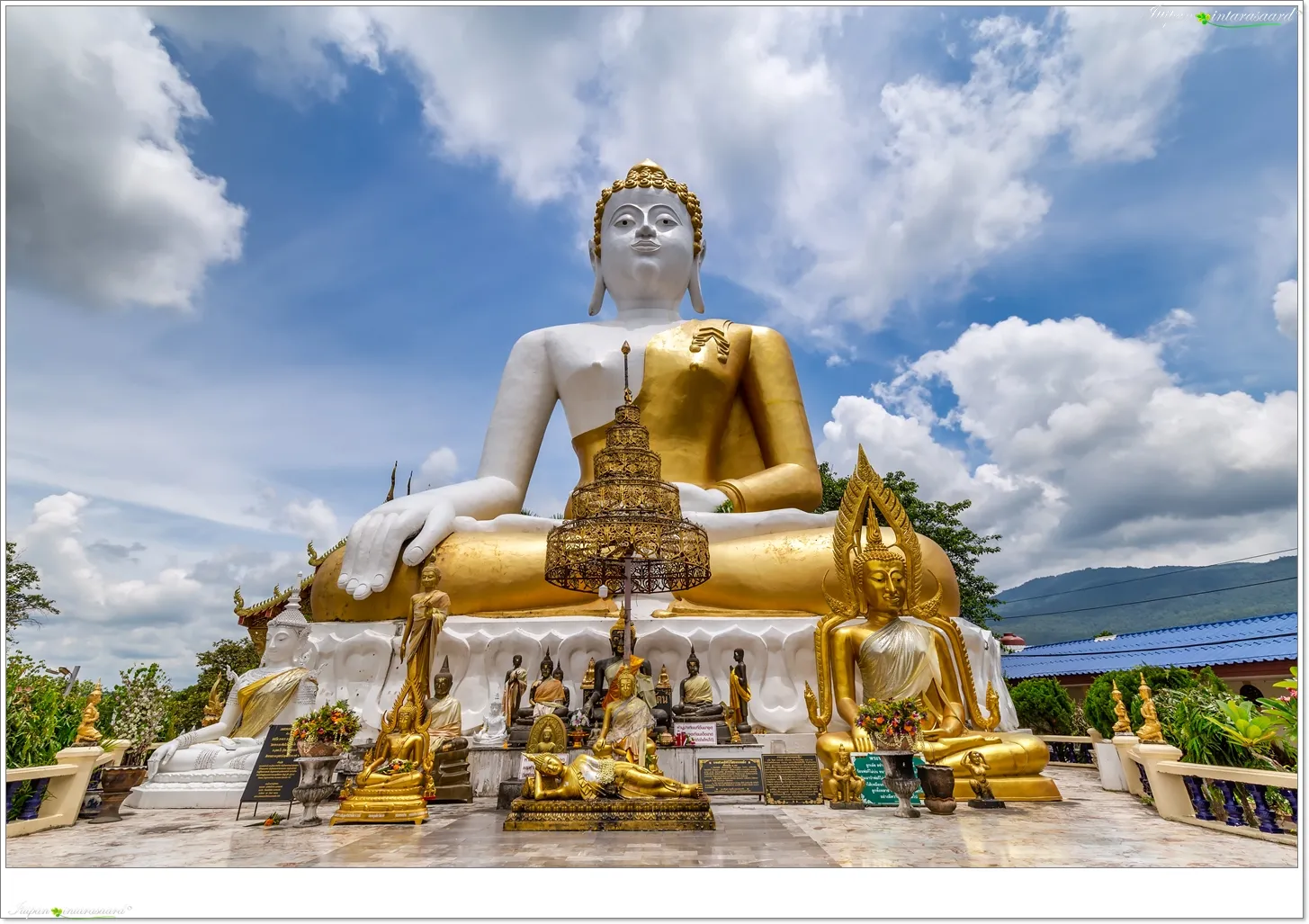
Wat Phra That Doi Kham, also called the Golden Temple, is a Buddhist temple on a hill southwest of Chiang Mai. Its grounds combine a hilltop view across the city and surrounding mountains with a large seated Buddha, a historic chedi and striking guardian figures. Look for the Buddha images and Hindu deities around the temple, then take time at the viewpoint. The calm setting and open views make this a worthwhile stop if you want to pair a temple visit with scenery beyond the city.

A hilltop temple with a long history
Wat Phra That Doi Kham

Wat Phra That Doi Kham stands on Doi Kham, southwest of Chiang Mai, and is also known as Wat Suwan Banphot. The temple dates to the seventh century and is more than 1,300 years old. Its name is commonly translated as Temple of the Golden Mountain.

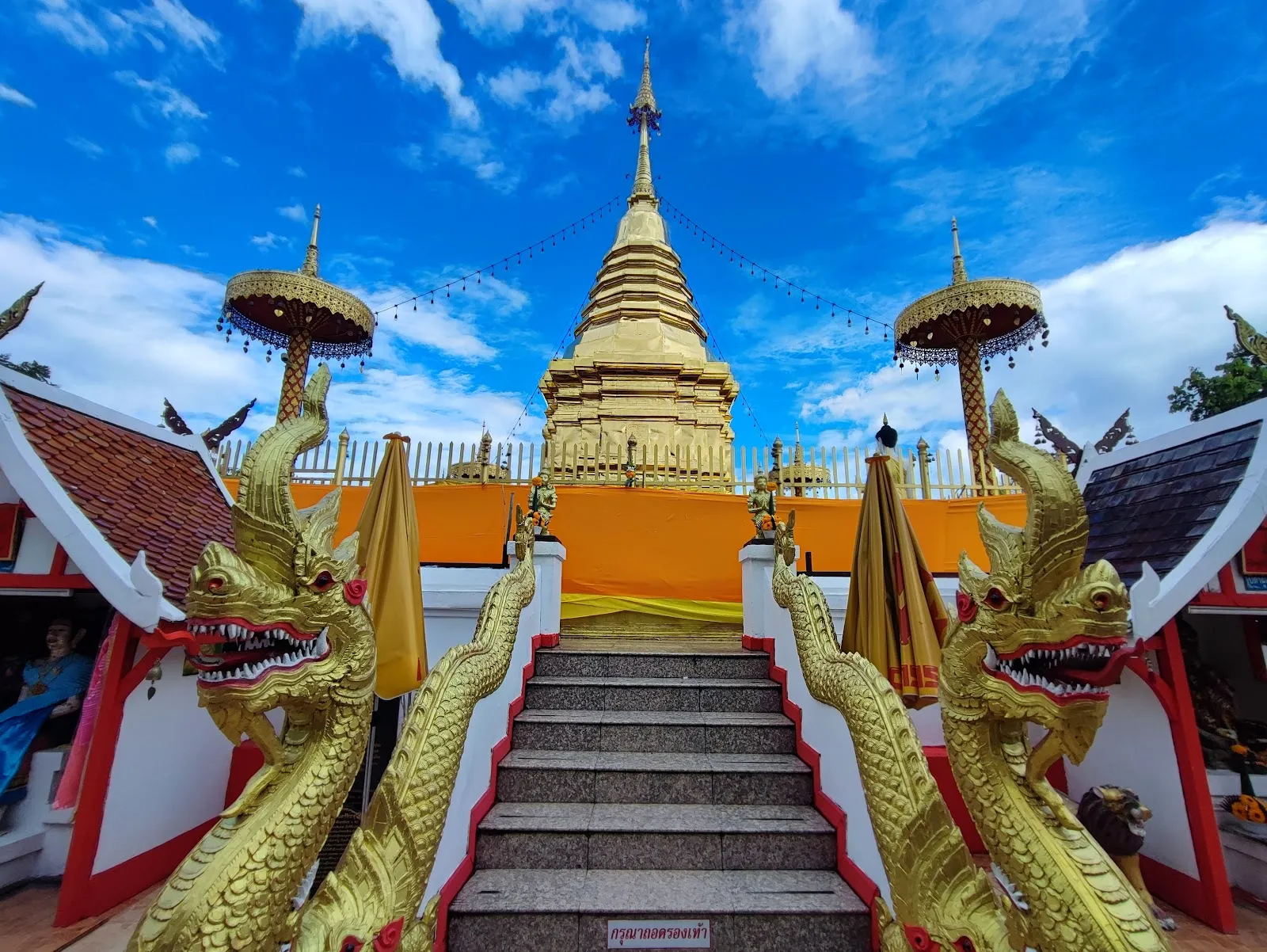
The temple has undergone several renovations. One of its oldest structures is the chedi, a pagoda associated with enshrining a Buddha relic. The site is an active place of Buddhist worship, and Thai devotees visit to pray and make merit.

The Buddha image and temple grounds
Wat Phra That Doi Kham

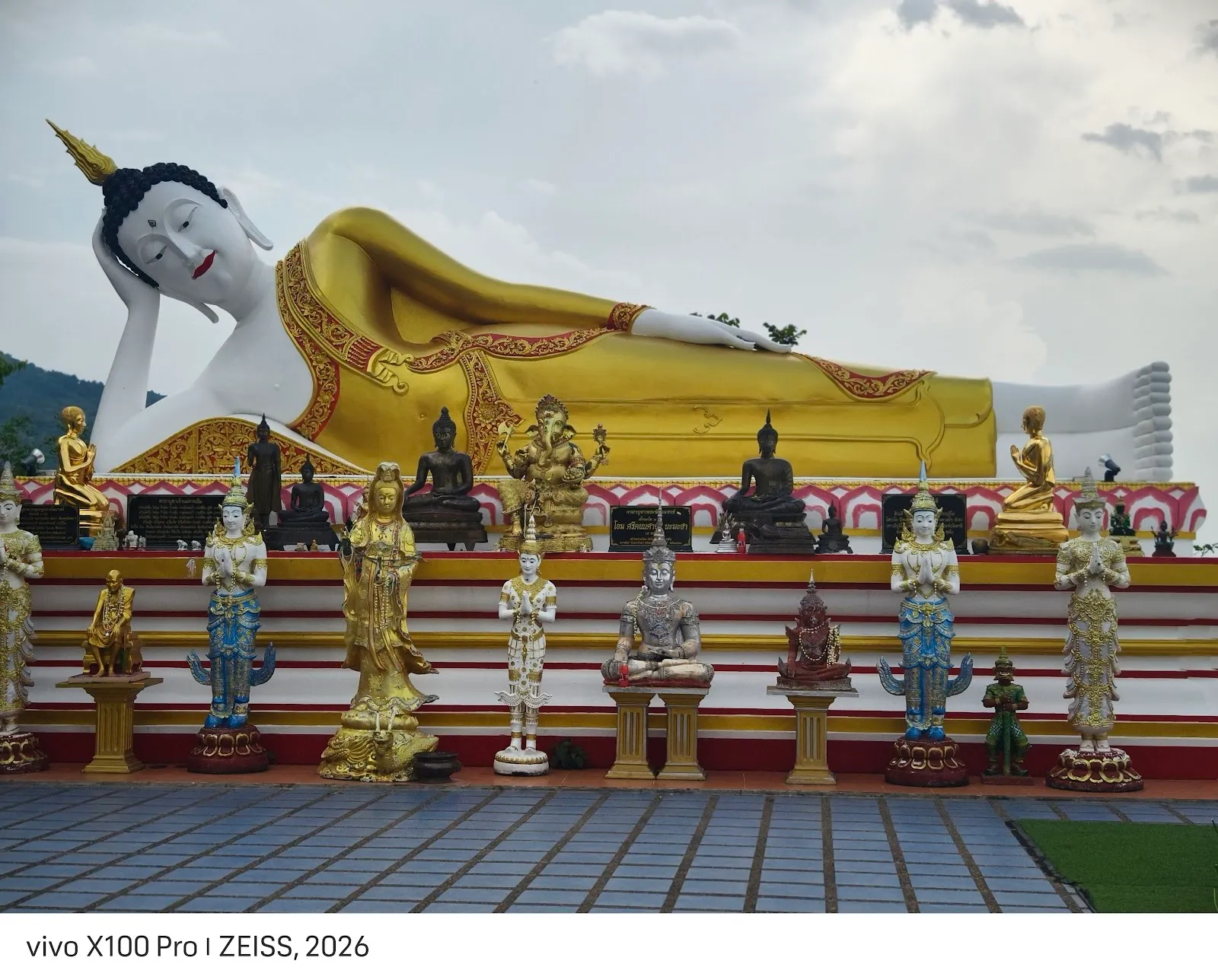
The 17-metre seated Buddha is the most prominent image on the hill and can be seen from below. Around the grounds, you will find other Buddha images, shrines and religious sculptures. Large yaksha figures, traditional guardian beings, stand among the temple’s distinctive statues.

The grounds also include a reclining Buddha toward the rear of the property. The chedi and its naga serpent guardians are worth looking for in the courtyard. Give yourself time to walk around the different structures rather than stopping only at the large seated image.

Getting to the viewpoint

From the hilltop, the view takes in Chiang Mai and the mountains beyond the city. A staircase leads up to the temple, while visitors arriving by vehicle can be dropped off at the top. The climb is an option for those who want to approach on foot; it is not necessary if you have a ride.

As a working temple, Wat Phra That Doi Kham calls for respectful dress and behaviour. Cover your shoulders and knees, and take off your shoes before entering temple buildings. An early or late visit can make the hilltop walk more comfortable than the warmer middle of the day.

Perguntas frequentes

Where is Wat Phra That Doi Kham?

It is on Doi Kham, southwest of Chiang Mai, in Tambon Su Thep.

What should I see at the temple?

Look for the 17-metre seated Buddha, the chedi associated with a Buddha relic, the reclining Buddha and the large guardian statues. The hilltop also has views over Chiang Mai and the surrounding mountains.

What should I wear to Wat Phra That Doi Kham?

Dress respectfully by covering your shoulders and knees. Remove your shoes before entering temple buildings.

Can you drive to the top of Doi Kham?

Yes. Visitors arriving by vehicle can be dropped off at the top; there is also a staircase leading up to the temple.

Mais locais imperdíveis em Província de Chiang Mai

Explorar tudo