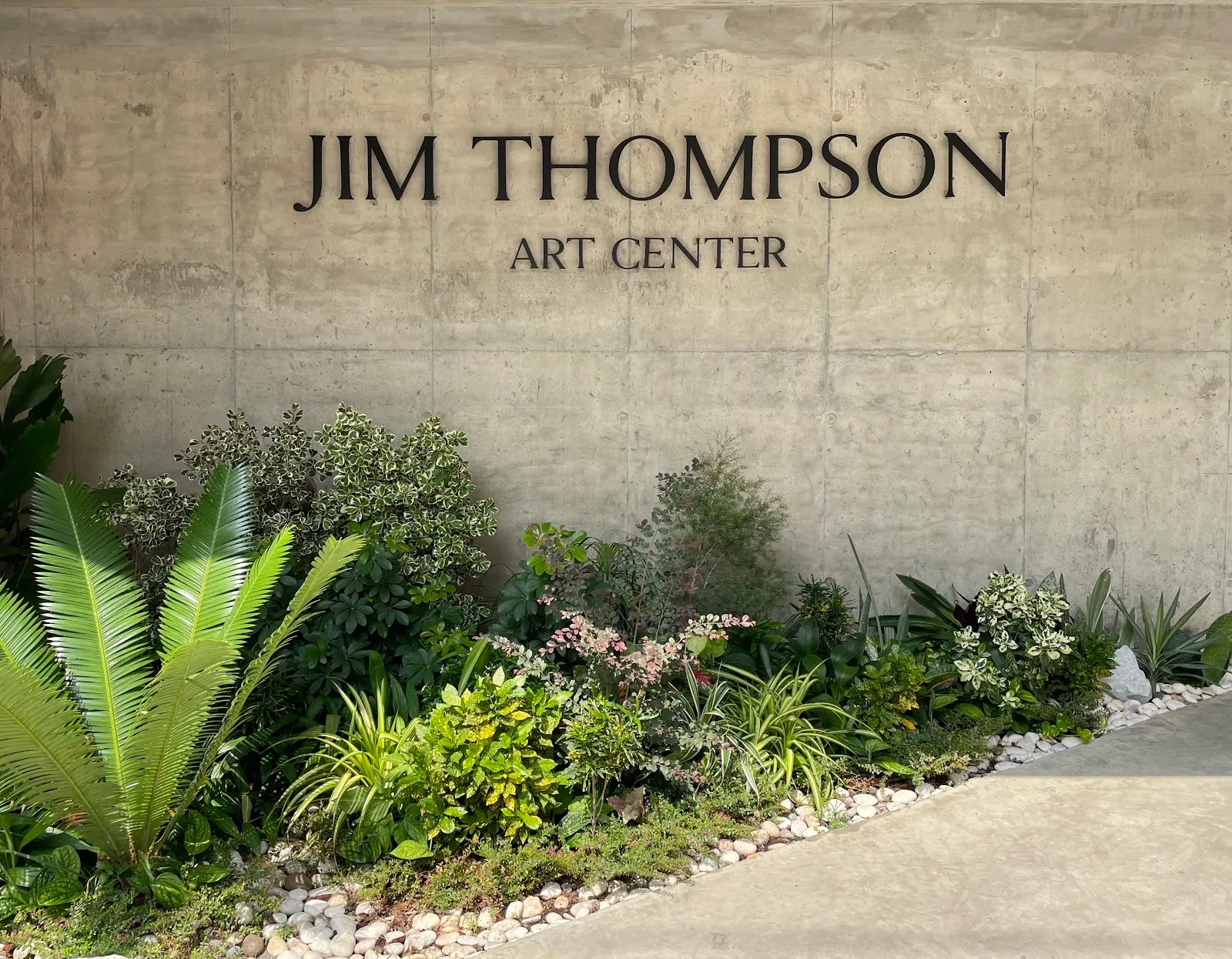
Jim Thompson House Museum is the former Bangkok home of the American businessman credited with reviving Thailand’s silk industry. Six traditional teak houses, brought together from elsewhere in Thailand, sit beside the Saen Saeb Canal among gardens. A guided tour takes you through the house and its collection of Southeast Asian art, antiques and textiles, with the story of Thompson’s life and disappearance woven into the visit. After the tour, take time to explore the grounds and browse the silk shop; a restaurant and café are also on site.
Six teak houses brought together
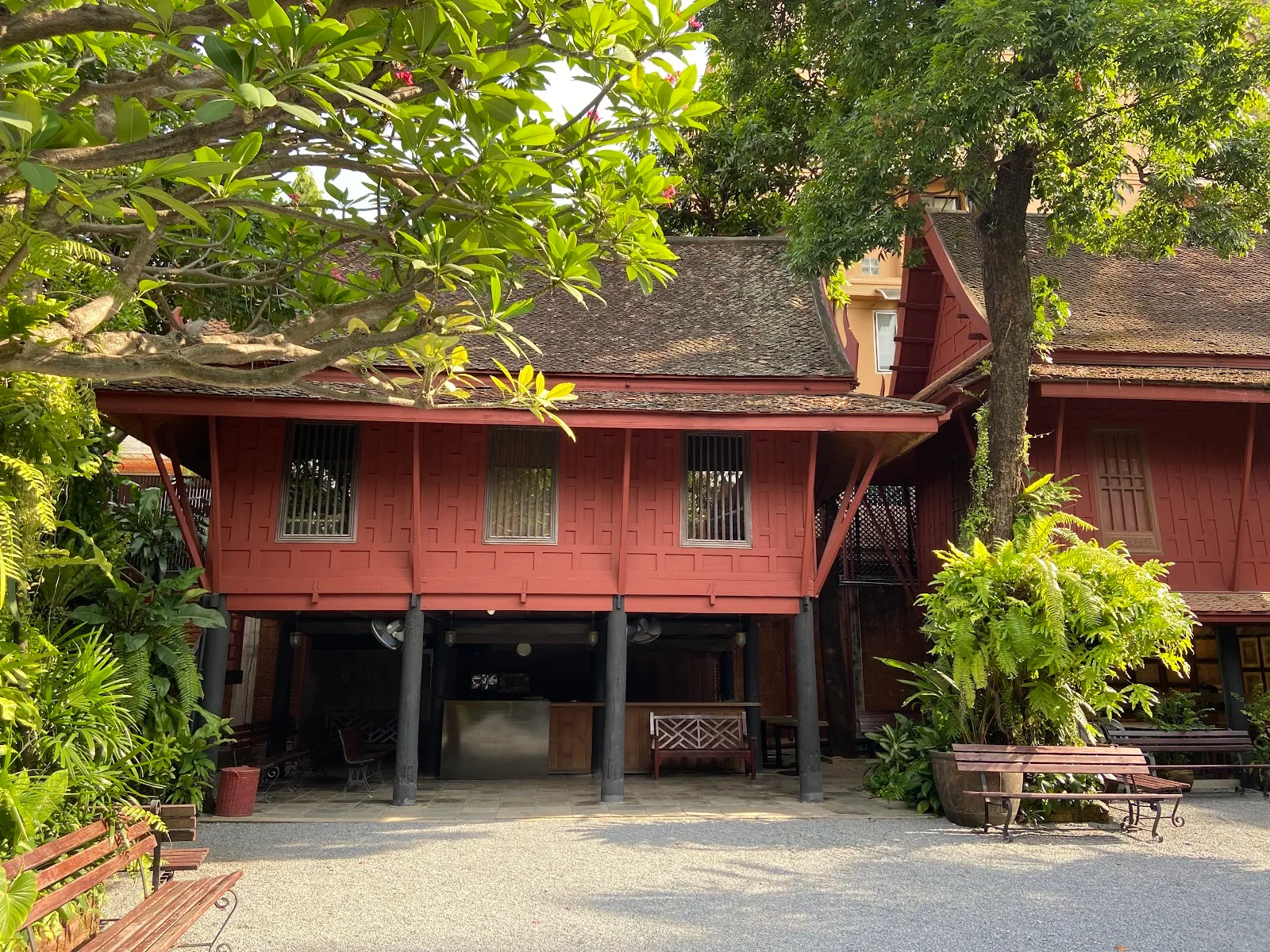
Jim Thompson’s former home is a group of six traditional Thai teak buildings set beside the Saen Saeb Canal. The structures were brought to Bangkok from different locations, including Ayutthaya and the Ban Krua community, where silk weavers lived. Thompson brought them together as his residence in the 1950s. Their raised wooden forms, steep rooflines and carved details give the museum a close look at traditional Thai house design.
The compound also reflects Thompson’s interest in combining Thai architecture with Western comforts. Details described in the house include outward-facing windows, indoor staircases and plumbing. The buildings are linked by open-air passages, with rooms and verandas looking onto the garden. Look closely at the roof forms and carved woodwork as you move through the house.
Art, antiques and textiles
The rooms hold Thompson’s collection of Asian art and antiques, alongside silk and other cultural objects. Displays include ceramics, sculptures and religious works. Among the pieces noted in the collection are temple wall hangings depicting episodes from the life of the Buddha, a standing Buddha figure and porcelain. The dining room also contains mahjong tables put to another use as furnishings.
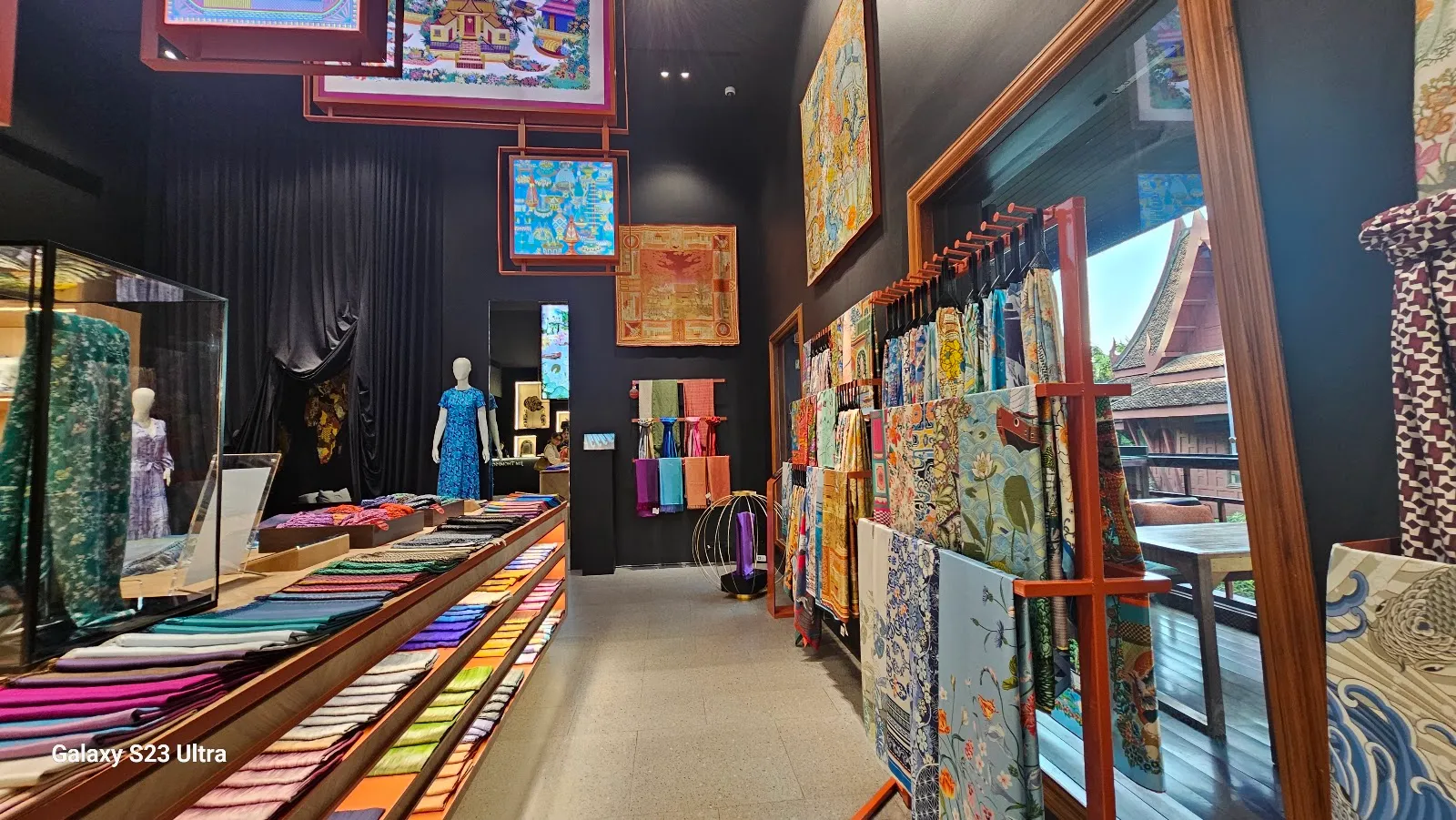
Textiles connect the collection to Thompson’s work in the silk trade. After settling in Thailand following World War II, he became involved in promoting Thai silk to international fashion houses. He worked with local weavers, and his efforts helped bring the craft to a wider audience. The guided tour gives context to the rooms, objects and the part silk played in Thompson’s life.
The story of Jim Thompson
Thompson was an American businessman and former architect who made Thailand his home after World War II. He became known for his work in the silk industry and for collecting art from across Southeast Asia. His former residence brings those interests together: the architecture reflects his attention to Thai houses, while the interiors preserve an array of art, antiques and personal objects.
In 1967, Thompson disappeared while in Malaysia’s Cameron Highlands. He was never found. That unresolved story remains part of the museum’s account of its former owner, alongside his work in the silk trade and his interest in Thai culture. The house and collection were preserved after his disappearance and later opened as a museum.
Planning a visit
Entry to the house is by guided tour, which one account puts at about 35 minutes; allow additional time if you want to wander the grounds. Timed tours can be booked in advance, a useful step if you have a particular visit time in mind. Some parts of the house are air-conditioned, offering a break from Bangkok’s heat.
The garden, silk shop, café and restaurant give you options before or after the tour. The on-site Art Center adds a contemporary art element to the historic house complex. Jim Thompson House is a short walk from BTS National Stadium station, and the address is 6 Kasem San 2 Alley in Wang Mai. Check the museum’s official website for current ticket and tour details before setting out.
Perguntas frequentes
Do you need to take a guided tour?
Yes. Access to the house is by guided tour. Booking a timed tour in advance is recommended.
How long does a visit take?
One account puts the house tour at about 35 minutes. Allow extra time for the gardens, shop and other on-site spaces.
How do you get to Jim Thompson House Museum?
The museum is a short walk from BTS National Stadium station. Its address is 6 Kasem San 2 Alley, Wang Mai.
What can you see inside the house?
The rooms display Thompson’s collection of Southeast Asian art, antiques and textiles, including ceramics, religious objects and Thai silk.