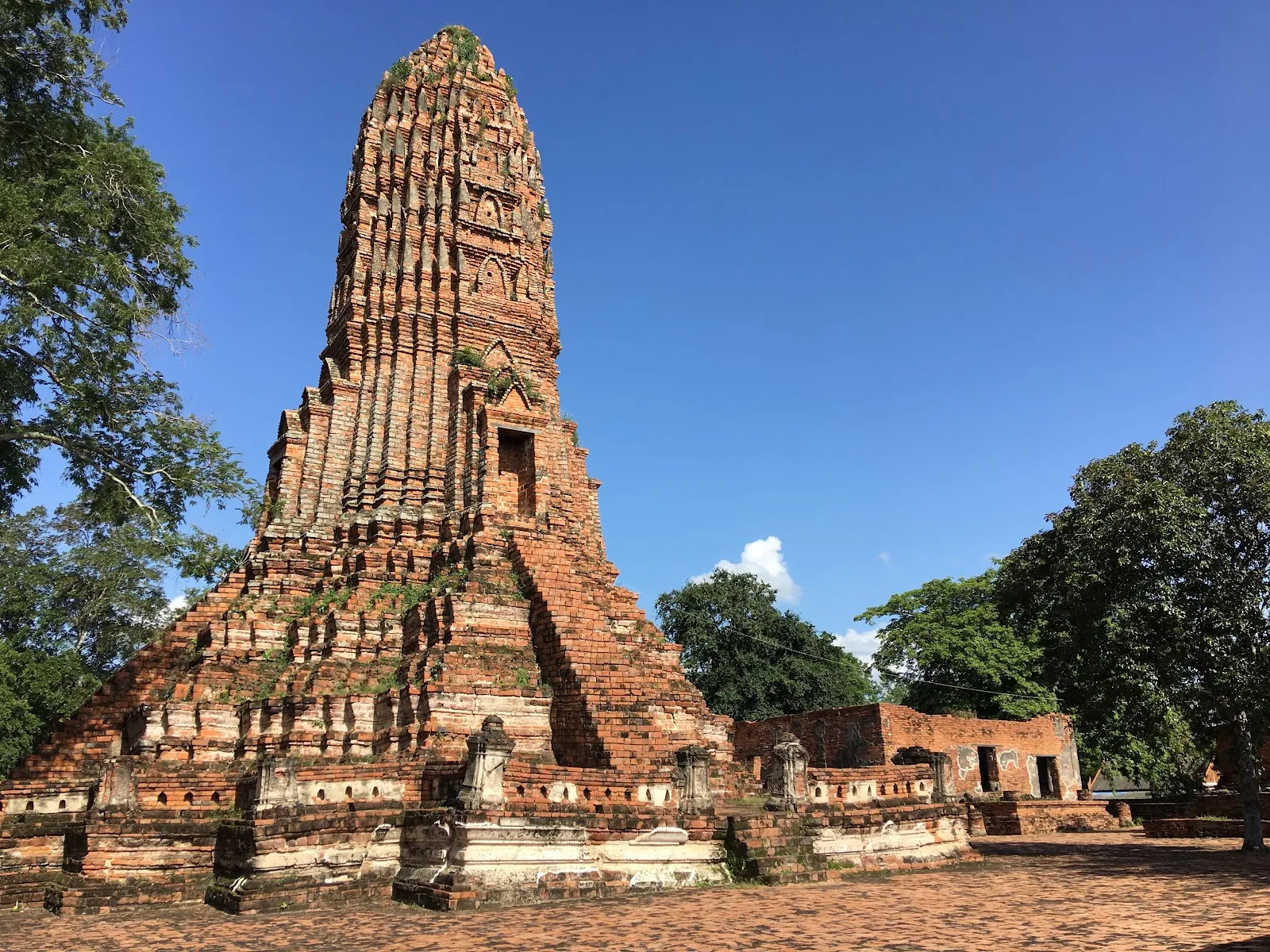
Wat Yai Chai Mongkhon is a working monastery on the southeast side of Ayutthaya, just outside the island that holds most of the ruins. A bell-shaped chedi about 60 metres tall rises from a square base, and rows of Buddha statues in saffron robes line the courtyard around it. A white reclining Buddha lies near the entrance. You can climb the steep steps of the chedi for a view across the grounds and the countryside. Monks live here and local worshippers come to pray, so cover your shoulders and knees and keep your voice low.
Founded in 1357 for monks from Sri Lanka
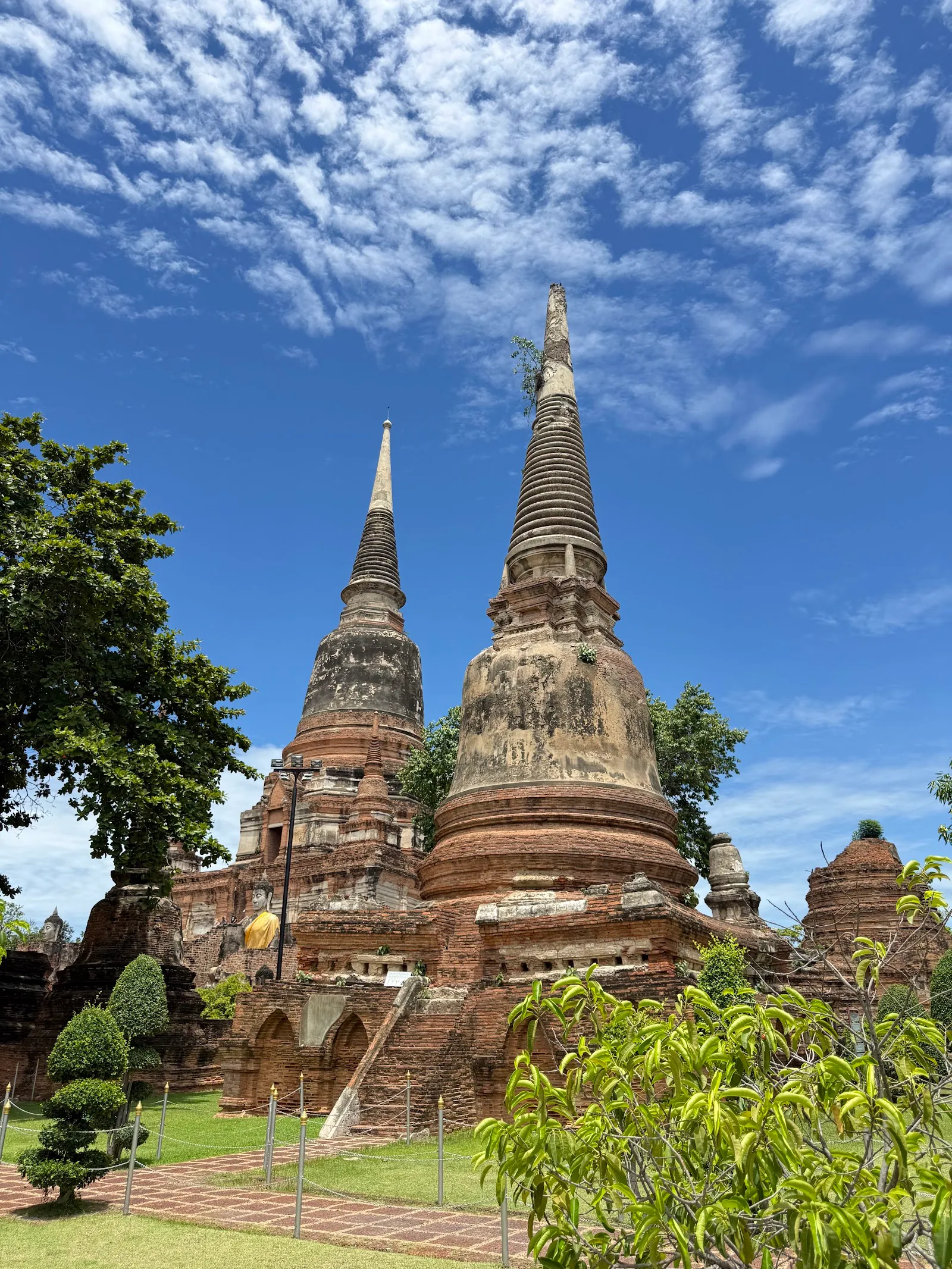
Wat Yai Chai Mongkhon dates to 1357 and the reign of King U Thong, also known as Ramathibodi I, the first king of Ayutthaya. It was built as a home for monks who had returned from Sri Lanka after studying under the teacher Phra Wanaratana. They belonged to an order known for strict practice, and monks of that tradition still live on the grounds.
The temple has carried other names. It was once called Wat Pa Kaew, and it is also known as Wat Chao Phraya Thai. The present name means the Great Temple of Auspicious Victory.
The site has been through war and repair. When the Burmese burned Ayutthaya, the temple was damaged, and only some statues and pillars survived in places. It has been restored several times since, most thoroughly in 1982, and it is now a living monastery rather than a ruin.
King Naresuan and the great chedi
The huge chedi is tied to King Naresuan the Great. In the late 16th century he had it raised to mark his victory over the Burmese crown prince in a duel fought on elephant back. Today the chedi is the tallest in Ayutthaya, at about 60 metres, and it is visible from far across the city.
It rises from a square base, with four smaller chedis at the corners. Its form is said to echo the summit of Mount Meru, the sacred mountain of Buddhist cosmology. Buddha images and relics are kept inside.
An early 17th-century or later painting of the battle is among the things to look for on the site, along with the memorial role of the chedi itself.
Buddhas, the reclining image and the wishing well
Around the chedi, long rows of seated Buddha statues look inward over the courtyard. Many wear saffron cloth. The robes are a more recent custom, and most of the statues have been rebuilt to match their original form. Some still show their age.
Near the entrance lies a large white reclining Buddha, remodelled from older structures. Local belief holds that good fortune follows if a coin sticks to the Buddha's feet. Worshippers also come to make offerings, and you may smell incense and see monks and locals at prayer. Keep your distance and stay quiet while they do.
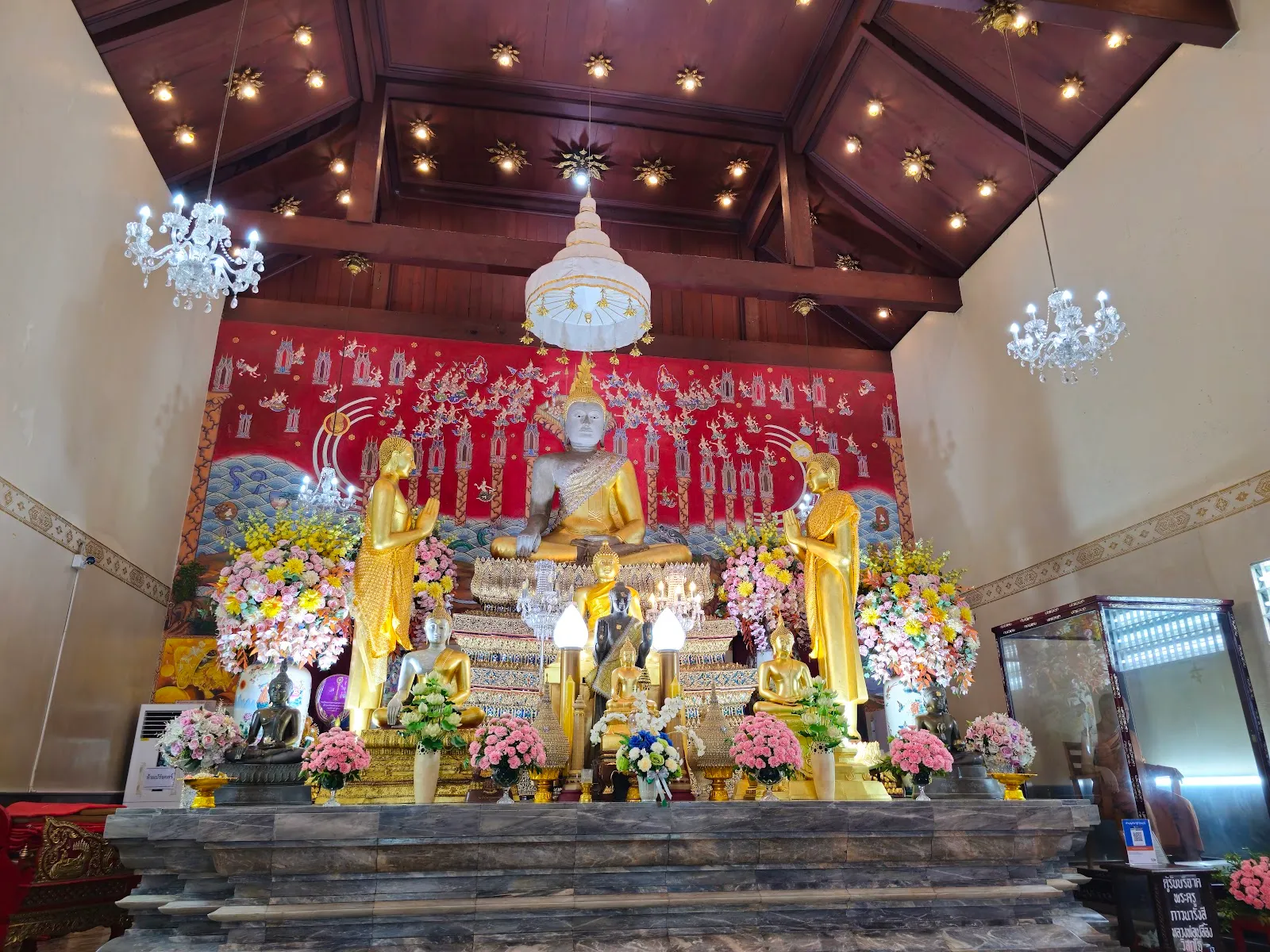
Within the complex there is also a wishing well, where visitors drop a coin and make a wish. The Ubosatha hall is where the monks hold important ceremonies.
Climbing the chedi and getting here
The steps up the chedi are steep, so wear shoes with grip and take your time. At the top you can look over the temple complex, its gardens and the green countryside beyond. Late afternoon light on the chedi and the nearby river is a good time for photographs.
The temple lies outside the island of Ayutthaya, near its southeastern corner, across the Pridi Thamrong bridge and east of the Pasak River. By road it is about ten minutes from the ruins in the historical park. Because it is far for cyclists, it sees fewer foreign visitors than the temples on the island. Weekends and holidays draw more Thai worshippers and tourists, so a weekday morning gives you the calmest visit.
The entrance, a restroom and the parking area are wheelchair accessible. Plan on 30 to 60 minutes for the grounds, a little longer if you climb the chedi.
Perguntas frequentes
Is there an entry fee at Wat Yai Chai Mongkhon?
Foreign visitors pay 20 baht. Thai citizens enter free. Donations toward the temple's upkeep are welcome.
How long do you need at Wat Yai Chai Mongkhon?
Allow 30 to 60 minutes to walk the grounds, see the reclining Buddha and climb the chedi.
What should you wear to Wat Yai Chai Mongkhon?
Cover your shoulders and knees. It is an active monastery where people come to pray.
Can you climb the chedi?
Yes. The steps are steep, but the top gives a view over the temple grounds and the countryside.
Where is Wat Yai Chai Mongkhon?
It is on the southeast side of Ayutthaya, outside the island and across the Pridi Thamrong bridge. It is about ten minutes by road from the main ruins.