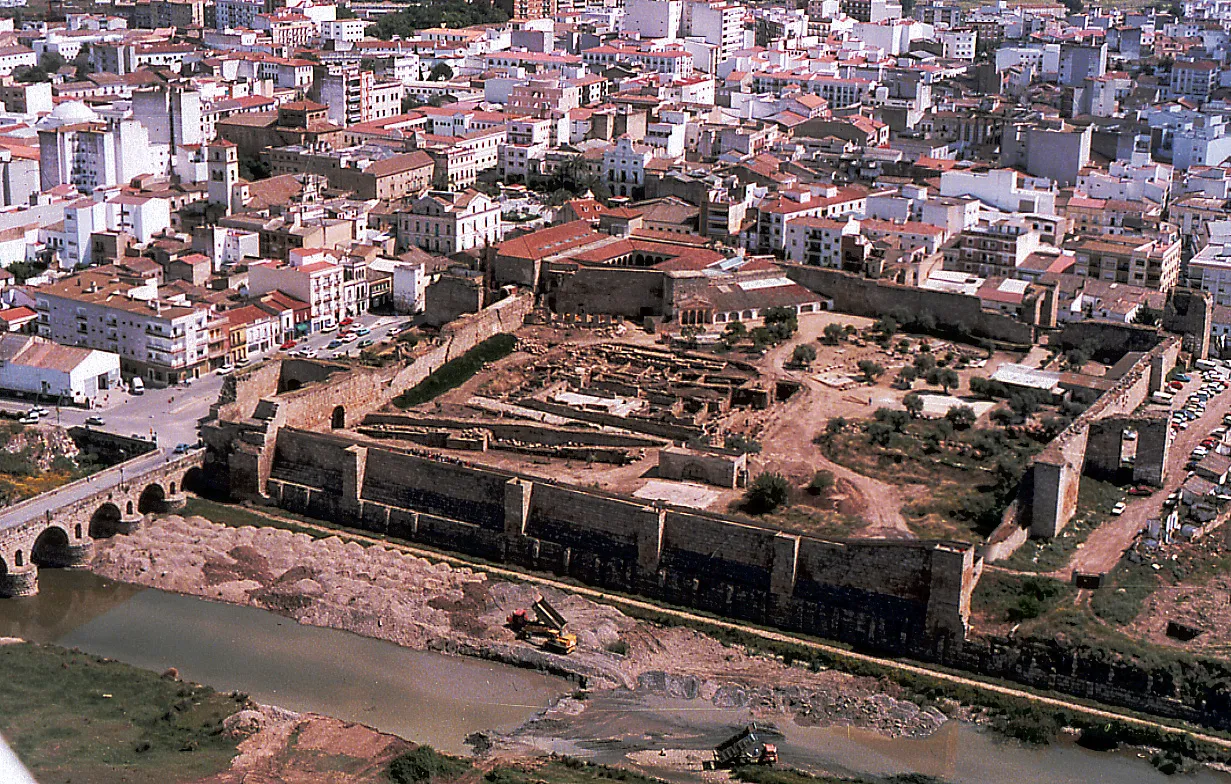
The National Museum of Roman Art sits across the square from Mérida's Roman Theatre and Amphitheatre, in western Spain. Its collection covers mosaics, statues, coins, weapons, inscriptions and everyday objects from Augusta Emerita, the Roman city that was the capital of Lusitania. Rafael Moneo's brick building, with its repeated arches, is worth seeing in its own right. Allow time for the three levels, and look at the ruins and a section of an original Roman street that lie below and inside the building.
Why the museum was built
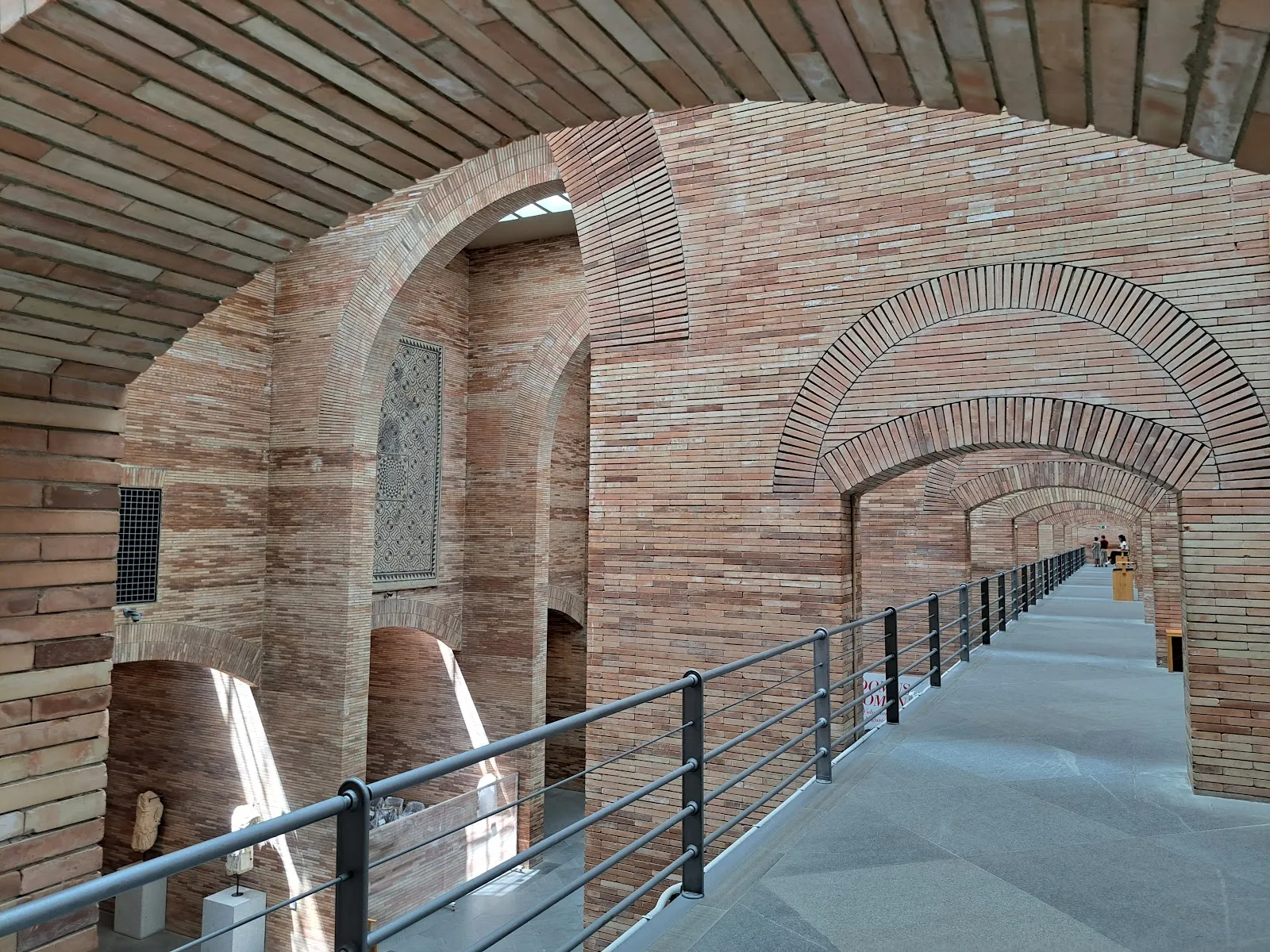
The museum was commissioned in 1979 to mark the two thousandth anniversary of Emerita Augusta, the Roman city that is now Mérida. It opened in 1986. It is a state museum linked to Spain's Ministry of Culture, and its displays draw on finds from the city's Roman past, many of them dug up locally.
The building sits across the square from the Roman Theatre and Amphitheatre, so you can look at the ancient monuments and the museum in the same visit. Mérida was the capital of the Roman province of Lusitania, and the collection gives a clear picture of daily life there.
The building
Rafael Moneo designed the museum in brick and concrete, with repeated arches across a large structure. The arched walls and the big open volumes recall Roman construction, and the building is a modern work that takes its cues from the past it displays.
The museum was built on top of archaeological remains, so the structure itself sits over the history it presents.
Inside the collection
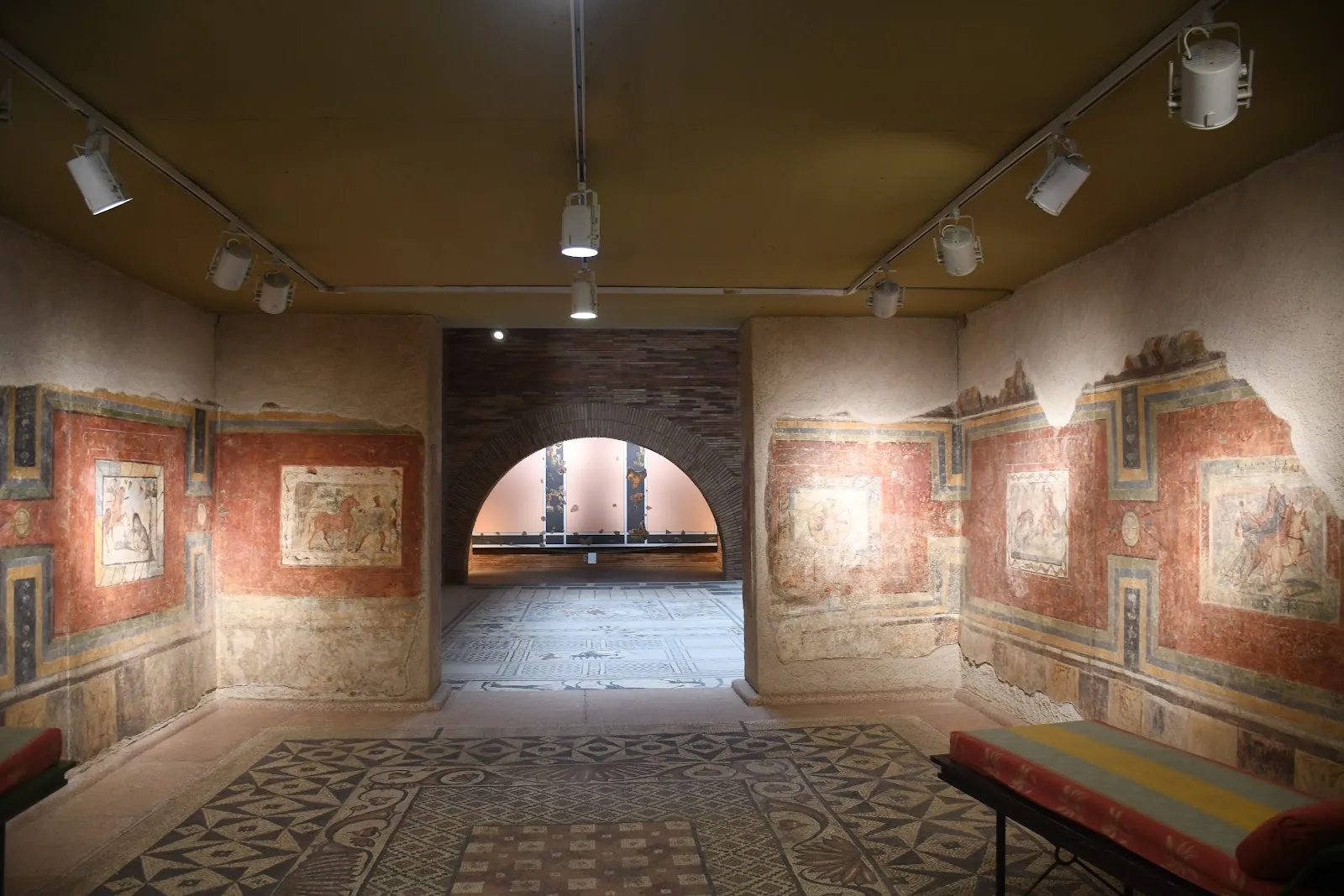
The objects are spread over three levels. Mosaics and sculptures form the core of the displays. The collection also includes inscriptions, coins, weapons, jewellery, ceramics, glassware, wall paintings and gravestones. Each piece stands on its own plinth, which makes details easier to see up close.
One large mosaic that once formed a floor in a Roman house now hangs on a wall. A reconstructed Roman living room, complete with copies of furniture, shows how a wealthy household may have been arranged.
The statues of Ceres, Pluto and Proserpina on the Roman Theatre are reproductions. The originals are kept in this museum.
Ruins and a Roman street
The basement holds archaeological excavations that are still in progress. A section of an original Roman street runs through the building. It was uncovered during construction and was kept in place.
Visitors can also enter a crypt on the site, which adds to the sense that the building is layered over older remains.
Visiting in practice
Entry is free on Sundays and on Saturday afternoons. The standard ticket costs 3 euros. The museum is not part of the combined ticket for Mérida's Roman sites, so it needs its own purchase.
The entrance, elevator and restroom are wheelchair accessible. The museum has a restaurant and restrooms, hosts private events and live performances, and is listed as good for children.
Getting there and nearby sights
The address is Calle José Ramón Mélida, 06800 Mérida. A car park beside Mérida's train station on Calle Carderos is close to the Roman Theatre, which is a short walk from the museum.
The Temple of Diana, the Moorish Alcazaba and the Roman bridge over the Guadiana River are other landmarks in the city. The city's archaeological ensemble has been a UNESCO World Heritage Site since 1993.
From June to August, the Mérida International Classical Theatre Festival stages Greco-Roman tragedies and comedies in the theatre, alongside concerts and dance.
Perguntas frequentes
Is there an entry fee?
Entry is free on Sundays and on Saturday afternoons. Otherwise, the standard ticket costs 3 euros.
How long do you need?
A visit of 1 to 2 hours covers the three levels of the collection at a steady pace.
Are the exhibits explained in English?
English explanations are limited. An audio guide or a guided tour gives more information about the exhibits.
Is the museum wheelchair accessible?
Yes. The entrance, elevator and restroom are wheelchair accessible.
Is the museum included in the combined ticket?
No. The museum is not part of the combined ticket for Mérida's Roman sites, so it needs its own ticket.