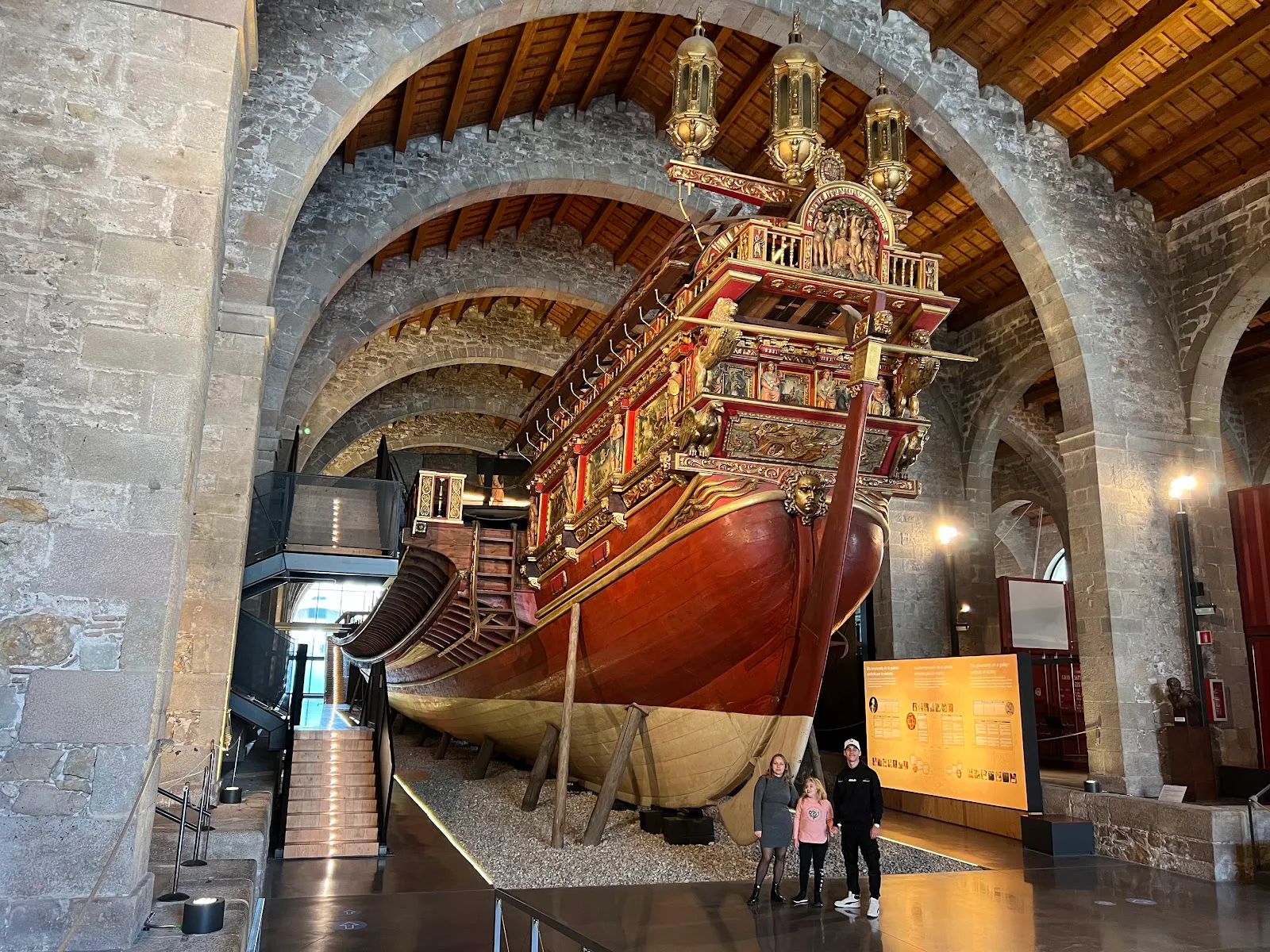
Barcelona’s Maritime Museum occupies the Drassanes Reials, the former royal shipyards at the end of La Rambla. Under their Gothic arches, exhibits trace Catalonia’s connection to the sea through ship models, maps, navigation tools, photographs and shipbuilding records. The central draw is a full-size reconstruction of a 16th-century galley; interactive displays add context to the objects and the work of sailing and building ships. Come for the vessels, or to see how this historic shipyard shaped the city’s maritime story.
A museum inside the royal shipyards
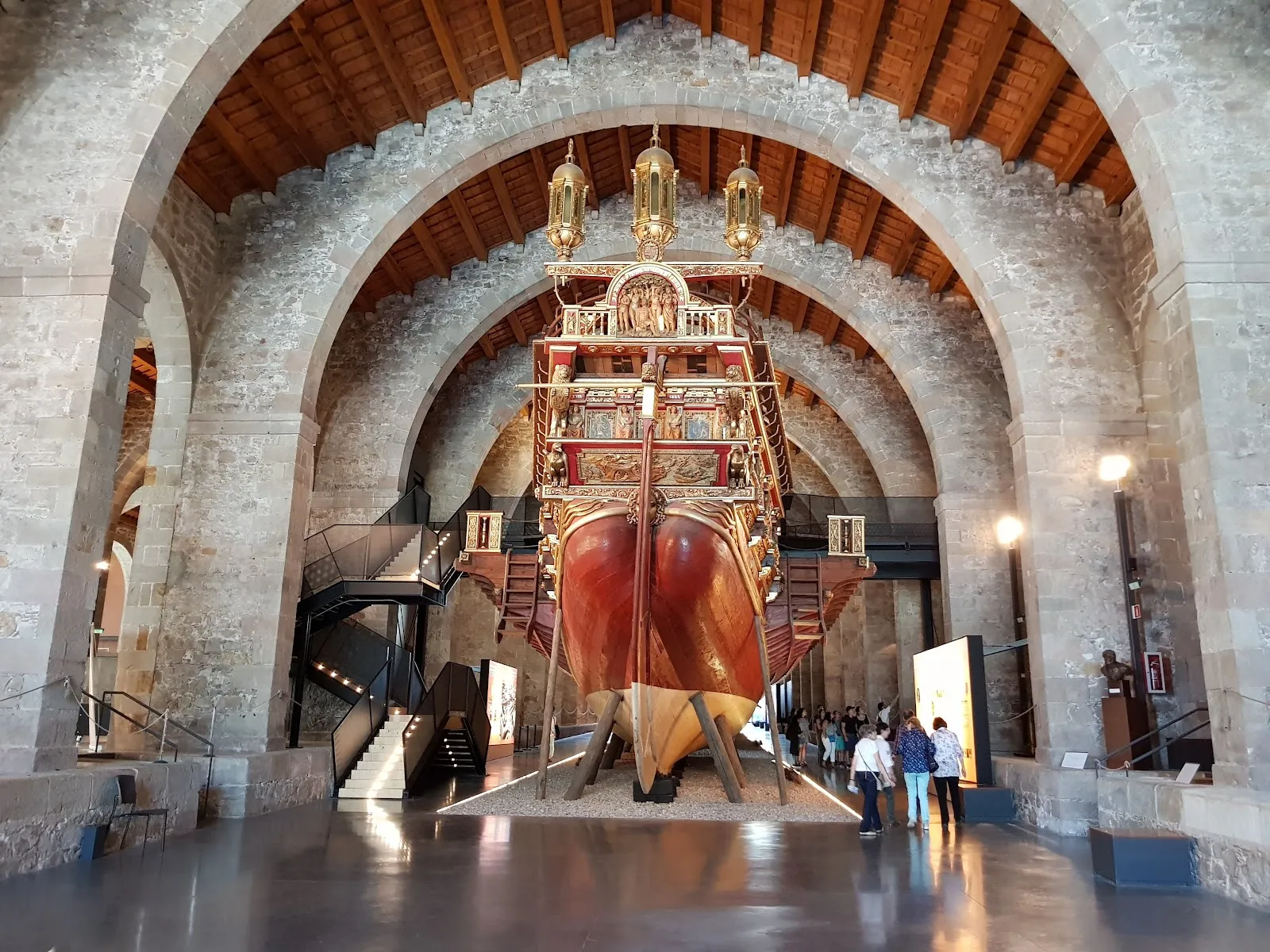
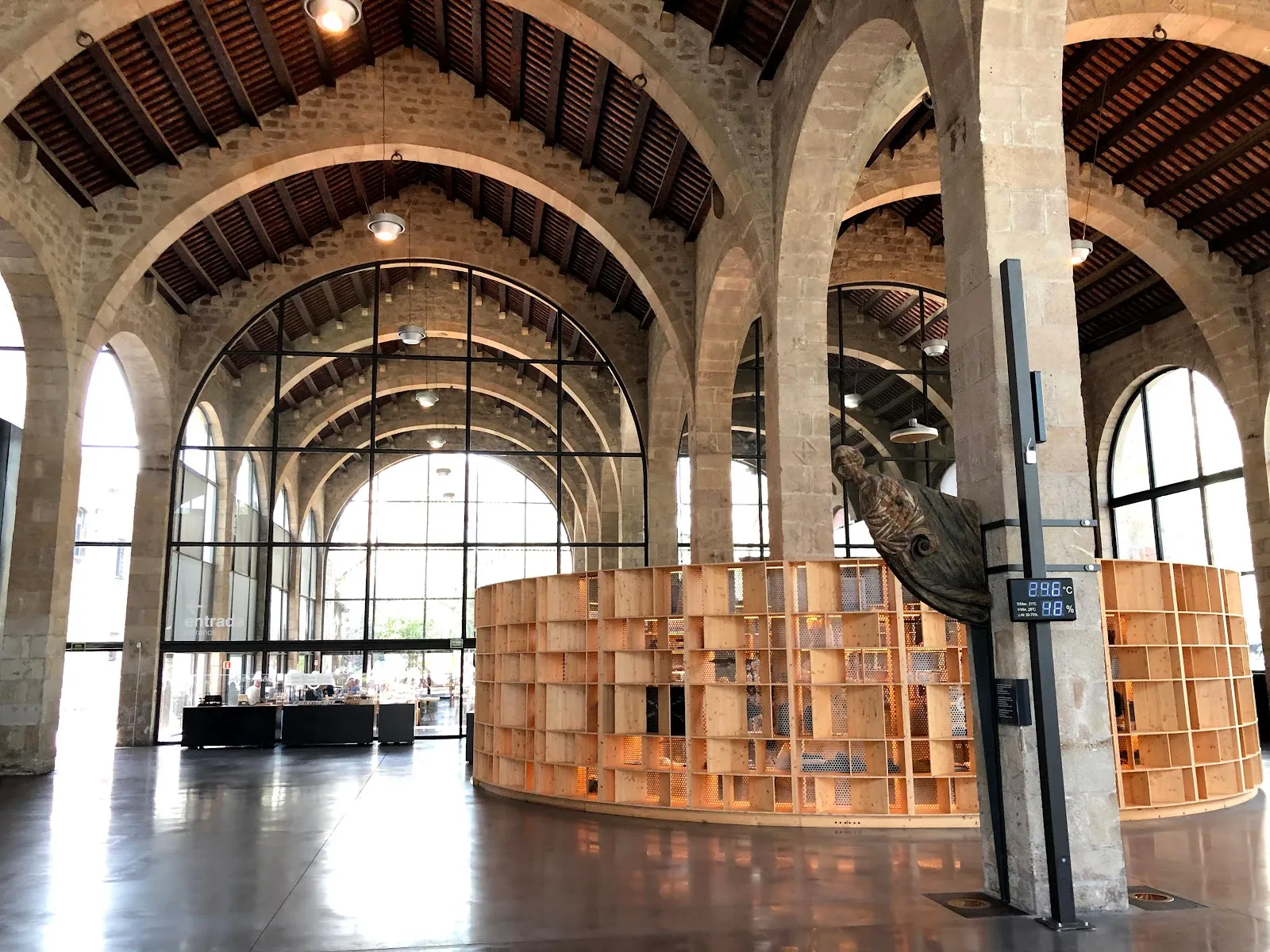
The Drassanes Reials were built for ship construction and served that purpose from the 13th to the 18th century. Today, their Gothic arches and vaulted halls house the Barcelona Maritime Museum. The building is part of the visit: its scale and architecture give a sense of the work carried out in the shipyards long before the galleries begin.
The museum connects the history of the shipyards with Barcelona’s development as a port city. Its collections and displays explore how shipbuilding and maritime trade influenced Catalonia, and how the sea became part of life in Barcelona. Exhibits also place local history in the wider context of navigation and Mediterranean seafaring.
Ships, maps and life at sea
The collection includes ship models from different periods, nautical charts, navigation instruments, photographs, maritime paintings and shipbuilding records. Together, these objects show how vessels were designed and built, how sailors found their way across the water, and how maritime technology changed over time. Some displays include interactive elements and screens that add context to the objects.
A full-size reconstruction of a 16th-century galley is a major highlight. It brings the scale of a historic vessel into the shipyard halls and gives visitors a closer look at the kind of ship associated with Mediterranean naval history. The displays also address the conditions aboard vessels, including the harsh realities of life at sea. The museum’s treatment of maritime history includes difficult subjects such as slavery in the shipping industry.
Planning a visit
The museum is at Av. de les Drassanes, at the port end of La Rambla, in the Ciutat Vella district. Its location makes it an easy stop to pair with a walk through the old town or towards the waterfront.
Allow at least two hours if you want time for the galleries and the shipyard architecture. Families can look for the interactive displays alongside the models and historical objects. There is a café with indoor seating beneath a high ceiling and seating in the garden for a pause during the visit.
Admission is free on Sundays after 3 pm. If you are visiting then, arriving before that period can help you avoid the queue associated with free entry. The museum is wheelchair accessible, with an accessible entrance, elevator and restroom.
Perguntas frequentes
Is the Barcelona Maritime Museum free to enter?
Admission is free on Sundays after 3 pm.
How long do you need at the Barcelona Maritime Museum?
Plan on at least two hours to explore the exhibits and the former shipyards.
What is the main highlight of the museum?
A full-size reconstruction of a 16th-century galley is a central exhibit.
Is the Barcelona Maritime Museum accessible?
The museum has a wheelchair-accessible entrance, elevator and restroom.


