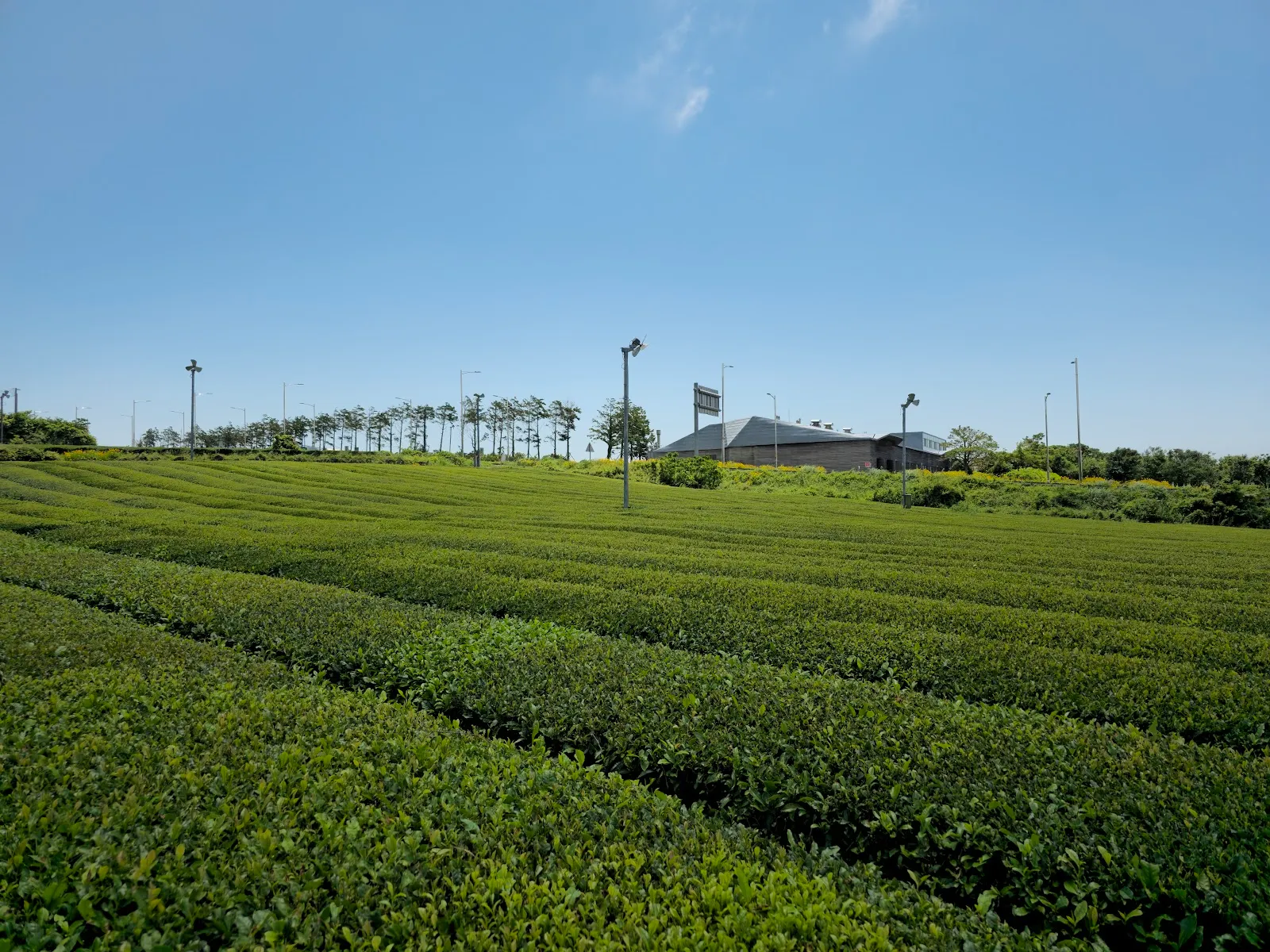
Osulloc Tea Museum stands at the entrance of the Seogwang Green Tea Plantation in Seogwipo, Jeju. AmorePacific opened it in 2001, and the building is shaped like a teacup. Inside you find exhibits on Korean tea history, free tea tastings, a gift shop and a café serving matcha lattes, green tea ice cream and roll cakes. Outside, neat rows of tea bushes and art installations spread across the grounds. Entry is free, and you pay only for what you buy or book.
From a volcanic field to a teacup-shaped building
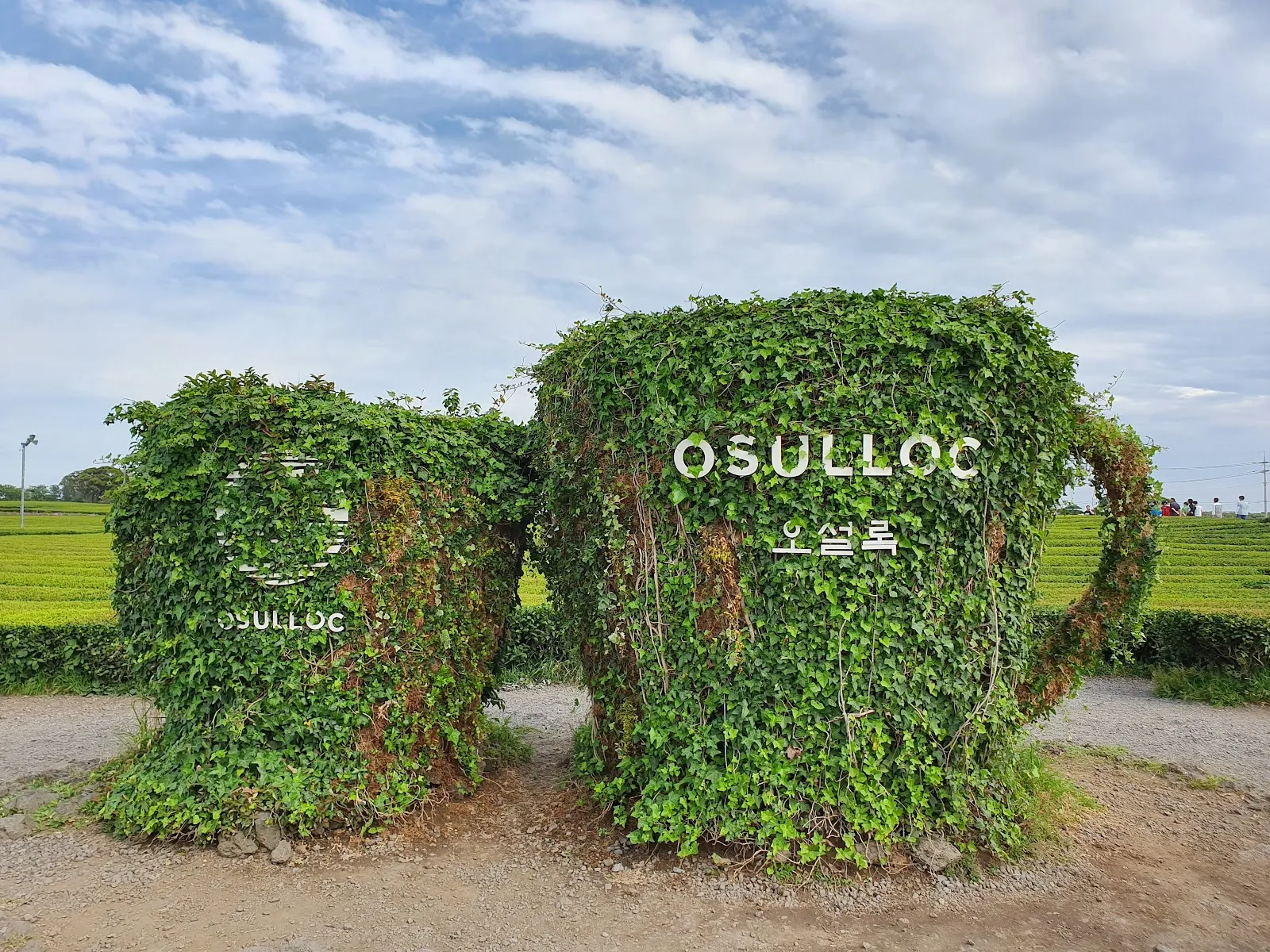
The Osulloc tea farm began in 1979 on a rocky volcanic field on Jeju. The founder wanted to revive a Korean tea tradition that was fading, and the brand grew from that project. Jeju suits the crop: volcanic soil, clear water, gentle sunlight and high rainfall and humidity. The taste of the tea shifts a little depending on when the leaves are picked.
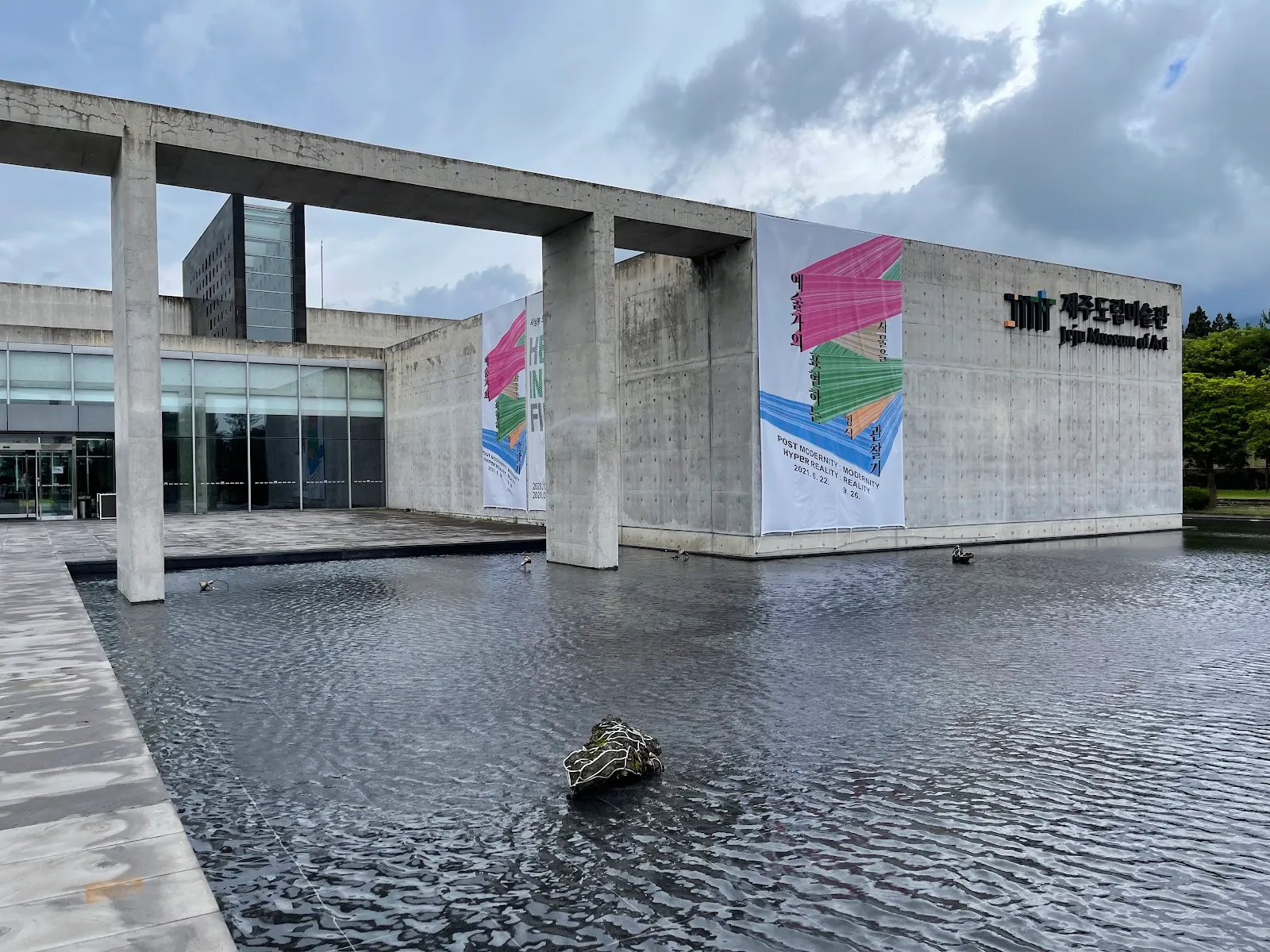
The museum opened in September 2001 at the entrance of the Seogwang tea plantation. The Korean firm Mass Studies designed the building and its outbuildings. The main hall is shaped like a teacup, and the design draws on both Western and Eastern ideas. The online magazine Designboom has named it among the top ten museums in the world for its architecture, art and design.
Inside the museum and the Tea Stone annex
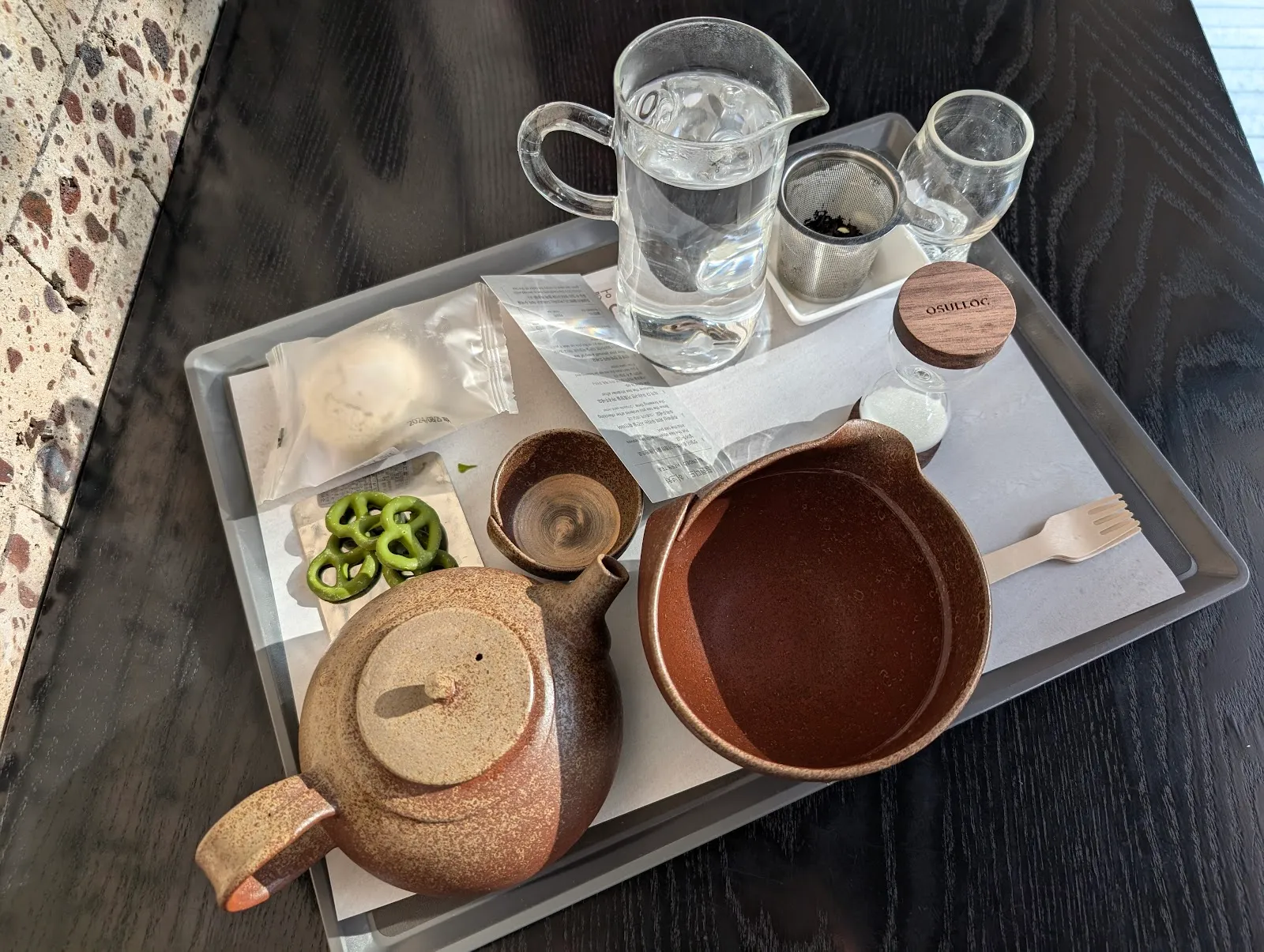
The exhibits cover the history and traditions of Korean tea, with a tea gallery and a collection of tea ware. Signs are bilingual. An indoor garden has a lotus pond, a quiet place to sit between displays. Tea tastings are free and the staff hand out plenty of samples.
The Tea Stone annex is set in a forest grove behind transparent glass walls. A 55-minute tour with a green tea class runs here. In the nearby Tea Stone Cellar, wooden barrels hold teas that are aged to develop their flavor, and you can sample some of them. Tea-making sessions run at set times, and not all classes are in English. A makgeolli tasting has also been offered, where you learn about the Korean rice wine and try several flavors.
The tea fields and grounds
The Seogwang tea garden around the museum covers more than half a square kilometer. You can walk through it freely, and the bushes are kept neatly trimmed. A terraced tea house and an observation deck look out over the tea hill. Osulloc grows tea on three plantations, and this is the most representative one.
The lawns are wide enough for children to run, and sculptures and interactive art installations are placed around the grounds. The rows look much alike after a while, so plan extra time here only if tea plantations interest you.
Café, shop and Innisfree Jeju House
The café menu centers on green tea: matcha lattes, green tea ice cream, green tea roll cakes and other desserts. Some items use hallabong, the Jeju tangerine. A children's set comes with a small brand-name building kit that doubles as a keepsake. Next to the café, a noodle restaurant serves noodles made with green tea.
The gift shop sells loose leaf tea in tins, tea snacks and cookies, and blends flavored with Jeju ingredients such as tangerine and camellia.
The Innisfree Jeju House stands in the same compound. It sells skincare made with local green tea, tangerine and volcanic stone, and runs workshops where you can design and make your own soap. Its café serves sandwiches, carrot smoothies and tangerine ice cream.
Planning around the crowds
This is one of the most popular stops on Jeju, and tour groups arrive through the day. Allow time for a queue at the café and shop counters. The grounds have a wheelchair accessible entrance, restrooms and changing tables. Both free and paid parking are available.
Perguntas frequentes
Is there an entry fee at Osulloc Tea Museum?
No. Entry to the museum and the tea fields is free. You pay only for food, drinks, shopping and activities such as classes.
How long do you need at Osulloc Tea Museum?
Plan on one to three hours. That covers the exhibits, a tasting, a café stop and a walk through the tea fields. Add time if you book the Tea Stone tour or a class.
When is the best time to visit?
Go on a weekday or early in the day to avoid the biggest crowds. The last hour before the café closes is also quieter.
Is Osulloc Tea Museum good for children?
Yes. The grounds have large green spaces and interactive art installations, and the café offers a children's set with a small building kit.
Is there parking?
Yes, there are free and paid lots. When the nearest lot is full, staff send cars to a farther one.
Are the tea classes held in English?
Not all of them. Exhibit signs are bilingual, but check the language of a class before you book.