Iona Abbey and Nunnery sit on the Isle of Iona, off the southwest coast of Mull. St Columba founded a monastery here in 563, and the abbey remains an important Christian pilgrimage site. Inside, see the vaulted nave, the cloister and the Abbey Museum’s carved stones and crosses. Nearby, the ruins of the 13th-century nunnery and the path past St Oran’s Chapel add more layers of island history. Allow time to explore at an unhurried pace.
A Christian site since the sixth century
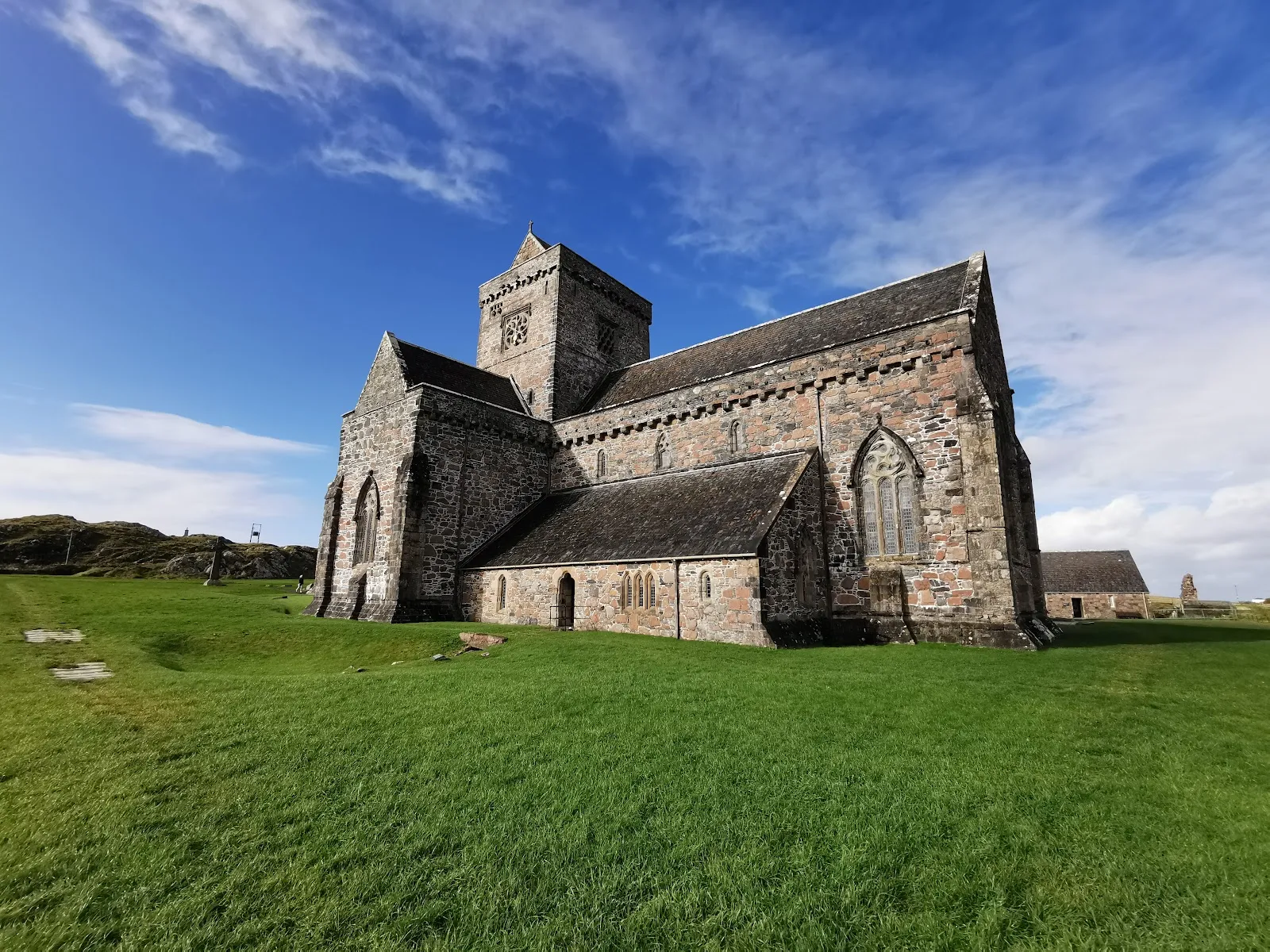
St Columba and his Irish followers founded a monastery on Iona in 563. The island became an early centre of Christianity in Scotland, and the abbey remains a place of worship and pilgrimage. Its long history is visible in the religious buildings and carved stones gathered across the site.
Iona is reached by ferry from Mull. From the landing, a walk of about 10 minutes leads to the abbey. The route passes the ruins of the nunnery, established in the 13th century, and St Oran’s Chapel and Reilig Odhrain, an ancient burial ground associated with Scottish kings and the Lords of the Isles.
The abbey, cloister and museum
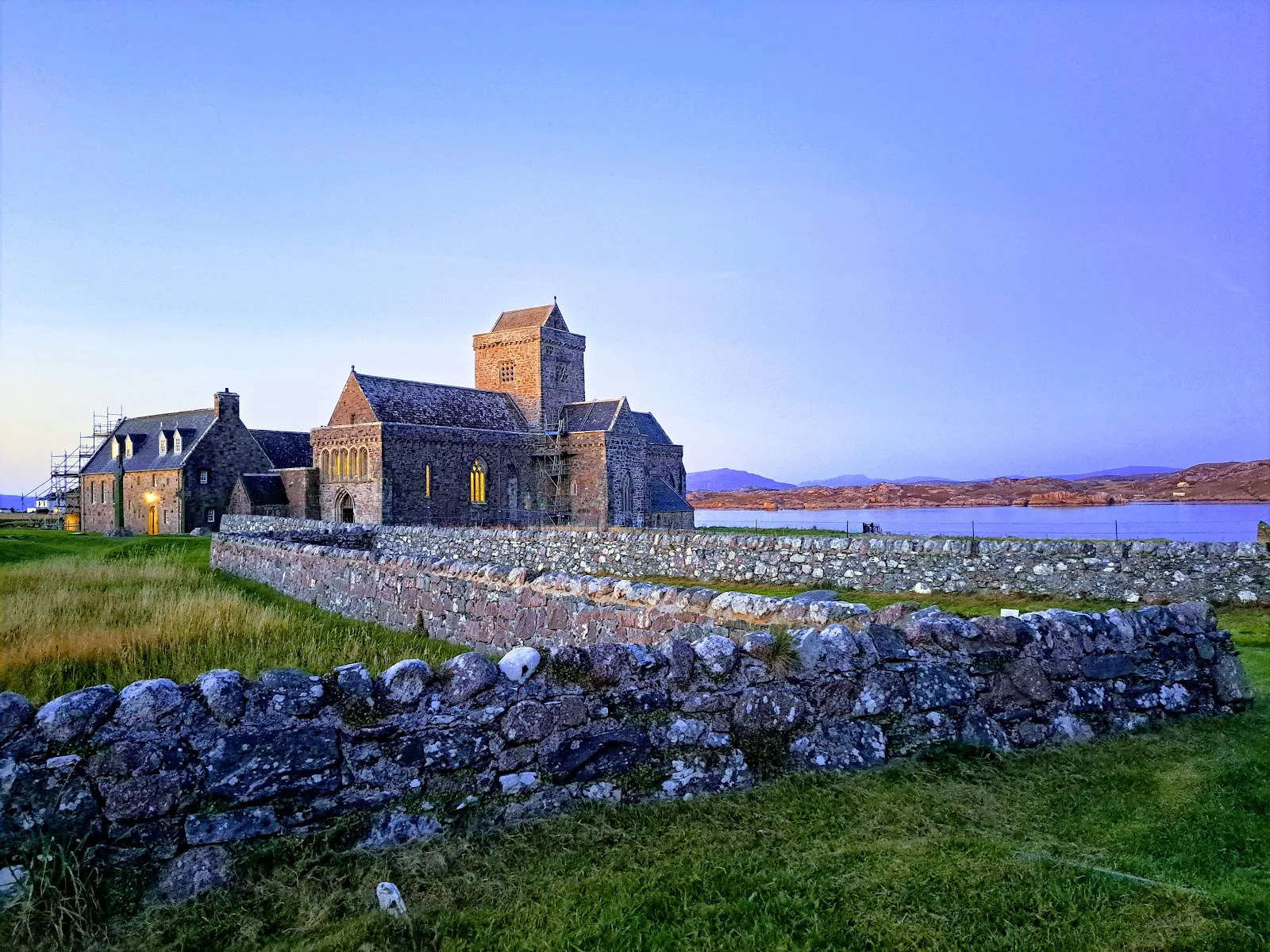
The abbey church has a broad nave with Romanesque and early Gothic vaulting and columns. A doorway on the left leads into the cloister, where medieval grave slabs sit alongside more recent religious sculptures. Sunlight can bring out the detail in this quiet space, so take time to look around rather than moving straight on.
The Abbey Museum displays carved high crosses and inscribed stones, with background information to help explain them. A replica of St John’s Cross stands outside the abbey; the original carved cross is among the objects to see in the museum. Together, the displays offer a closer look at the stonework and religious history of Iona.
The nunnery and the path to St Oran’s
The nunnery ruins give a sense of the island’s later medieval religious life. It is among Scotland’s best-preserved examples of an Augustinian nunnery, and its remains are close enough to include in the same visit as the abbey.
Continue along the Street of the Dead, the route lined with high crosses that leads towards St Oran’s Chapel and Reilig Odhrain. The chapel and burial ground connect the walk to the island’s history as a resting place for Scottish rulers. Give yourself time to pause along the way; the island’s calm setting is part of the experience.
Perguntas frequentes
How do you get to Iona Abbey?
Take the ferry to the Isle of Iona from Mull. The abbey is about a 10-minute walk from the landing.
How long should I allow for Iona Abbey and Nunnery?
Plan for more than an hour to see the main sites. A full day gives you time to explore at a slower pace.
What can you see at Iona Abbey?
The abbey has a vaulted nave and cloister, and the museum displays carved crosses and inscribed stones. Nearby are the nunnery ruins, St Oran’s Chapel and an ancient burial ground.
Should I book tickets in advance?
Advance booking is recommended.