Caerlaverock Castle is a medieval fortress near Dumfries, on the edge of the Caerlaverock National Nature Reserve. Its unusual triangular plan, pink-red sandstone walls, twin-towered gatehouse and water-filled moat make the approach as striking as the ruins themselves. Walk through the castle’s passageways and around the moat, then follow paths through the grounds, where there is a play area and wildlife to look out for. Displays cover the castle’s sieges, and a nearby site marks where an earlier castle stood.
A triangular fortress on the Solway coast
Caerlaverock Castle stands near the northern edge of the Solway Firth, beside the River Nith and about 11 kilometres south of Dumfries. Built in the 13th century, it defended the southwestern approach to Scotland. For more than four centuries, it was home to the Maxwell family, whose fortunes were bound up with the border conflicts between the English and Scots.
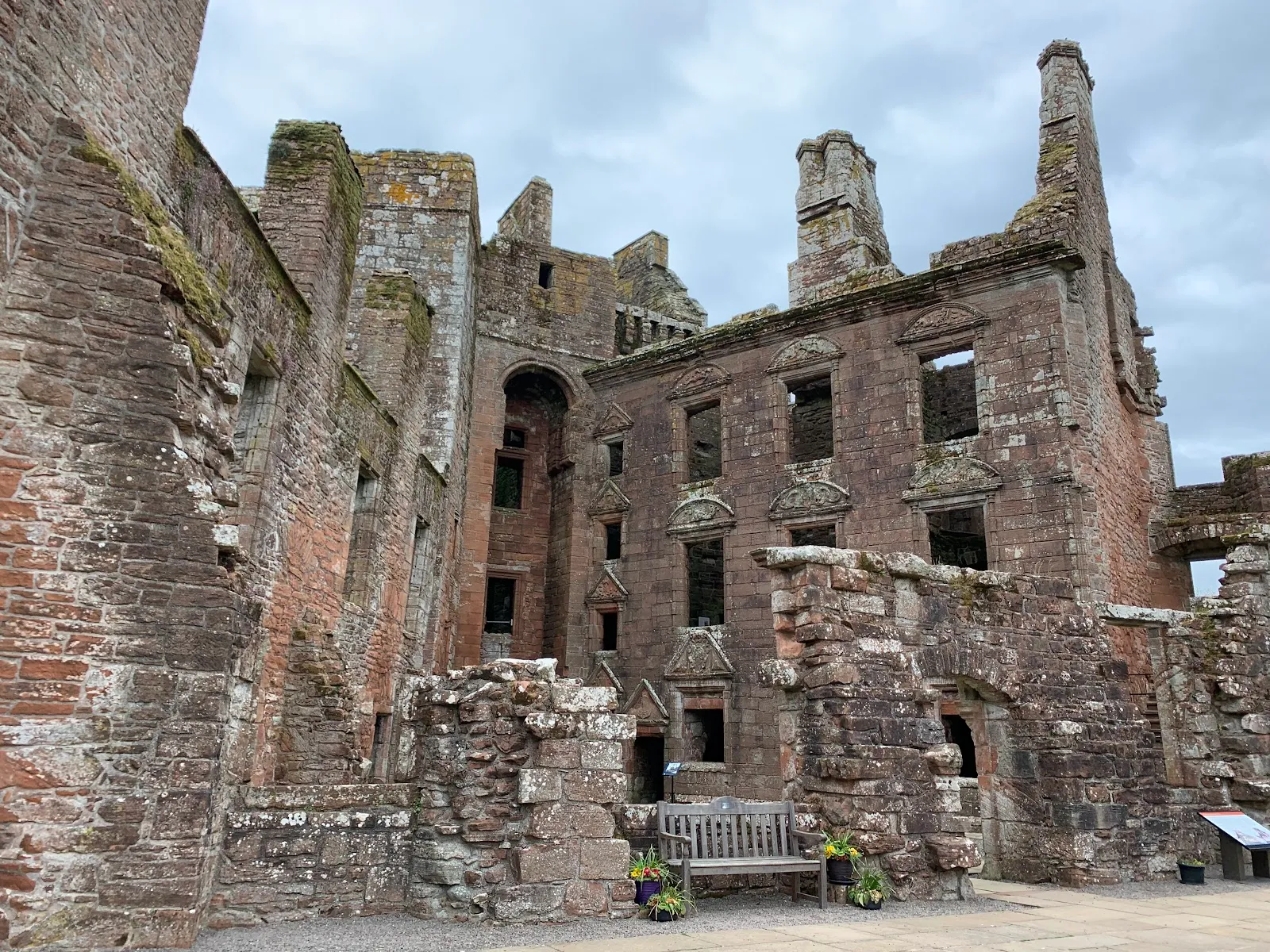
The castle’s triangular layout sets it apart from the more familiar rectangular fortresses. Its pink-red sandstone walls rise from a water-filled moat, and a twin-towered gatehouse marks the entrance. The setting is open and peaceful now, but the castle was besieged, captured and recaptured during its history. Its walls still show the effects of conflict.
Through the gatehouse and into the ruins
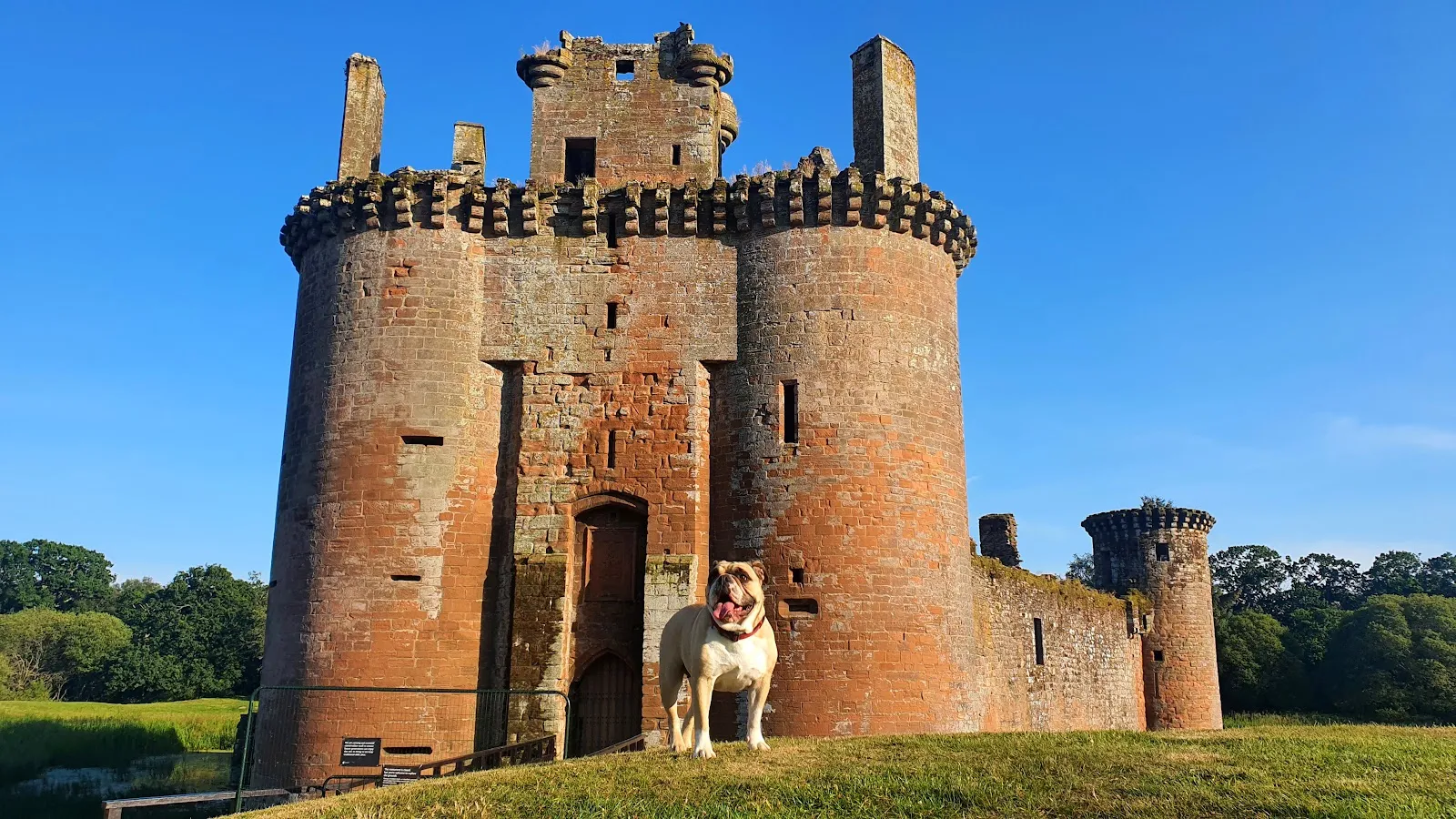
Cross the moat and pass through the gatehouse to explore the castle’s surviving spaces. Narrow passageways thread through the interior, with walkways and battlements to examine as you move between levels. Some areas may be closed off, so the route through the ruins can be limited.
Take time to view the castle from outside as well as within. Walking along the moat gives a sense of the triangular plan and the scale of the walls. The twin towers and battlements are especially clear from the approach, while the surrounding lawns and trees give the ruins room to stand apart from the modern visitor facilities.
Sieges, earlier ruins and the grounds
Caerlaverock’s position made it important in repeated struggles along the Scottish border. In 1300, Edward I attacked the castle; the siege became the subject of a medieval poem. Displays at the site explain the history of the sieges, including reconstructions of medieval siege engines. A short walk also leads to the site of an earlier castle, where information helps explain the remains.
The grounds extend the visit beyond the stone walls. Paths lead through wooded areas and towards the nearby nature reserve, where squirrels and waterbirds may be seen. Families can use the play area and children’s trail. The visitor centre and shop are beside the car park, with a small café serving drinks and snacks. Dogs on leads are permitted around the castle and grounds, but not inside the café.
Perguntas frequentes
Where is Caerlaverock Castle?
It is near Dumfries, on the edge of the Caerlaverock National Nature Reserve and beside the Solway coast.
What makes Caerlaverock Castle unusual?
The medieval fortress has a triangular plan, a twin-towered gatehouse and a water-filled moat.
How long should you allow for a visit?
Allow about 1 to 2 hours to see the castle and walk around the grounds.
Are dogs allowed at Caerlaverock Castle?
Dogs on leads are allowed around the castle and grounds, but not in the café.